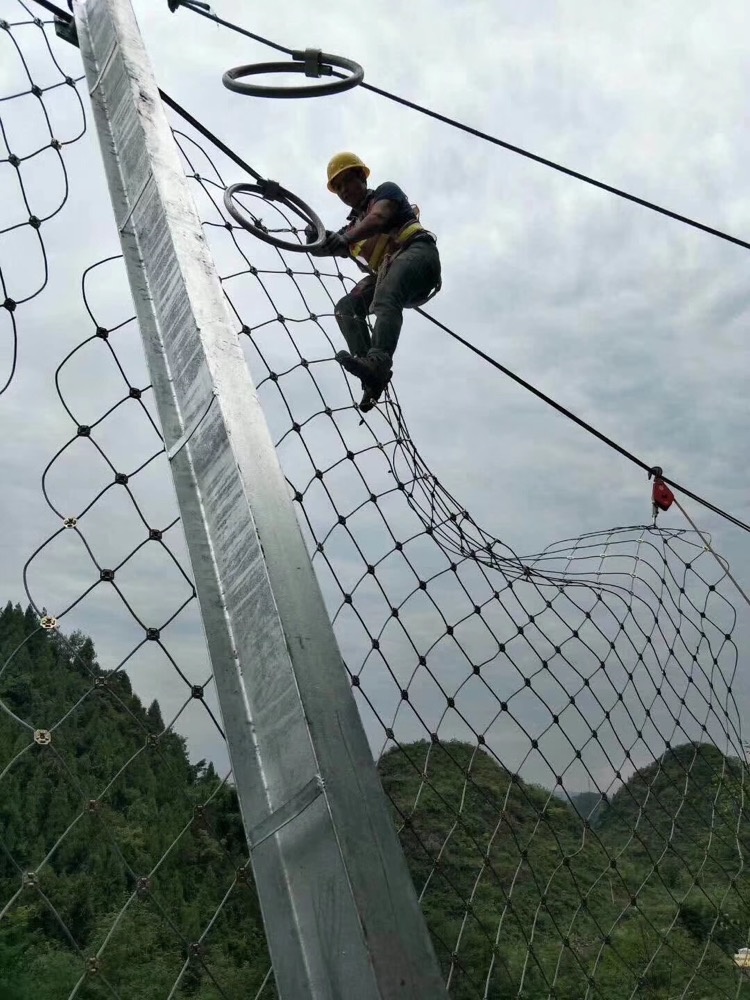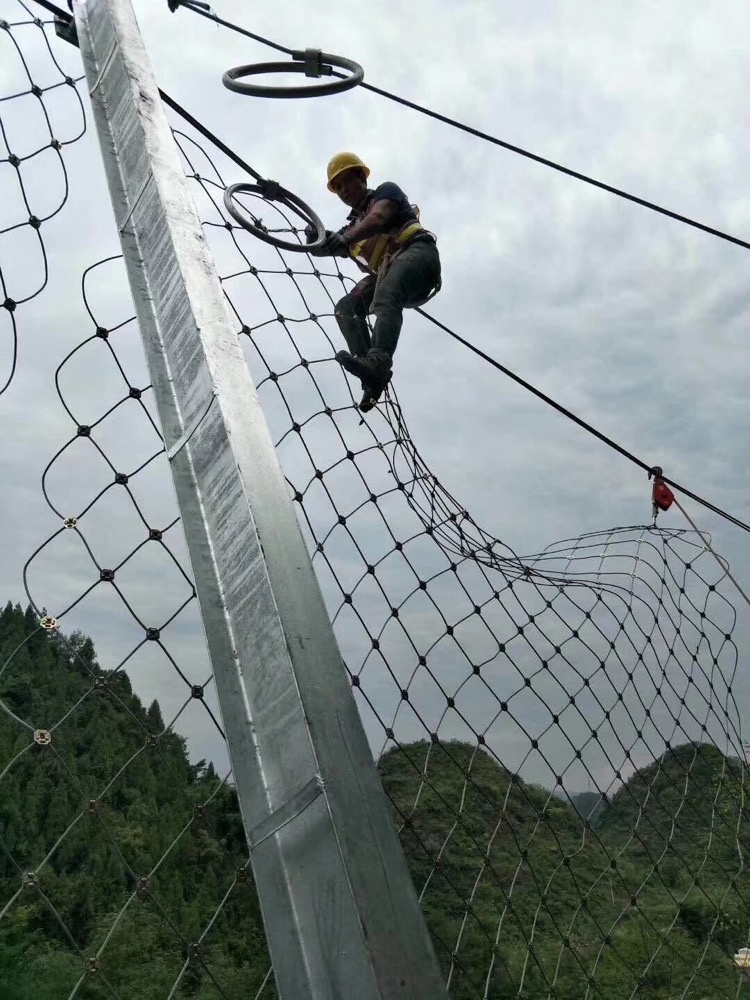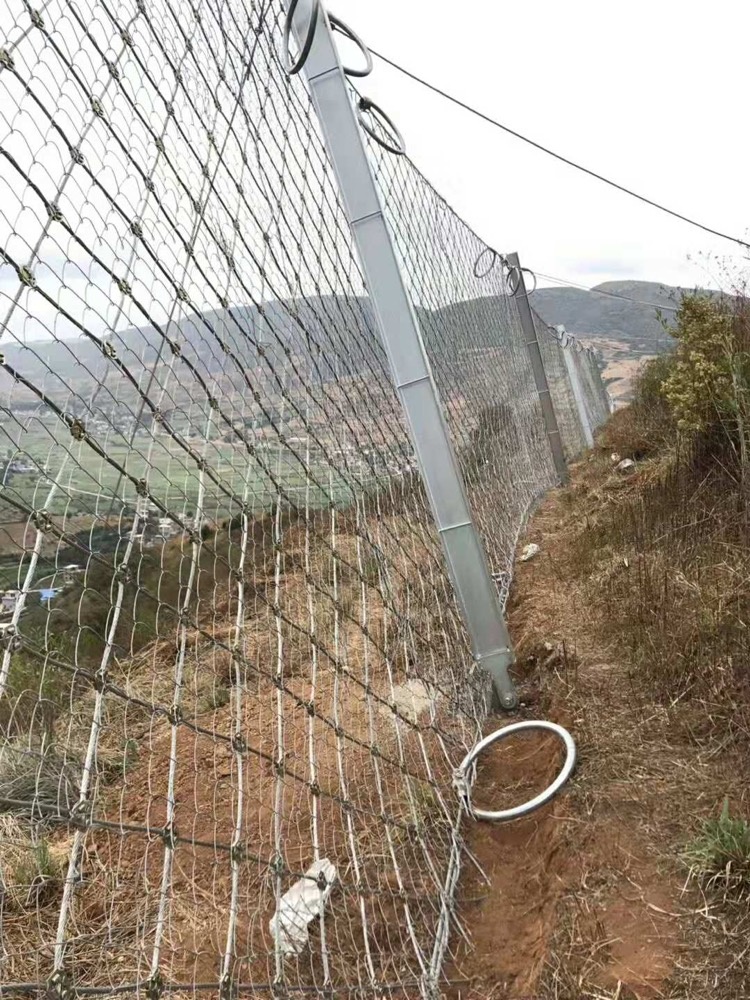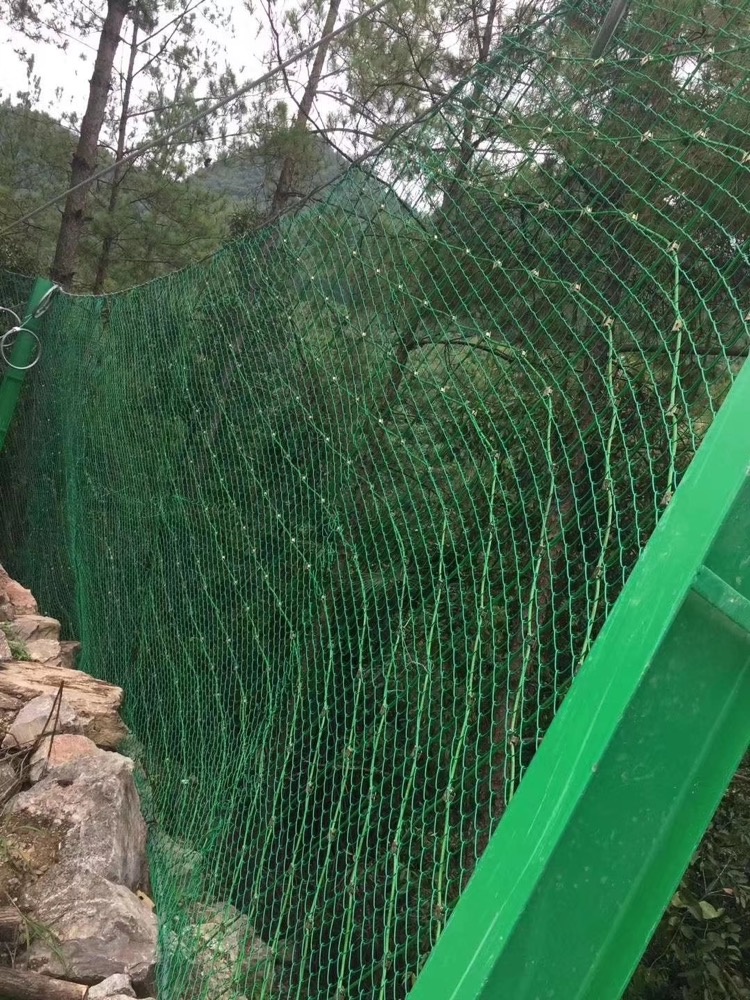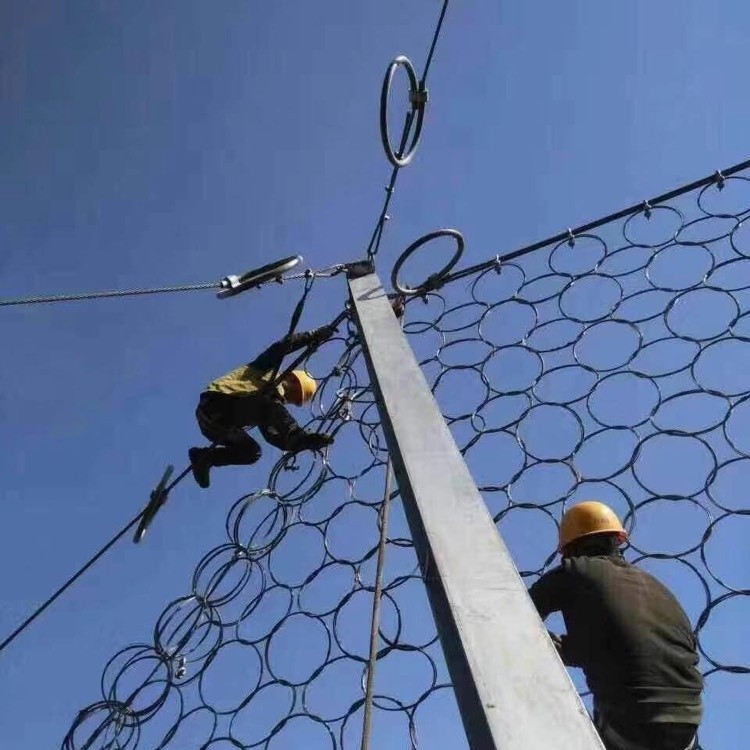

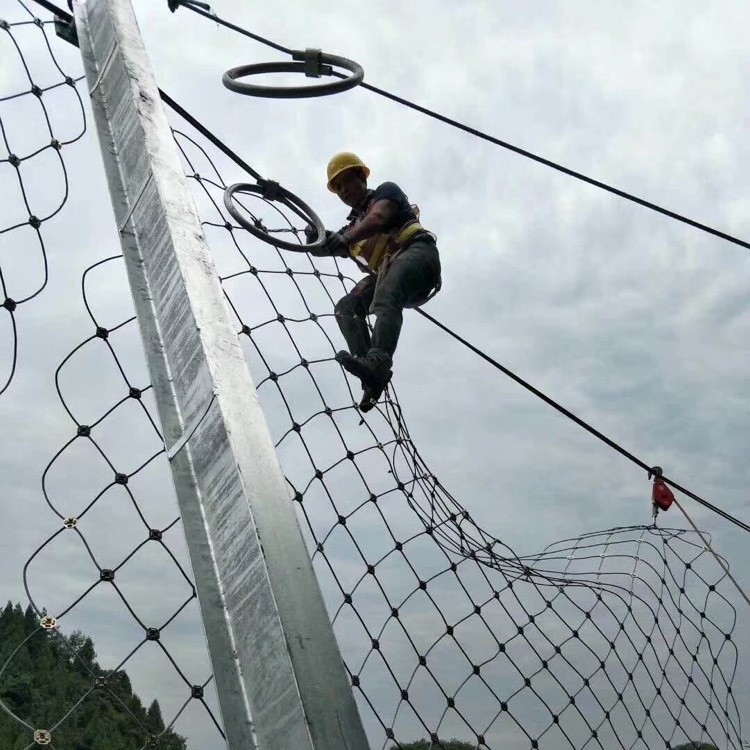

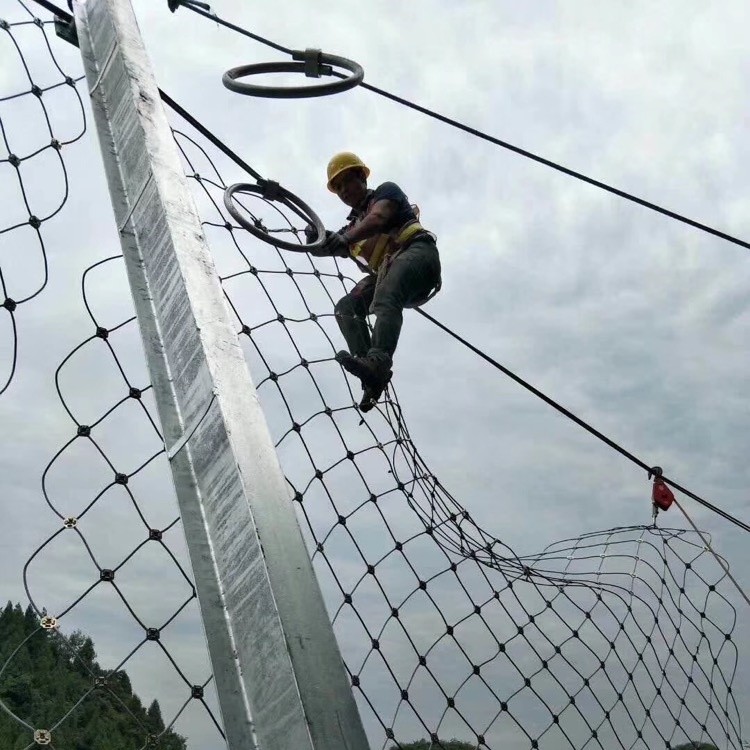
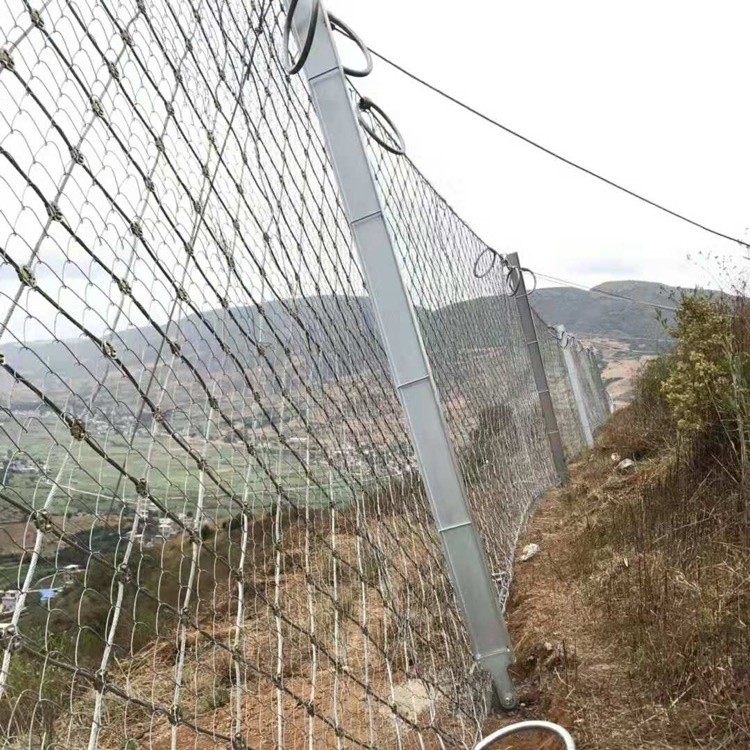
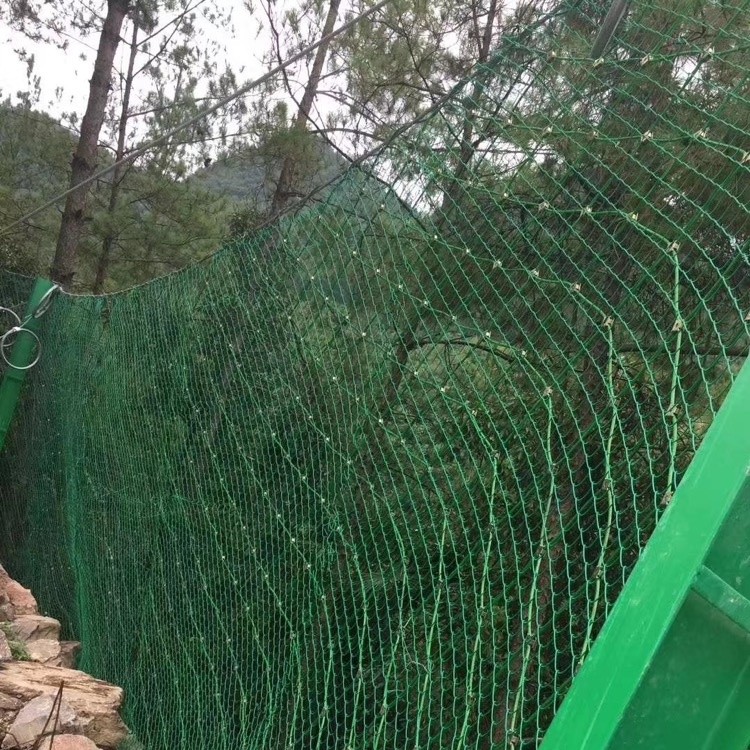











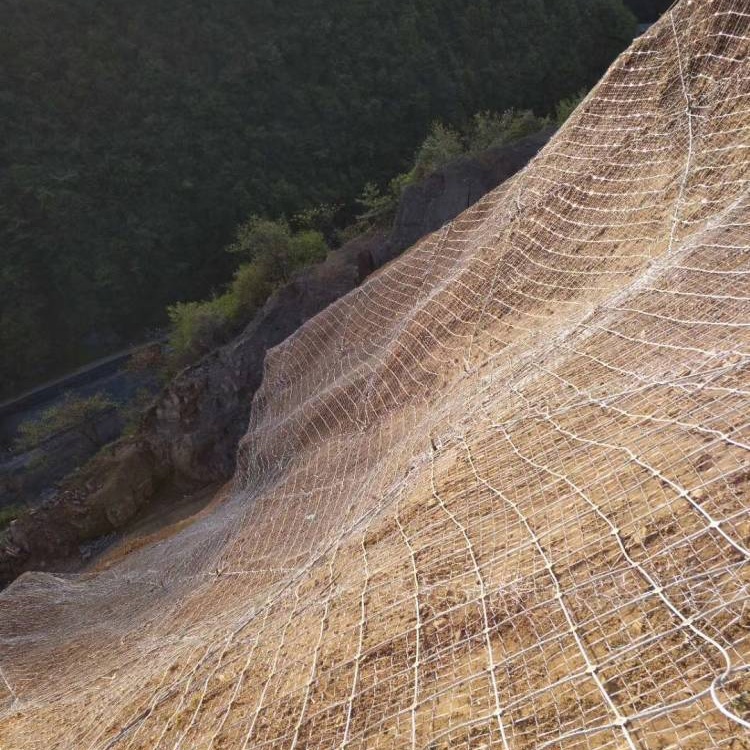
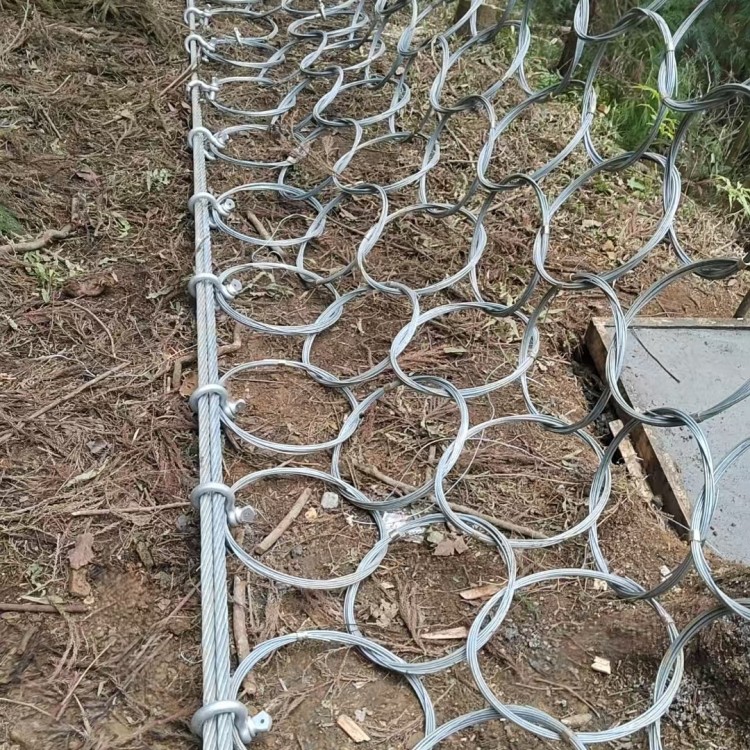
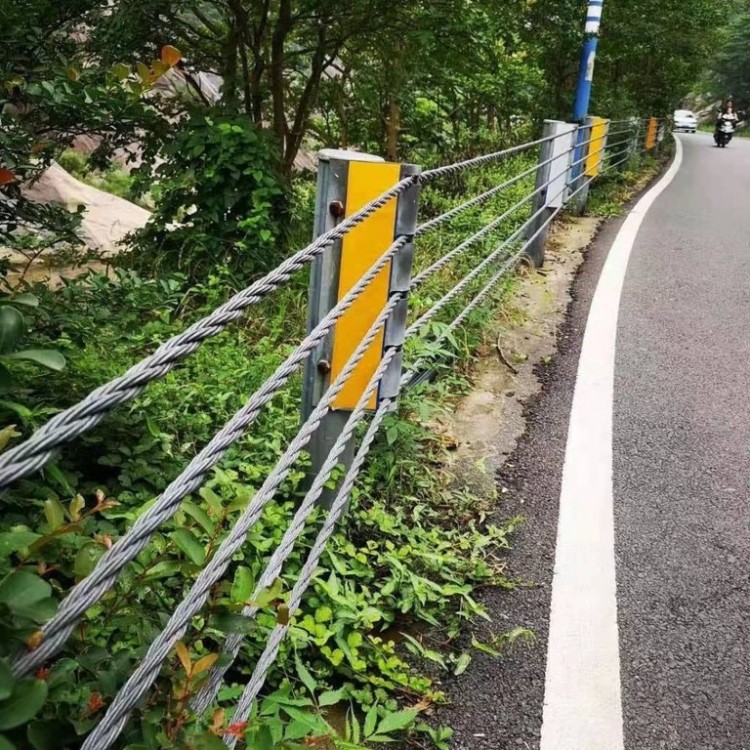
Passive protection netting is an efficient building material for slope protection. It is composed of wire rope nets, steel wire mesh, anchor rods, I-beam columns, tensile ropes, and pressure relief rings. Its working principle is to connect steel columns and wire rope nets to form an integrated unit, providing surface protection to the protected area and preventing the downward fall of collapsed rock and soil. The passive protection netting boasts high flexibility and strong interception strength, capable of absorbing and dispersing the kinetic energy of anticipated falling rocks. The design of the pressure relief rings further enhances the system's impact resistance. Compared to rigid interception and concrete retaining walls, it alters the original construction process, reducing both time and financial costs. This type of protection netting is suitable for mountainous areas with buffer zones adjacent to construction facilities, effectively intercepting natural disasters such as rockfalls, flying stones, avalanches, and mudslides, and protecting buildings from damage. With its unique structure and stable performance, the passive protection netting plays a crucial role in various fields such as construction, transportation, and electricity, providing a reliable safeguard for engineering construction and public safety.