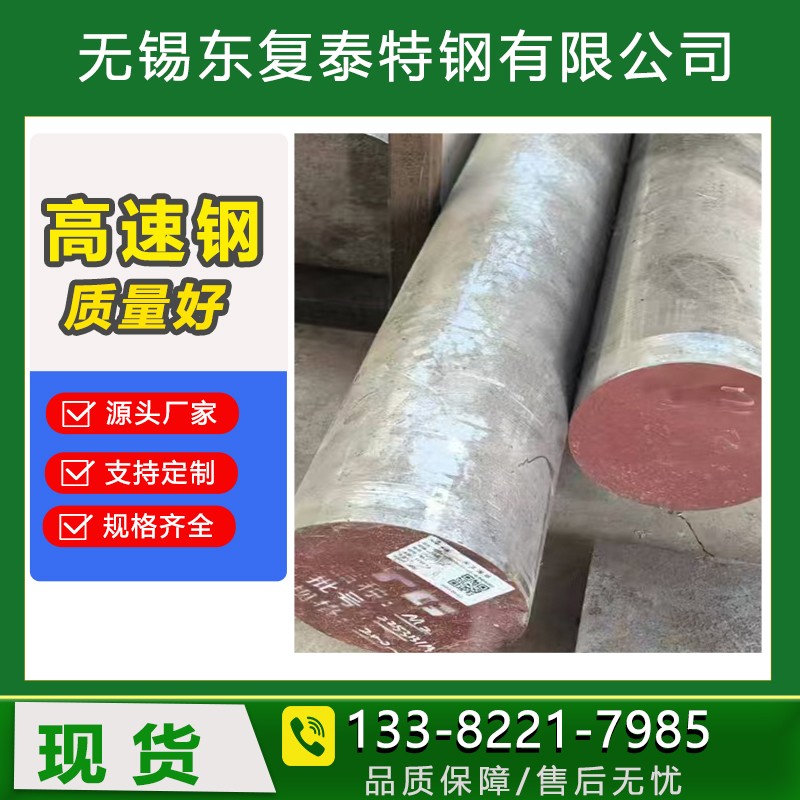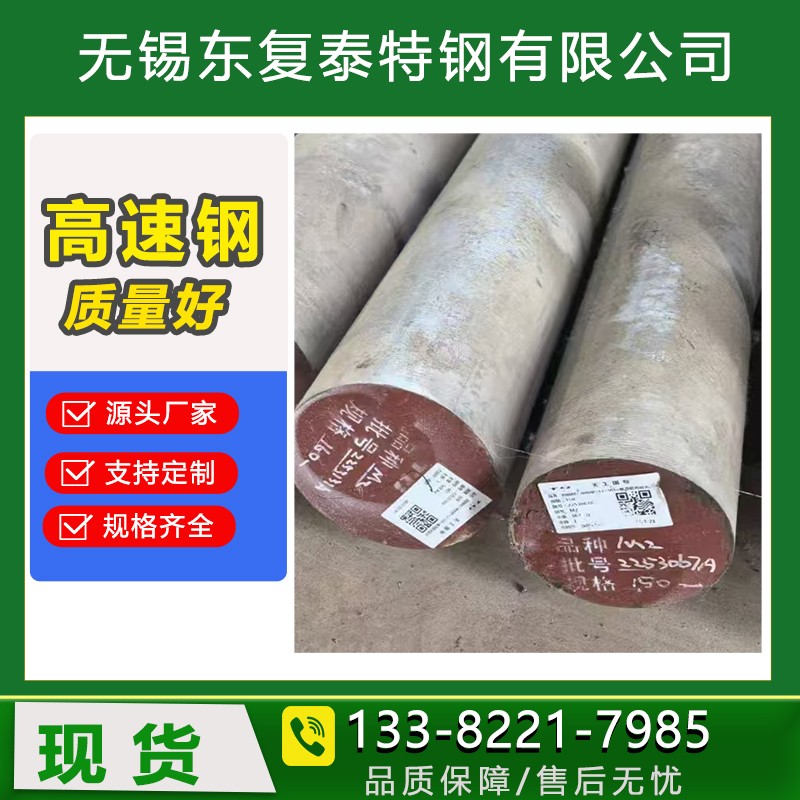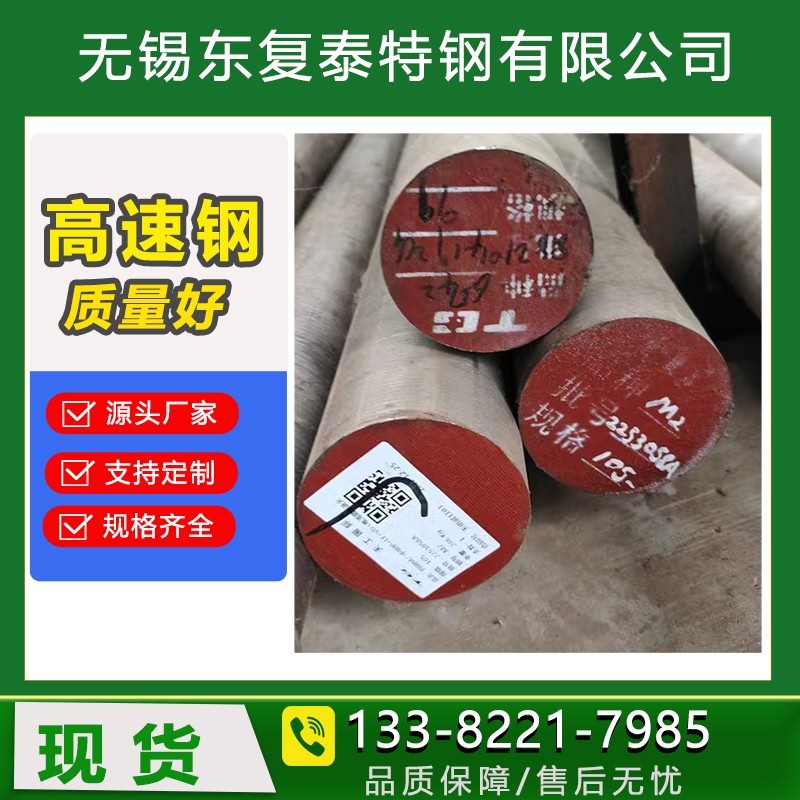















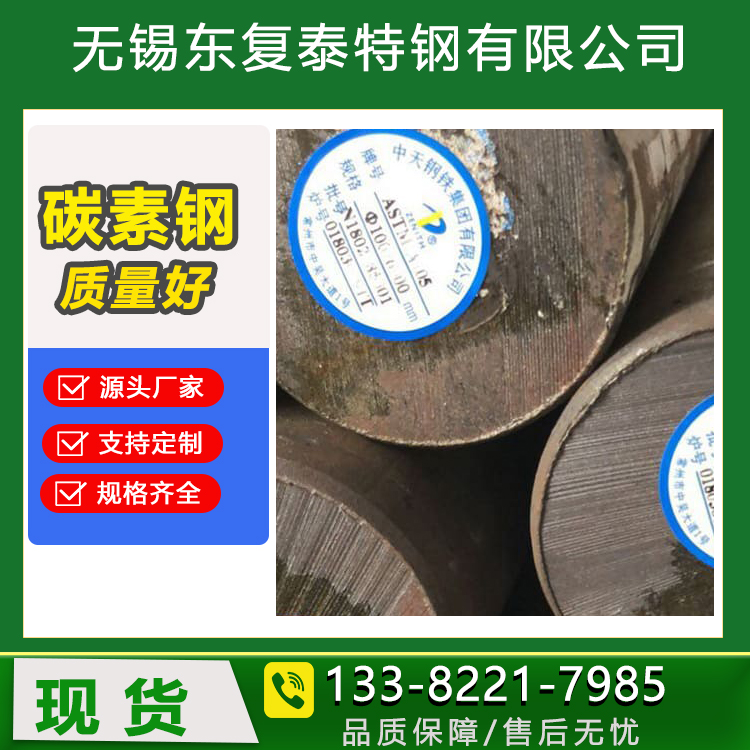

W18Cr4V high-speed steel is a tungsten high-speed steel, a commonly used type of tungsten high-speed steel. It belongs to the martensitic steel group and is one of the longest-used high-speed steels. Like other high-speed steels, it is often called "white steel," "sharp steel," or "wind steel" (can be quenched by air cooling). It boasts high hardness, red hardness, and high-temperature hardness. Its heat treatment range is wide, making it less prone to overheating during quenching. The heat treatment process is less likely to cause oxidation and decarburization, and it has good grinding processing properties. At 500°C and 600°C, the hardness is maintained at HRC 63-64 and HRC 62-63, respectively, offering excellent cutting performance for a wide range of processed materials.
Carbon 0.7--0.8%, Tungsten 17.5--19%, Chromium 3.80--4.4%, Vanadium 1.0--1.4%, Silicon <0.4%, Manganese <0.4%, Molybdenum <0.3%.
Features of W18Cr4V high-speed steel:
In steel, carbon primarily combines with chromium, tungsten, molybdenum, and vanadium.Elements such as carbide-forming elements form carbides to enhance hardness, wear resistance, and red hardness. Tungsten is the primary element for increasing red hardness, forming carbides in steel. During heating, some carbides dissolve into the austenite, resulting in a martensite with high tempering stability, containing a large amount of tungsten and other alloy elements. During tempering, some tungsten precipitates in the form of carbides, causing secondary hardening. Un溶解 carbides prevent the growth of austenite grains during heating. Vanadium significantly improves the red hardness, hardness, and wear resistance of high-speed steel. The carbides formed by vanadium partially dissolve into the austenite during heating and precipitate out as fine particles during tempering, causing secondary hardening and increasing the red hardness of the steel. Chromium in high-speed steel primarily increases its hardenability, as well as its resistance to oxidation, decarburization, and corrosion. Cobalt can also significantly improve the red hardness and hardness of steel.
W18Cr4V high-speed steel structural material
The as-cast microstructure of W18Cr4V includes ledeburite with a skeletal structure, alternating layers of carbide plates with martensite or troostite, as well as black microstructure (δ segregation) and white microstructure (martensite and residual austenite). The as-cast microstructure and chemical composition of high-speed steel are particularly uneven, and heat treatment cannot alter this, so it is necessary to undergo pressure working to fracture the coarse eutectic carbides and distribute them evenly, before using them to manufacture various cutting tools and molds.
W18Cr4V high-speed steel forging:
High-speed steel is prone to overheating during heating, and forging near this temperature range is easily susceptible to cracking. The heating temperature should be strictly controlled.
Forging temperature range
W18Cr4V is a high-alloy steel characterized by a slow heating rate and a narrow forging temperature range. The initial forging temperature is 1100-1150°C, and the final forging temperature is 900-950°C.
2. Determining the Heating Time
W18Cr4V steel has poor thermal conductivity and usually requires segmented heating. The heating temperature in the low temperature segment is typically 800-900°C, with the heating time generally calculated at 1 minute/mm. In the high temperature segment, heating is rapid, with the heating time usually calculated at 0.5 minute/mm. During heating, strict control over the upper temperature limit is necessary to prevent overheating or burning. Additionally, the billets in the furnace should be loaded in appropriate quantities and continuously flipped to ensure even internal and external temperatures.
W18Cr4V high-speed steel annealing:
Pre-treatment before heat treatment is annealing, at a temperature of870 to 880 degrees Celsius, insulation for 2 to 3 hours, then preheat to 800 to 840 degrees Celsius, quenching in stages from 1270 to 1280 degrees Celsius, with stage temperatures ranging from 580 to 620 degrees Celsius. Afterward, three tempering cycles at 560 degrees Celsius, with each cycle involving 1 hour of insulation. W18Cr4V contains a high amount of alloying elements: poor plasticity, poor thermal conductivity, and rapid heating can cause thermal stress leading to deformation and cracking. Therefore, it is essential to preheat to 1270 to 1280 degrees Celsius and then preheat to 800 to 840 degrees Celsius. For complex shapes, an additional preheat to 500 to 650 degrees Celsius is recommended. Elements like V and W, which primarily increase red hardness, dissolve at very high temperatures, but excessive temperatures can lead to coarse grain sizes. Moreover, elements like W reduce the A area, raising the eutectoid and eutectic temperatures, hence the choice of 1270 to 1280 degrees Celsius. Direct air cooling can result in the precipitation of secondary carbides, thereby reducing the steel's red hardness. The quenching structure consists of M + carbides + residual A (up to 30%) that precipitate during tempering at 550 to 570 degrees Celsius, causing secondary hardening, decomposition of A, precipitation of C, reduction in alloy element content, and an increase in Ms, leading to secondary quenching and one tempering cycle. There is also 15% residual A, with 3% to 5% residual A after the second tempering cycle. After three tempering cycles, only 1% to 2% residual A remains, resulting in a final tempered structure of M + carbides + residual A.