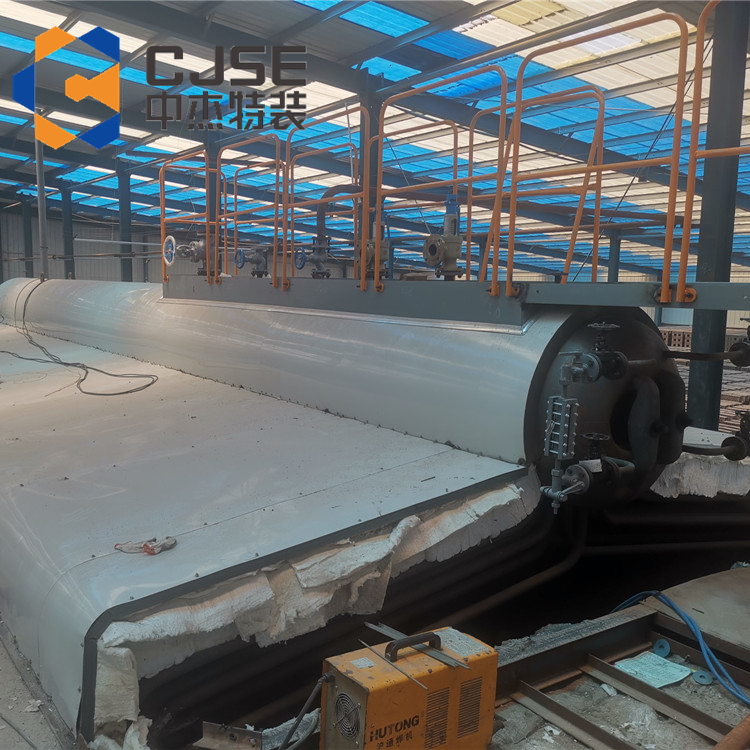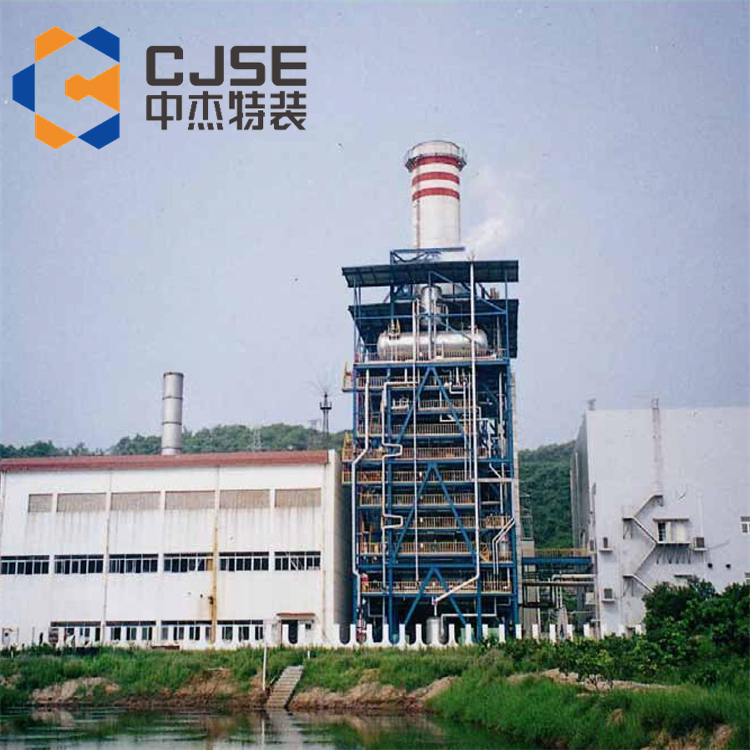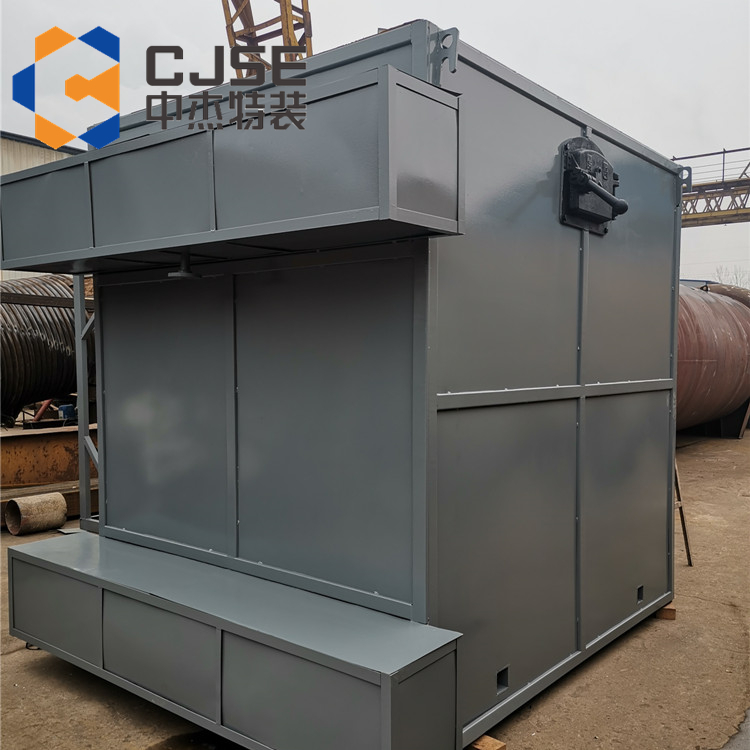


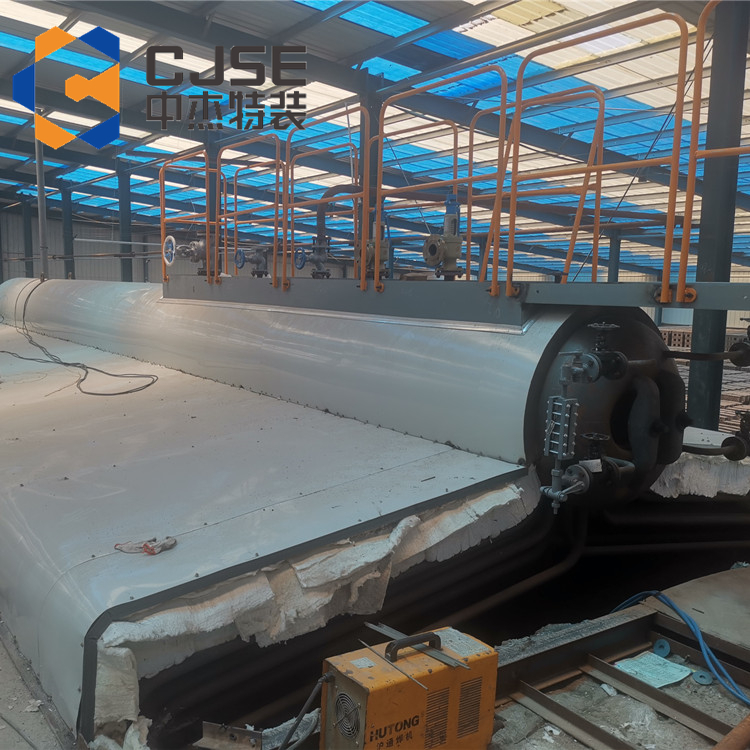
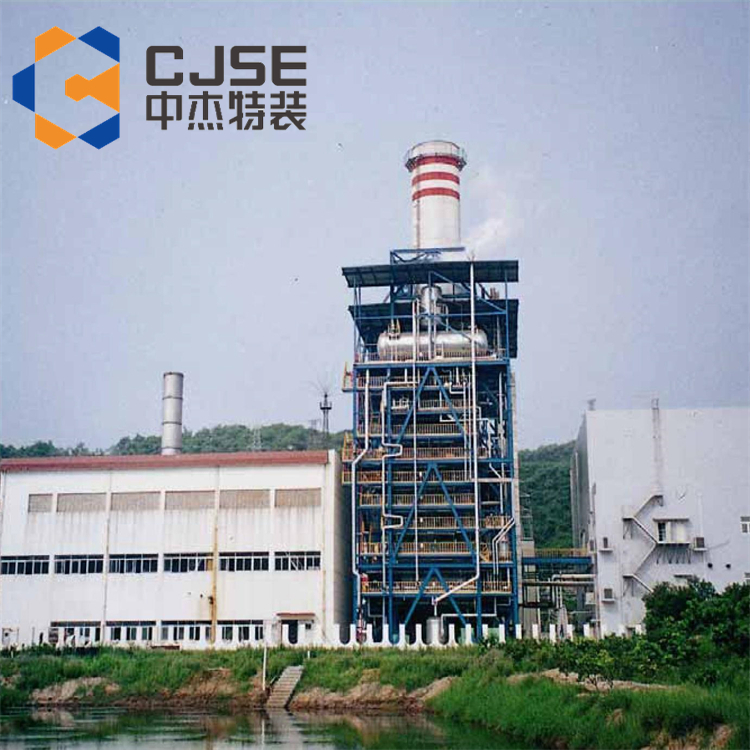


















The structure of the waste heat boiler: The boiler utilizes high-temperature waste heat flue gas and is generally arranged vertically. It consists of a drum, economizer, evaporator, superheater, heating section flue, inlet section flue, outlet section flue, various supports and hangers for the flues, manholes, and differential pressure tapping devices.
The waste heat boiler consists of a drum, a movable smoke hood, a mouth segment smoke channel, inclined 1st smoke channel, inclined 2nd smoke channel, final 1st smoke channel, final 2nd smoke channel, feeding tube (downfeed chute) trough, oxygen opening, nitrogen sealing device and plug, manhole, micropressure sampling device, support and bracket for the smoke channels, etc. The waste heat boiler is divided into six circulation circuits, each consisting of a downcomer and an upcomer. Water from each segment of the smoke channels is introduced into the lower collector box of each smoke channel via the downcomer from the drum, then into each heating surface. After passing through the heating surface, the water turns into steam and enters the inlet collector box, which is then introduced into the drum via the upcomer. The smoke channels are all connected using flanges.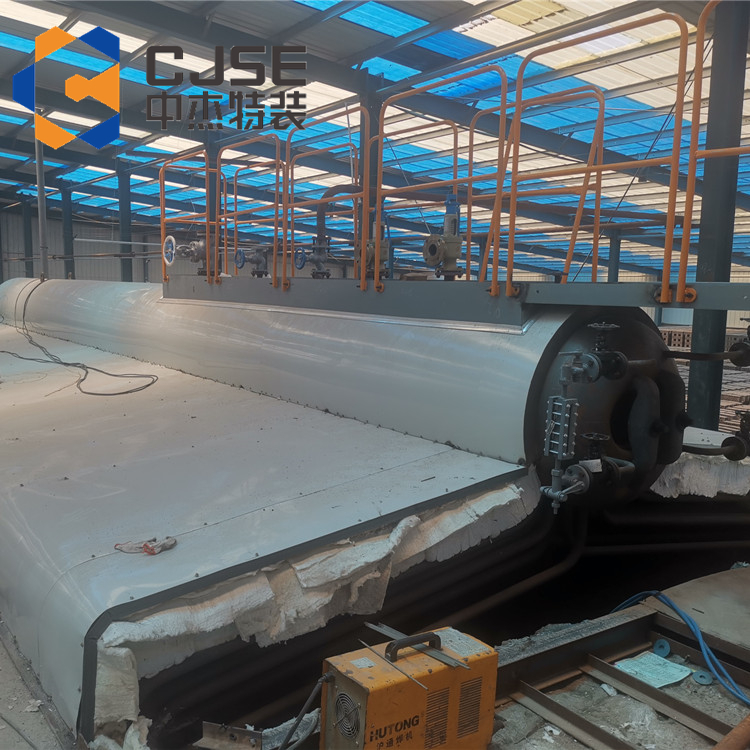
The water distribution header consists of a header box and connecting pipes; the boiler feed water is extracted from the drum through downcomers and enters the header box. To ensure that the temperature at various parts of the header box remains consistent, multiple scattered downcomers are used to introduce water into the header box and the lower header.
A single inclined flue, a double inclined flue, a final single flue, and a final double flue are each composed of an allocation header, lower header, pipe assembly, and upper header.
To prevent the chimney from warping, reinforcing rings are installed at appropriate positions on the chimney. For easy maintenance, manholes are also provided in the chimney. The material for the header and pipes is 20 (GB3087-1999).