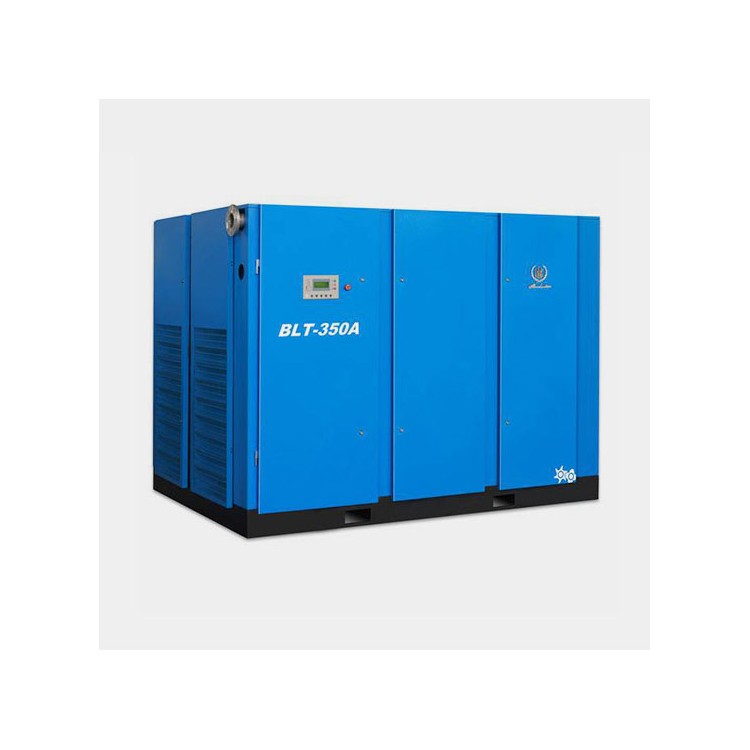
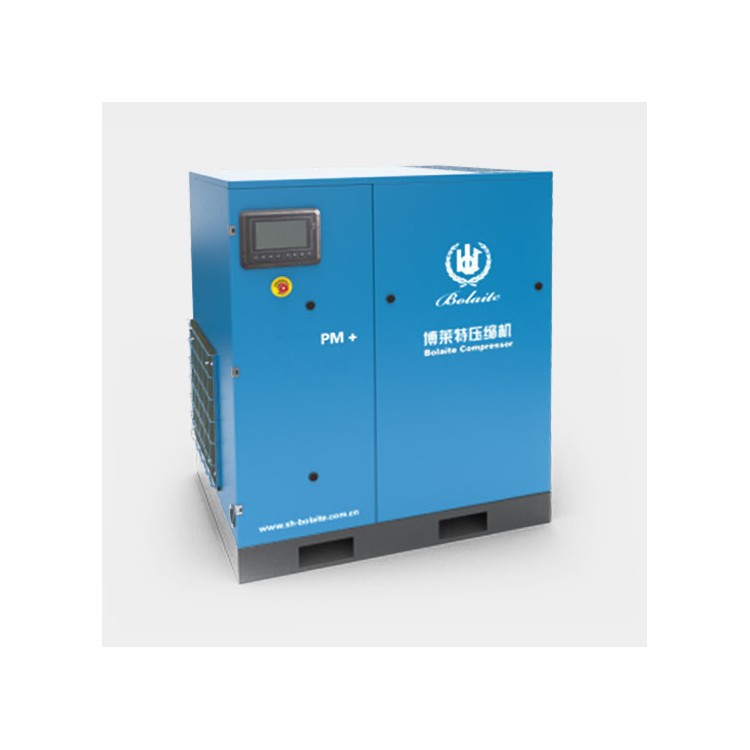














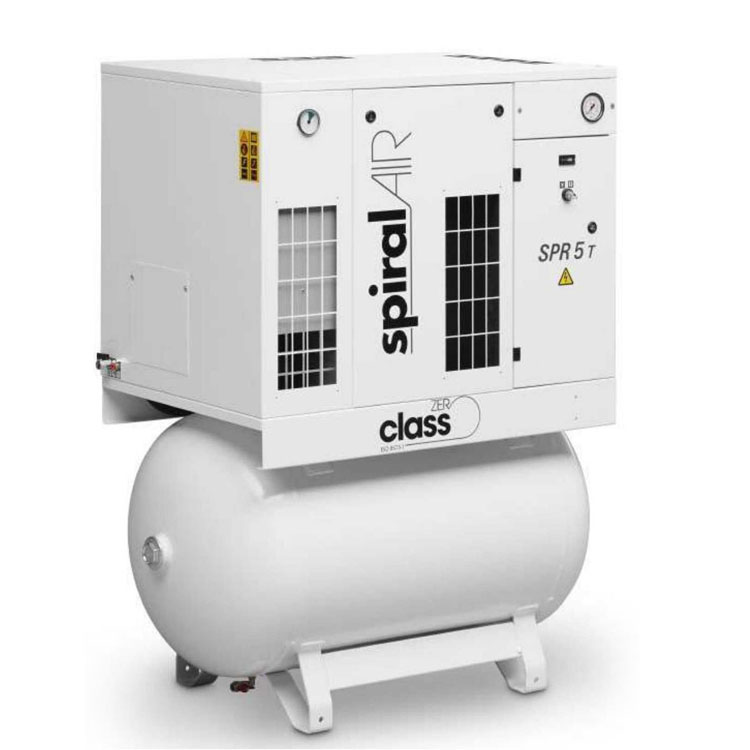
Variable Frequency Air Compressor Working Principle
Due to the linear relationship between the compressor motor's speed and the actual power consumption of the air compressor, reducing the motor speed will decrease the actual power consumption. Variable frequency air compressors utilize pressure sensors to immediately detect the actual air pressure and flow rate in the system. Through the coordination of electrical and variable frequency controls, the motor speed (i.e., output power) is controlled in real-time without altering the air compressor motor's torque (i.e., the ability to drive the load). By adjusting the compressor speed, it responds to changes in system pressure and maintains a stable pressure level (set value) to achieve on-demand output of high-quality compressed air. When the system's air consumption decreases, if the compressed air provided by the compressor exceeds the system's consumption, the variable frequency compressor will reduce its speed and simultaneously decrease the output air volume. Conversely, it will increase the motor's operating speed and enhance the air volume of compressed air to maintain a stable system pressure. Similar to energy-saving in fan motor and water pump, it controls the input voltage frequency based on load changes, following the same principle as a variable frequency drive, achieving the following energy-saving effects:
1. The pressure setting for variable-frequency air compressors can be a point, meaning it can set a lower pressure to meet the production equipment's requirements. The variable-frequency air compressor adjusts the speed of the compressor based on the fluctuating trend of pipeline pressure, even eliminating the unloading operation of the air compressor, thus saving electrical energy.
2. Due to the stable pressure on the pipeline achieved by variable frequency air compressors, pressure fluctuations can be reduced or eliminated, ensuring all running air compressors operate at a lower pressure that meets production requirements. This reduces power loss caused by upward pressure fluctuations.
3. In actual operation, the time spent on light load operation is very high. By using variable frequency speed control, the operational efficiency can be significantly improved. Therefore, there is great potential for energy saving.
4. Certain adjustment methods (such as adjusting valve openings and changing the angle of blades) cannot reduce the operating power of the motor even when the demand is low. With the adoption of variable frequency speed control, the motor's speed can be reduced and its operating power minimized when demand is low, thereby further achieving energy conservation.
5. Most single-motor drive systems cannot continuously adjust based on the load's lightness or heaviness. However, with the adoption of variable frequency speed regulation, continuous adjustments can be made quite conveniently, maintaining stable parameters such as pressure, flow rate, and temperature, thereby significantly improving the compressor's performance.