








Product Introduction
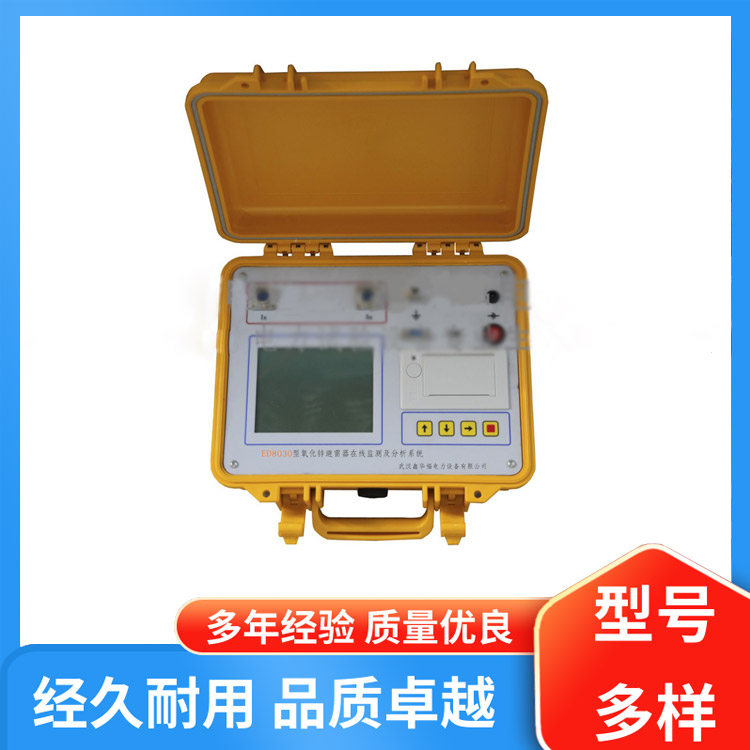
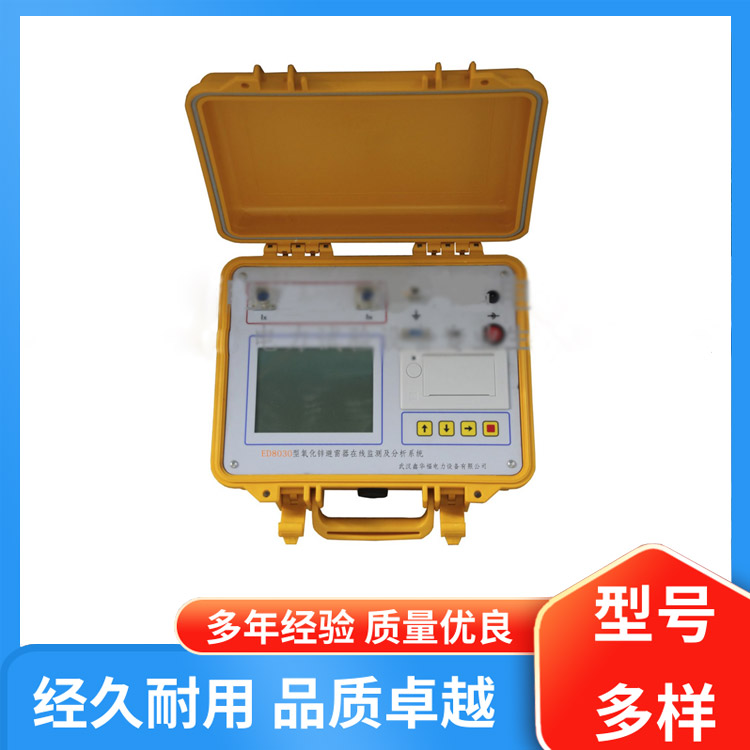
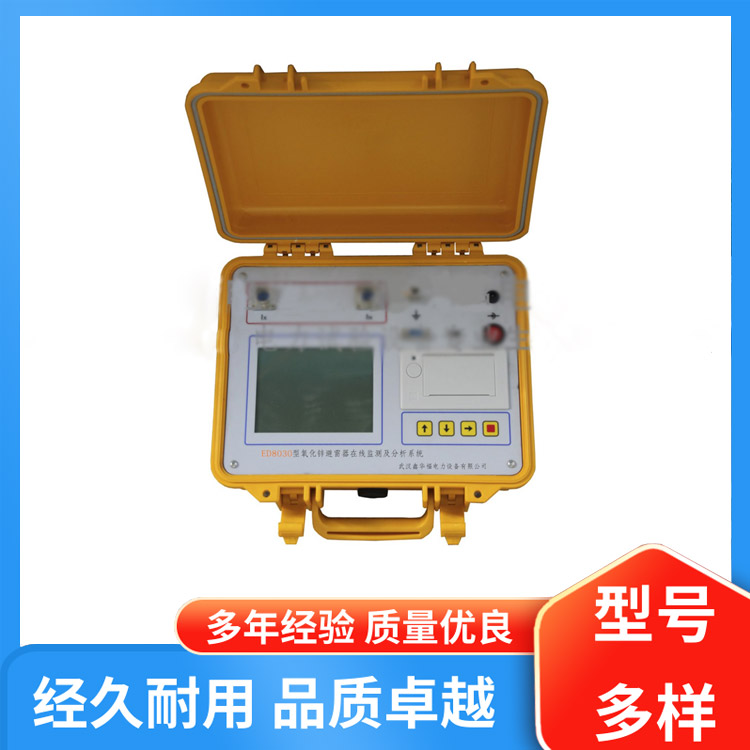
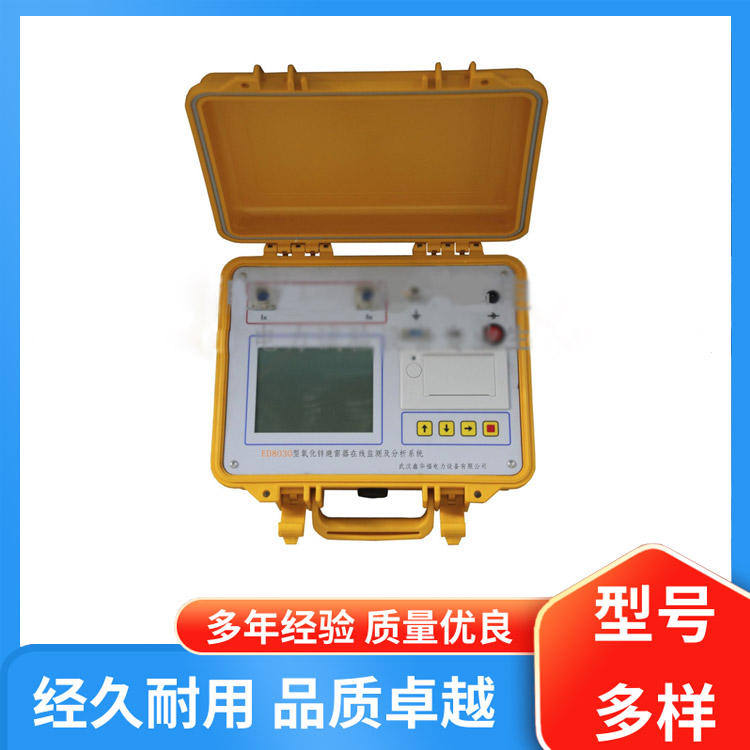
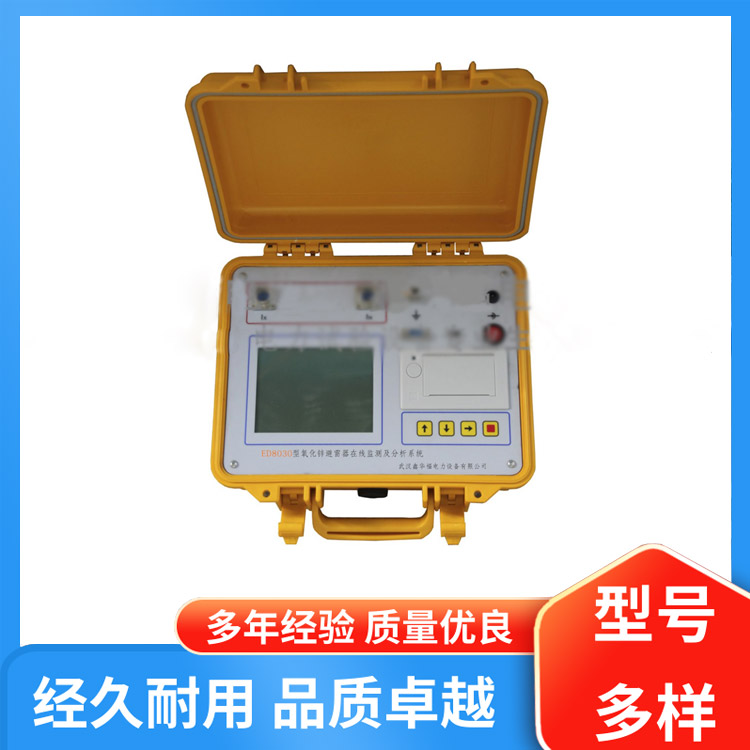
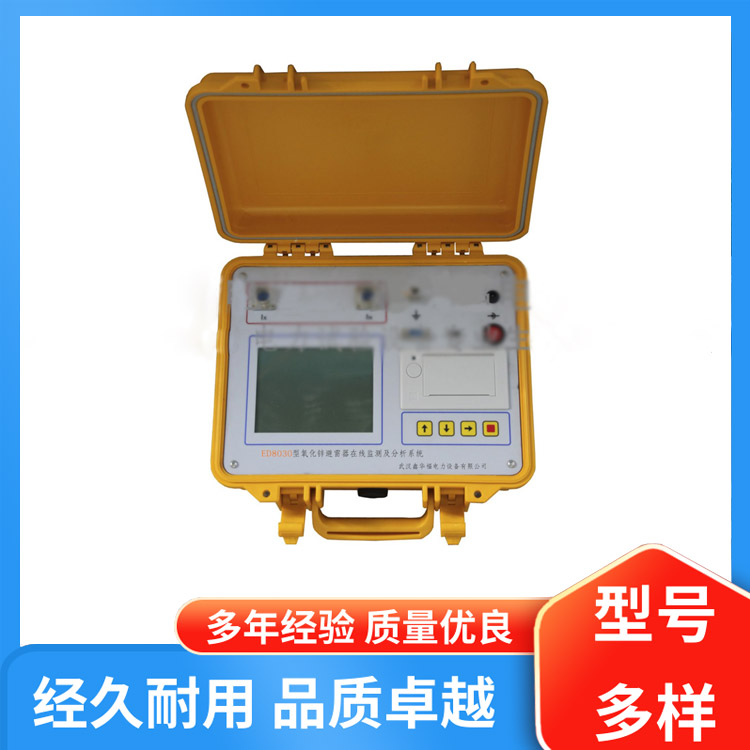
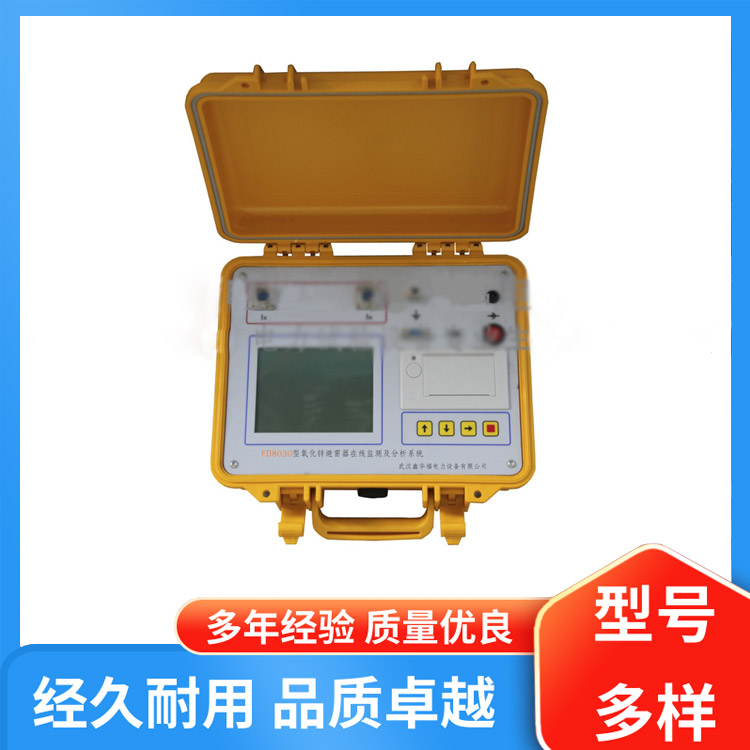
The ED8030 zinc oxide lightning arrester online monitoring and analysis system comprehensively adopts two detection techniques: value measurement and relative value comparison, effectively solving the measurement problems of dielectric loss and resistive current under on-site interference environment. It is suitable for current transformers under operating conditions CVT、 The online inspection of dielectric loss and capacitance of equipment such as sleeves and coupling capacitors can also be used for the online measurement of resistive current and full current of zinc oxide lightning arresters.
The ED8030 zinc oxide lightning arrester online monitoring and analysis system adopts a design structure with built-in sensors, which means that the instrument contains high-precision through core CT inside. As long as a dedicated sampling protection unit is installed below the tested electrical equipment, this portable detection instrument can be used to detect the current transformer in operation CVT、 Regularly inspect the characteristic parameters of electrical equipment such as coupling capacitors, bushings, and lightning arresters to achieve timely detection of insulation defects.
The sampling protection unit of the ED8030 zinc oxide lightning arrester online monitoring and analysis system is based on the principles of simple sampling and reliable protection, and will not have any adverse effects on the normal operation of electrical equipment. Due to the low input impedance of the detector, it is directly connected in series in the sampling circuit during measurement, independent of the component parameters in the sampling protection unit. The detector itself can be calibrated according to conventional instrument methods, ensuring the long-term stability and reliability of the entire online inspection device, while also reducing the project cost.
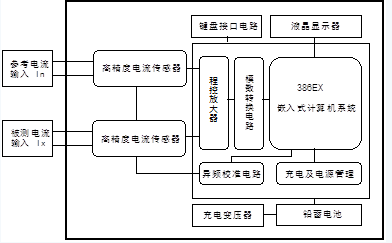
The successful development of the ED8030 zinc oxide lightning arrester online monitoring and analysis system is attributed to the use of high-performance current sensors and advanced ARM embedded computer systems. The working principle diagram is shown in the figure below.
In response to the problems and deficiencies in testing methods of similar detection instruments in the past, the product has focused on and properly addressed the following issues:
(1) By using high-precision current sensors with cross frequency self calibration function and advanced digital phase detection technology, the accuracy and stability of dielectric loss testing have been effectively solved, and the effects of harmonic interference and environmental temperature changes can be completely eliminated;
(2) The detection function of dielectric loss difference and capacitance ratio of in-phase capacitive equipment has been added, which not only avoids the distortion of test results caused by using PT secondary voltage as the reference signal, but also helps to reduce the influence of phase to phase electric field interference;
(3) By utilizing digital processing technology to achieve full compensation of capacitive current in lightning arresters, the impact of harmonic interference on the test results of resistive current in lightning arresters is reduced, and the peak values of resistive current and its fundamental components can be accurately measured;
(4) With the help of high-performance sensors and advanced ARM embedded computer systems, one machine can achieve multi-purpose functions, creating conditions for future high-voltage dielectric loss measurement work.
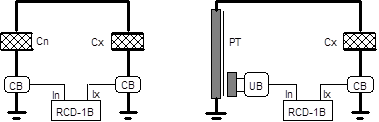
When measuring capacitive equipment (CT, CVT, bushing, coupling capacitor), the tester provides two measurement methods: relative measurement method (left figure) and measurement method (right figure) as shown in the following figure. Considering that the inherent errors of PT on site can sometimes seriously affect the accuracy of dielectric loss measurement, relative measurement method should be prioritized, that is, directly measuring the dielectric loss difference and capacitance ratio of two devices of the same phase and type, and making judgments based on their relative trends.
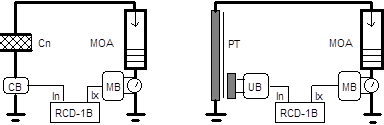
When measuring zinc oxide lightning arresters, the tester provides two measurement methods: capacitive equipment compensation method (left figure) and PT signal compensation method (right figure) as shown in the following figure. Among them, the capacitive equipment compensation method is adopted, which directly uses nearby capacitive equipment sampling protection units to provide capacitive current compensation signals, which can effectively avoid inconvenience caused by the use of PT secondary signals.
Product nickname:
Zinc oxide lightning arrester online monitoring, lightning arrester online monitoring system, monitoring system, nitrogen oxide online monitoring system, zinc oxide lightning arrester tester, zinc oxide lightning arrester, zinc oxide lightning arrester model, metal oxide lightning arrester, metal oxide zinc lightning arrester
Product Features
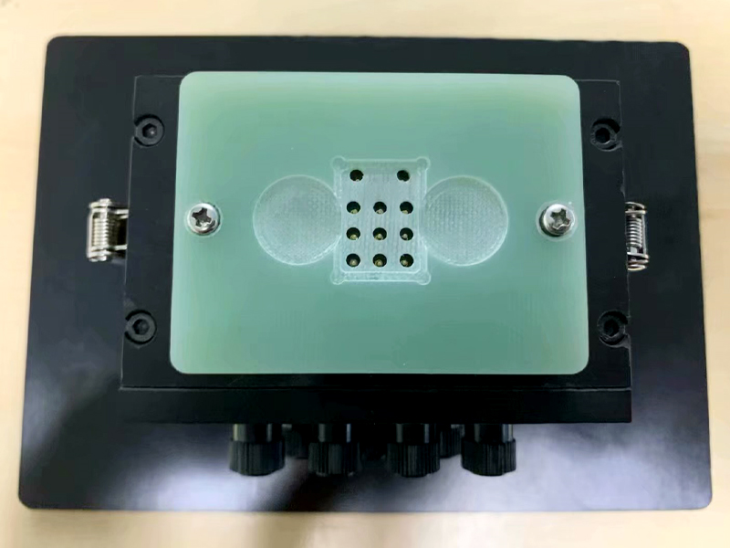
The ED8030 zinc oxide lightning arrester online monitoring and analysis system uses high-precision external through core current sensors or clamp sampling sensors instead of the commonly used "sampling protection unit" (including multiple switch circuits, used to switch the end screen current to the testing instrument during testing, which poses a risk of end screen open circuit. Multiple short connectors need to be operated during testing to introduce the end screen current into the testing instrument). The sampling unit adopts a through core structure sensor and is installed near the equipment. The end screen lead has no fracture and the lead distance is very short, fundamentally avoiding safety hazards such as end screen open circuit. This sensor can accurately detect input signals within the range of 100 μ A to 1000mA.
The ED8030 zinc oxide lightning arrester online monitoring and analysis system has a low sensor input impedance and can withstand the effects of 10A power frequency current and 10kA lightning current impact, meeting the conditions for online detection.
The sensor of the ED8030 zinc oxide lightning arrester online monitoring and analysis system adopts a die cast aluminum shell sealed waterproof design, and the secondary output adopts waterproof cable joints for easy testing and connection; After the sensor is installed, it is normally not charged. If testing is required, only the secondary cable of the sensor needs to be connected, which can achieve "plug and play" without any operation on the signal lead of the end screen.
The core processor of the ED8030 zinc oxide lightning arrester online monitoring and analysis system adopts a 32-bit floating-point high-performance digital signal processor (DSP) from TI Corporation in the United States, and uses an external 16 bit, high-speed, multi-channel synchronous sampling analog-to-digital converter (A/D) to achieve real-time measurement and high-precision calculation of monitoring data. Capable of monitoring multiple devices simultaneously.
The ED8030 zinc oxide lightning arrester online monitoring and analysis system provides two methods for online detection of dielectric loss. It can measure the difference in dielectric loss and capacitance ratio between two in-phase capacitive devices, and can also use PT secondary voltage as a reference signal to measure the capacitance and dielectric loss values of the equipment.
The ED8030 zinc oxide lightning arrester online monitoring and analysis system adopts a self compensating high-precision current sensor and advanced digital filtering technology, which effectively solves the problems of dielectric loss testing accuracy and stability. Combined with perfect electromagnetic shielding measures and advanced digital filtering processing technology, it can ensure that the dielectric loss test results are not affected by harmonic interference and pulse interference, with a detection accuracy of up to ± 0.05%.
The ED8030 zinc oxide lightning arrester online monitoring and analysis system has added the detection function of dielectric loss difference and capacitance ratio of in-phase capacitive equipment. This not only avoids the distortion of dielectric loss test results caused by using PT secondary voltage as the reference signal, but also helps to reduce the impact of phase to phase electric field interference.
ED8030 zinc oxide lightning arrester online monitoring and analysis system equipped with 320240 LCD screen, used to display data such as voltage, current, dielectric loss, resistive current, capacitive current, etc.
The ED8030 zinc oxide lightning arrester online monitoring and analysis system can record all monitoring quantities and continuously detect and save data from 255 devices.
The ED8030 zinc oxide lightning arrester online monitoring and analysis system only needs to connect the PT voltage line when testing the zinc oxide lightning arrester or voltage mode, without the need for protective resistors.
The ED8030 zinc oxide lightning arrester online monitoring and analysis system adopts an external sensor or clamp sampling sensor "sampling protection unit", which can be easily upgraded from "live detection" mode to "online monitoring" mode under normal operation of the equipment. When upgrading, there is no need to remove the installed sensors, no need to power off the equipment, just install a monitoring unit (IED).
The ED8030 zinc oxide lightning arrester online monitoring and analysis system adopts a portable design structure, which is easy to operate and use. The built-in lithium battery can maintain a continuous working time of 8 hours, fully meeting the requirements for on-site use.
Technical Specifications
(1) Current mode//
Current measurement range 1mA~1000mA effective value, 50Hz/60H
Accuracy of current ratio ± Reading × 0.5%+10uA
Phase angle measurement range 0.000~359.999°
Phase angle measurement accuracy ± 0.023 ° or dielectric loss ± 0.04% (excluding magnetic field interference)
Measurement range of capacitance ratio 1: 10000-10000:1 (4-digit significant value display)
Measurement accuracy of capacitance ratio ± (0.5% reading+5 words)
Measurement range of dielectric loss Tanδ=-200%~200%, Small resolution 0.001%
Measurement accuracy of dielectric loss ± (0.5% reading+0.0004)
(2) Voltage mode//
Voltage measurement range 1~300V
Voltage measurement accuracy ± (0.5% reading+10mV)
measurement range 3V~300V effective value, 50Hz/60Hz
input resistance 200kΩ
Phase angle measurement range 0.000~359.999°
Phase angle measurement accuracy ± 0.023 ° or dielectric loss ± 0.04%
Capacitance measurement range 10pF~0.5uF
Accuracy of capacitance measurement ± (0.5% reading+1pF)
Measurement range of dielectric loss Tanδ=-200%~200%, Small resolution 0.001%
Measurement accuracy of dielectric loss ± (0.5% reading+0.0004)
(3) Measurement method for zinc oxide lightning arrester//
Full current measurement range 0~100mA effective value
Full current measurement accuracy ± (reading x 5%+5uA)
Measurement range of resistive current Irp=10μA~100mA
Measurement accuracy of resistive current Measurement accuracy ± (5% reading+5uA)
Measurement range of capacitive current Icp=100uA~1000mA
Accuracy of capacitive current measurement Measurement accuracy: ± (5% reading+5uA)
Phase measurement range 0.000~359.999°
Phase measurement accuracy ±0.1°
Frequency measurement range 45Hz-65Hz
Frequency measurement accuracy ±0.5Hz
(4) Measurement of Iron Core Grounding Current
Current measurement range Range: 0-1A; Small resolution: 0.01mA;
Measurement accuracy of iron core current Measurement accuracy of iron core grounding current: ± (0.5% reading+0.1mA)
(5) Other parameters /
Sampling method for capacitive equipment 1. The voltage reference side supports two modes:)
A. PT secondary side sampling B, capacitive equipment final screen sampling
Sampling method for lightning arrester The base of the zinc oxide lightning arrester on the test side is short circuited, and the upper end is directly sampled. The sampling device is required to have on-site anti-interference performance
Data stabilization time 10s
Battery working time 6 hours (lithium-ion battery)
charging power supply AC 220V, 50Hz/60Hz
Other functions Equipped with a micro printer that can print and output measurement results;
Equipped with RS232 interface