





Working Principle:
Under the action of centrifugal force, the liquid is thrown from the center of the impeller to the outer edge and gains energy, leaving the outer edge of the impeller at high speed and entering the volute pump casing. In the snail shaped pump casing, the liquid slows down due to the gradual expansion of the flow channel, and converts some of its kinetic energy into static pressure energy, which then flows into the discharge pipeline at a higher pressure and is sent to the required location. When the liquid flows from the center of the impeller to the outer edge, a certain vacuum is formed at the center of the impeller. Due to the pressure above the liquid level in the storage tank being greater than the pressure at the pump inlet, the liquid is continuously pressed into the impeller.
Structure:
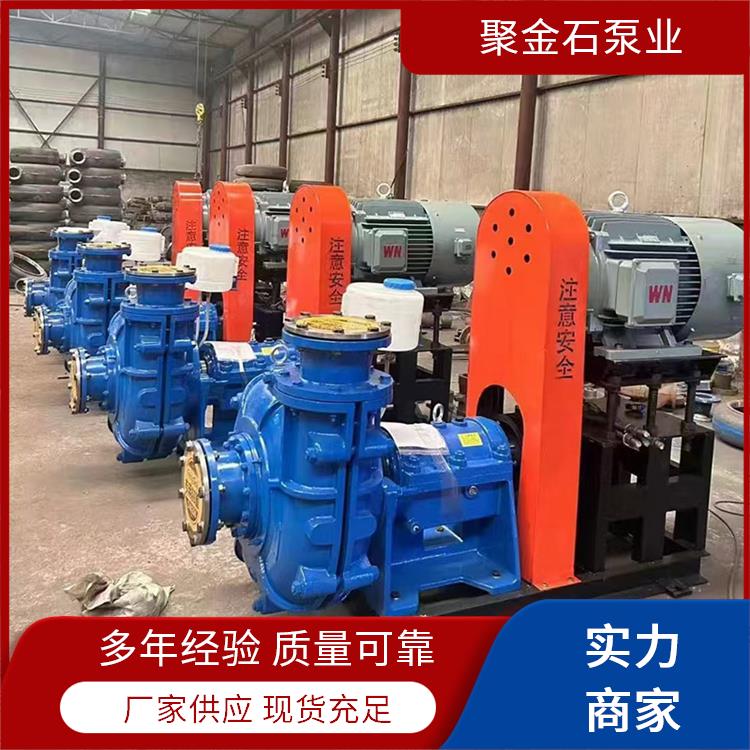
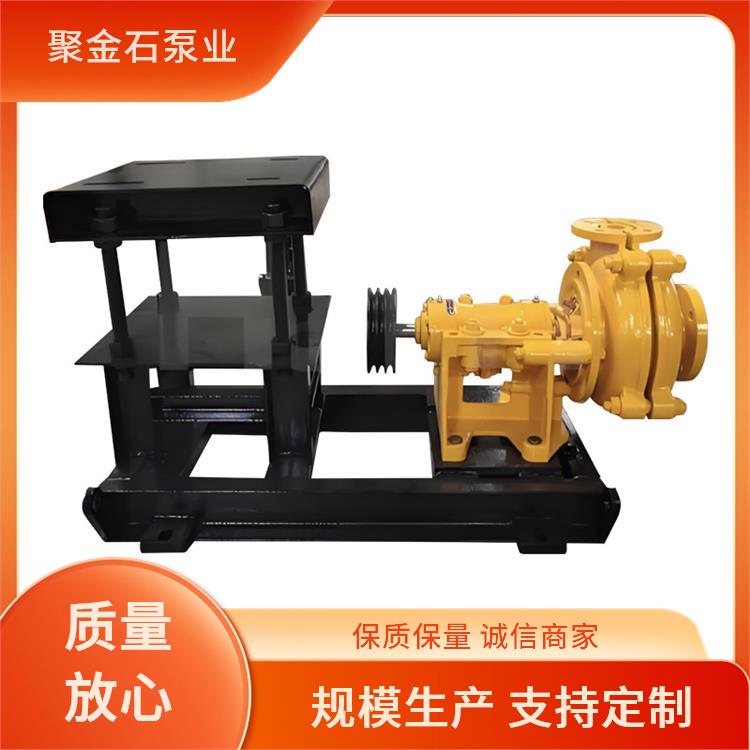
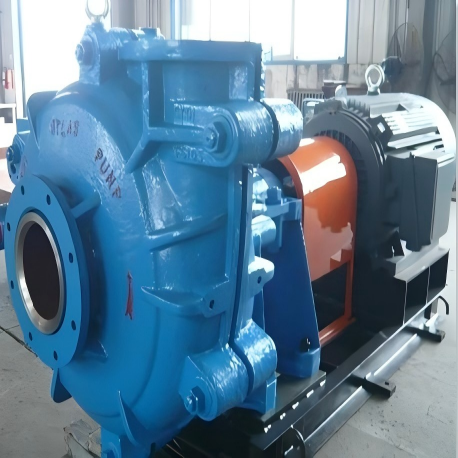
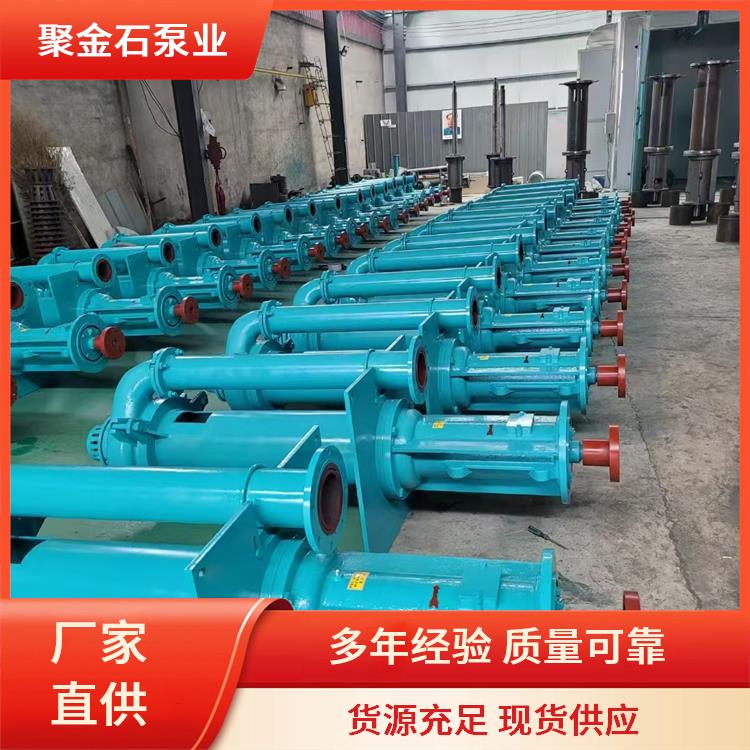
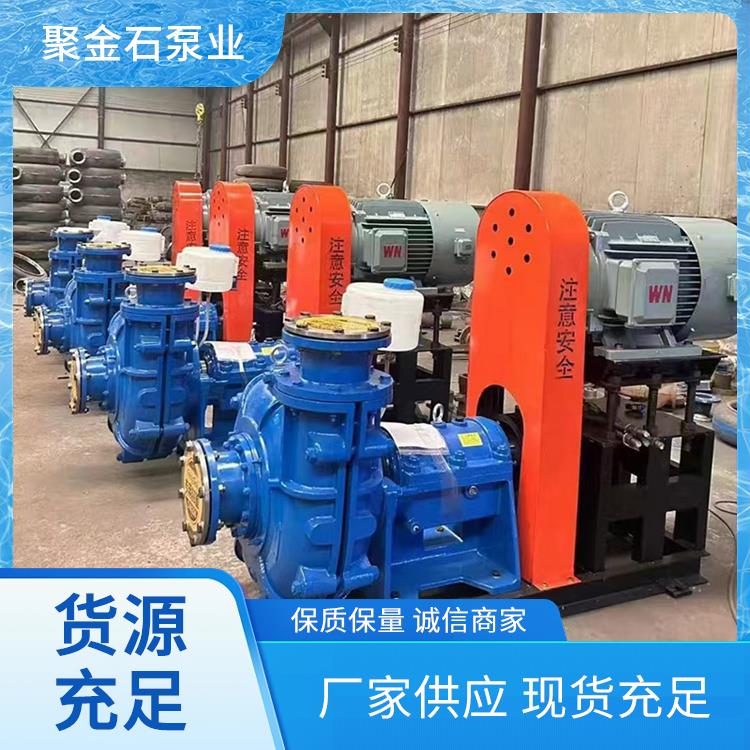
In principle, slurry pump belongs to a type of centrifugal pump, which is mainly used in steel enterprises for slurry transportation in systems such as converter dust removal water, blast furnace gas washing water, continuous casting turbid circulating water, and steel rolling turbid circulating water.
The commonly used slurry pump structures are as follows:
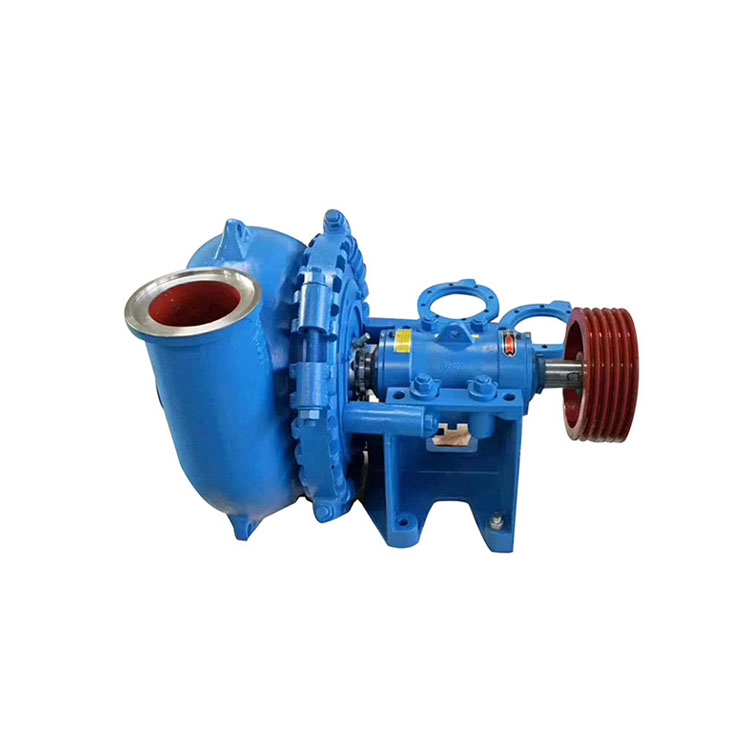
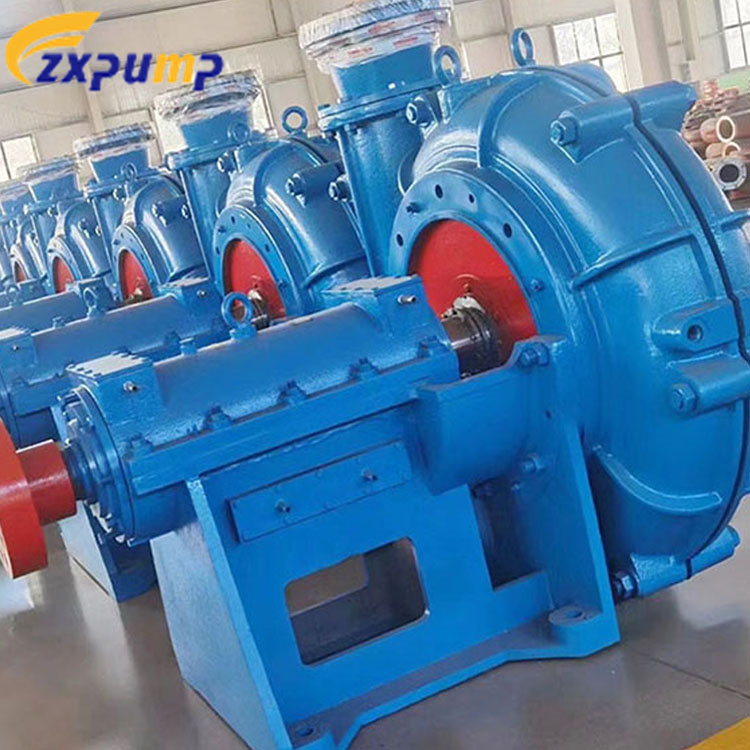
(1) Pump head architecture. The pump body adopts a double-layer pump casing (inner and outer double-layer metal structure), and the double pump casing shell structure is vertically split. The water outlet position can be installed and used at intervals of 45 degrees and rotated 8 different positions. To effectively prevent shaft seal leakage, a combination of power seals, packing seals, or mechanical seals is used. There is a labyrinth gap seal between the impeller and the rear guard plate, which greatly reduces the leakage of slurry to the packing box and effectively ensures the reliability of the seal. The impeller is equipped with back blades to timely discharge the backflow slurry, thereby increasing the volume ratio, reducing backflow and erosion, and improving the service life of overcurrent components. For the convenience of maintenance and disassembly, a disassembly ring is provided to avoid cutting the shaft due to inability to disassemble.
(2) Bracket structure. The bracket structure is a horizontal open type, which has been optimized in terms of hydraulic and structural design to extend the service life of the bearings. Reasonable distribution of radial and axial forces, and correct selection of bearing form, model, cooling and lubrication methods, have been achieved to meet the requirements of low heat generation and high service life of bearings.
(3) Shaft seal form. The shaft sealing device plays a sealing role between the pump body and the pump shaft. It can prevent air from entering the pump and prevent a large amount of water from leaking out of the pump. The sealing form of centrifugal slurry pumps usually adopts a secondary impeller with packing seal. The secondary impeller with packing seal is a fluid dynamic seal, which relies on the pressure head generated by the secondary impeller to resist the leakage of liquid at the outlet of the impeller. At the same time, the impeller cover plate is used to install a back blade with water seal ring and packing to prevent air from entering. The back blade and water seal ring are also used to reduce the pressure at the packing, which has the effect of preventing impurities from entering the seal.
The following checks should be carried out during the installation of slurry pumps:
(1) The size, position, and elevation of the foundation should meet the design requirements, and the anchor bolts must be properly and correctly fixed in the concrete foundation. The machine should not have missing parts, damage, or rust;
(2) According to the characteristics of the medium conveyed by the slurry pump, it is necessary to check the materials of the main components, shaft seals, and gaskets when necessary;
(3) The leveling and alignment of the slurry pump should comply with the technical specifications of the equipment. If there are no regulations, it should comply with the current standard "General Specification for Construction and Acceptance of Mechanical Equipment Installation Engineering";
(4) The installation of all pipelines and fittings connected to the slurry pump, as well as the cleaning requirements for lubricating oil pipelines, shall comply with the relevant standards.