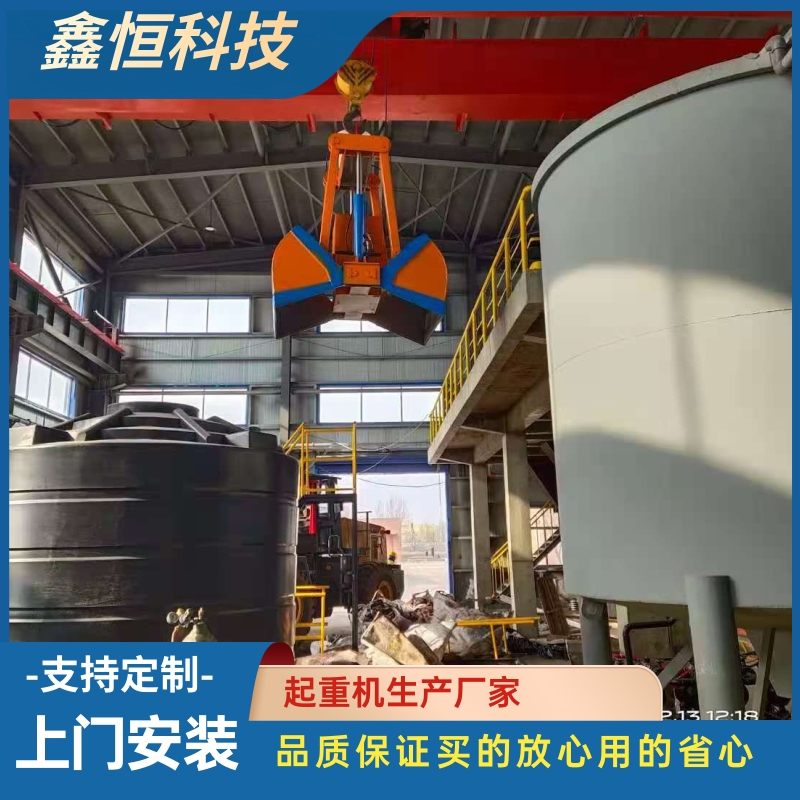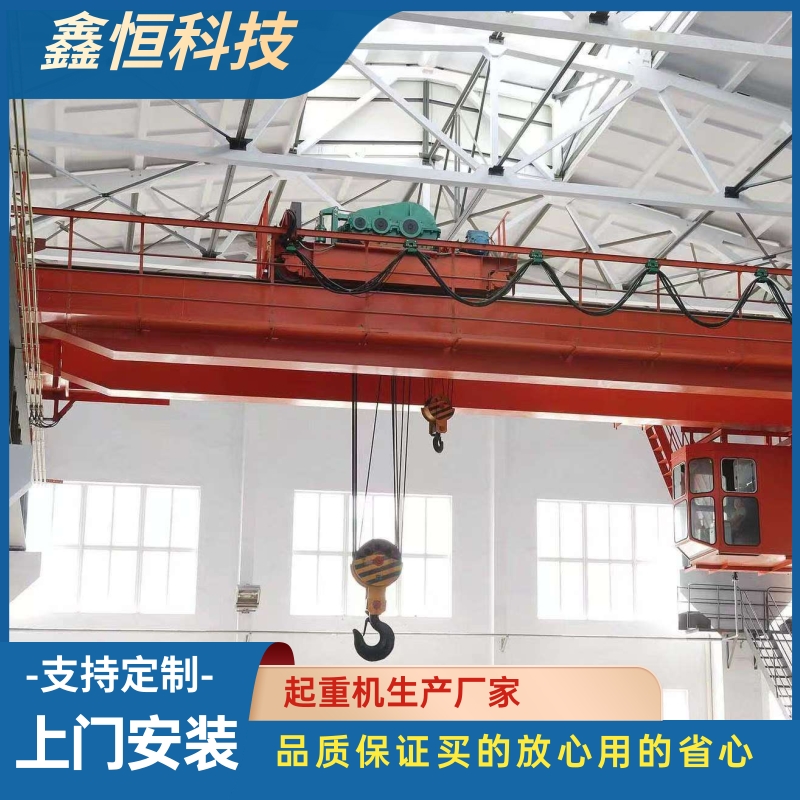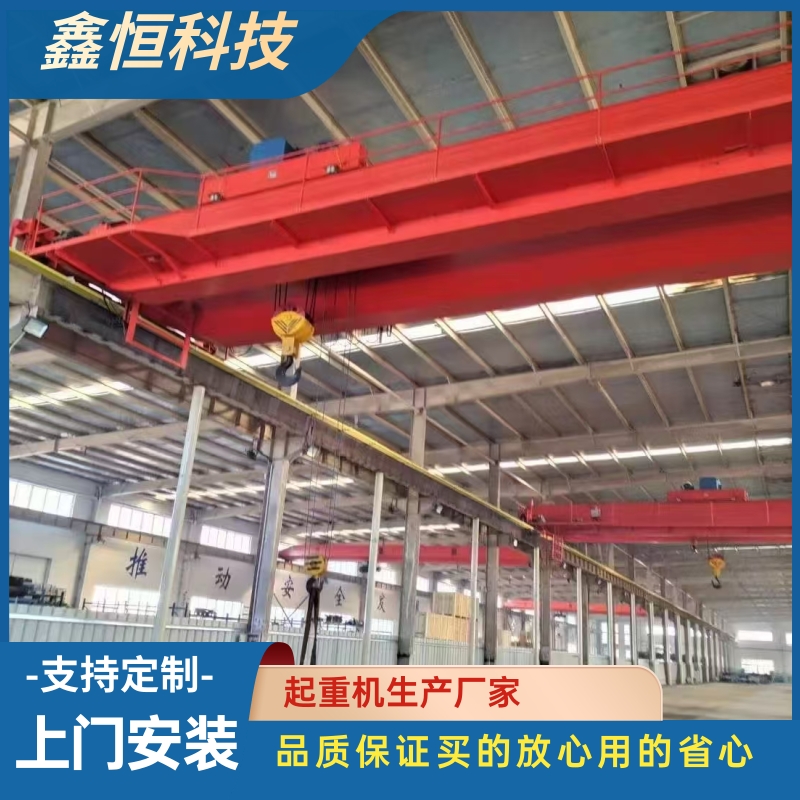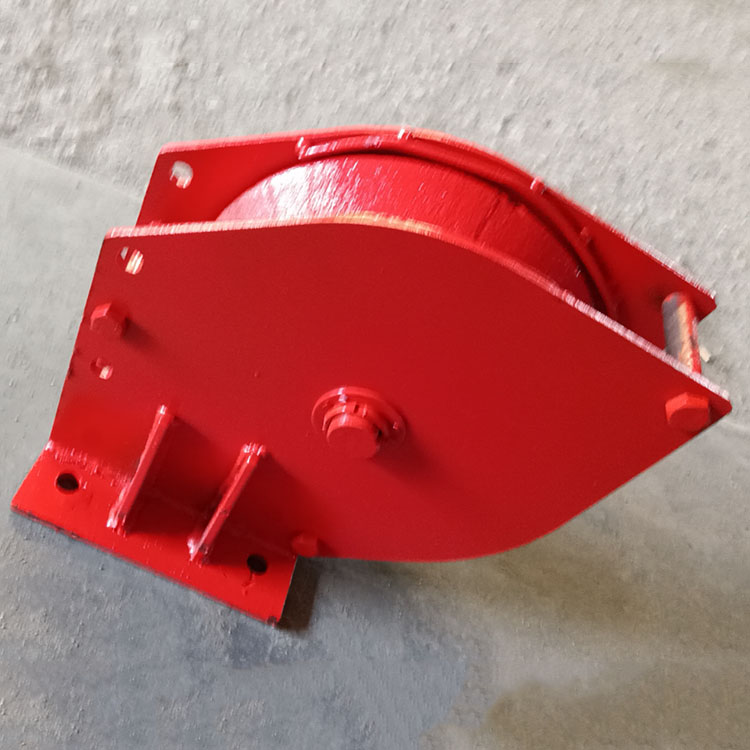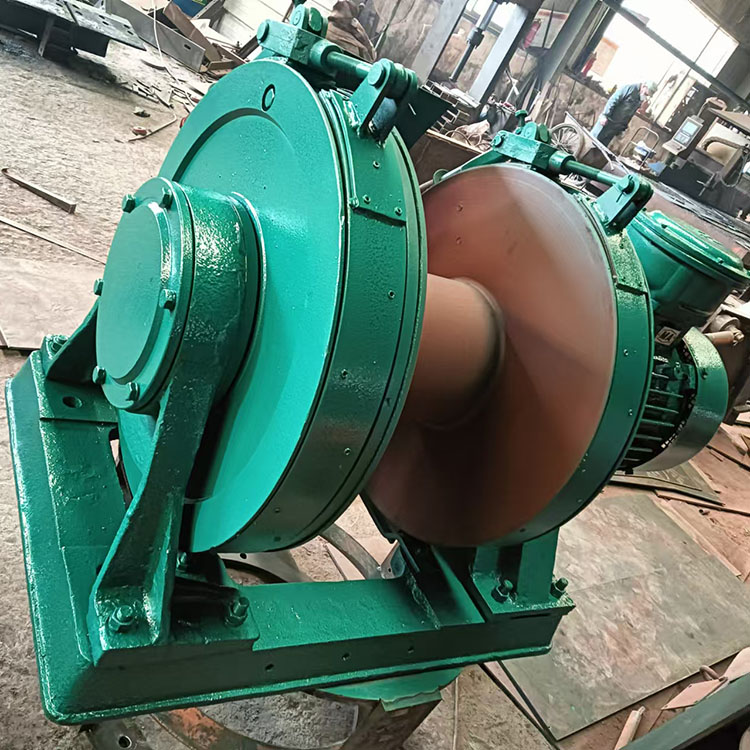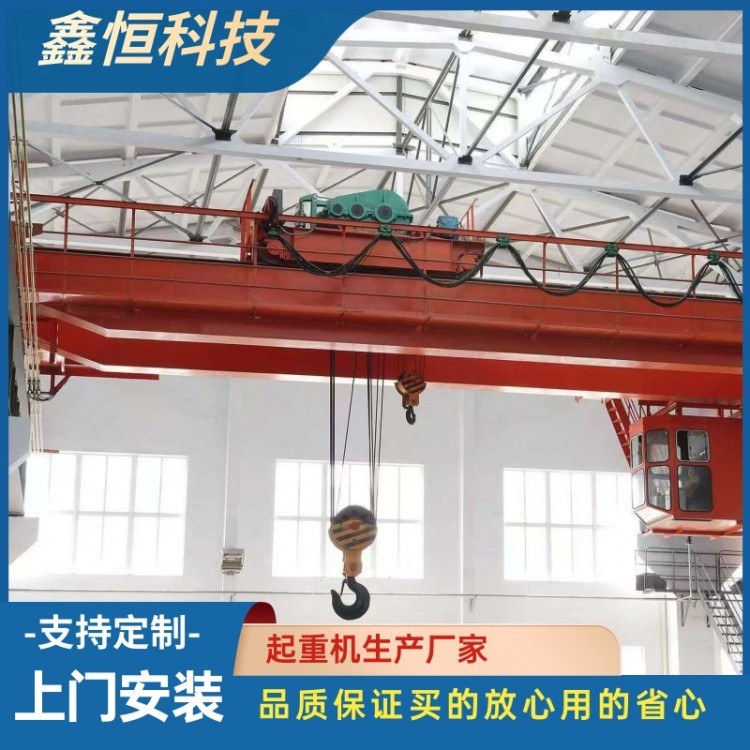
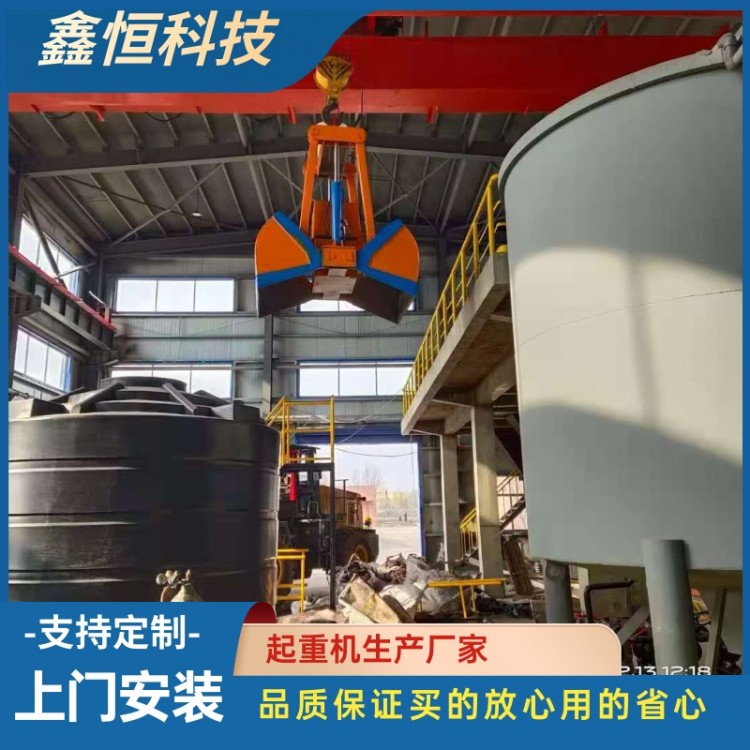


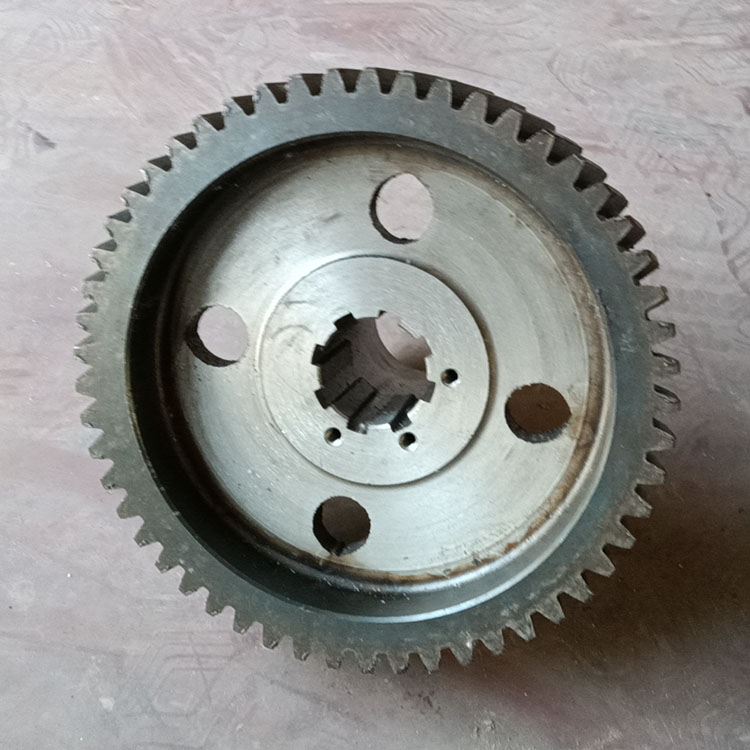
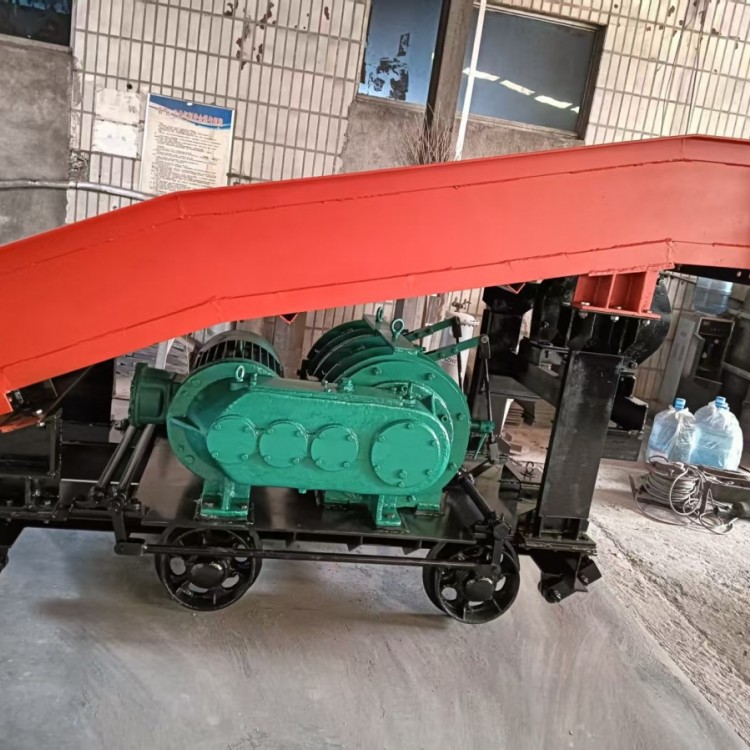





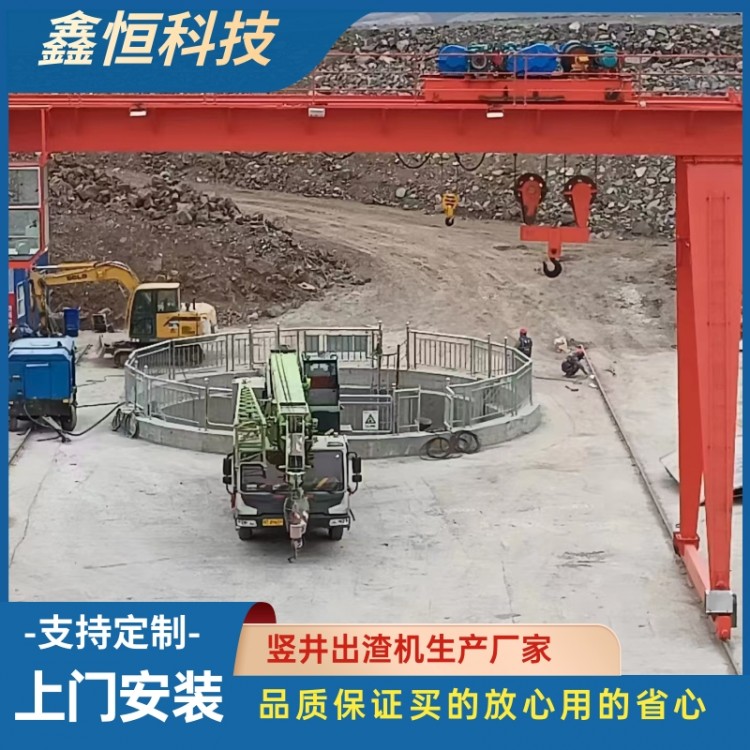
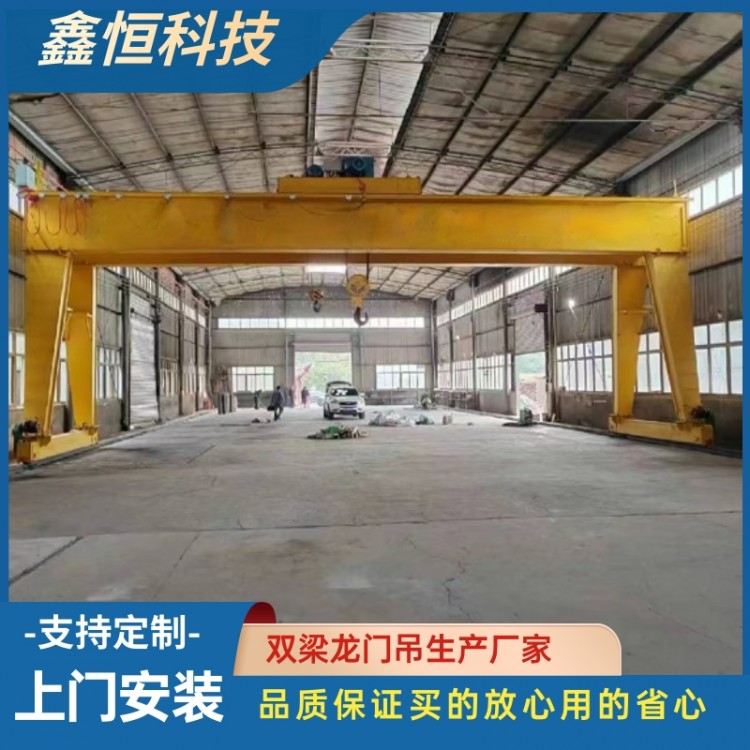
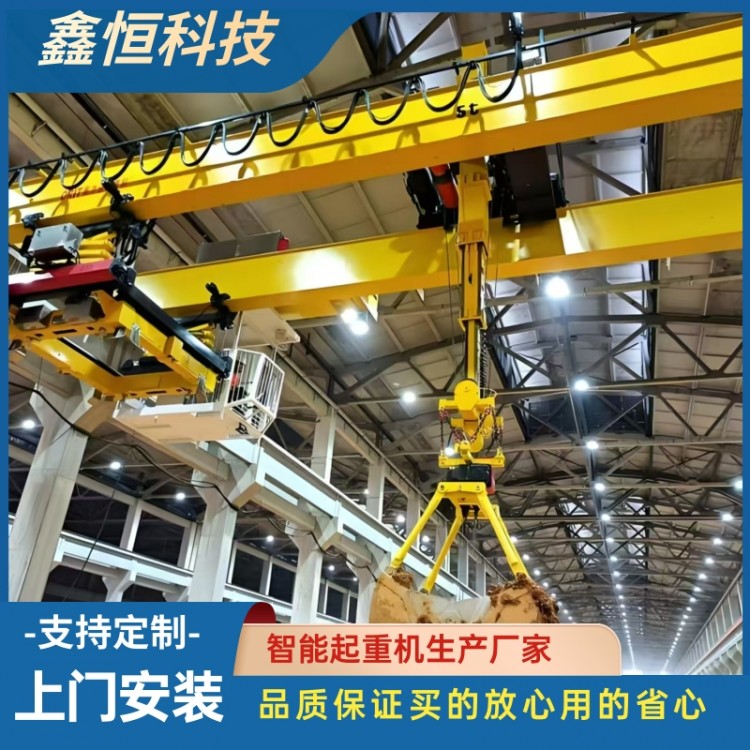

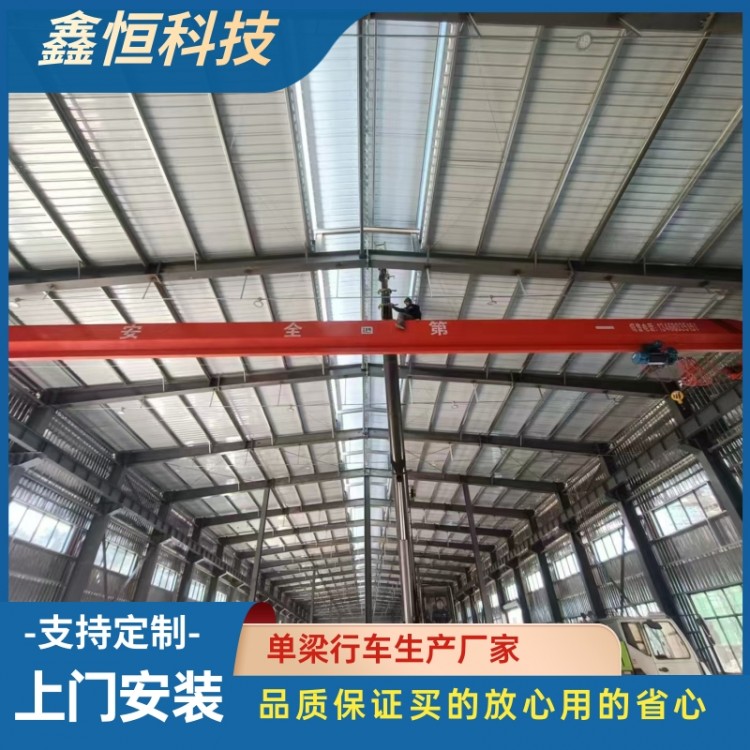
The double girder crane is versatile in its applications, operating primarily through three movements: the trolley's vertical and horizontal motion, and the lifting hook's lateral movement. The hoisting transmission system of the double girder crane: the lifting mechanism's power source is transmitted by the motor, reaching the high-speed shaft end of the reducer through a gear coupling, a compensating shaft, and a braking wheel coupling. After the motor rotates at high speed and is reduced to the required speed ratio by the reducer, the driving force is input and output from the slow-speed shaft of the reducer, transmitted to the drum assembly through the inner gear ring in the drum. This is then adjusted by galvanized wire rope and pulleys as the lifting hook to achieve the effect of adjusting the lifted object. The trolley running system's transmission system of the double girder crane: the driving force is transmitted by the motor, reaching the high-speed shaft end of the vertical reducer through a braking wheel coupling, a compensating shaft, and a half tooth coupling. After the motor rotates at high speed and is reduced to the required speed ratio by the vertical reducer, the slow-speed shaft of the reducer outputs, and the low-speed shaft connects to the car's rotating shaft through a half tooth coupling, a compensating shaft, and a half tooth coupling, thus driving the rotation of the trolley rotating shaft, achieving the effect of horizontal transportation of the lifted object. The trolley running system's transmission system of the double girder crane: the driving force is transmitted by the motor, reaching the high-speed shaft end of the reducer through a braking wheel coupling, a compensating shaft, and a half tooth coupling. After the motor's speed is reduced to the required rate by the reducer, the slow-speed shaft of the reducer outputs, and the low-speed shaft connects to the trolley's rotating shaft through a full tooth coupling, thus driving the rotation of the trolley rotating shaft, achieving the effect of vertically lifting the lifted object on the bridge.