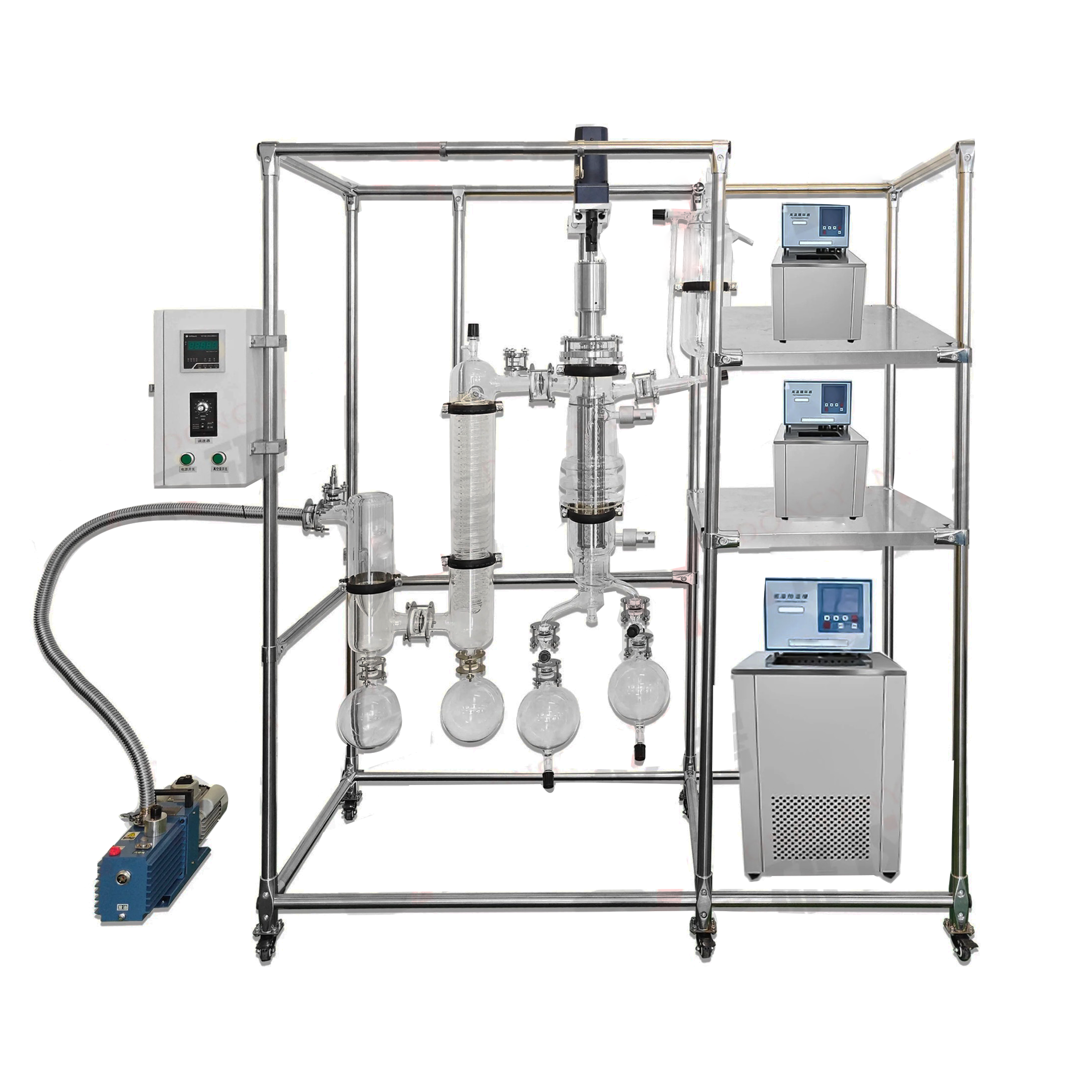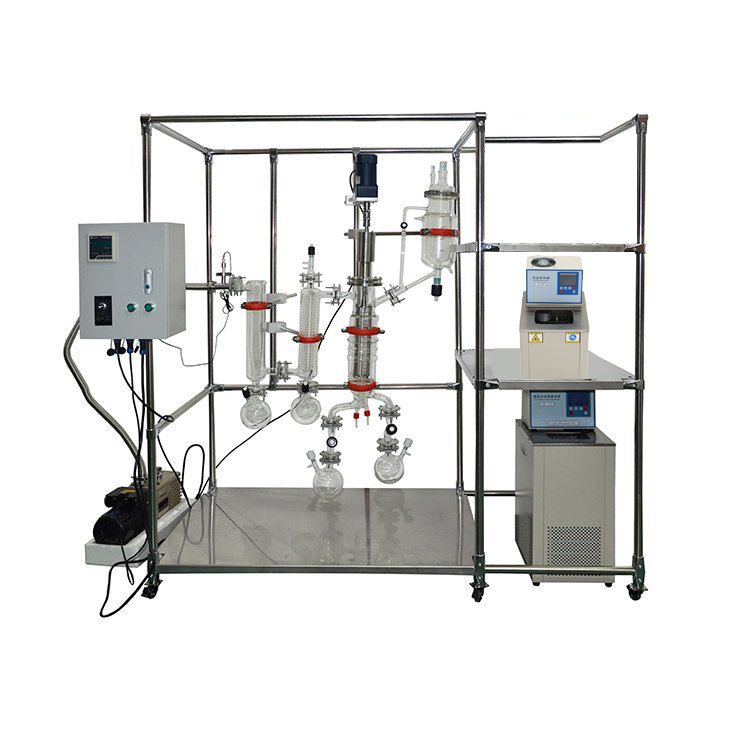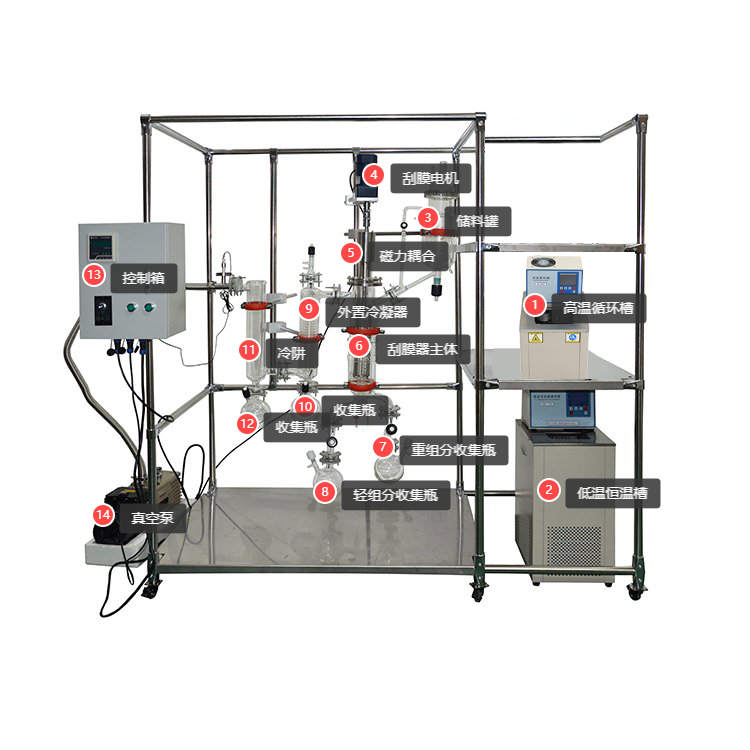


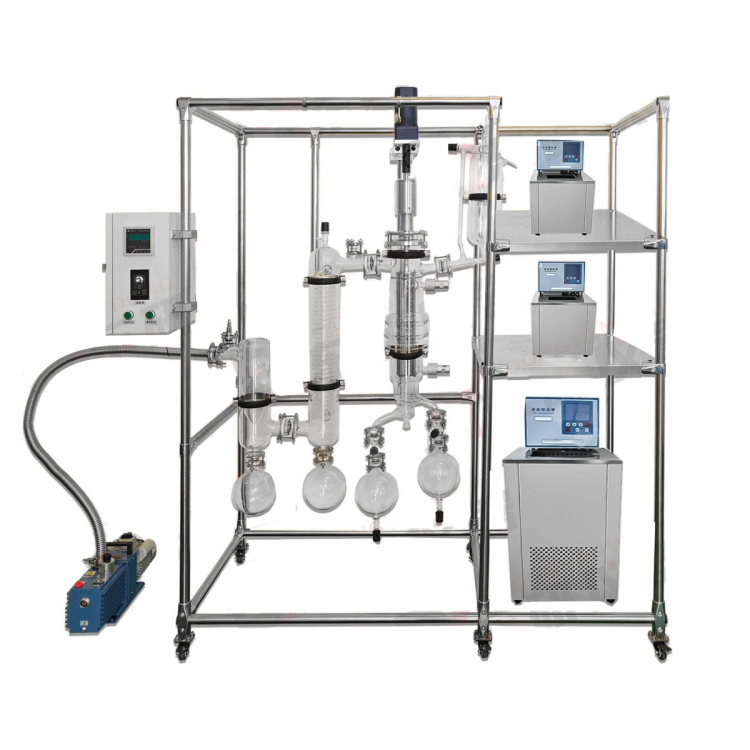
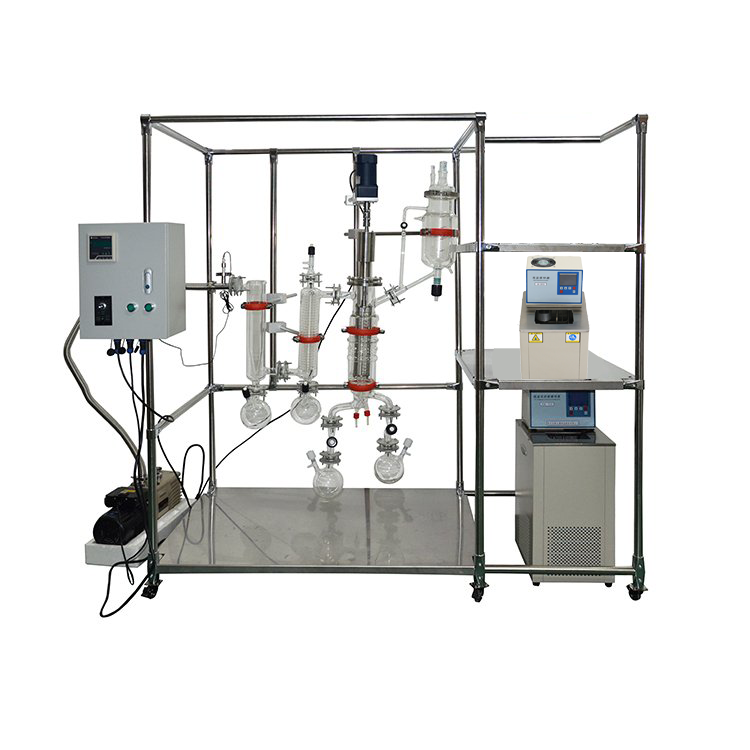









Product Description
Molecular distillation technology is a specialized liquid-liquid separation technique that emerged in the 1920s. It gradually rose to prominence as a result of the in-depth research on the theory of gas movement under vacuum conditions and the continuous advancement of vacuum distillation technology.
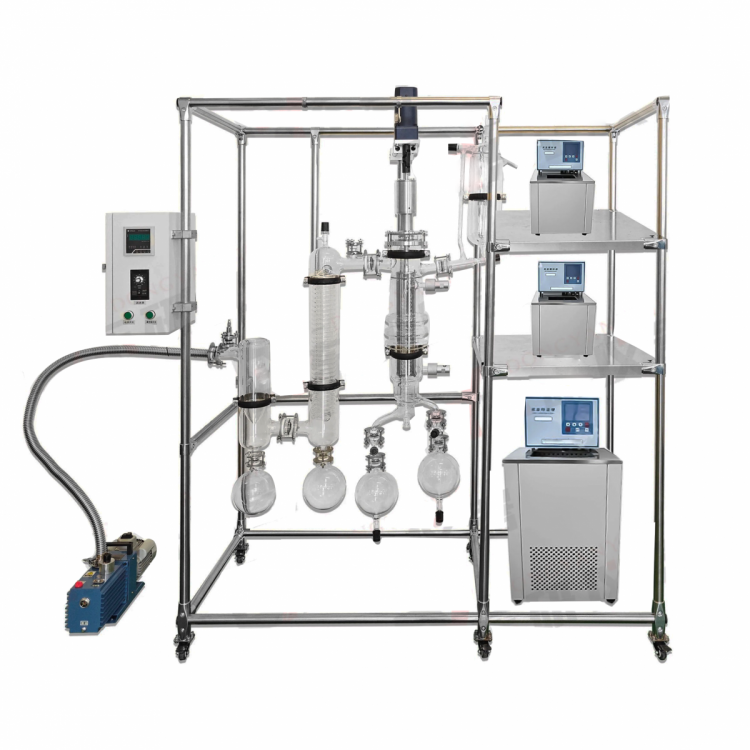
Currently, molecular distillation technology has become an important branch within separation techniques. Molecular distillation apparatus, also known as short-path distillation, is an instrument for a continuous distillation process conducted under high vacuum (residual gas pressure <0.1 Pa). The molecular distillation process differs from the traditional distillation process in the following aspects:
Traditional distillation involves separation at the boiling point temperature, where the evaporation and condensation processes are reversible, and a balance is formed between the liquid and vapor phases. Molecular distillation is an irreversible process that takes place at temperatures significantly away from the substance's normal atmospheric pressure boiling point. Specifically,
It is a process of molecular evaporation. (1) Average free path of molecular motion. Any molecule experiences a changing free path during its motion, and the average of the free paths within a certain short interval of time in a molecular distillation unit is defined as the average free path. Let Vm represent the average velocity of a molecule.
f is the collision frequency, λm is the mean free path. Then, λm = Vm/f, thus f = Vm/λm. (2) Separation Factor Langmuir studied the evaporation phenomenon of pure substances under high vacuum, theoretically deriving that the molecular evaporation rate of pure substances is compared to ordinary distillation.
The theoretical separation factor in molecular distillation has increased by a factor of (MB/MA)^(1/2), hence, molecular distillation technology can be employed to separate mixtures with similar volatilities but different molecular weights. (3) Basic Principle of Molecular Distillation. According to the formula for the average free path of molecular motion,
Different types of molecules have varying average free paths due to their differing effective diameters, meaning they are different types of molecules.
Application Fields
Refined Chemicals: Such as purification of essential oils, purification of polymer intermediates, and extraction of lanolin, etc.
Medical Field: Extracting natural vitamins, deriving derivatives of amino acids and glucose, etc.
Food Industry: Refined fish oil, oil de-acidification, refined high-carbon alcohols, separation of mixed oils, etc.
Other Fields: Oil Industry, Daily Chemicals, Environmental Protection, etc.
Key Features
Operate below the boiling point of the materials, with short residence times; beneficial for separating high-boiling, heat-sensitive, and easily oxidizable materials.
2. An effective method for removing substances from liquids, such as solvents and odors, particularly effective for desolventizing liquids after solvent extraction.
3. Optional distillation of volatile products, removal of other impurities; multi-stage separation can simultaneously separate two or more substances.
4. High vacuum distillation, vacuum level can reach below 0.1 Pa, achieving a high vacuum inside; typically, molecular distillation occurs under very low pressure.
Perform operations, thus the material is less prone to oxidation and damage.
5. The distillate film is thin, with good heat transfer, with a film thickness less than 0.5mm.
High separation degree, molecular distillation can separate conventional substances that are difficult to separate.
7. No boiling or bubbling occurs; molecular distillation is a free evaporation at the liquid surface, carried out under low pressure, with no dissolved air in the liquid, thus
During the distillation process, the entire liquid should not be allowed to boil, and there should be no bubbling.
8. Offer a variety of specifications for customer selection, suitable for small-scale and pilot experiments. Custom sizes with larger evaporation areas are available upon customer request.
9. Physical separation method, non-toxic, harmless, pollution-free, with no residues, yielding pure and safe products.
9. The scraper system is made of PTFE material and SS316L stainless steel, offering *corrosion-resistant properties.
10. The raw material tank can be optionally equipped with a preheating function, with adjustable preheating temperature.
11. Seals are made with fluorocarbon gaskets for excellent airtightness. If corrosion resistance is required, they can be replaced with PTFE material upon customer request.
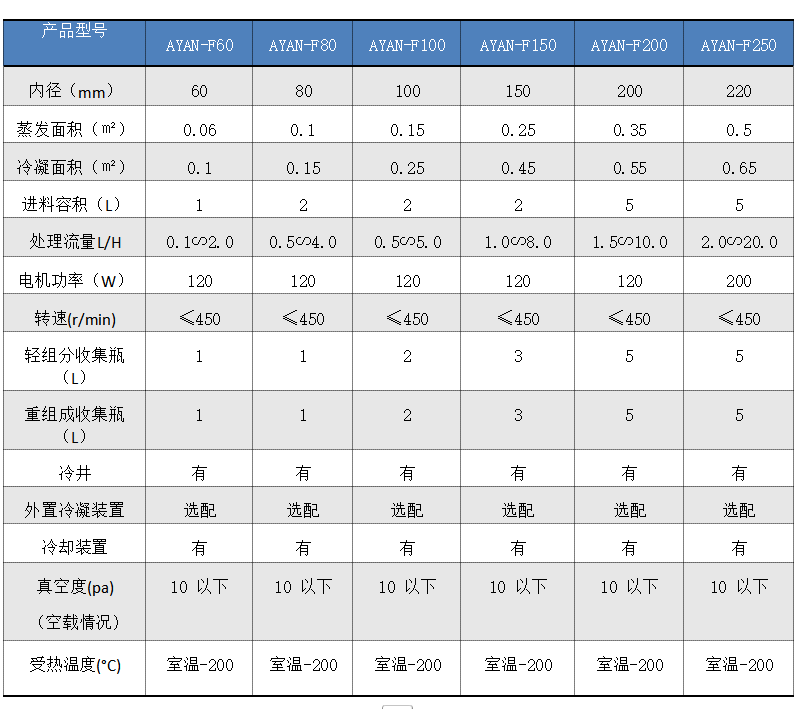
Product Specifications