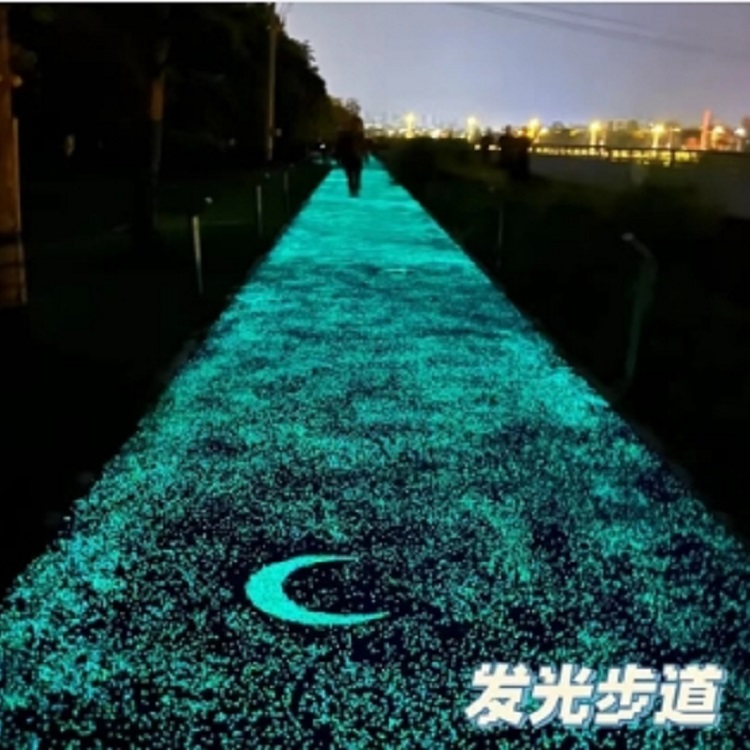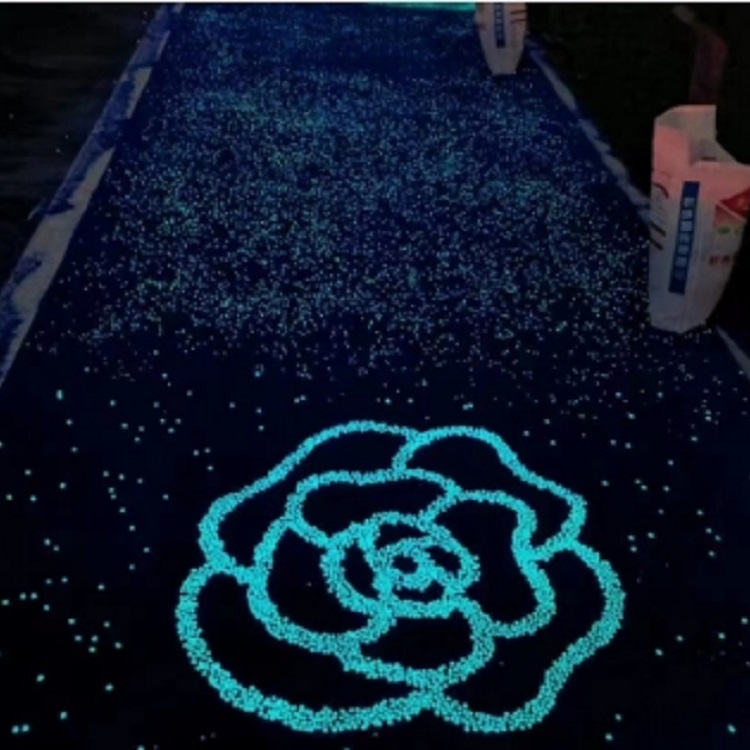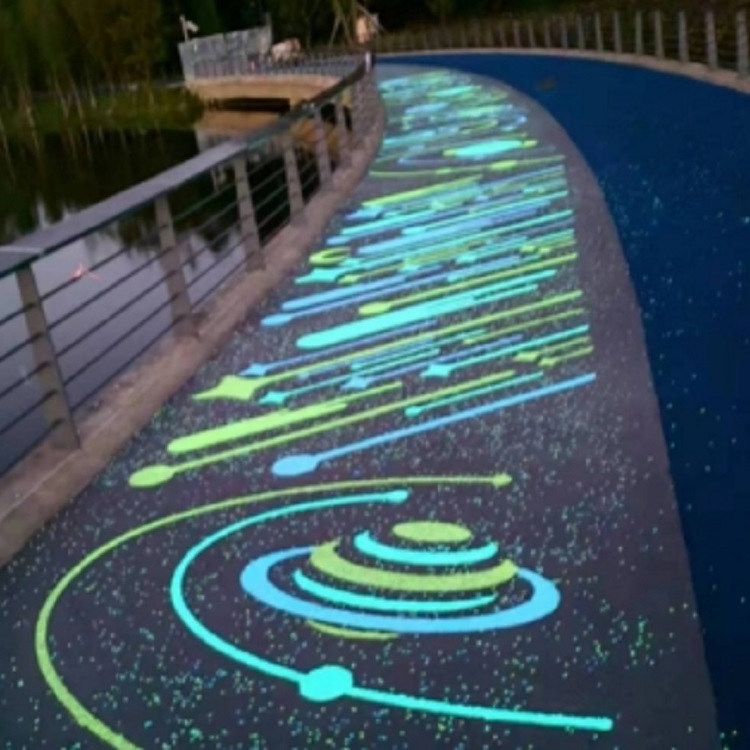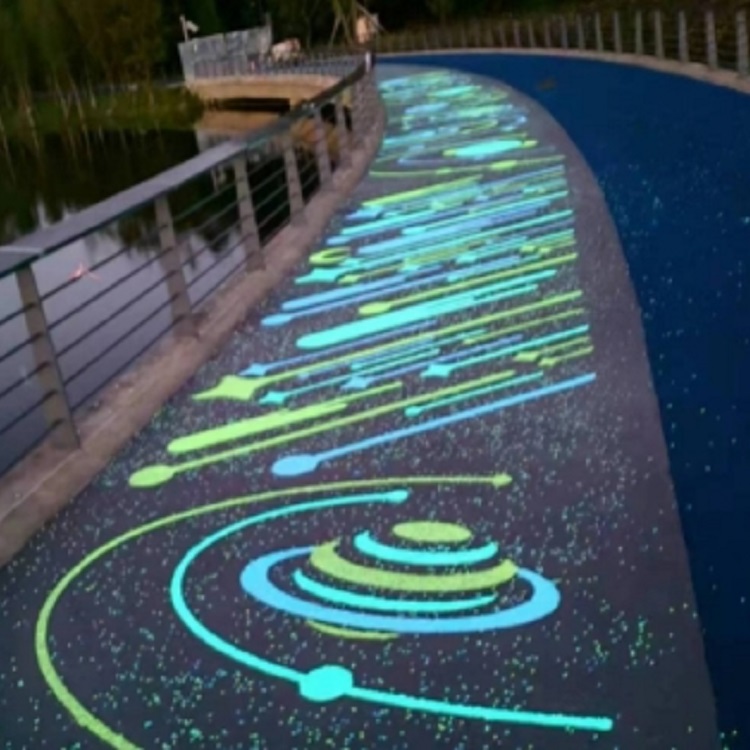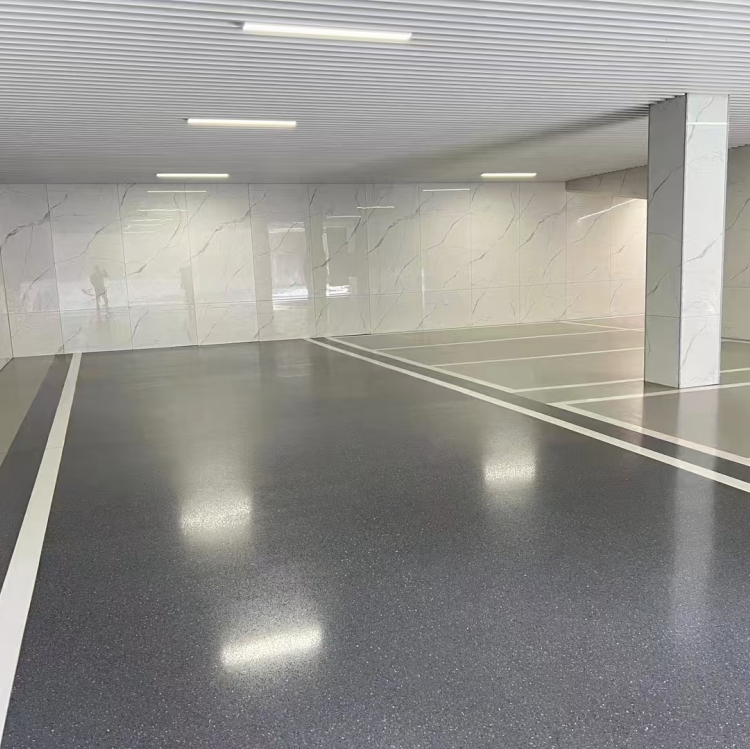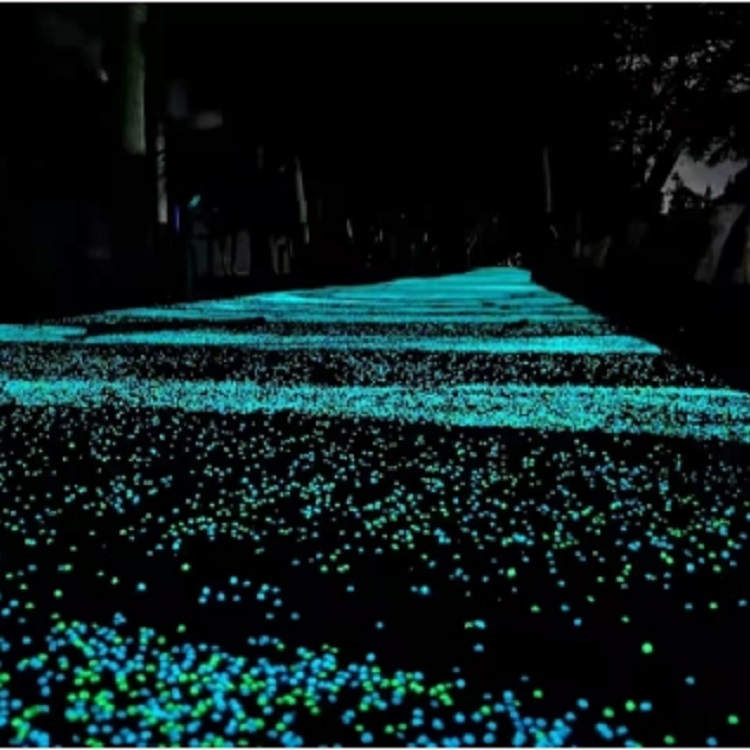

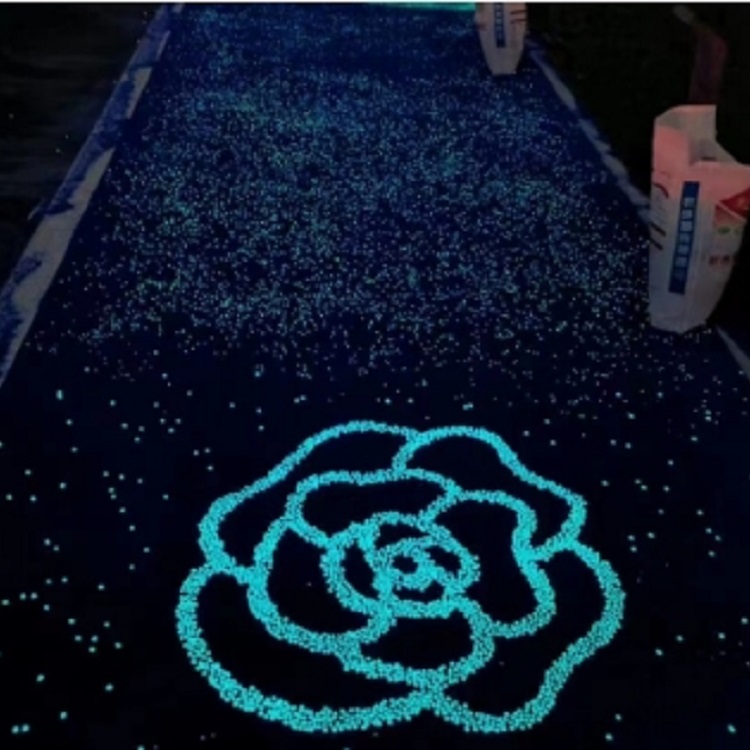
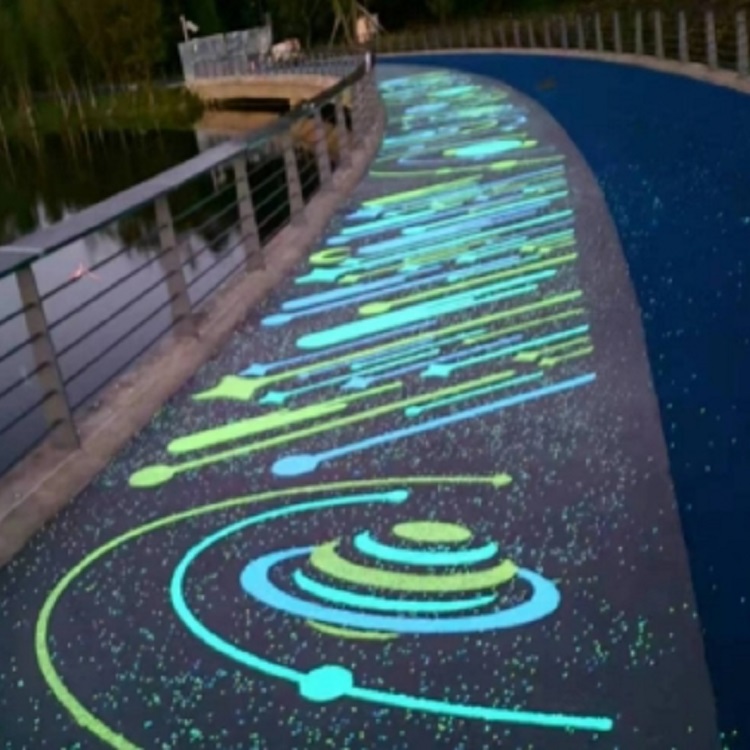









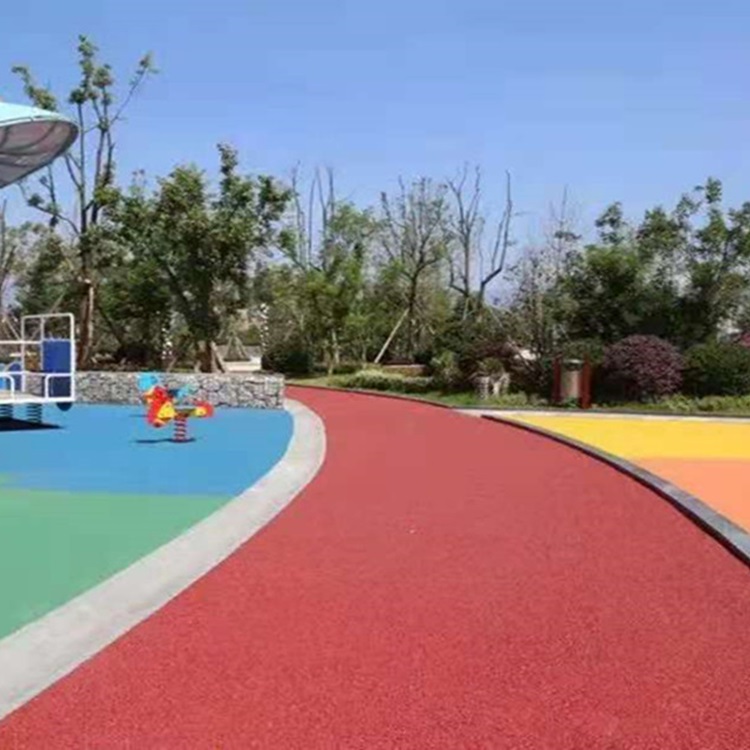



Night-vision ceramic granule pavement and luminescent ceramic granule pavement are two special types of pavements, both utilizing ceramic granules as the surface material to offer enhanced anti-slip, wear-resistant, and decorative effects. However, there are some distinctions between them, primarily evident in the luminescent effect.
Photoluminescent ceramic granule paving involves adding luminescent materials to ceramic granules, enabling them to emit light in the dark or at night. This type of paving typically absorbs sunlight or other light sources during the day and then releases the stored light as bright illumination at night. It offers excellent lighting effects and can create different atmospheres or directional cues through various colors and patterns.
Luminous ceramic granule road surfaces refer to road surfaces made from ceramic granules that can emit light on their own. These surfaces typically employ special light-emitting materials, such as fluorescent or phosphorescent materials, which can emit light after being stimulated. Unlike phosphorescent ceramic granule road surfaces, luminous ceramic granule road surfaces do not require absorption of external light; they provide illumination or guidance through their inherent light-emitting effect.
In summary, both luminous ceramic granular road surfaces and self-luminous ceramic granular road surfaces are innovative types of road materials, offering good anti-slip, wear-resistant, and decorative properties. They also provide additional lighting or directional functions through their luminous effects. However, their principle of luminescence and application scenarios vary slightly, so the appropriate materials and construction methods should be chosen based on specific requirements.