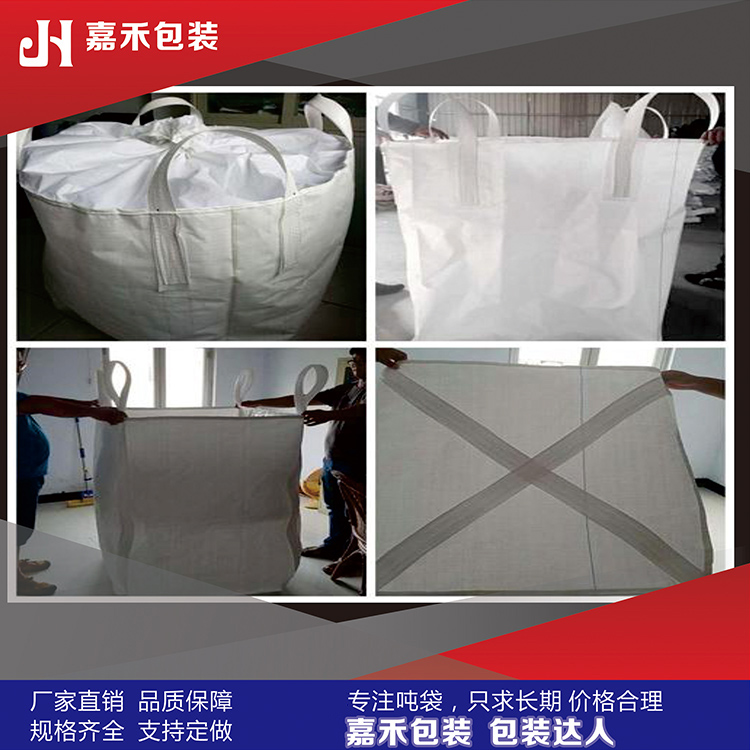

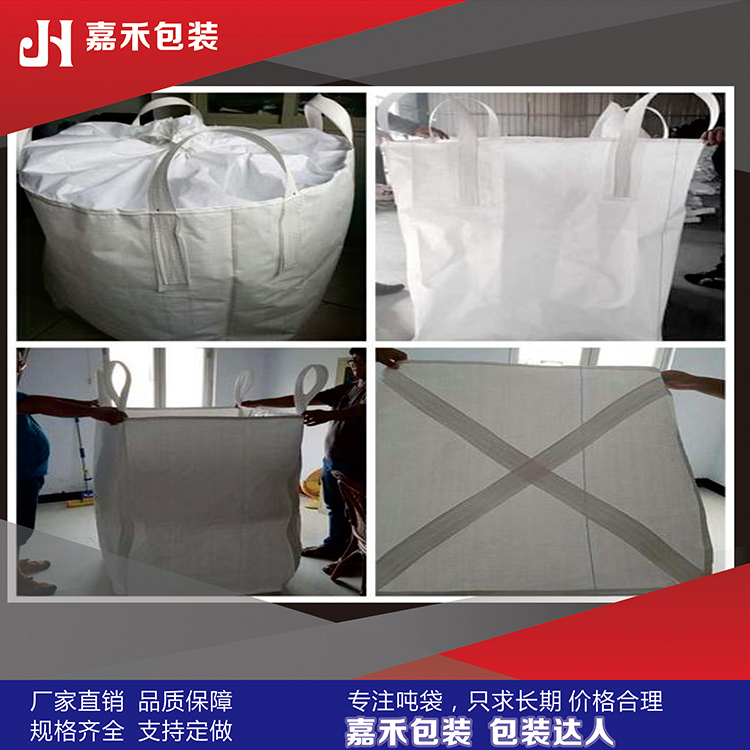

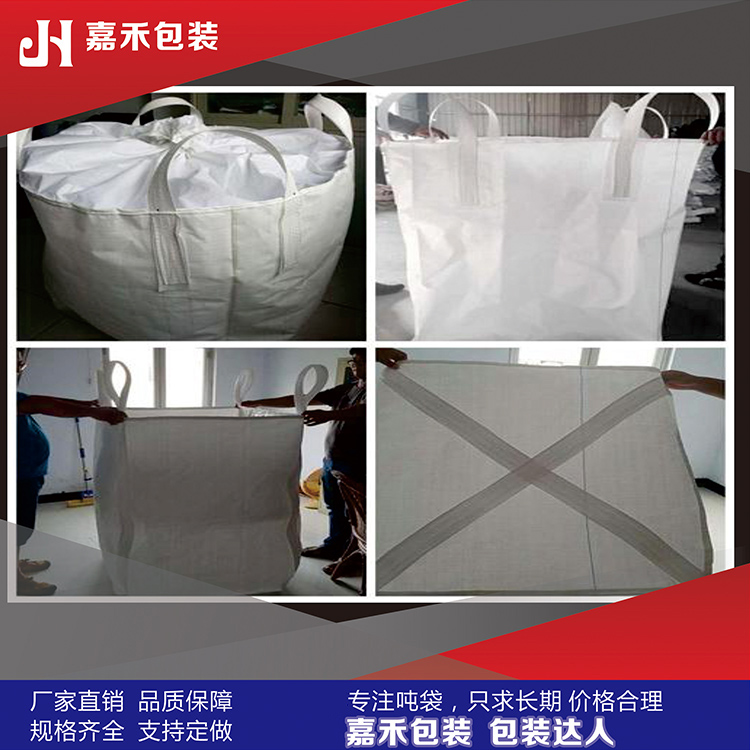
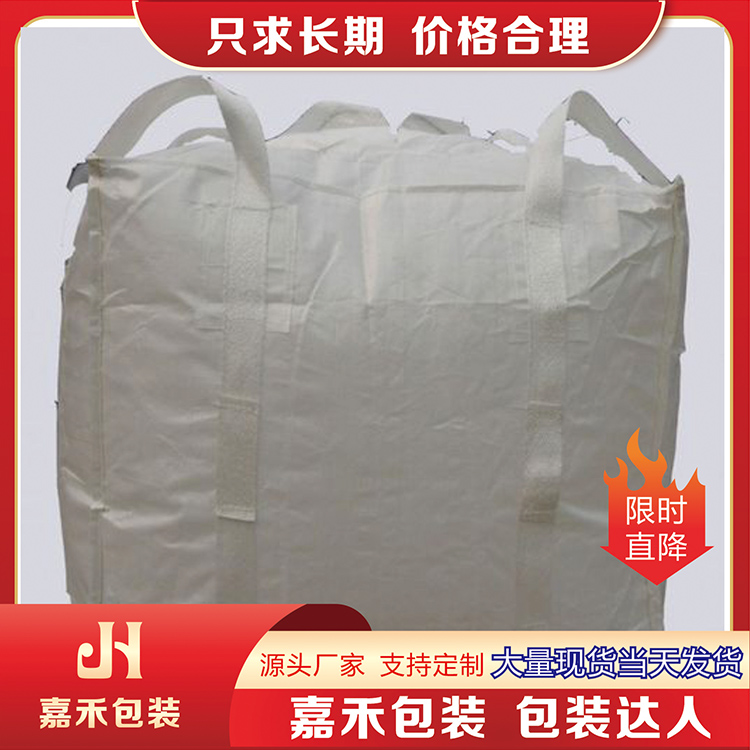
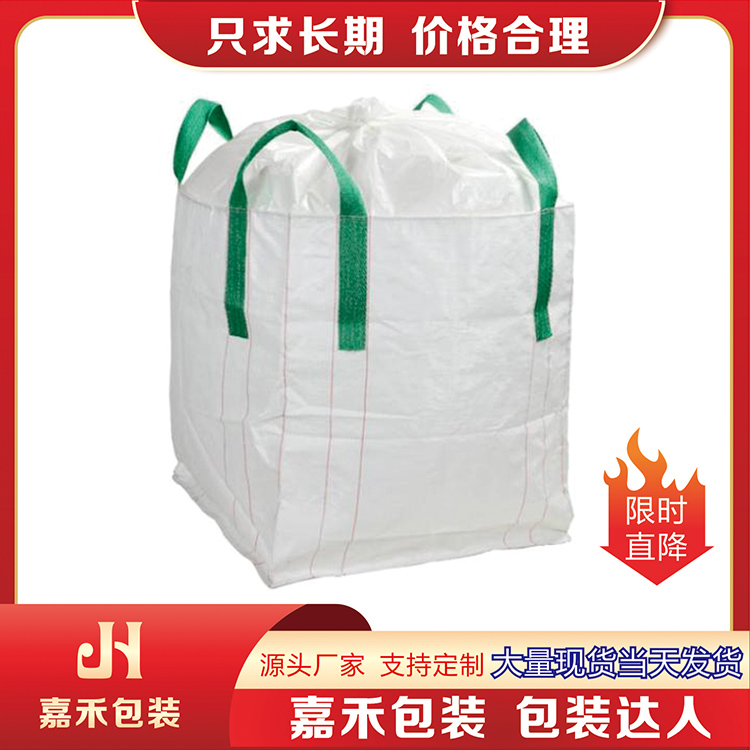









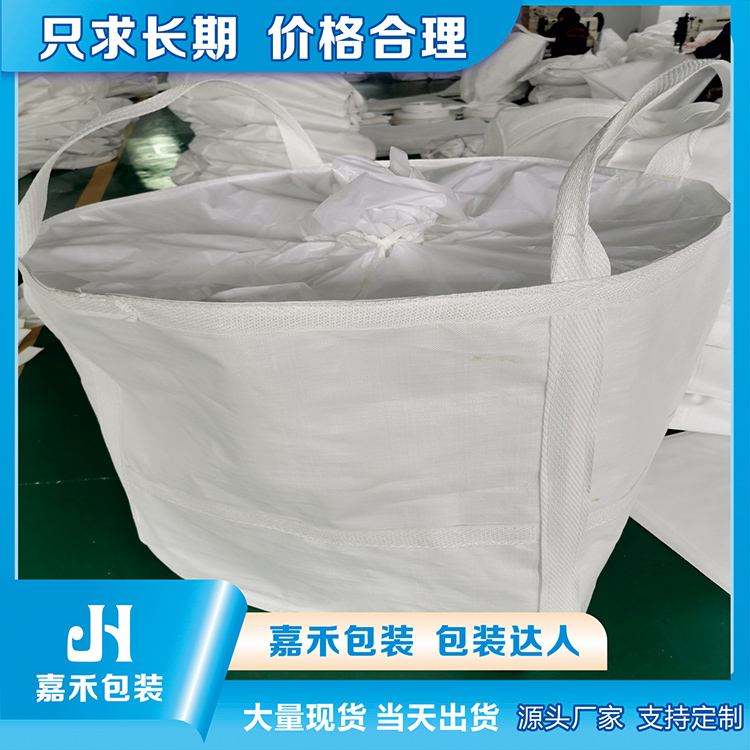
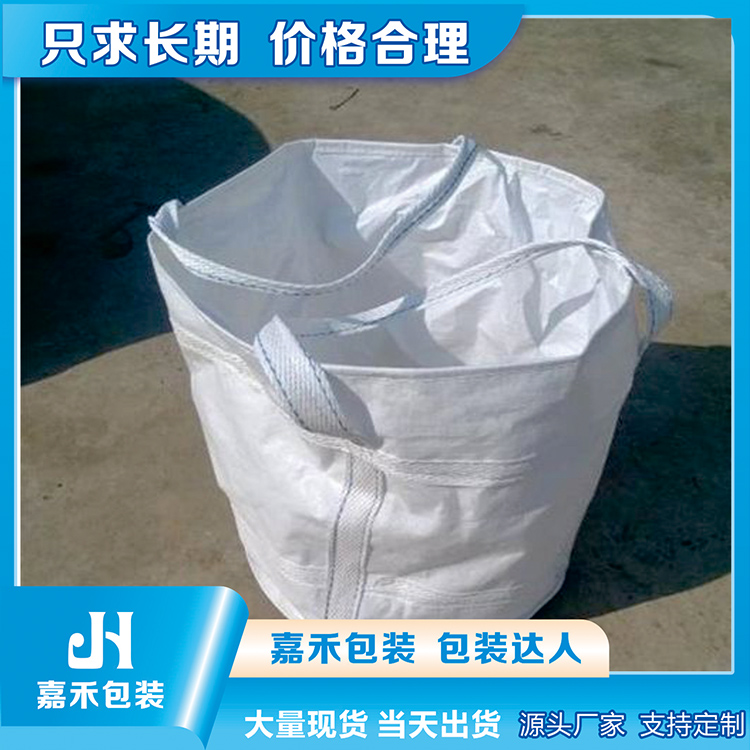
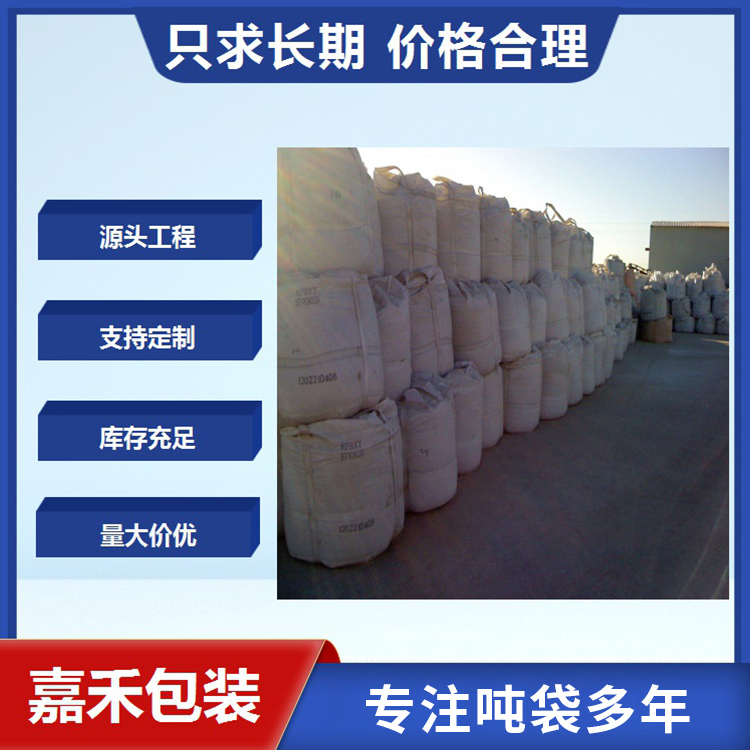

Description:Tonnage bags are convenient for transporting bulk powdery materials, featuring large capacity, light weight, and ease of handling. They are one of the common packaging materials. Their characteristics include simple structure, low self-weight, foldability, minimal space when empty, and low cost.
Tonnage bag manufacturing process
Jute bags are made primarily from polypropylene, mixed with a small amount of stabilizing additives, then melted and extruded into plastic film by an extruder. The film is cut into fibers, stretched, and heat-set to form high-strength, low-elongation PP raw fibers. These fibers are then woven and coated to create the base fabric for plastic burlap. After being sewn with straps and other accessories, they are assembled into ton bags.
Performance Parameters
Reusability Type: Reusable/Single-Use
Shape: Square/Rectangular
Lifting Methods: Top Lifting/Side Lifting/Bottom Lifting
Inlet: With/Without inlet (large opening/waterproof cover)
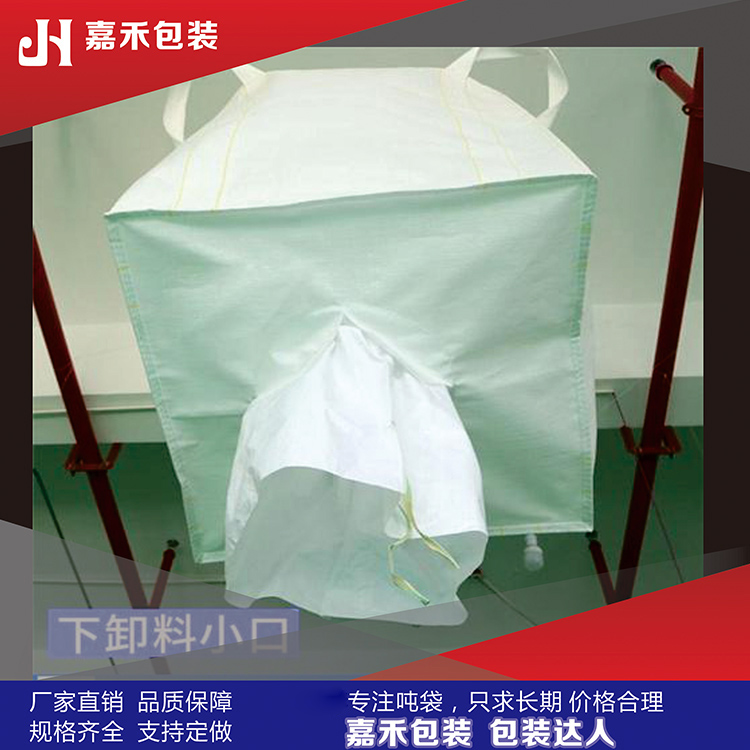
Material outlet: With material outlet / Without material outlet
Raw Material: Polypropylene (PP)
Load Capacity: 0.3-2 tons
Caution for use of ton bags:
Do not stand under the container bags during lifting operations.
2. Please hang the hook on the designated area of the sling or rope, avoid tilting or single-side suspension when hoisting the container bag.
3. Avoid friction, snagging, or collision with other items during handling, and keep away from the container bags.
4. Do not pull the straps outward in a reverse direction.
5. When using forklifts to handle bulk bags, please avoid the forks coming into contact or piercing the bag body to prevent puncturing the bag.
6. During handling in the workshop, try to use pallets and avoid lifting bulk bags with hooks, which can cause swinging and movement during transport.
Keep the bags standing upright during loading, unloading, and stacking.
Do not stand the container bags upright.
9. Do not drag the bulk bags across the ground or concrete.
10. When storage outdoors is unavoidable, the bulk bags should be placed on shelves and must be securely covered with opaque tarpaulins.
11. After use, wrap the container bag with paper or opaque tarpaulin and store it in a well-ventilated area.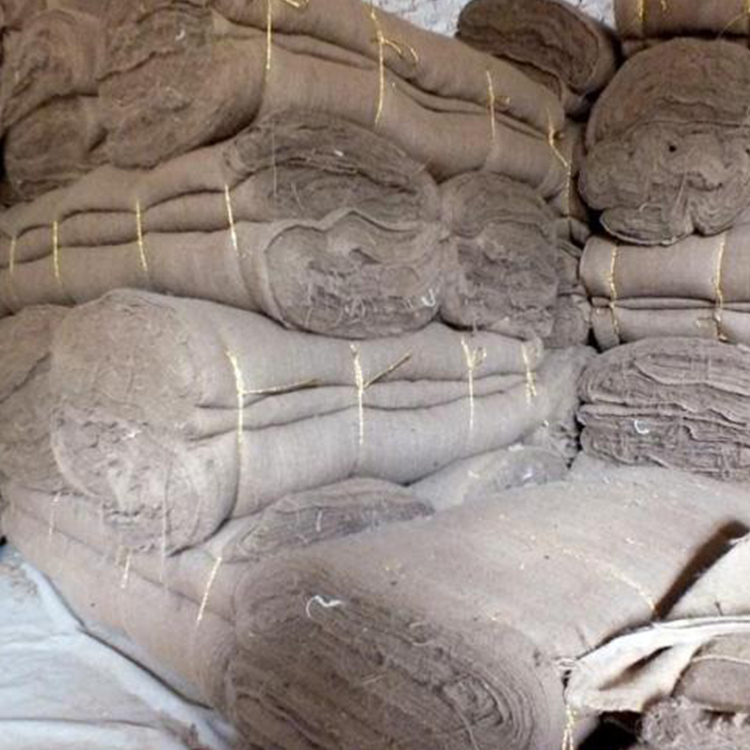
Features of ton bags
Features
1. The capacity of the container bags ranges from 0.5 to 3T, with a volume between 500 and 2300L. The safety factor can be designed as 3:1, 5:1, or 6:1 according to customer requirements.
2. Goods are categorized into bulk cargo bags and small package cargo bags based on content, suitable for single-use and reusable applications.
3. Container bags are categorized into three shapes: round, square, and U-shaped.
4. Lifting structures include overhead, side, and underlift types, typically featuring infeed and outfeed openings.
Performance
Reusable/Single-use
Shape: Square/Rectangle
Lifting Method: Top lifting/Side lifting/Bottom lifting. Material Inlet: With material inlet/Without material inlet (large opening/waterproof cover). Material Outlet: With outlet/Without outlet.
Tonnage bags are primarily used for packaging large, solid, granular, or powdered items. To assess the quality of a tonnage bag, it's advisable to test it with the product the user needs to carry. There are various types of tonnage bags, depending on the product. The materials used in tonnage bags also vary. Bags made from multi-layer composite materials may contain hazardous items, such as calcium carbide. The bag body consists of three layers: the outer layer is a laminated plastic woven fabric, the inner layer is a polyethylene film, and the middle layer is made up of four or five layers of material, which are composite materials suitable for packaging calcium carbide.
Our company, guided by the business philosophy of "credibility as the sky, sincerity as the root," offers warm and excellent service, ensuring customer satisfaction. We tirelessly strive to create greater social value and build a brighter future for our enterprise!