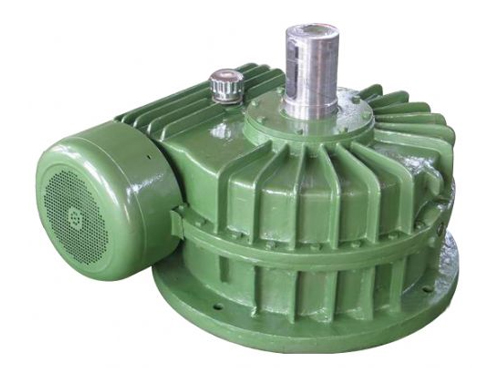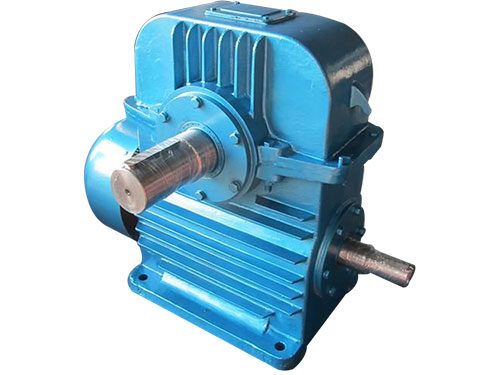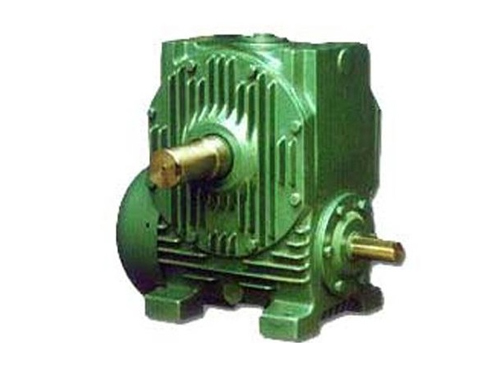

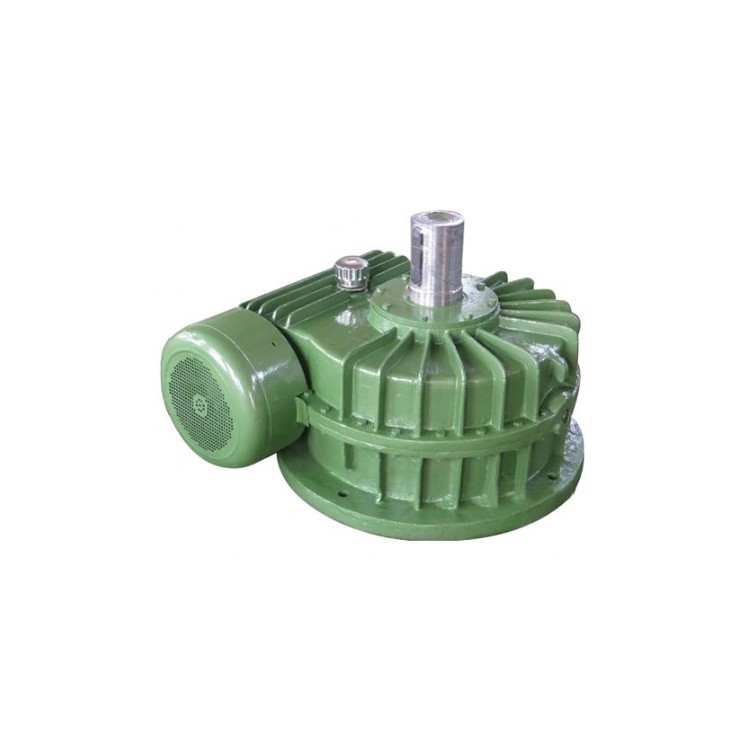

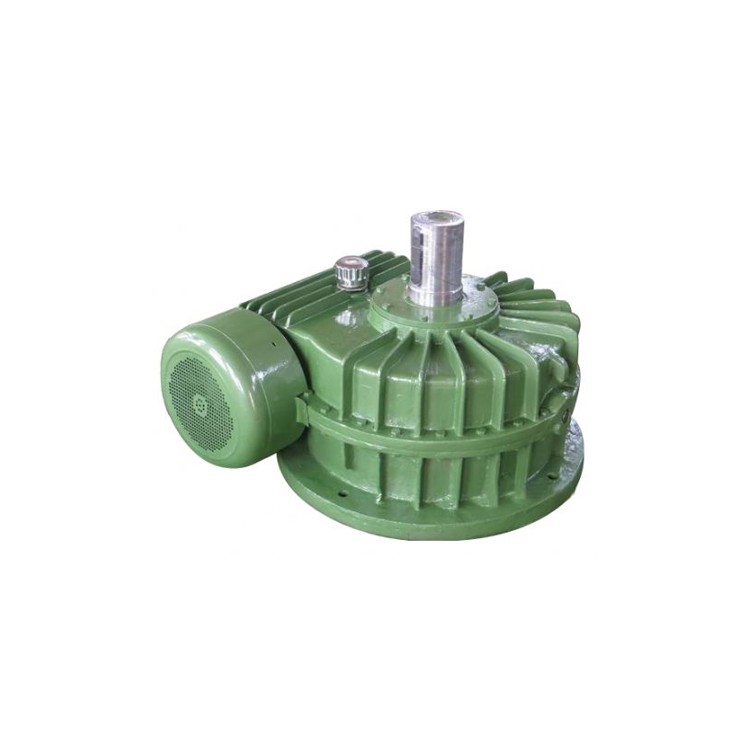
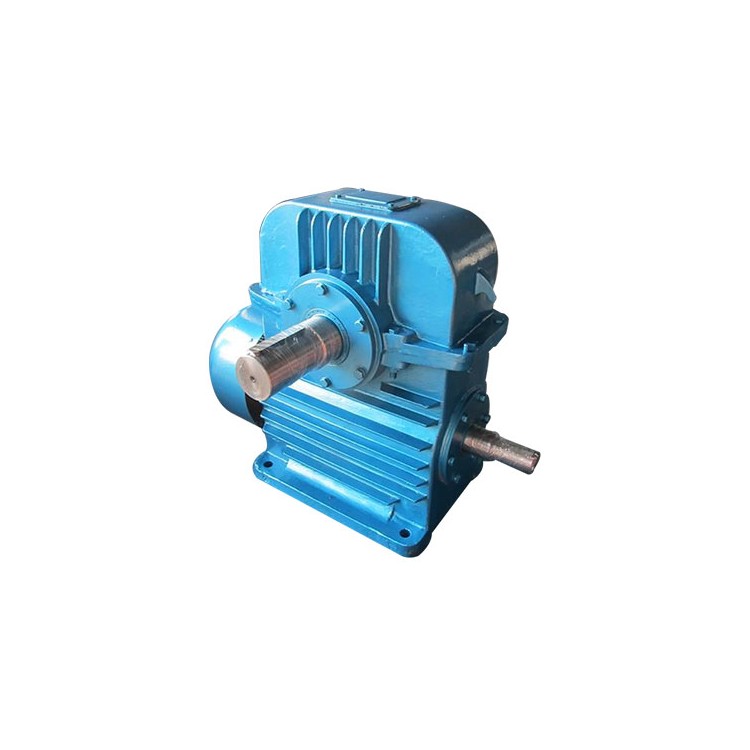
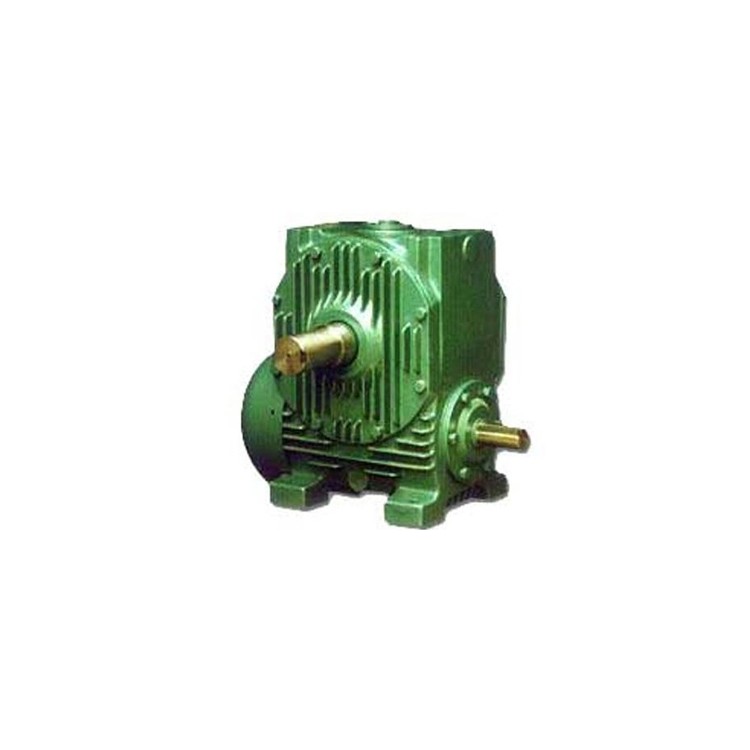







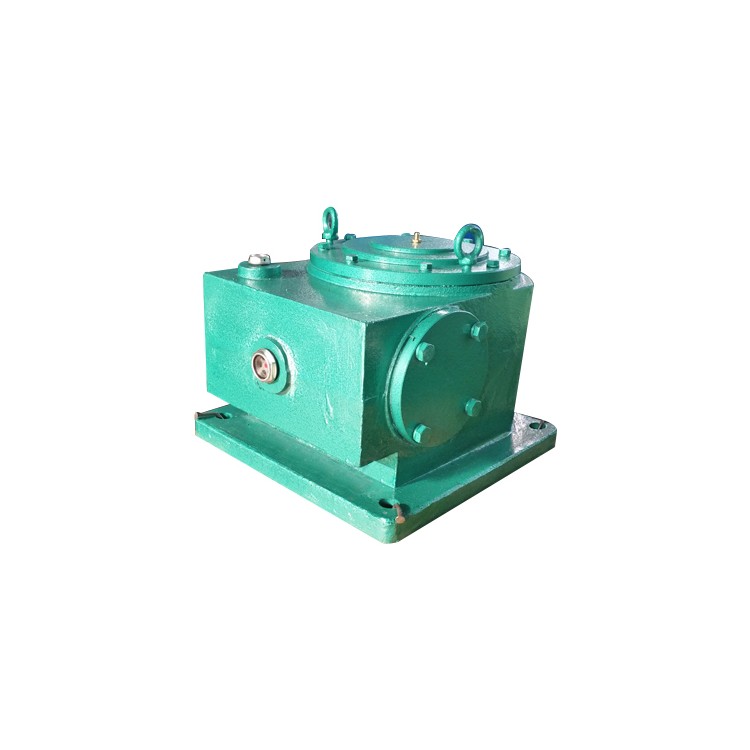
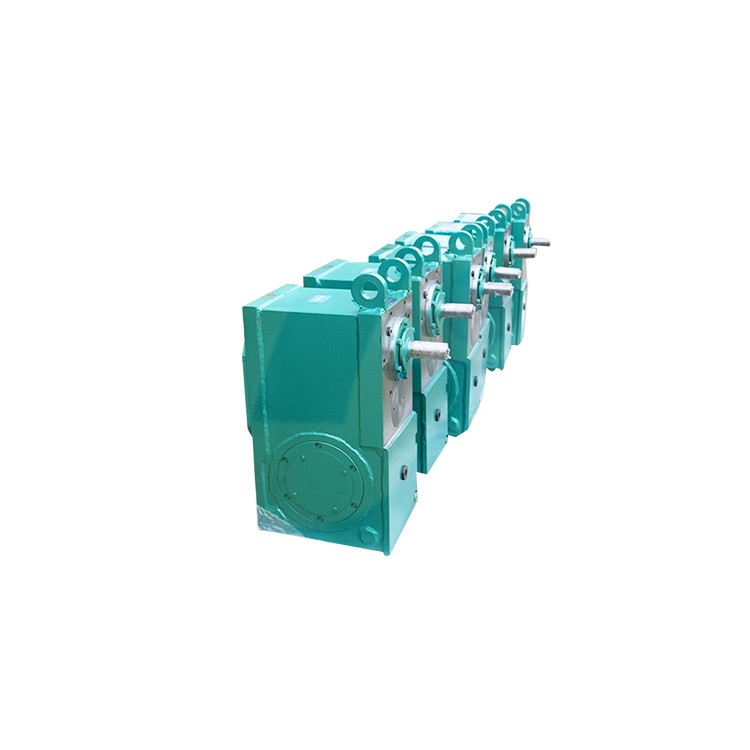
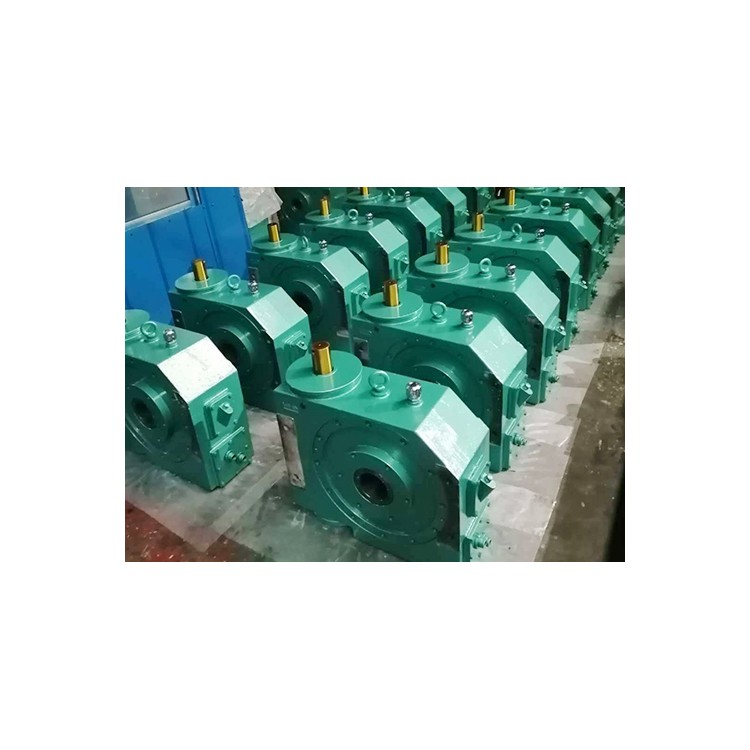

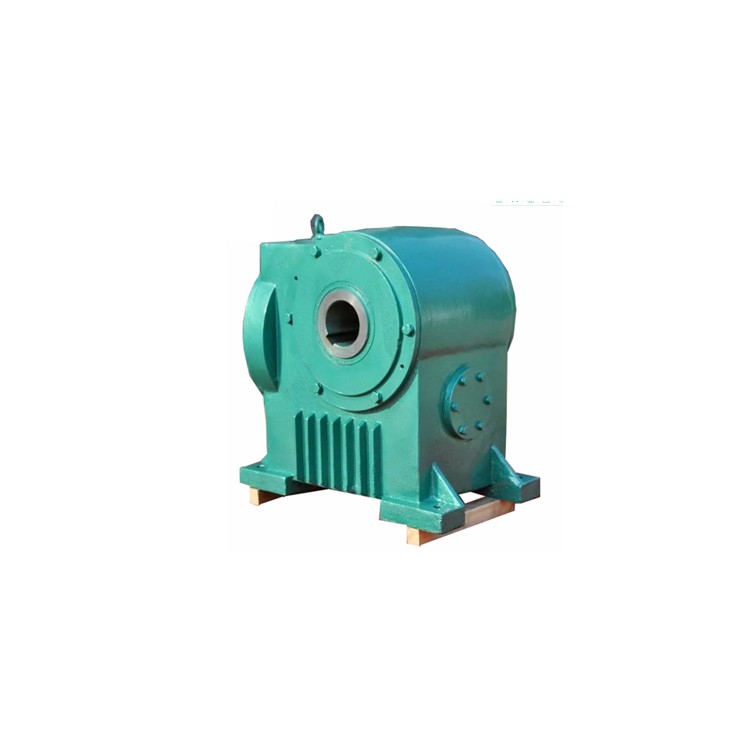
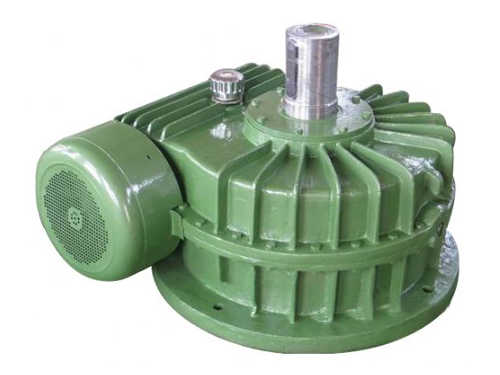
PW Type Planar Double Enveloping Gearbox and Planar Double Enveloping Ring Gear Worm Reducer (GB/T16449-1996) utilizes the double enveloping process, enhancing the transmission efficiency of the reducer and increasing its load-bearing capacity. It includes three types: PWU, PWO, and PWS. (1) PWU Type - Worm under the worm gear in a planar double enveloping ring gear worm reducer; (2) PWO Type - Worm above the worm gear in a planar double enveloping ring gear worm reducer; (3) PWS Type - Worm at the side of the worm gear in a planar double enveloping ring gear worm reducer. Operating Conditions: 90° shaft angle; worm speed not exceeding 1500 r/min; operating temperature range of 0-40°C; lubricating oil should be heated or cooled before start-up if the ambient temperature is below 0°C or above 40°C; the worm shaft can rotate in both directions. Application Range: Reduction transmission for mechanical equipment in industries such as metallurgy, mining, lifting, transportation, petroleum, chemical, and construction.
Characteristics of the Double Envelope Reducer:
Planar quadratic enveloping worm gear transmission is an advanced heavy-duty transmission device with excellent features such as high load-bearing capacity, high transmission efficiency, and long service life. It is a great choice for replacing other worm gear transmissions.
Section II: Formation Principle of Planar Secondary Involute Spiral Gear Pair
The formation process of the planar enveloping worm gear pair mainly includes two enveloping movements:
1. The enveloping motion involves using the tooth surface of a planar worm gear as the parent surface, with the worm rotating in a certain relative motion, thus enveloping the worm's helical tooth surface.
2. Enclosure motion involves forming a helical surface as the mother surface by a single enclosure motion, and the worm gear teeth surface is enveloped by the worm through conjugate motion.
B. The meshing process exhibits the following characteristics:
1. The worm shaft tooth profile is arc distributed, with simultaneous contact teeth ranging from 3 to 7.
2. The worm gear surface is ground after hardening treatment, with a hardness of HRC > 50 and a roughness of Ra < 0.8.
3. The processing and forming processes are completely identical, ensuring reliable manufacturing accuracy and the theoretical engagement state.
4. The area at the gear tooth junction is greater than: 70%.
5. At all times, there are two simultaneous contact lines on the worm gear surface, continuously advancing from both ends towards the center along the width of the teeth, and the angle between the contact lines and the direction of relative velocity is nearly 90 degrees.
6. Large tooth surface lubrication angle, excellent formation and maintenance of dynamic pressure oil film.