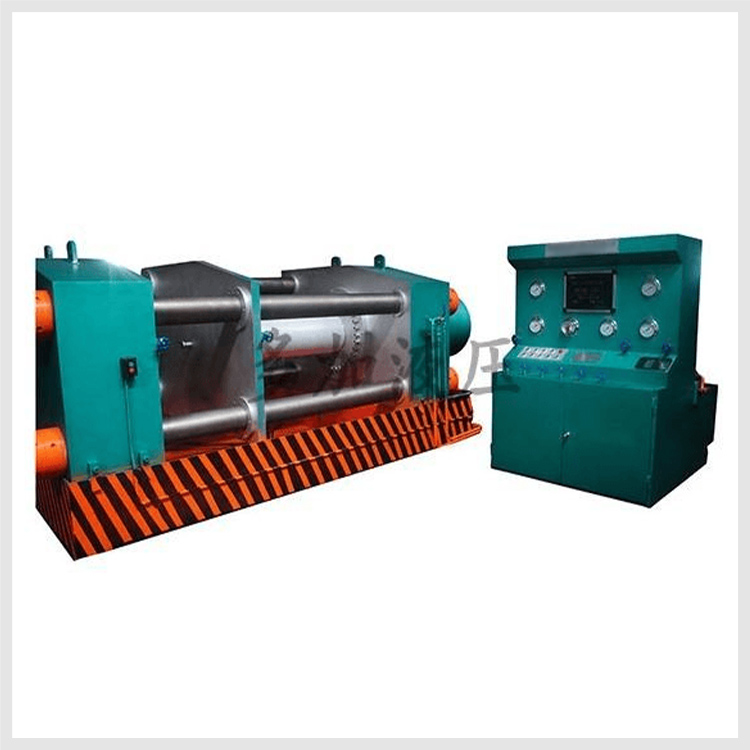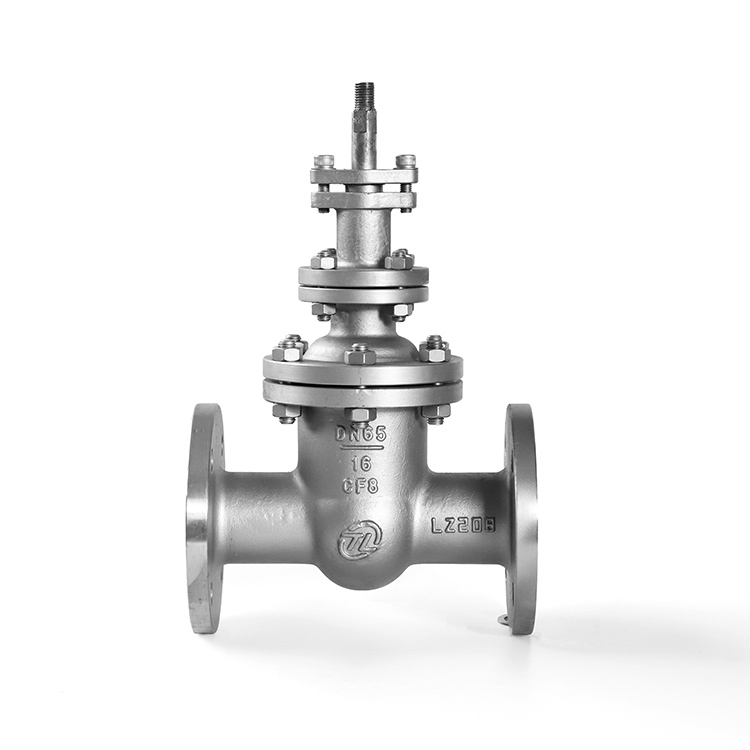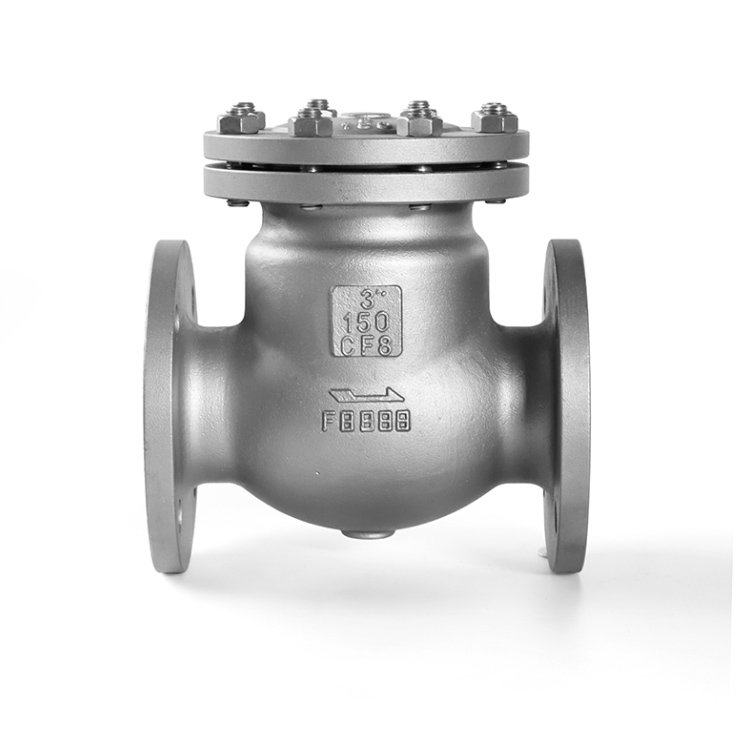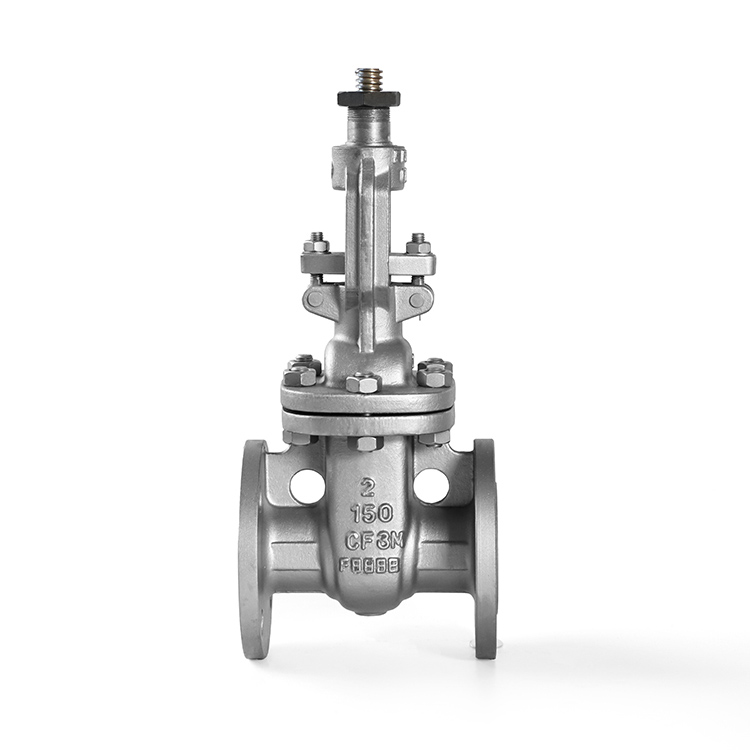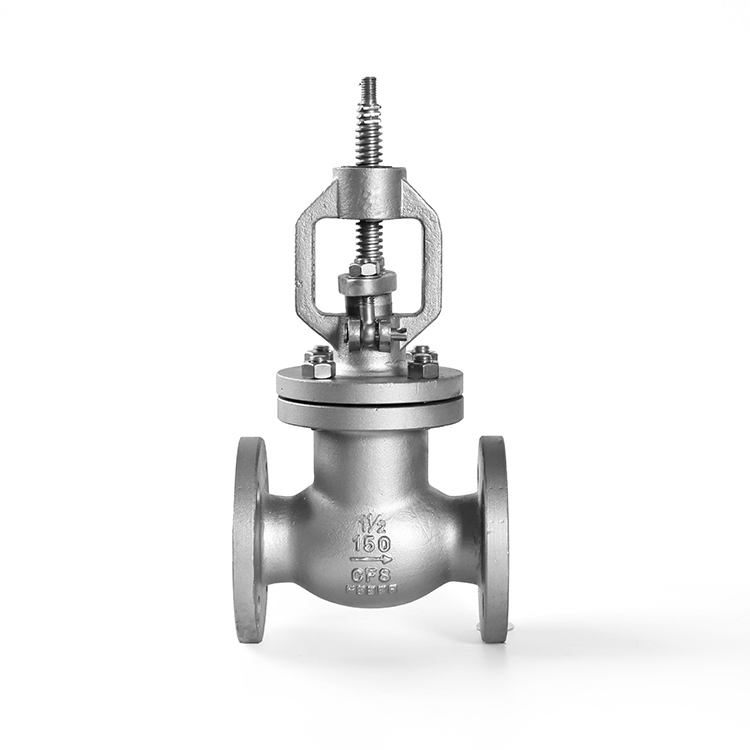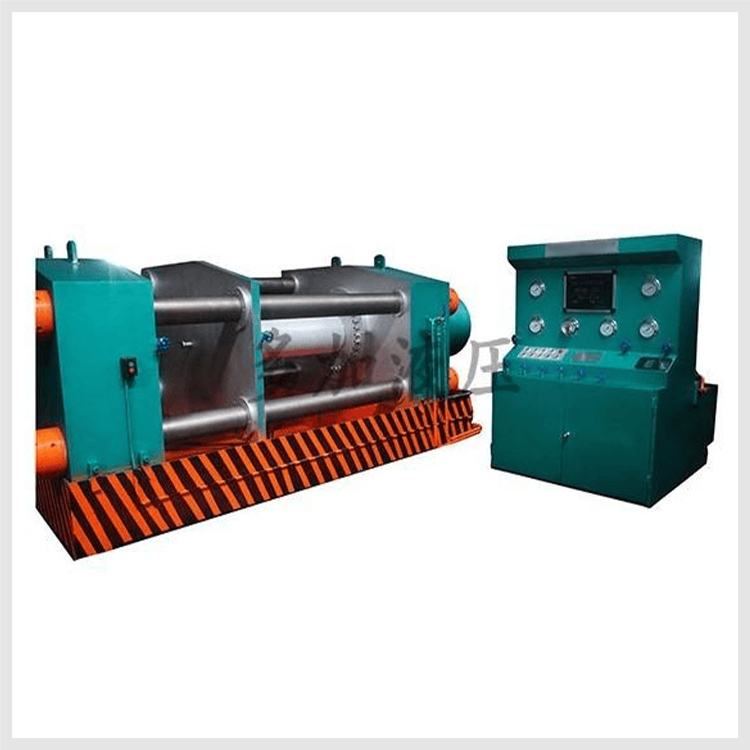

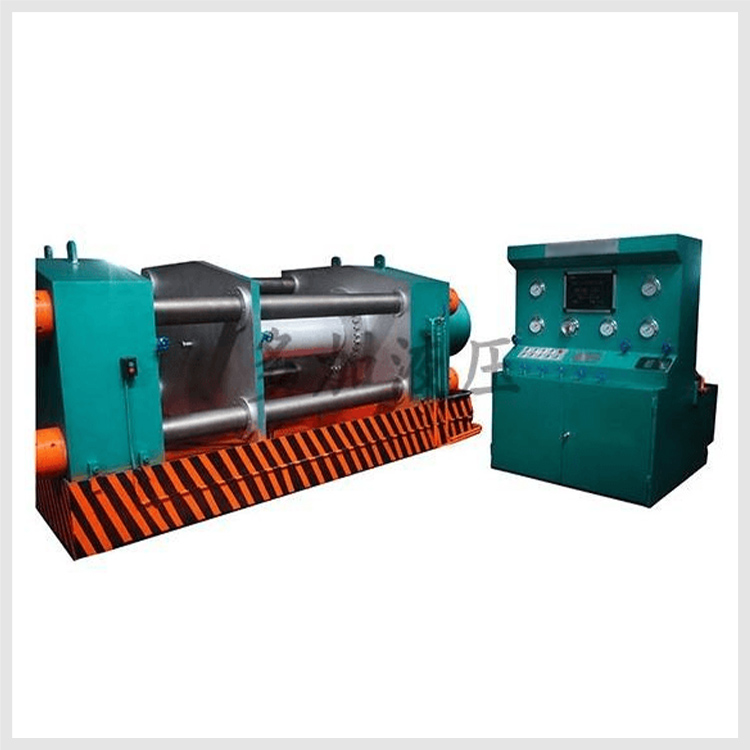









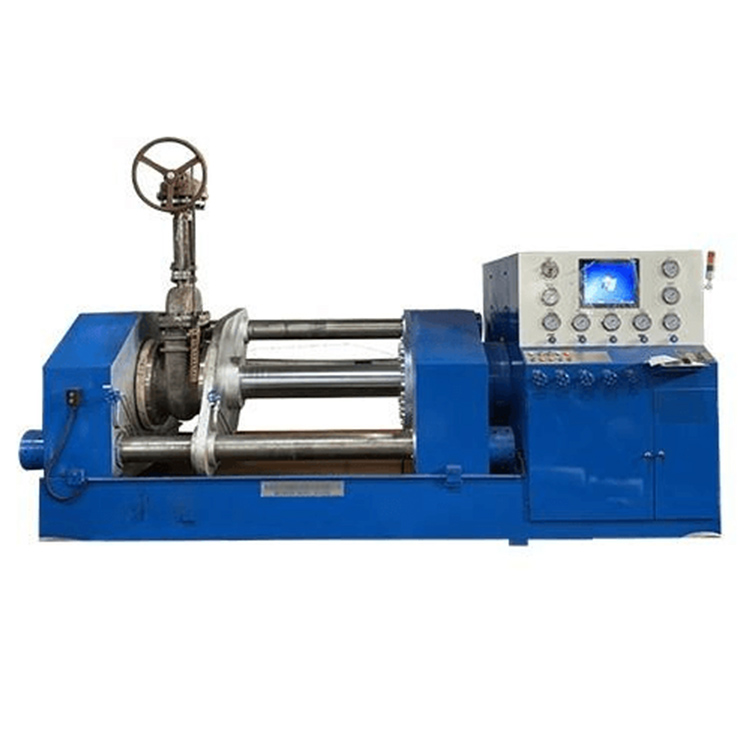

The DYFJ-E1200 valve testing bench is the fourth-generation pressure testing and inspection equipment independently developed by Duojia Hydraulics, based on years of production experience and in accordance with national standards and specifications.
The DYFJ-E1200 valve test bench integrates mechanical and electrical, hydraulic systems, pressure testing, and the storage and recycling of liquid mediums. It features comprehensive functions, stable performance, and high automation. It is widely used for sealing surface leakage tests and other performance tests, such as shell strength (sand holes), of high, medium, and low-pressure valves with nominal diameters of 800-1200mm, in direct-connection flanged designs. Test mediums: water, gas, oil.
The equipment is fully driven by hydraulic power and controlled by electrical systems, exerting no additional external force on valves that could affect test results. This significantly enhances work efficiency and reduces labor intensity, making it an ideal new generation pressure testing and inspection equipment for valve manufacturing companies, users, and maintenance units.
DYFJ-E1200 Type Valve Test Bench Working Principle and Structure
The DYFJ-E1200 type valve test bench operates by positioning the valve flange and clamping the back of the flange with movable claws, ensuring no external forces that could affect test results. It meets the national standard requirements for valve testing.
Equipment is generally divided into hydraulic pressure supply systems, electrical control systems, water circulation systems, and various operating devices.
The equipment features a horizontal, top-pressed design. Each side of the workbench is sealed with a blind flange. The left workbench is equipped with an in/out mechanism, directly driven by a hydraulic cylinder, ensuring uniform force on the valve sealing surface and reliable clamping. The right workbench is stationary, with bidirectional water intake and drainage. The sealing disk is fitted with drainage and exhaust valves for easy inspection of the gas-tightness test and observation of the valve sealing surface. It boasts good performance and a simple, compact structure.
Operation Instructions
1. Valve Mounting Method
Select a valve with the nominal pipe size corresponding to the equipment model, turn on the power supply, and start the hydraulic system. Move the left-hand cylinder back to a position longer than the length of the test valve. Place the valve flange face against the right-hand workbench test blind plate, aligning with the center hole. Advance the left-hand moving frame to the right-hand fixed workbench, with the other end of the test valve pressed against the left-hand test blind plate, aligned with the center hole. The valve is positioned horizontally as a whole.
2. Water Pressure Testing Methods (Bidirectional Inflow and Drainage)
After the valve bracket is assembled, refer to the "Clamping Cylinder Pressure Comparison Table" to increase the hydraulic clamp force to the required pressure. Adjust the electric contact pressure gauge (for a 25 kg valve, adjust the pointer of the electric contact pressure gauge to 2.5 MPa). Open the main inlet, left, and right inlet valves, close the air inlet, drain, and vent valves. Start the low-pressure water pump, observe the movement of the water pressure gauge pointer. When the pointer stops rising, it indicates that the valve cavity is filled with water. Start the high-pressure water pump; the high-pressure water pump automatically stops when the water pressure reaches the set pressure on the electric contact pressure gauge. The equipment enters the water pressure maintenance state.
Upon reaching the pressure-holding time, the valve is free of any issues. First, open the water valve to release the water pressure inside the valve chamber, and then remove the valve.
3. Pressure Test Methods (Bi-directional Intake, Venting)
The equipment does not come with a gas source. The user must provide an external gas source. Please consult the manufacturer before using high-pressure gases.
After the valve fixture is completed (for example, using pressure air, generally not exceeding 10 kg), open the inlet and air inlet valves, and close the drain and air vent valves. Close the inlet and air inlet valves when the pressure gauge reaches the highest pressure, and the equipment remains in a pressure-holding state.
Upon reaching the pressure-holding time, the valve shows no issues. It is recommended to first open the vent valve to release the pressure inside the valve chamber before removing the valve.
Handling Instructions and Requirements
1. Align the equipment horizontally during installation or secure the foot slot steel with concrete.
2. Use 46-grade anti-wear hydraulic oil (use anti-freeze 46-grade anti-wear hydraulic oil below 0℃), ensuring the oil level does not fall below the gauge's lower limit. Regularly check the oil level and hydraulic oil. After one year of use, clean the oil tank and replace the hydraulic oil.
3. Add rust inhibitor to the recirculating water, and change the water promptly when the water quality deteriorates.
4. The equipment work surface should be kept clean, and there should be no debris between the test valve flange and the test pressure blank flange.
5. All moving parts of the testing bench should be lubricated and kept clean for smooth operation.
6. Operators must undergo professional training before starting work, adhere to standard procedures, and prioritize safety.