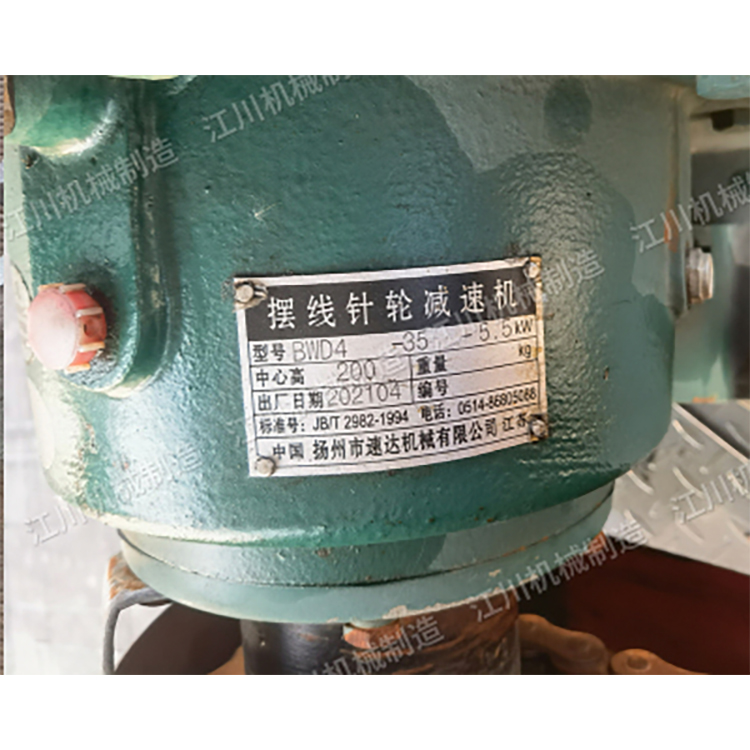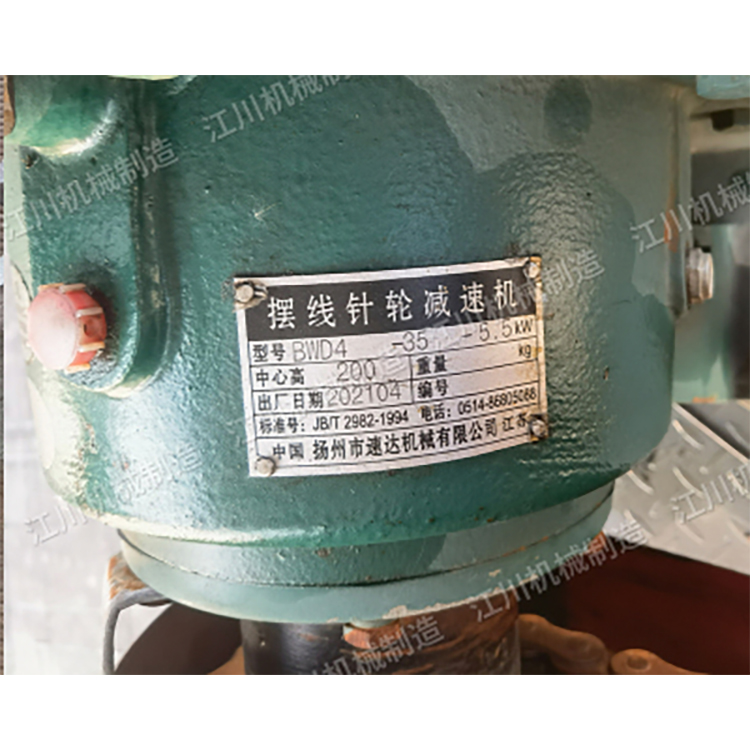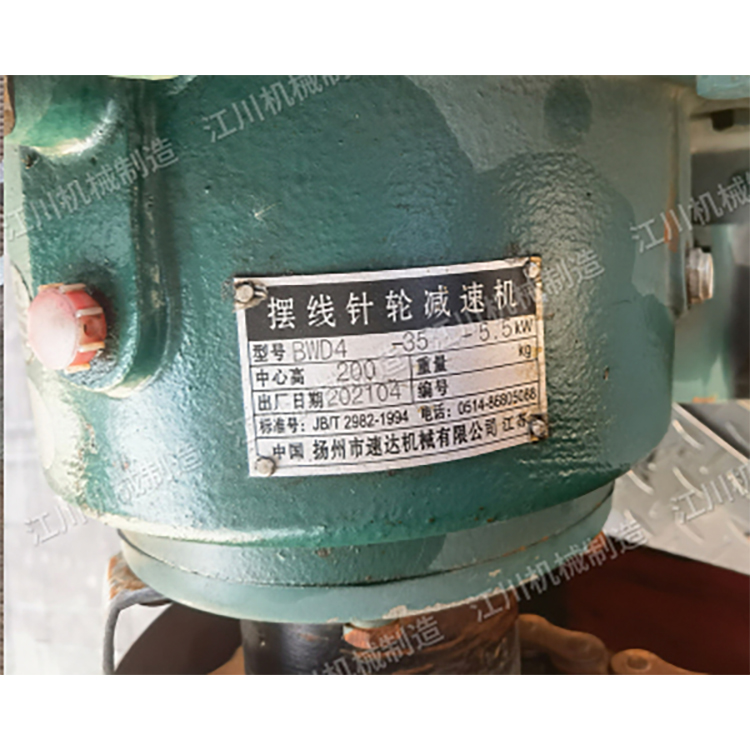









Helical Bevel GearboxA common type of decelerating transmission device, utilizing the cycloidal pinwheel transmission principle, widely applied in machinery and equipment. This article will provide a detailed introduction to the cycloidal pinwheel reducer, covering its working principle, structural features, advantages and disadvantages, as well as application fields.
The working principle of the cycloidal pinwheel reducer is to achieve reduction through gear meshing. The gear teeth are composed of convex and concave surfaces, which allows for rolling contact during motion, reducing friction and noise. The meshing angle of the cycloidal pinwheel reducer can be adjusted as needed to achieve different speed ratios. The axes of the gears intersect at a single point, giving the reducer higher transmission efficiency and load-bearing capacity.
The structural features of the cycloidal pinion reducer mainly include the following aspects. Firstly, the reducer is compact, with a small size and light weight, making it suitable for installation in machinery with limited space. Secondly, it boasts high transmission efficiency and precision, ensuring stable and reliable transmission. Furthermore, the reducer generates minimal noise and vibration, operates smoothly, and does not significantly disturb the surrounding environment. The structure of the cycloidal pinion reducer is simple, easy to maintain and repair, and has a long service life.
However, there are some drawbacks to the cycloidal pinion reducer. Firstly, due to the meshing transmission, its transmission efficiency is relatively low, typically around 60% to 80%, which is lower compared to other types of reducers. Secondly, the manufacturing process of the cycloidal pinion reducer is complex, with high processing difficulty and production costs. Additionally, due to its unique structure, the reducer has limited load-bearing capacity and cannot withstand heavy loads.
The cycloidal pinion reducer finds wide application in various fields. In the machine tool industry, it is extensively used in CNC machine tools, cutting equipment, etc., providing a stable and reliable transmission effect. Additionally, in the food and beverage industry, the reducer can achieve different rotational speeds to meet various production requirements. Furthermore, in the transportation sector, the cycloidal pinion reducer is widely employed in vehicles, high-speed trains, airplanes, and other means of transport, offering efficient and stable transmission. In industries such as metallurgy, petrochemicals, and chemicals, the reducer can bear certain loads, catering to diverse application needs under different working conditions.
In summary, the cycloidal pinion reducer is a common type of speed reduction transmission device, featuring compact structure, high transmission efficiency, and stable operation. It is widely used across various industries. With the advancement of technology and process improvements, the performance of cycloidal pinion reducers will be further enhanced, and their application scope will expand even more.