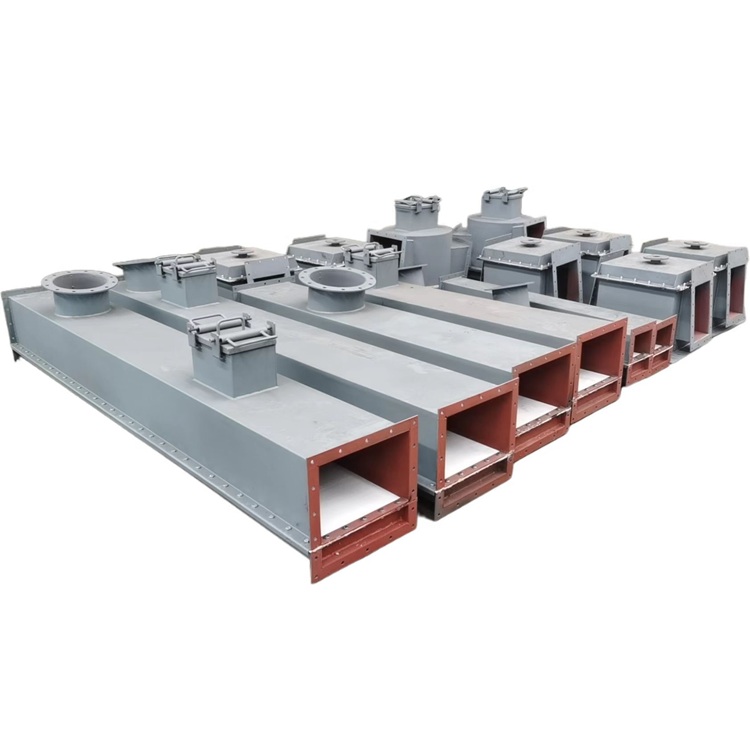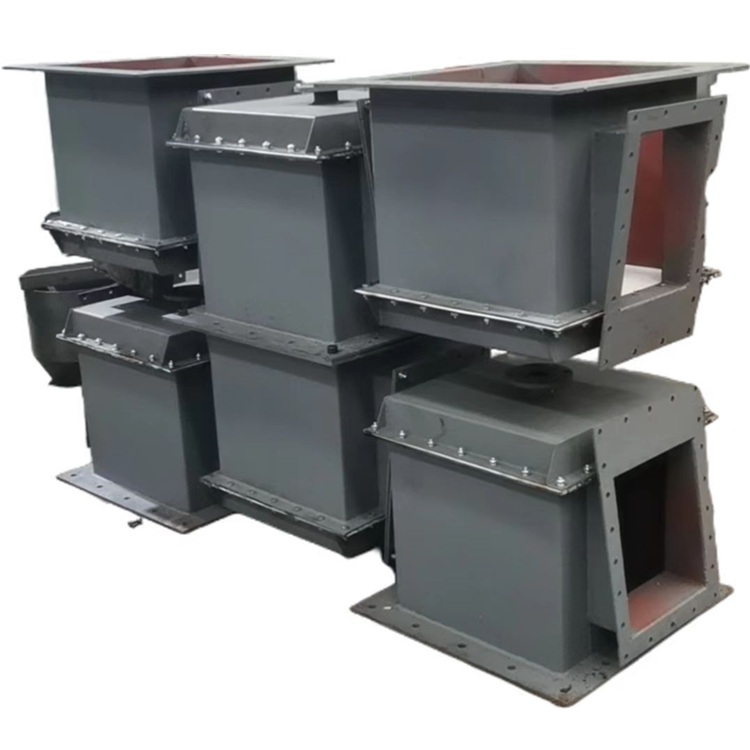


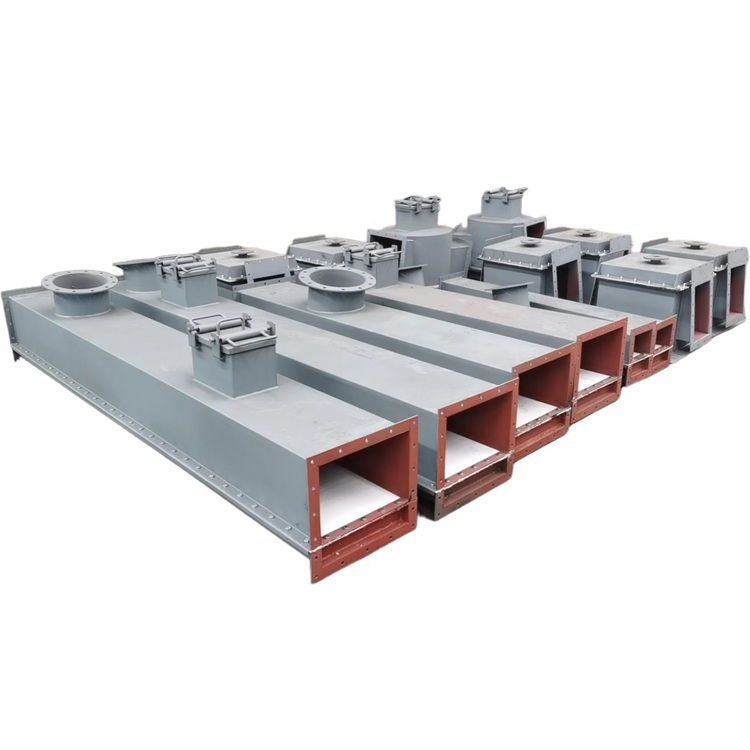







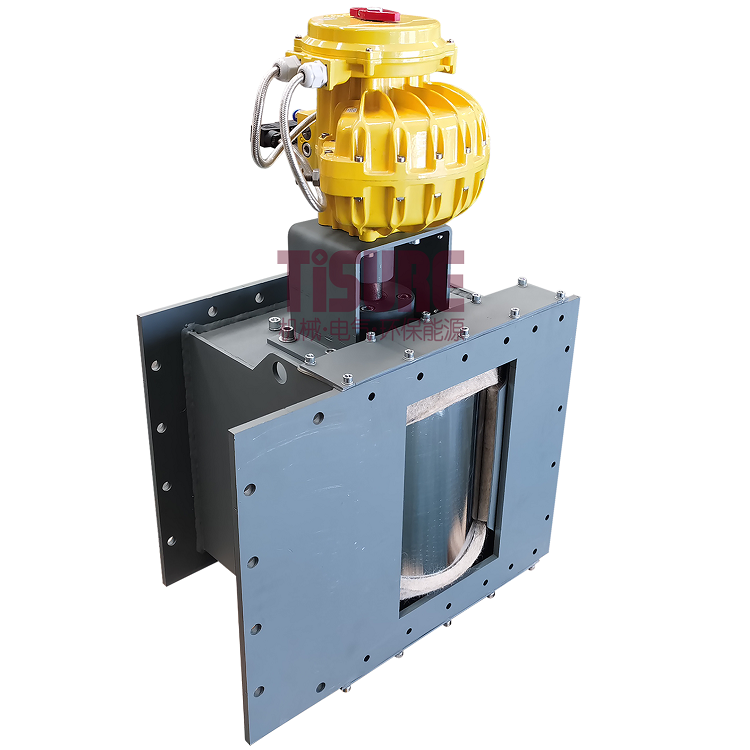
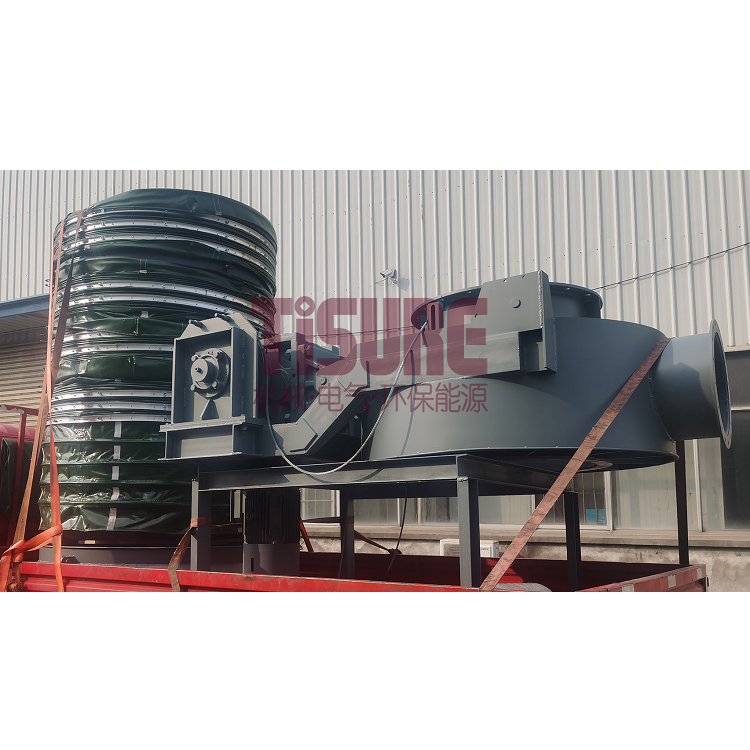
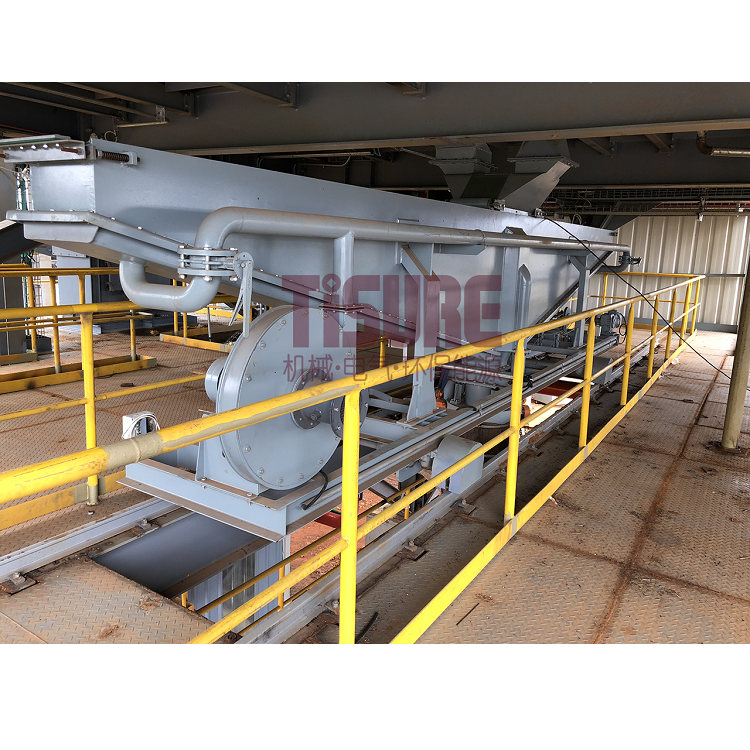
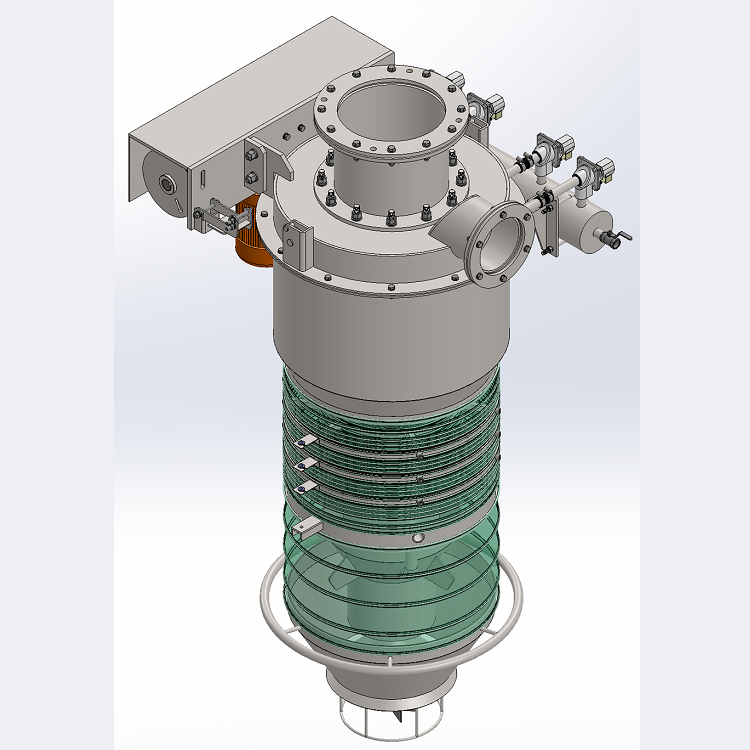
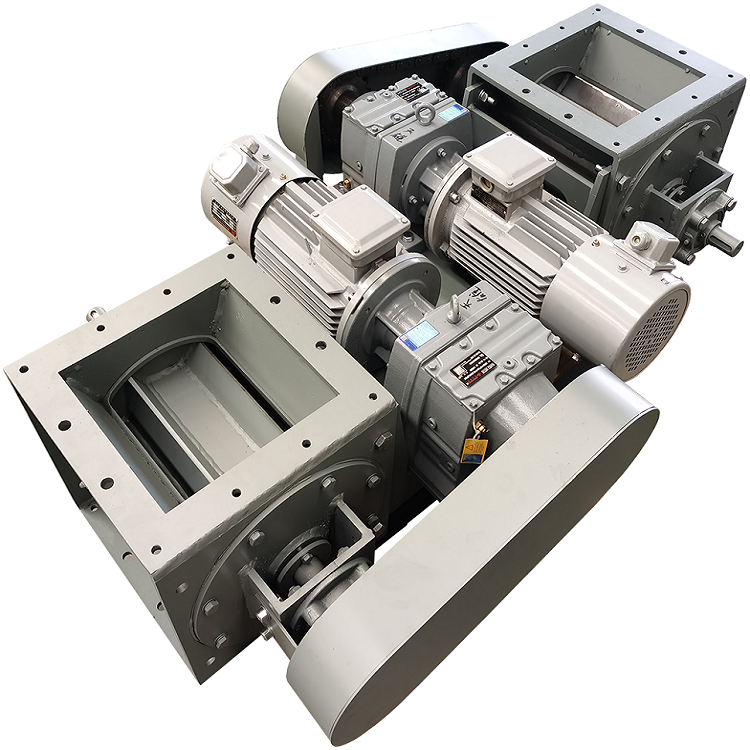
Air conveyance chutes are devices that use airflow to transport bulk materials through pipelines. They come in three types: suction, pressure, and mixed. Their operating principle is to utilize the kinetic energy of the airflow to suspend the bulk materials in a floating state and transport them along the pipeline with the airflow.
① Suction-feeding. Once the exhaust fan is activated, the entire system achieves a certain vacuum level. Under the force of pressure difference, the airflow draws the material into the suction nozzle and transports it along the feeding pipe to the separator at the unloading point. After the material is separated from the airflow, it is discharged from the bottom of the separator. The airflow is purified through a dust collector before being discharged into the atmosphere through a muffler. The advantages include simple feeding and the ability to simultaneously吸取 material from several locations. However, the short transportation distance and low production rate are drawbacks. High sealing requirements are necessary.
② Pressure conveying. Blowers press air into the conveying pipeline, where the material is supplied from the feeder. The mixture of air and material is conveyed along the pipeline to the discharge point. After separation by the separator, the material is discharged, and the air is purified by the dust collector before being released into the atmosphere. Characteristics are opposite to suction conveying, allowing material to be conveyed to multiple locations simultaneously, with longer conveying distances and higher production rates, but with a more complex structure.
③ Hybrid. A combination of the aforementioned two forms.
Reminder You: This equipment is not suitable for materials with large particle size, high moisture content, and poor fluidization.