







Following the issuance of the ROHS 2.0 revised directive, EU member states must transpose this directive into their national laws and implement it by December 31, 2016. Starting July 22, 2019, all electronic and electrical products destined for Europe (excluding appliances) must comply with these restrictions; from July 22, 2021, equipment (including in vitro equipment) and appliances (including industrial equipment) will also be included in the control scope. Additionally, toy products already under the control of Annex XVII, Article 51 of REACH for phthalates will not be subject to the restrictions for DEHP, BBP, and DBP in this directive.
Plasticizer (DBP, BBP, DEHP, DIBP) Testing Method
Sample Testing Process
Refer to methods such as EN14372 and ASTM D3421. Weigh 2g of the finely powdered sample, extract for over 8 hours using Soxhlet extraction, transfer and evaporate the solvent, then dilute to 25mL with n-hexane, filter, and test on the machine.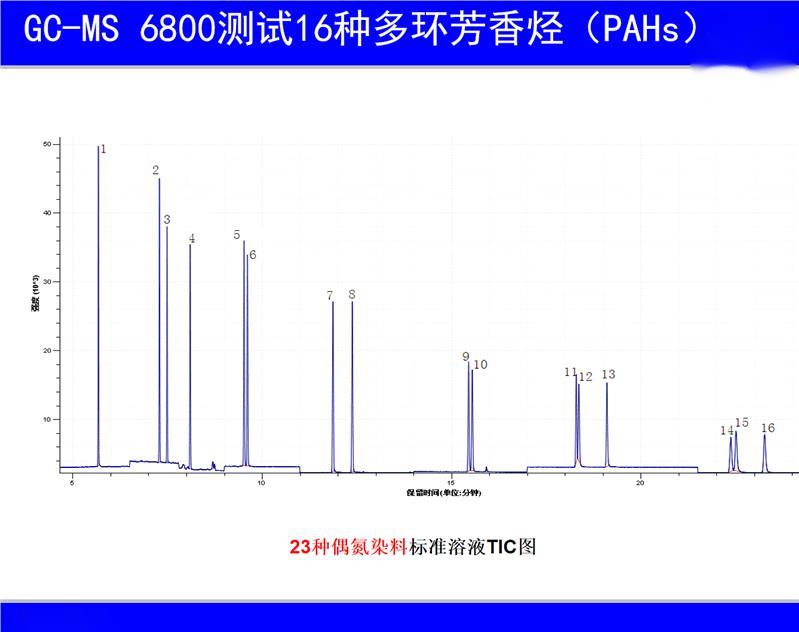
Testing for organic tin substances in textiles
Testing Principle
Refer to the standard GB/T 20385 - Textiles - Determination of Organotin Compounds, and extract the sample with acidic sweat using sodium tetraethylborate as the reagent and n-hexane as the extracting solvent at a pH of 4.0 ± 0.1. Perform direct extraction and derivatization of organotin in the extract. Analyze using a GCMS6800 gas chromatography-mass spectrometry system, and quantify using the external standard method.
1. Dimethyltin, 2. Trimethyltin, 3. Monobutyltin, 4. Dibutyltin, 5. Phenyltin, 6. Tributyltin, 7. Diphényltin
Phthalate plasticizers detection in textiles
Testing Principle
In accordance with the standard GB/T 20388-2006 "Determination of Phthalates in Textiles," the sample was extracted using three ultrasonic extractions. After the extract was diluted to a fixed volume, it was analyzed using a gas chromatography-mass spectrometer (GCMS6800) with selected ion monitoring for confirmation, and quantified using the external standard method.
1. Dimethyl Phthalate (DMP)
2. Diethyl Phthalate (DEP)
3. Diisobutyl Phthalate (DIBP)
4. Dibutyl Phthalate (DBP)
5. Di-(2-methoxy) Phthalate (DMEP)
6. Di-(4-methoxy-2-pentyl) Phthalate (BMPP)
7. Di-(2-ethoxy) Ethyl Phthalate (DEEP)
8. Di-pentyl Phthalate (DPP)
9. Di-hexyl Phthalate (DHXP)
10. Butyl Benzyl Phthalate (BBP)
11. Di-(2-butoxy) Ethyl Phthalate (DBEP)
12. Di-cyclohexyl Phthalate (DCHP)
13. Di-(2-ethyl) Hexyl Phthalate (DEHP)
14. Di-n-octyl Phthalate (DNOP)
15. Di-nonyl Phthalate (DNP)
Hexabromocyclododecane (HBCDD)
Sample Testing Process
Refer to methods such as GB/T 29785-2013 and EPA3550C. Weigh 2g of the sample after thorough粉碎, extract for more than 16 hours using the Soxhlet method, transfer and concentrate nearly to dryness, dilute to a final volume of 5ml, filter, and then perform machine testing.
The introduction of RoHS2.0 directive also means that factory-level clients need to increase their investment to address the current testing of phthalate substances. This is in response to the complexity of GC-MS testing methods, high costs of purchasing equipment, and high maintenance costs and personnel requirements faced by clients in various manufacturing industries. In comparison, using a liquid chromatography instrument is not only economical and practical but also easy to operate. It can effectively meet the detection requirements for 16 types of benzene substances, 22 types of PAHs, 18 types of AZO azo compounds, and other organic substances.
WeChat Official Account

Scan to follow Official Account