












One,Project Overview:
Engineering Reputation states: Taizhou Port Logistics Park Phase I Foundation Work
General Contractor: Nantong Wujiang Yuejin Construction & Installation Engineering Co., Ltd.
Direct subcontractor: Shandong Hengding Foundation Engineering Co., Ltd.
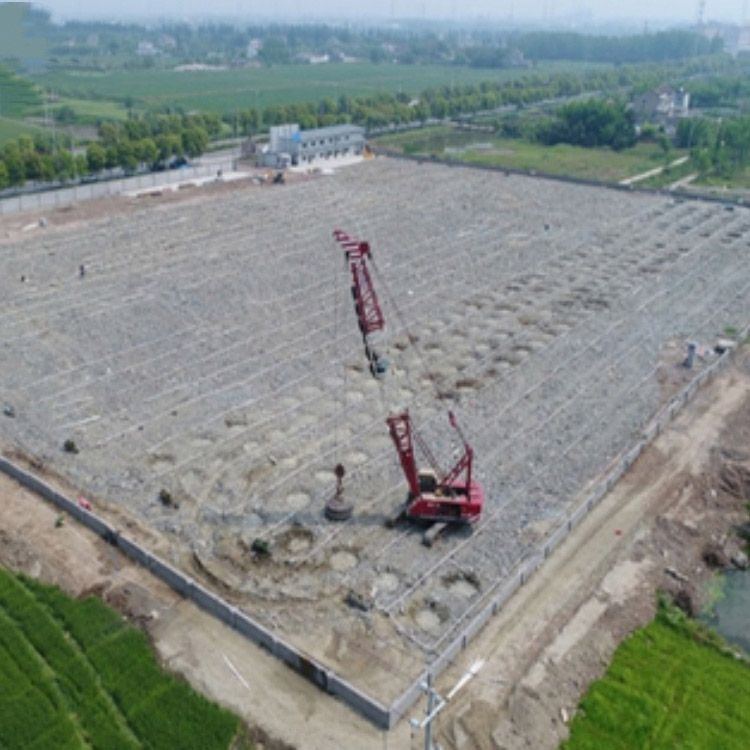
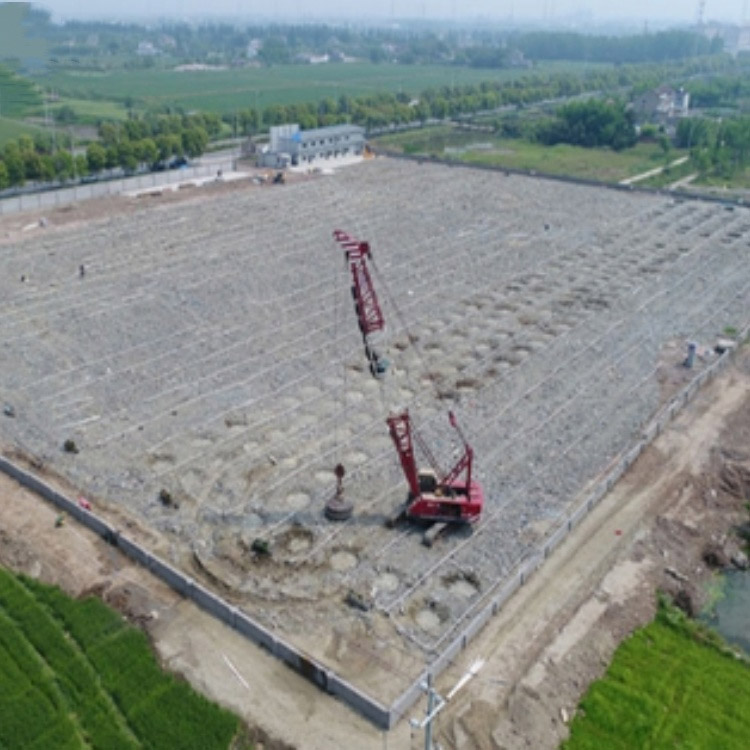
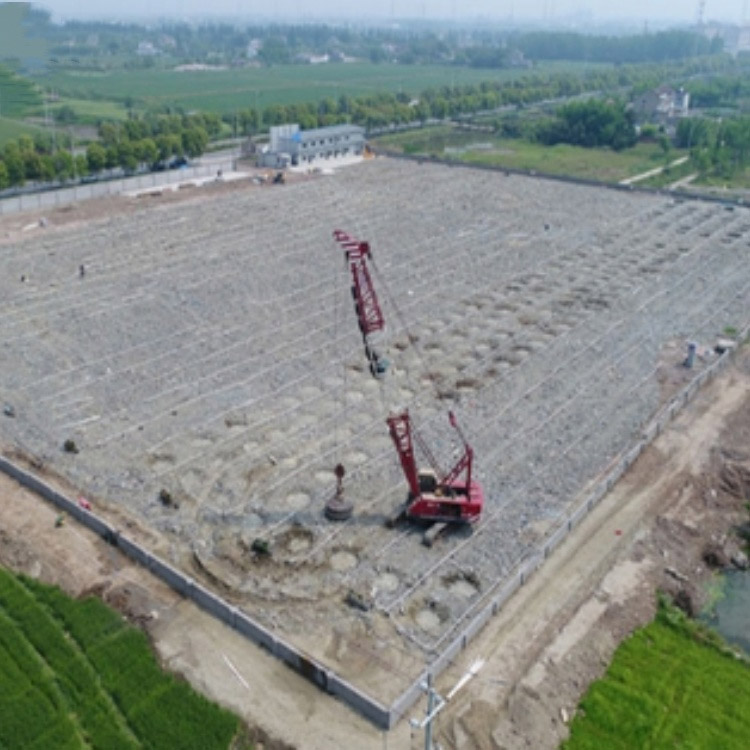
The total area of this project is approximately 18,000 square meters. The original terrain was residential buildings, which have now been leveled and filled with 40 cm of mountain stone. The surface geology is good. The trial compaction area was set up by April 20, 2018, and the trial compaction test was conducted on April 23. This document describes the trial compaction process, argues the issues found during the process, and provides construction suggestions.
Two,Original Geotechnical Data:
① Layer: Refuse fill: Grey, loosely structured, mainly composed of silt and silty clay; locally mixed with bricks and stones on the surface, uneven soil texture. Thickness is generally 0.8 to 1.4 meters. Poor engineering properties, not suitable for direct use.
② Layer: Silt-clayey silt interbedded with thin layers of silty sand; gray, moist, plastic, lustrous, contains some organic matter and a few decayed plants, low in dryness, locally interbedded with thin layers of silty sand, moderately dense. Layer thickness: 4.6 to 9.0 meters, highly compressible, poor foundation soil for engineering purposes.
③ Layer: Silt clay, silty silt clay interbedded with thin layers of silty sand: Silt clay, gray-brown, soft plastic, moist, containing iron and manganese concretions, slightly lustrous, moderate dryness, moderate toughness; silty silt clay, fluid plastic, lustrous, containing organic matter and a small amount of decayed plant material, low dryness, interbedded with silty sand, slightly dense. This layer is 4.3 to 6.0 meters thick, with poor engineering properties.
④ Layer: Silt intercalated with silty loam: gray, moderately dense, saturated, mineral composition mainly quartz, poor grain distribution, grain shape is round, contains a small amount of feldspar and mica flakes. Silty loam, moderately dense. Layer thickness: 1.7~3.3m, medium compressibility, medium foundation soil, general engineering properties.
The overall soil quality is average, with poor engineering properties, and lacks a sand layer, resulting in poor permeability.
Three.Test Compaction Parameters and Process:
Precipitation points at 4m x 4m intervals, well points spaced 4m and 6m apart.
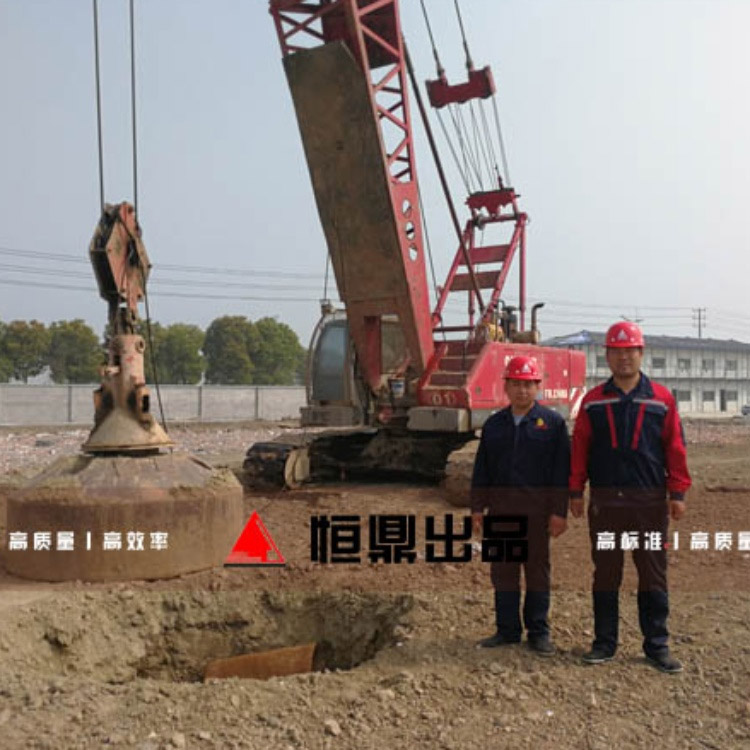
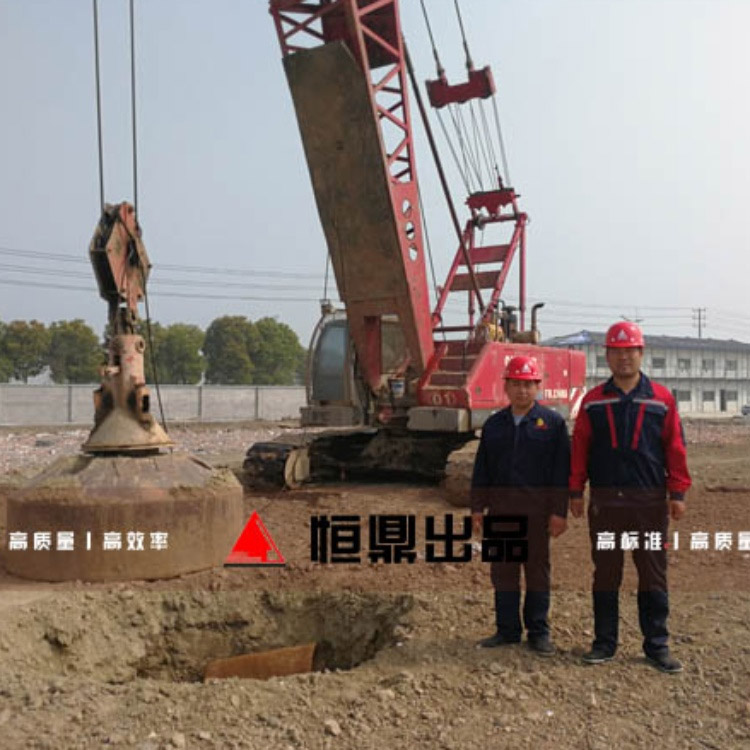
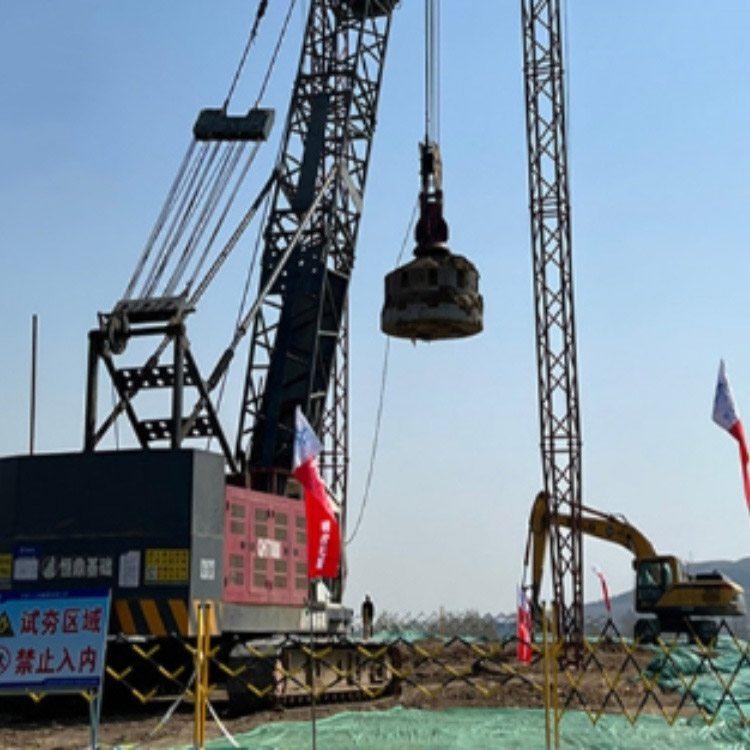
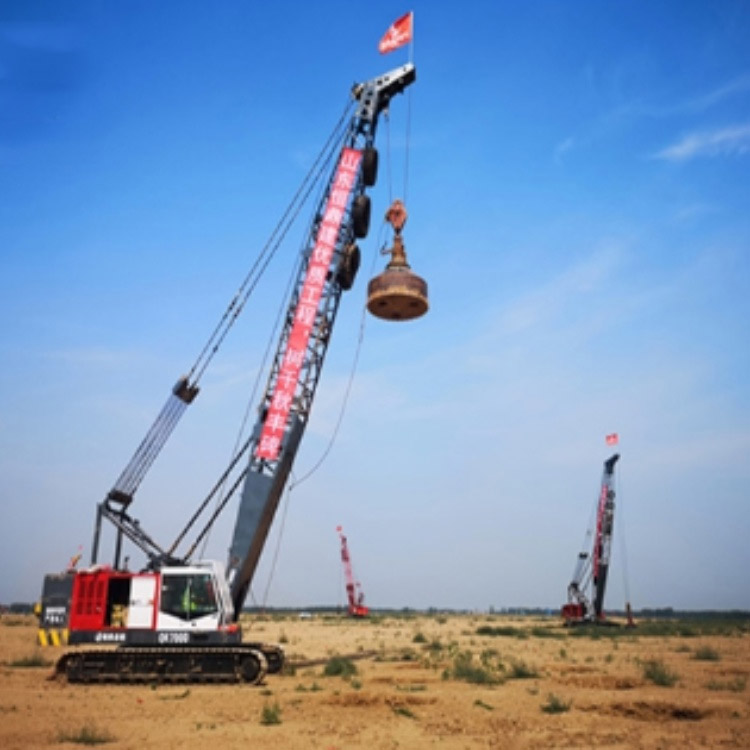
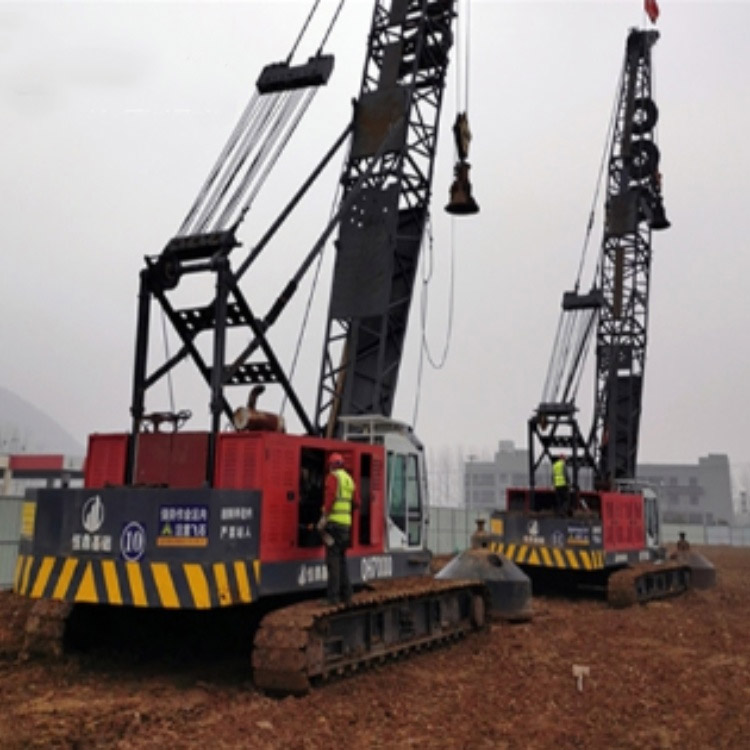
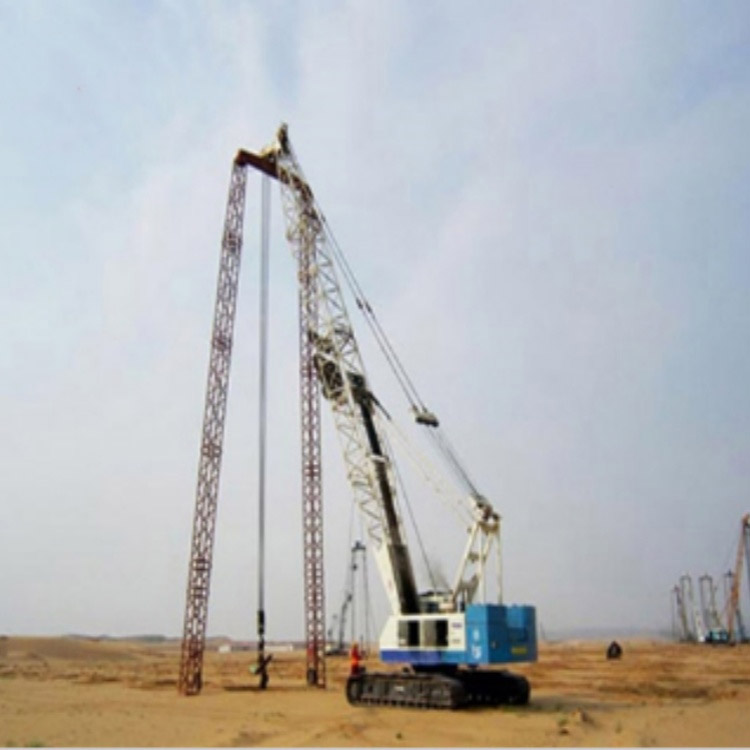
The Fuzhai Heavy Industry QUY50B has a first-hand crawler compactor, weighing 15 tons with a lifting height of 12 meters and a compaction impact energy of 1800 KN.m.
Initial groundwater level was shallow and stable at 0.81m. Water injection began on April 21st. Continuous water injection in the test area showed that the flow was slightly higher at first, but it gradually decreased after a day, with the groundwater level stabilizing around 1.5m to 1.6m. As of April 23, 2018, most of the water extracted from the test area was air, with a low water yield. The groundwater level remained controlled at 1.5m to 1.6m. According to the geological survey report and field tests, the foundation soil is mostly silt loam, with poor permeability and a low sand content. The material that came up during drilling was mostly clay and silt loam.
On April 23rd, a compaction test was conducted, with a total of 48 points (6 rows and 8 columns) being compacted. On average, each point was compacted 3 times, with an average settlement of 60 cm. The compaction results were favorable, with no heaving or uncontrollable settlement observed in the surrounding area. During the compaction process, due to the hammering, water overflow was noticed at 3 points adjacent to the wells. The overflowed water was gradually absorbed by the wells after the compaction, and the surface water left in the compaction pit was pumped out.
Due to overflow phenomena at some well points from the third ramming strike, based on our company's years of joint dewatering and ramming construction experience, we propose a suggestion in the construction plan to withstand "spring soil" during the stop ramming process.
FourCompaction construction handling suggestion:
Due to the different properties of silt loam clay compared to sandy soil, sandy soil has better permeability, allowing groundwater levels to easily drop below 2.5 meters. However, silt loam clay inherently has poor permeability, acting like a "sponge," and it is imperative to avoid the occurrence of "springy soil" during construction.
Our recommendation is to implement the mature "start light, end heavy, fewer strikes, more passes" solution during the compaction process in the precipitation compaction project. Gradually compact the foundation, squeezing out excess moisture from the soil mass, and gradually strengthening from the top of the foundation to the bottom, thereby enhancing the bearing capacity of the foundation.
V. Detailed Construction Plan:
①The precipitation project continues; the compactor performs a series of tamping operations, with two tamps per compaction point, inserted in the middle of the well points, gradually lowering the water level during the tamping process.
② To facilitate the dissipation of pore water around the well point, allow one day for dissipation after a few tamping blows, then use an excavator to level the tamped pit, and backfill and level the soil to the pit's height.
③ Conduct a second round of compaction, with each compaction point receiving 2-3 blows, and the spacing between compaction points at 4m x 4m.
④ Remove one row of well points and perform full compaction, with a compaction capacity of 1000KN.m. Strike each point once, with overlapping hammer marks.
⑤ Subsequently, mechanical vibration compaction is performed, with orthogonal compaction flattened twice.
Six, Conclusion
With our company's many years of joint dewatering and compaction construction experience, the dewatering compaction for silt loam is a mature solution with excellent construction outcomes. After compaction, the foundation bearing capacity value is ≥120KPa, and all auxiliary design requirements meet the design standards.