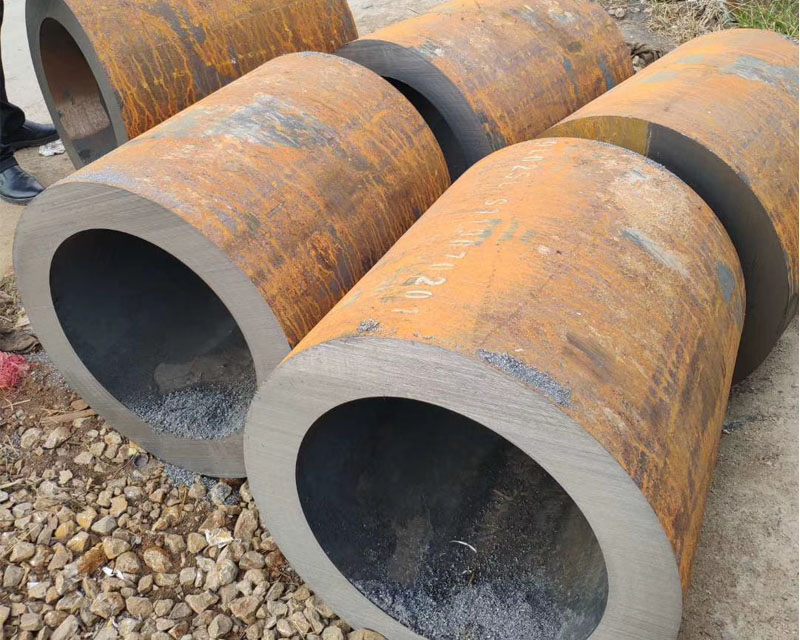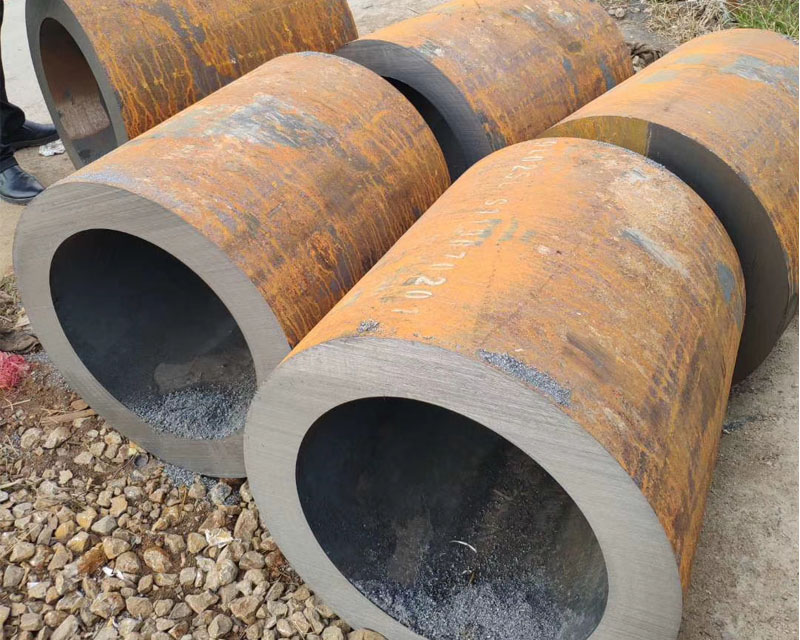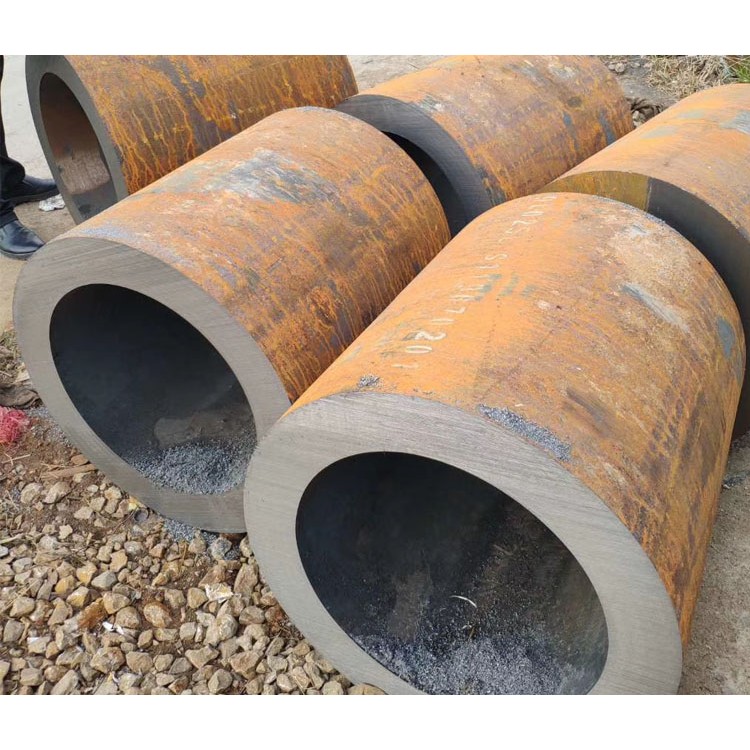

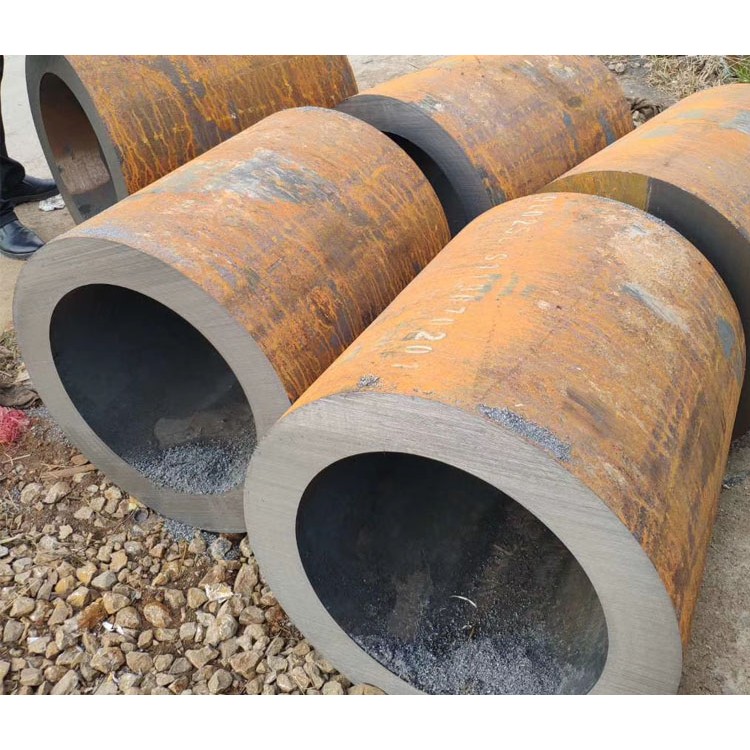













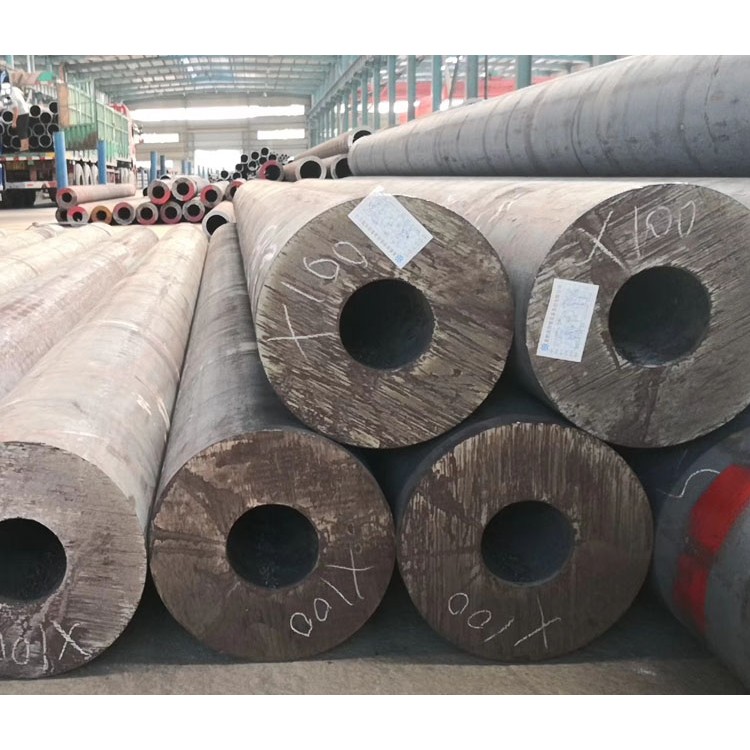
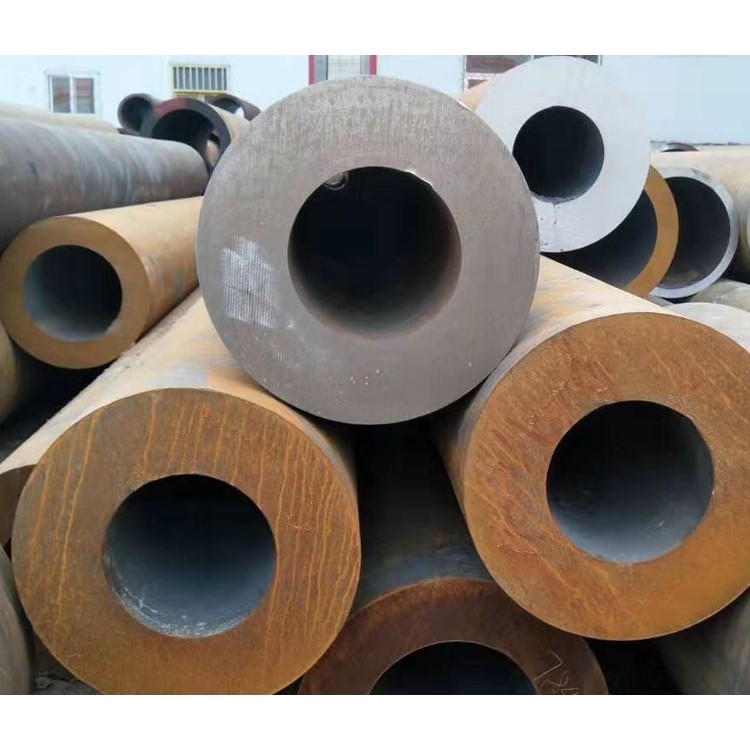
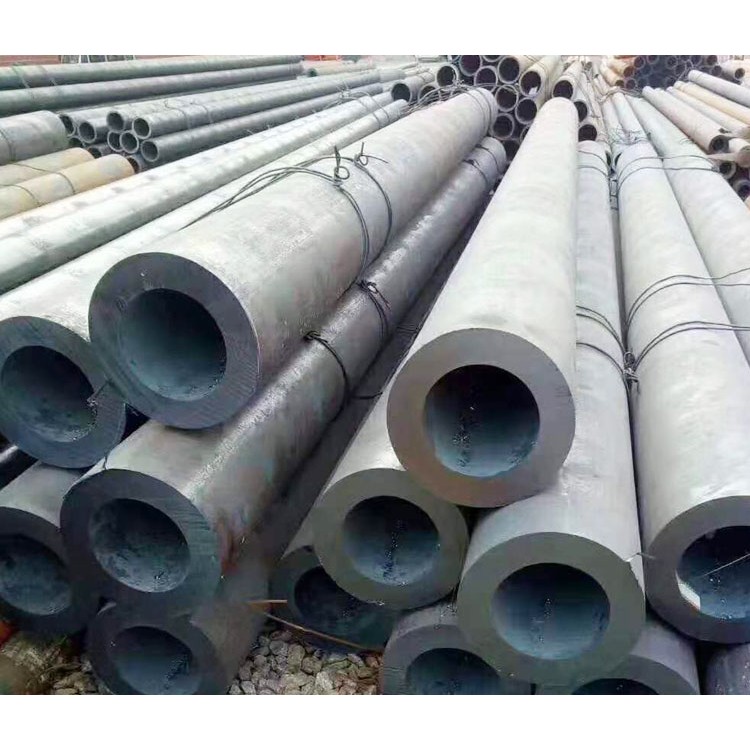
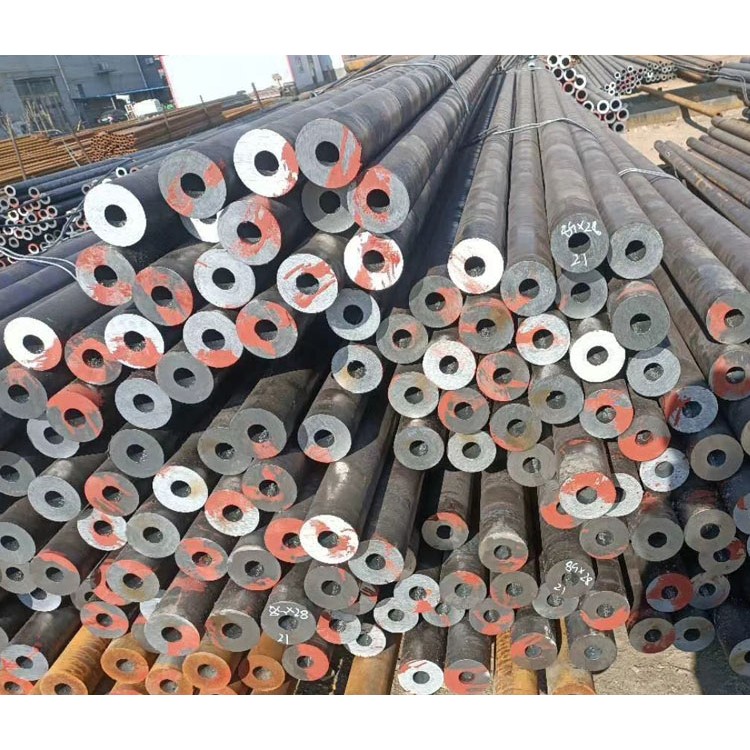
15CrMo thick-walled seamless steel pipes are pearlite-structured heat-resistant steel with high thermal strength (δb≥440MPa) and oxidation resistance at high temperatures, as well as certain resistance to hydrogen corrosion. Due to the high content of Cr, C, and other alloying elements in the steel, the tendency for quench hardening is pronounced, and the weldability is poor.
15CrMo thick-walled seamless steel pipe welding material
Based on the working characteristics of the weldability of 15CrMo steel, and drawing from past experience, referring to the welding procedure specifications provided by foreign sources, two welding trial methods were selected.
Plan I: Weld preheating, using ER80S-B2L welding wire, TIG welding for root pass, E8018-B2 welding rod for filling, followed by local heat treatment after welding.
Plan II: Use ER80S-B2L welding wire for TIG root pass, E309Mo-16 welding rod for filling and cover welding, no heat treatment after welding. The chemical composition and mechanical properties of the welding wire and rod are shown in Table 1.
Test Results of 15CrMo Thick-Walled Seamless Steel Pipe
Test Plan Tensile Test Bend Test Impact Toughness Test aky (J/cm²)
Tensile Strength δb/MPa, Fracture Location, Bending Angle, Face Bend, Back Bend, Weld Seam, Fusion Line, Heat Affected Zone (HAZ)
Plan I: 550/530 Base Material 50. Qualified Qualified 84.8 162 135.6
Plan II 525/520 Base Material 50. Qualified Qualified 79.4 109.2 96.7
Heat treatment is an extremely effective measure for improving and enhancing the properties of 15CrMo alloy round steel, playing a crucial role in both the reliability and cost-effectiveness of the product. The heat treatment of 15CrMo alloy round steel typically includes two main categories: general heat treatment (annealing, normalizing, quenching, tempering) and surface heat treatment (surface quenching and chemical heat treatment such as carburization, nitriding, and metal infiltration).
In mechanical engineering, many machine parts, such as crankshafts, gears, camshafts, and gears in critical reducers, not only require sufficient toughness, ductility, and bending strength in the core, but also high hardness, high wear resistance, and high fatigue strength within a certain surface thickness. The aforementioned integrated heat treatment methods are difficult to meet all these performance requirements simultaneously. Surface heat treatment is an effective way to achieve these performance criteria at the same time.
Surface heat treatment is a heat treatment method that alters the surface properties of 15CrMo alloy round steel by changing its surface structure.
Surface hardening is a heat treatment that alters the surface structure without changing the chemical composition. It can be achieved through induction heating using high-frequency, medium-frequency, or industrial-frequency currents, or by flame heating. Its common feature is to rapidly heat the surface of 15CrMo alloy round steel to the quenching temperature, then quickly cool it down before the heat has reached the core of the part, resulting in a high surface hardness with a still high core toughness.
Chemical Treatment - A heat treatment method that alters the surface chemical composition and microstructure of 15CrMo alloy round steel. Chemical heat treatment can be divided into methods such as carbon nitriding, nitriding, carbonitriding, and metal infiltration, depending on the elements diffused into the surface of 15CrMo alloy round steel. It is highly effective in enhancing and improving the wear resistance, corrosion resistance, and fatigue resistance of 15CrMo alloy round steel. With the rapid development of chemical heat treatment and the application of new technologies, it has become increasingly prevalent.