








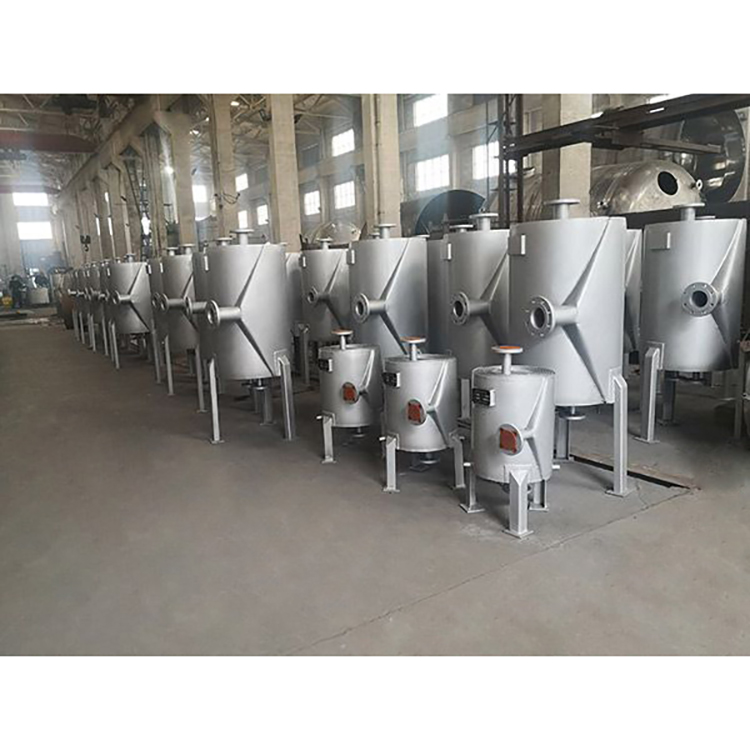
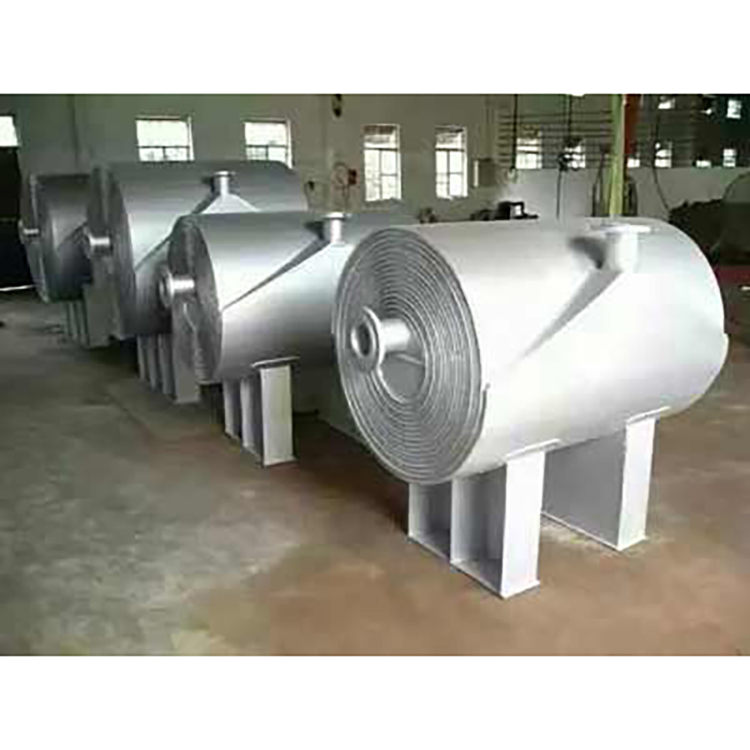
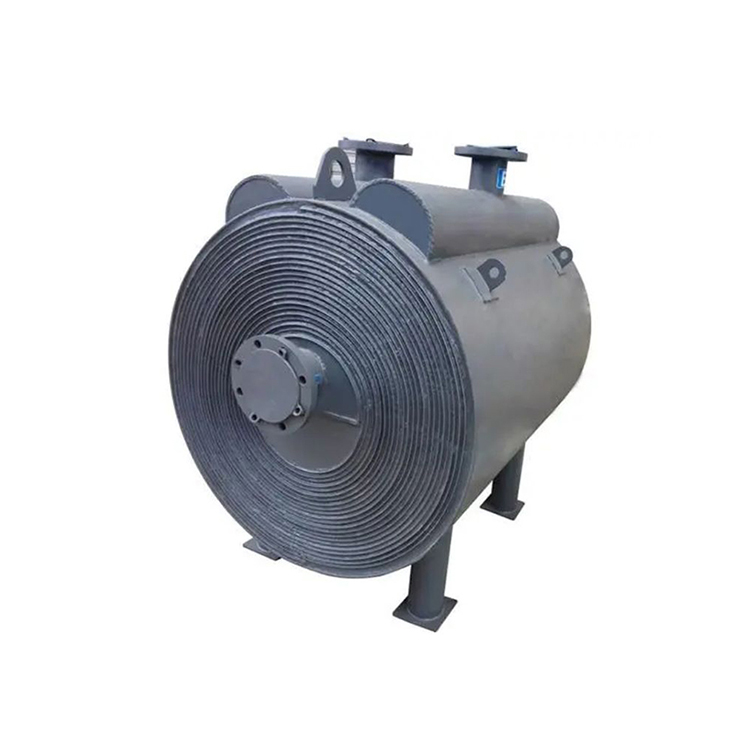
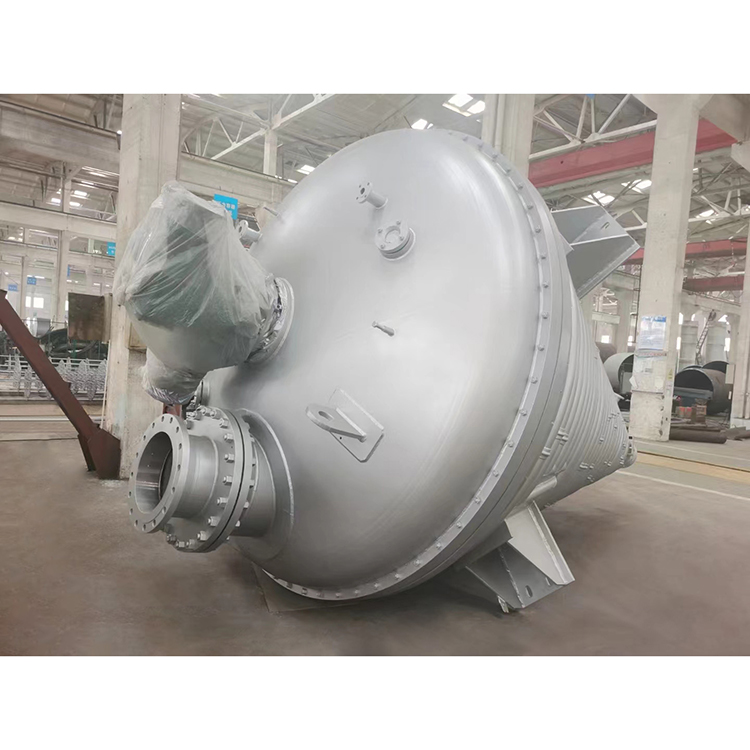
Tube-in-tube condenser
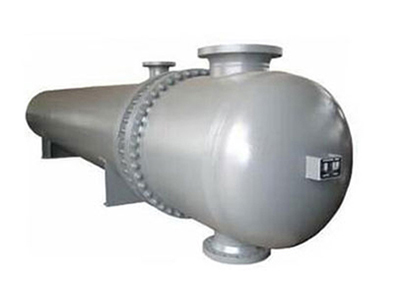
Tube-in-tube condenser structure
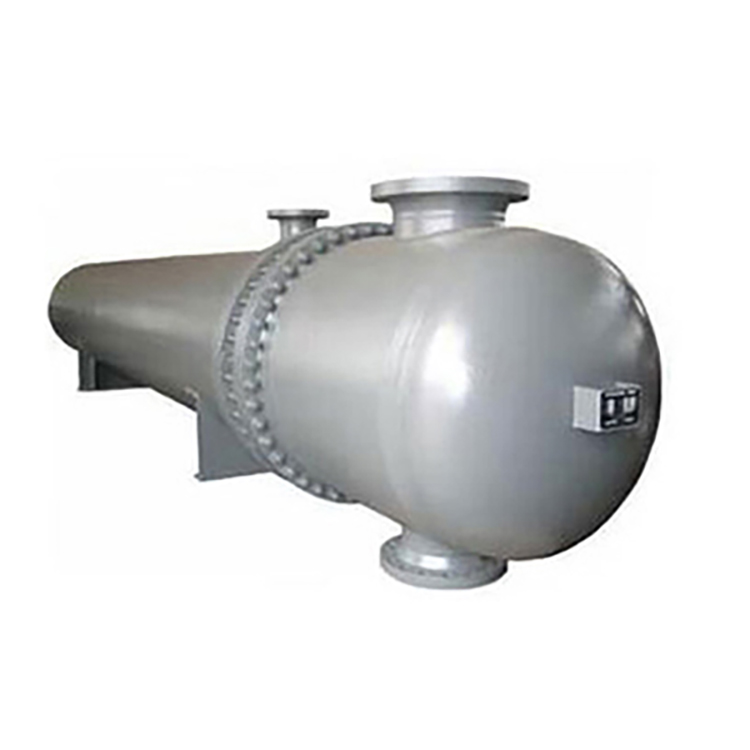
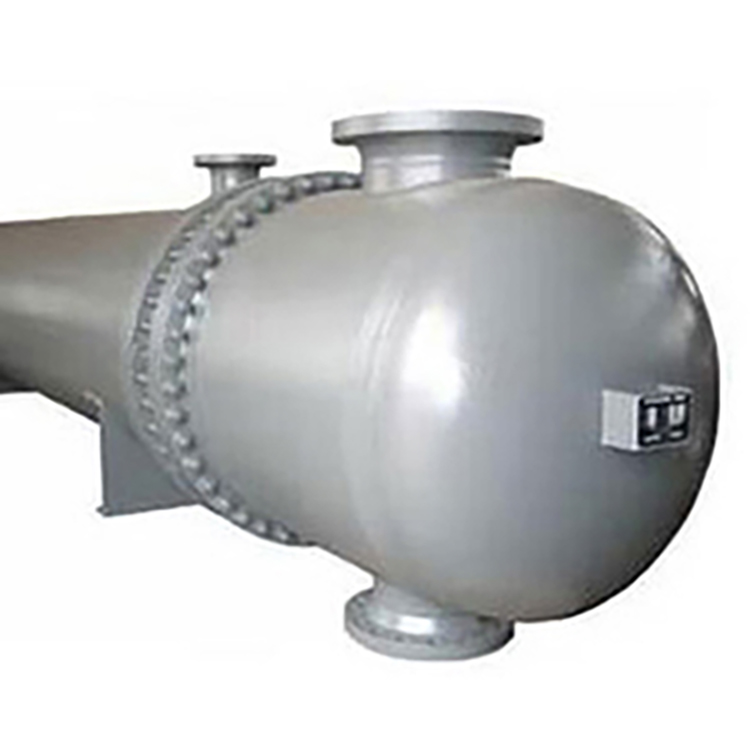
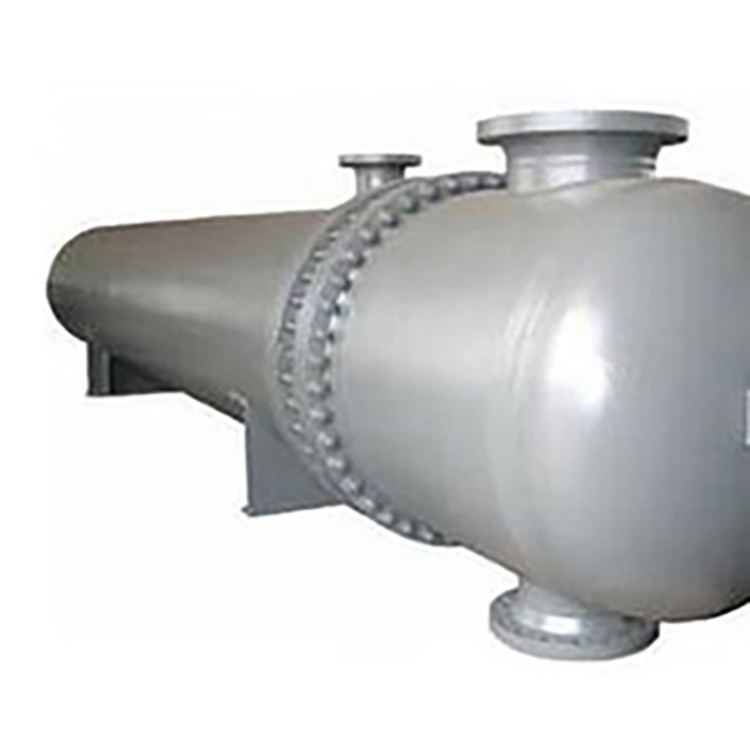
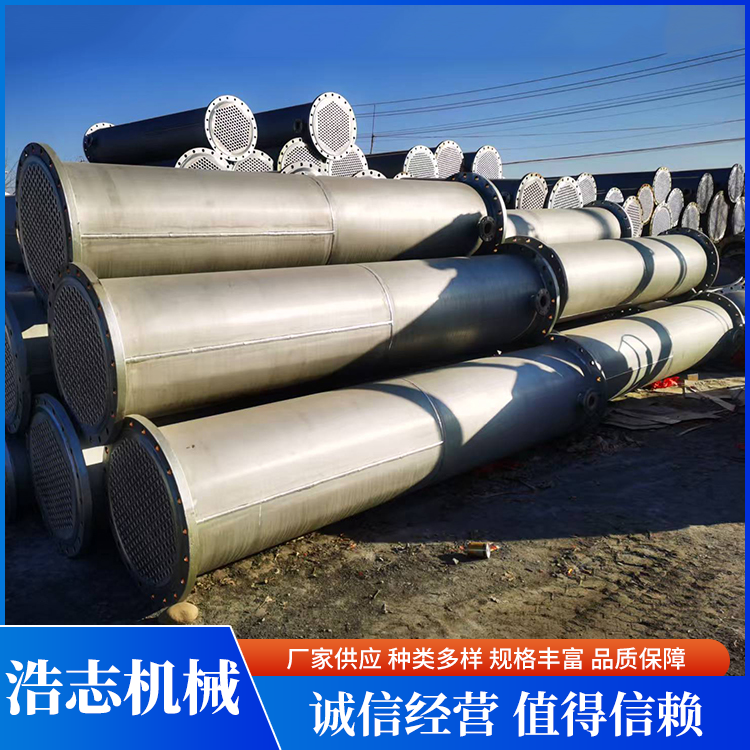
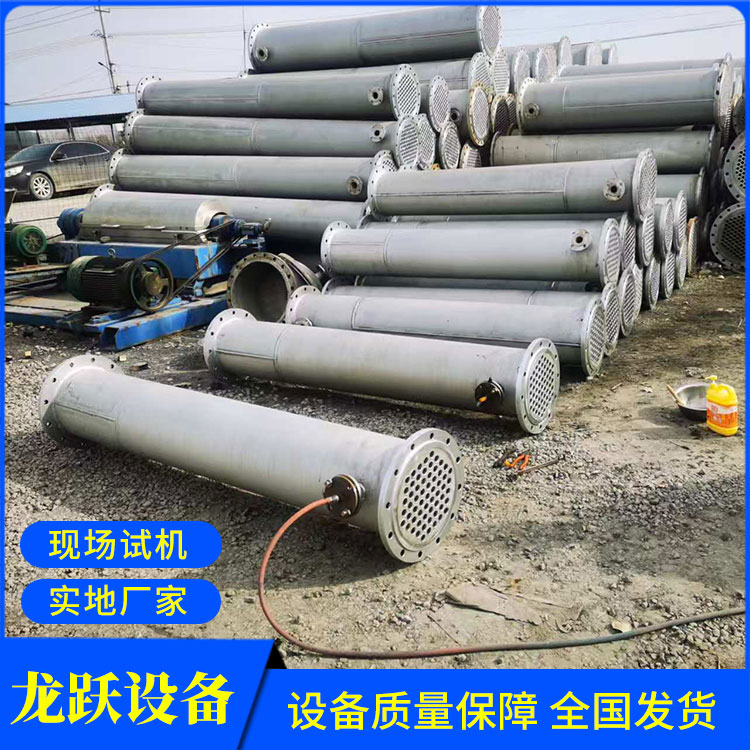
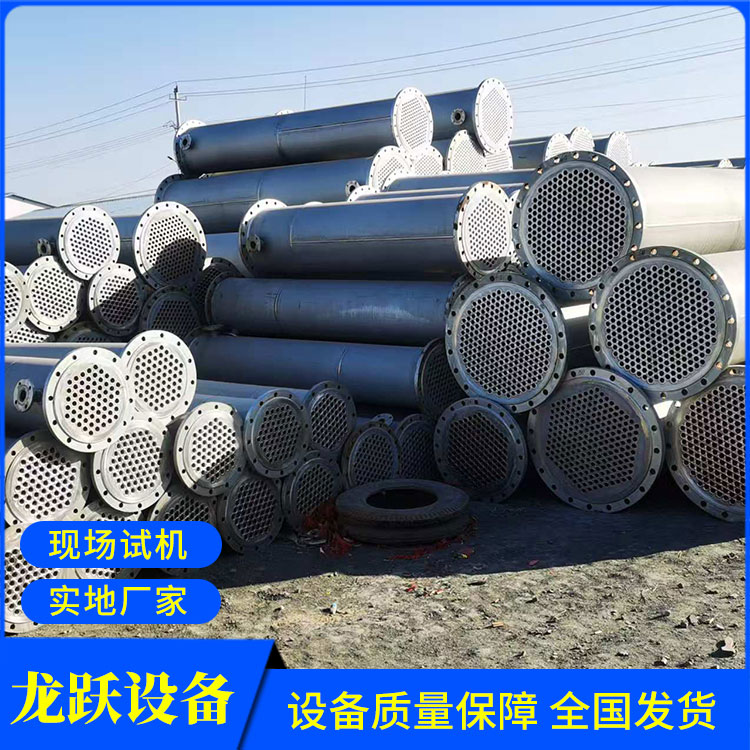
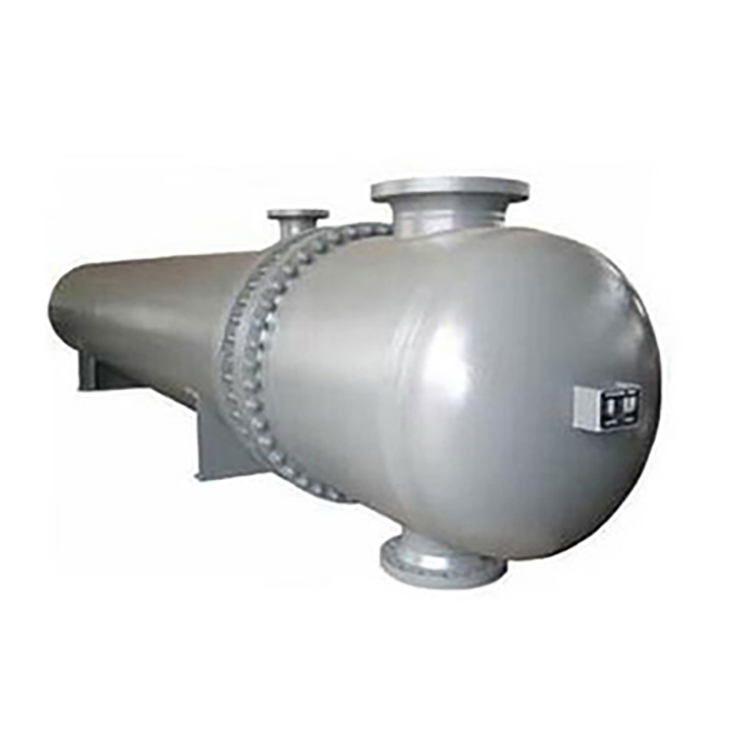
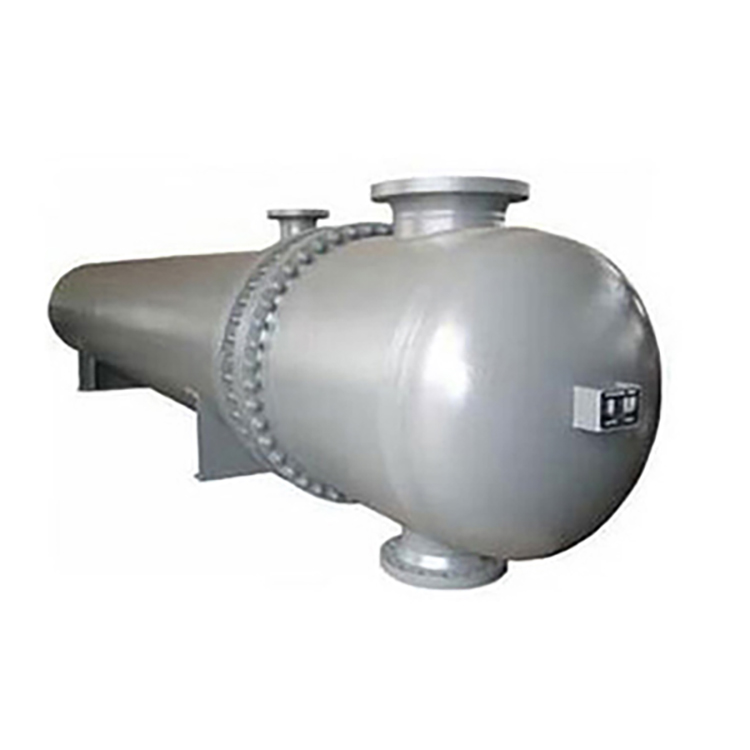
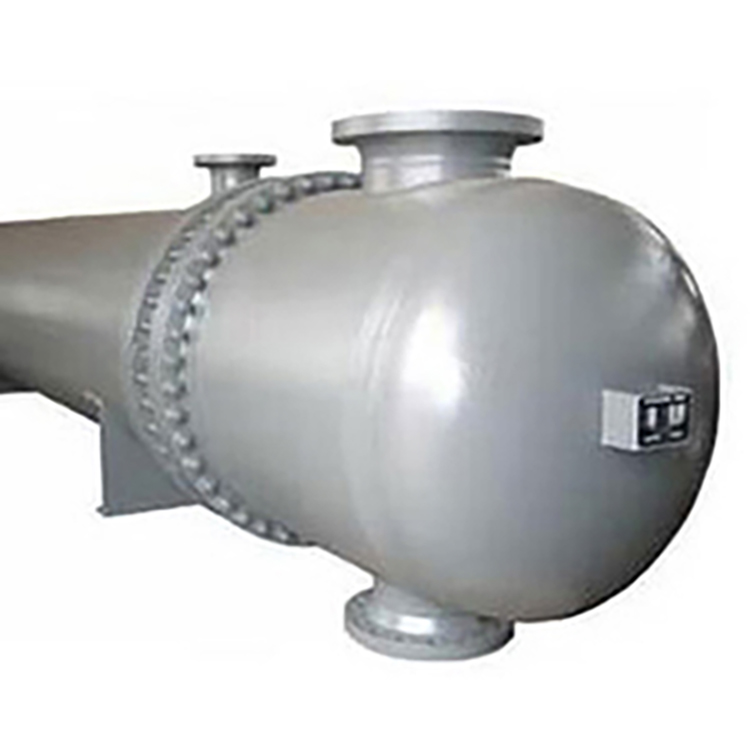
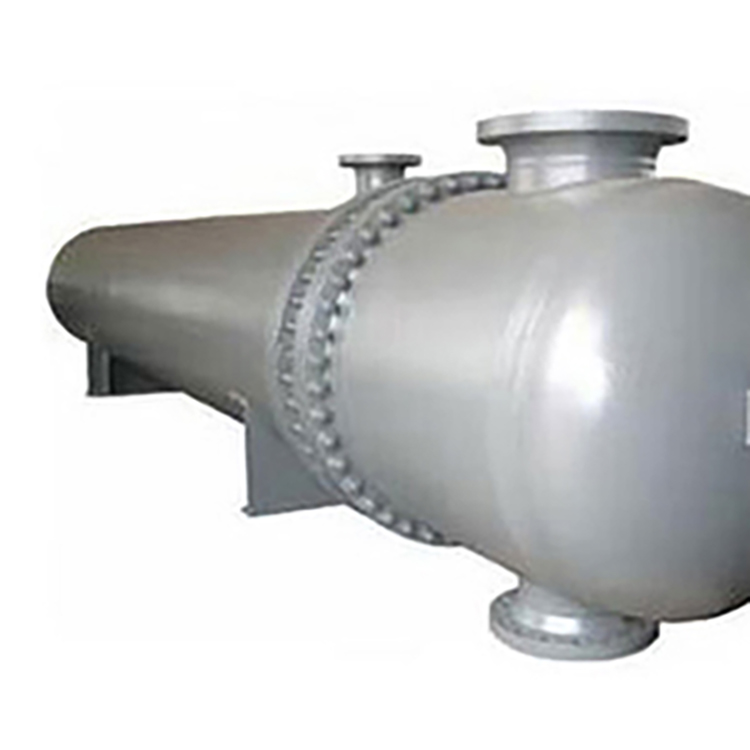
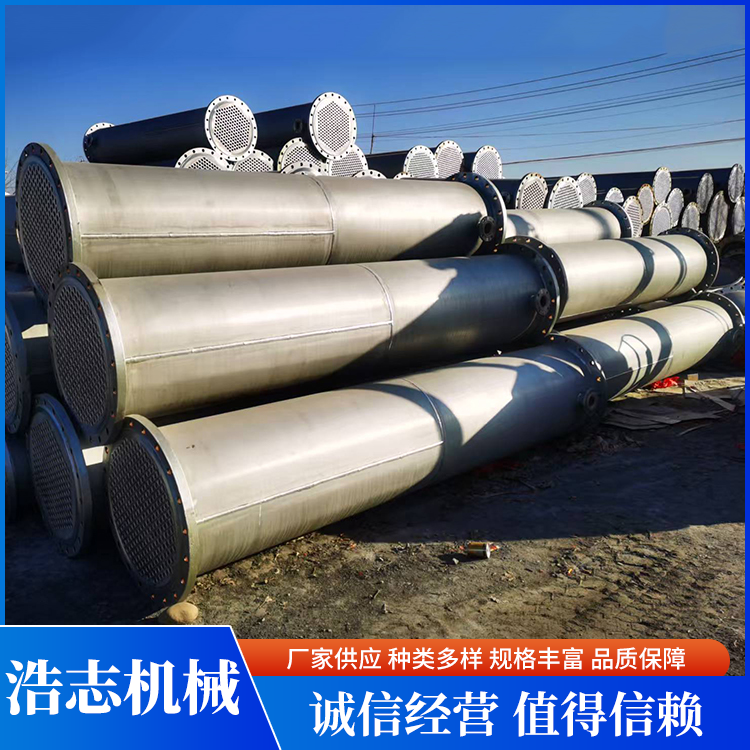
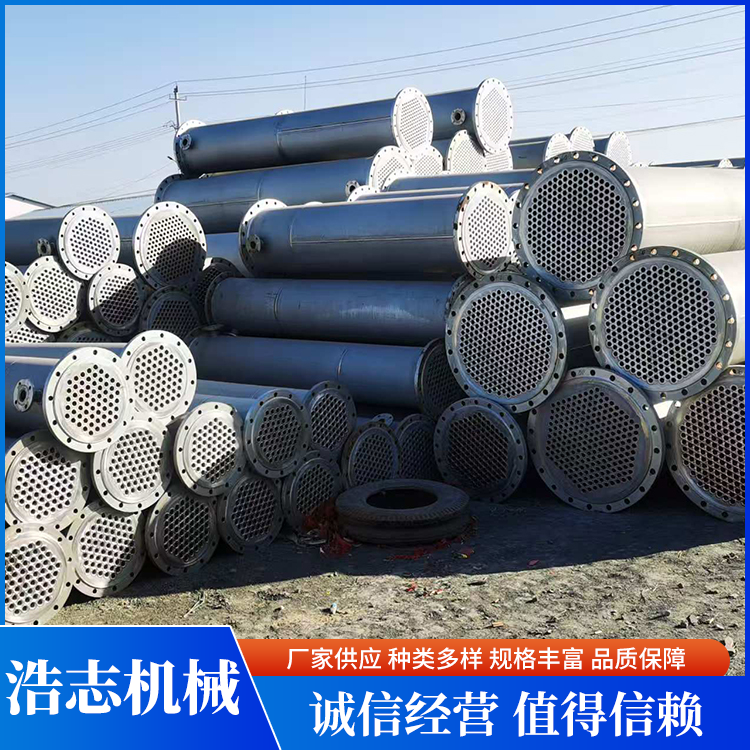
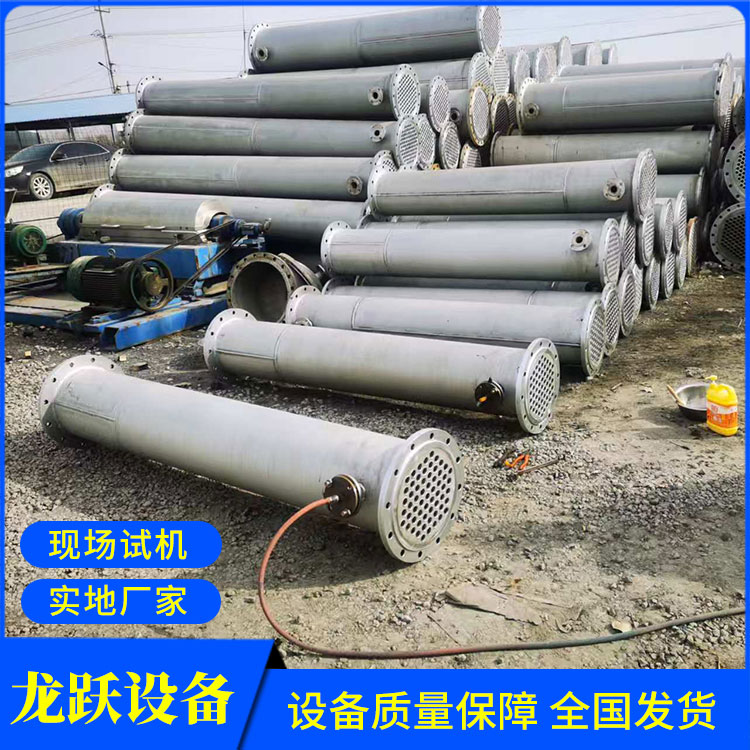
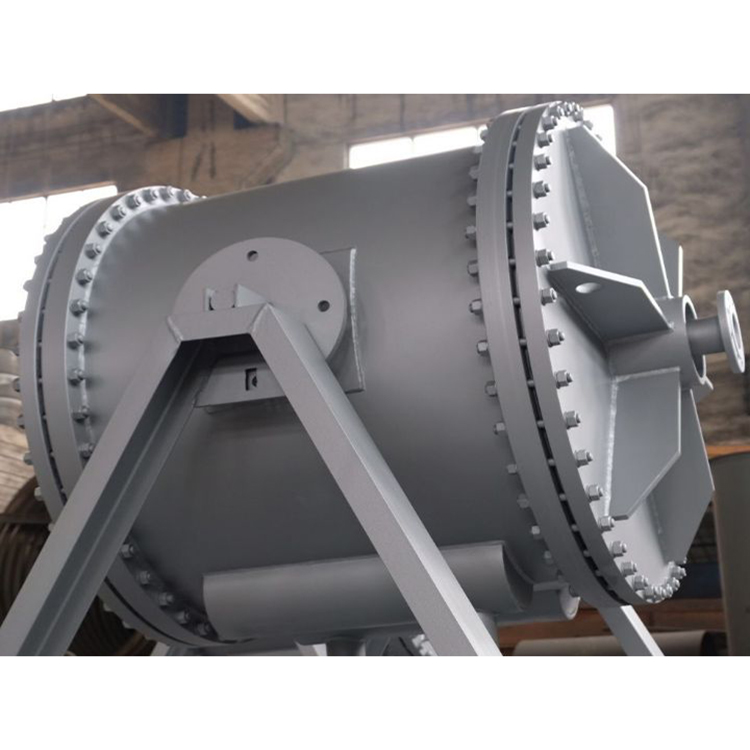
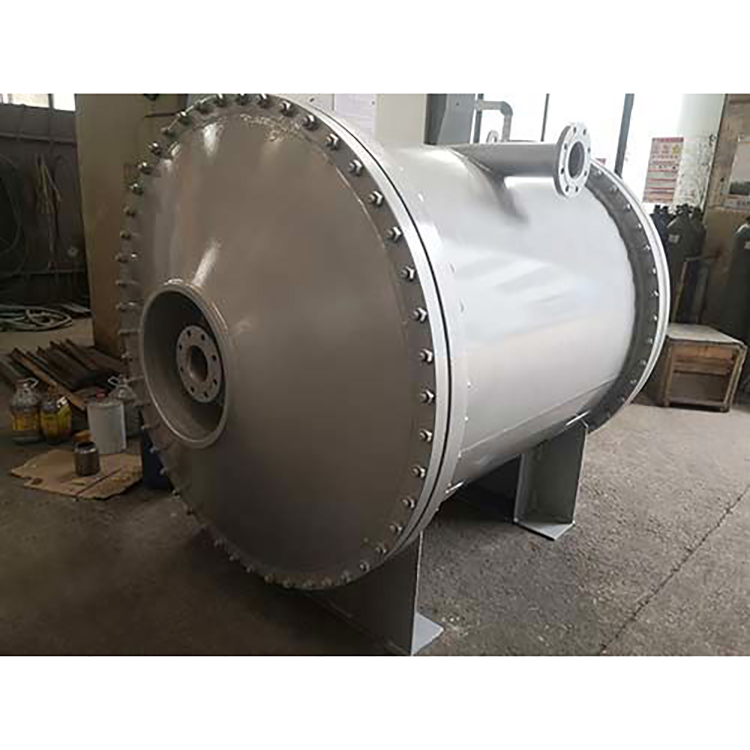
The tubular condenser is primarily composed of the shell, tube sheet (also known as the header), tube bundle, and top cover (also called the head). Parallel tube bundles are installed inside the circular shell, with the ends of the tubes fixed on the tube sheet. The tubes are generally secured to the tube sheet using welding or expansion methods. The top cover, equipped with either an inlet or outlet tube, is connected to the shell ends via bolts and flanges. It forms a fluid distribution chamber between the top cover and the tube sheet. It is widely used due to its simple and robust structure, ease of manufacturing, broad material range, high processing capacity, and strong adaptability.
During heat exchange, cooling water enters through the connection pipe at the top cover, flows within the pipes, and this path is called the tube side; harmful vapor flows in the gap between the tube bundle and the shell, and this path is called the shell side; the surface area of the tube bundle is the heat transfer area. In the condensation recovery process, whether it is the condensation of saturated vapor or the condensation with non-condensable gas, generally speaking, condensation in the shell side of the horizontal condenser is more reasonable, as it is more suitable in terms of heat transfer, pressure drop, and cleaning.
Tube-in-tube Condenser Categories
(1) Fixed tube sheet heat exchanger: Simple and compact structure, capable of withstanding high pressure, low cost, easy to clean the tube side, and easy to block or replace tubes when damage occurs.
(2) Floating Head Heat Exchanger: Easy to clean inside and between the tubes, and does not generate thermal stress.
(3) U-tube heat exchanger: Consists of a single tube plate with a bundle made up of multiple U-shaped tubes. The ends of the tubes are fixed on the same tube plate, allowing for free expansion and contraction. No thermal stress is generated when there is a temperature difference between the shell and the U-tube heat exchanger.
(4) Sliding Tube Sheet Heat Exchanger: Simple structure, low cost, and can add baffles in the tube box as needed to enhance heat transfer.
Features of Tube-in-Tube Condensers
(1) The horizontal shell-side film heat transfer coefficient is several times higher than that of vertical tube inner or outer film, and non-condensables do not accumulate in dead corners, making them easy to discharge.
(2) The cooling water flows through the pipes, which facilitates the cleaning of scale. Water flow within the pipes ensures a higher velocity, which is beneficial for reducing the rate of scale formation and increasing the heat transfer coefficient of the water film.
(3) Tube-in-tube condenser, positioning the lower tubes at the cooling water inlet to allow condensate to accumulate at the bottom for lower condensate temperature. In surface condensation systems, it's crucial to further cool the condensate. If the condensation system is too hot, contact with air can cause a significant amount of organic gases to volatilize. The outlet temperature of the condensate is generally required to be 60℃ or lower. Of course, an additional cooler can be added, but this will increase costs.