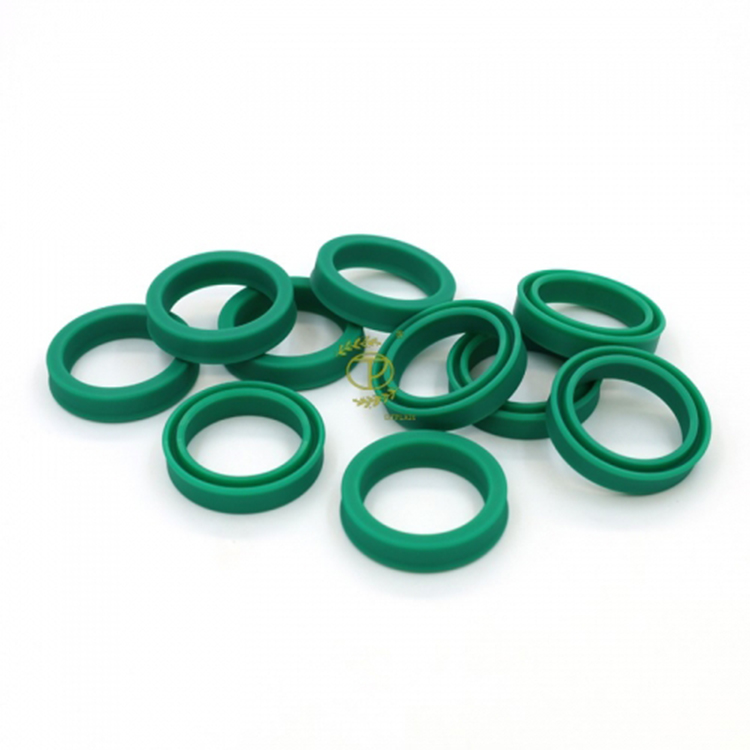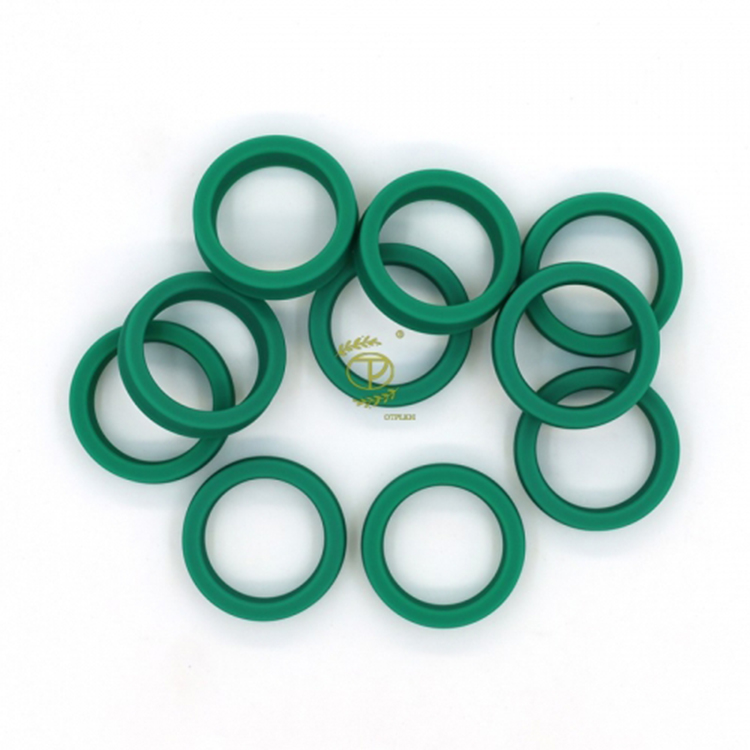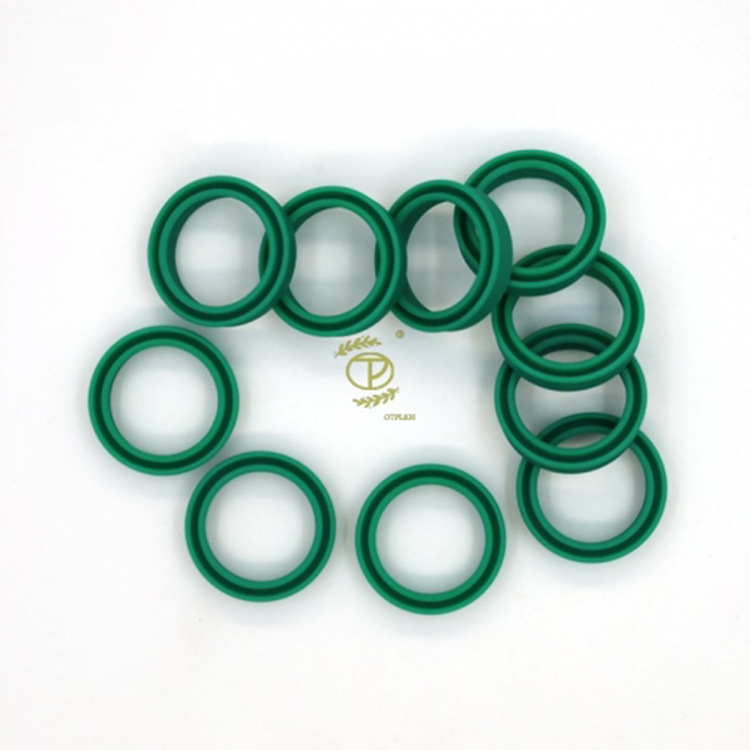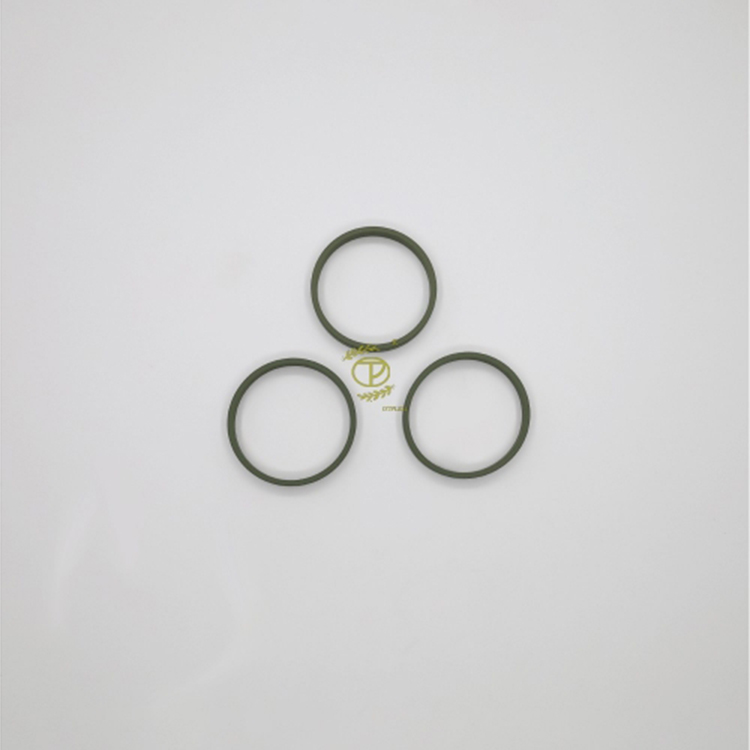

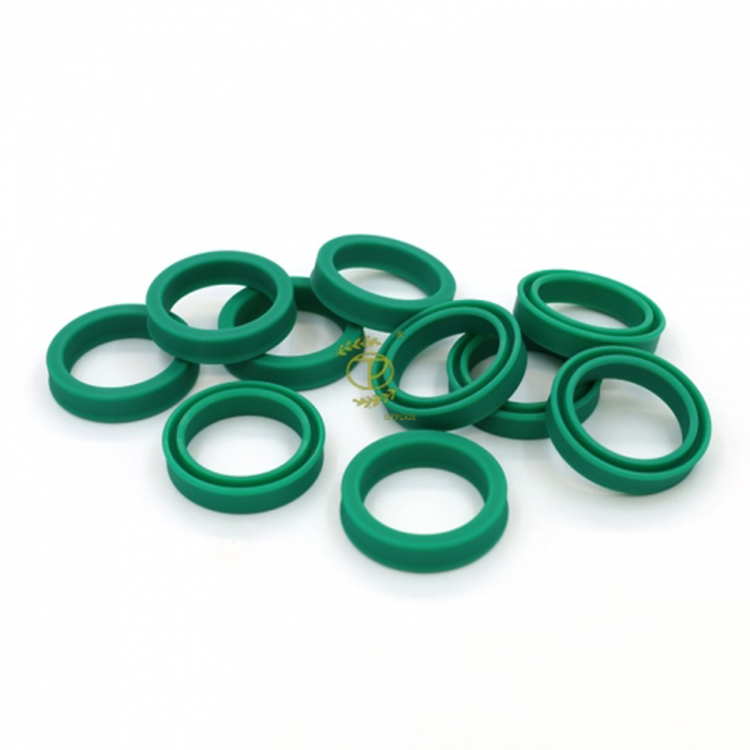

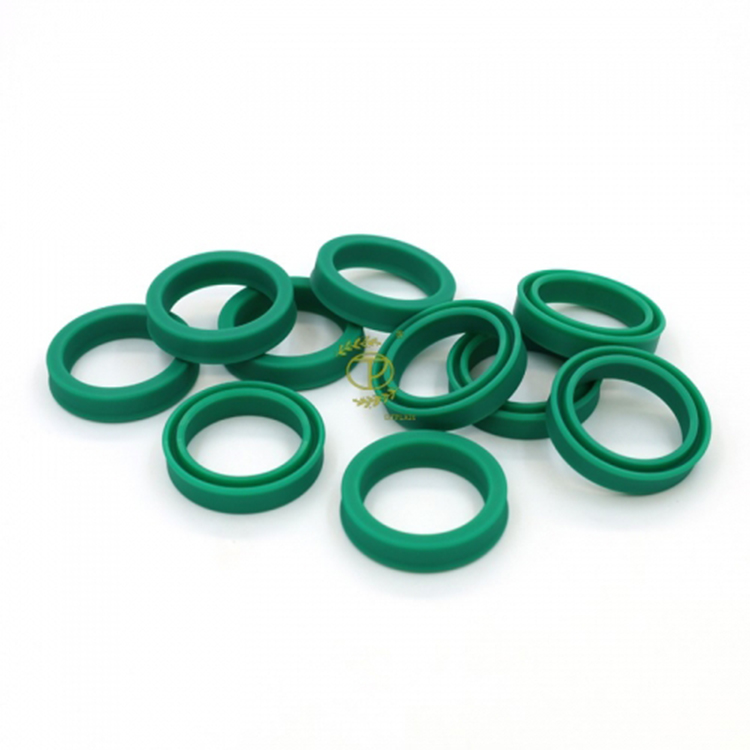
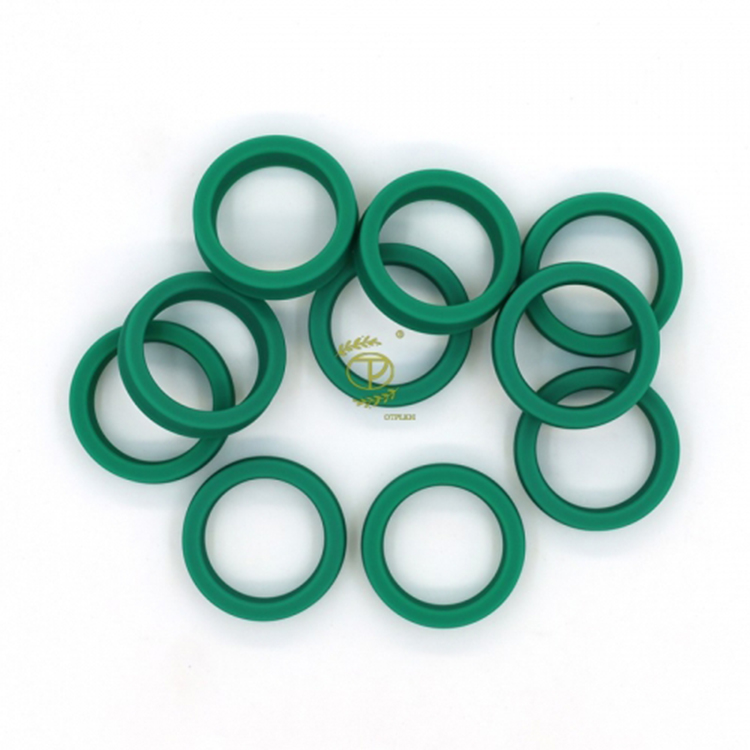
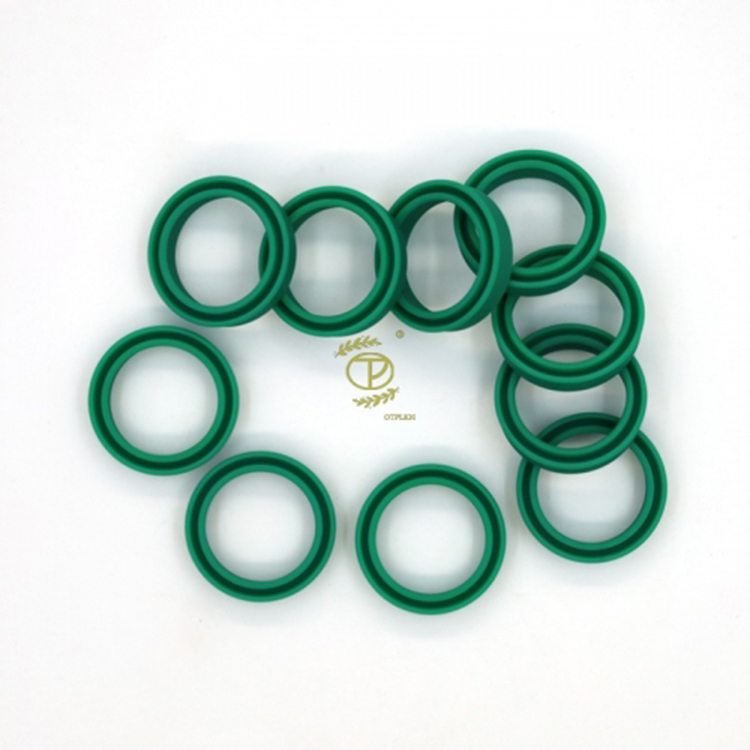


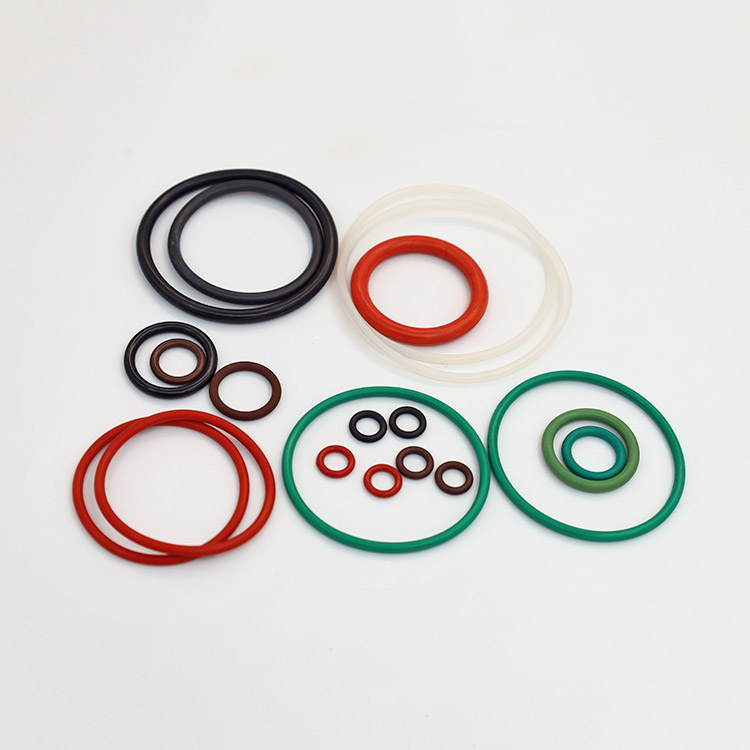

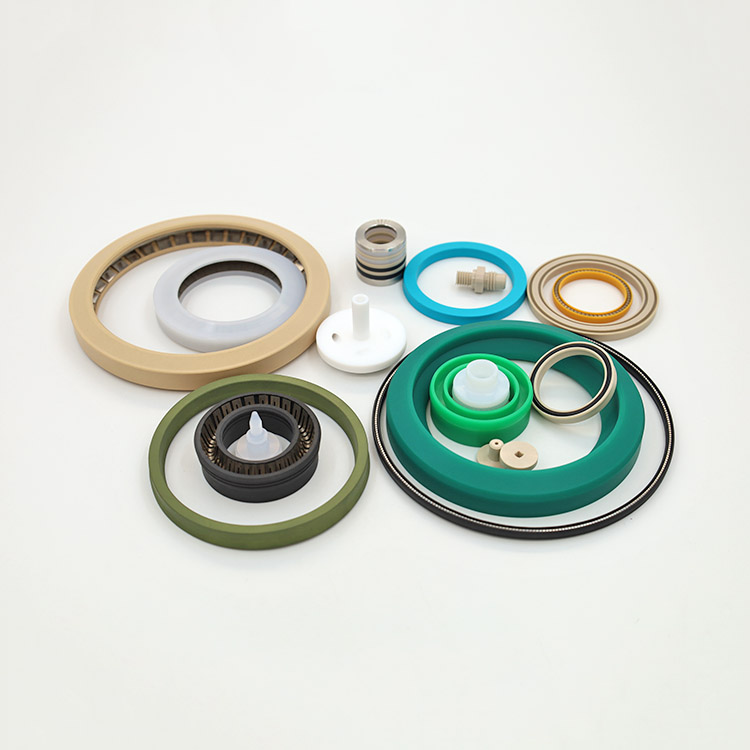





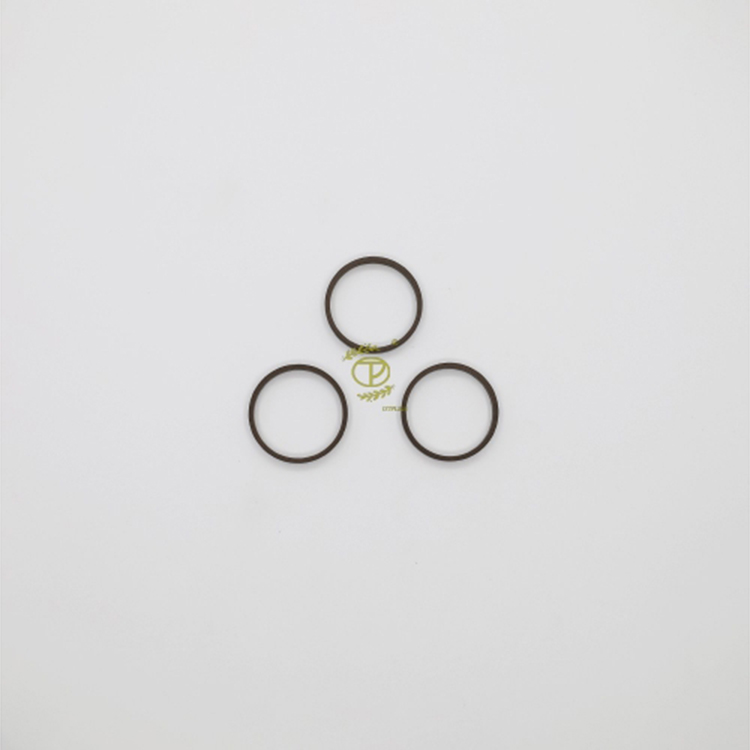
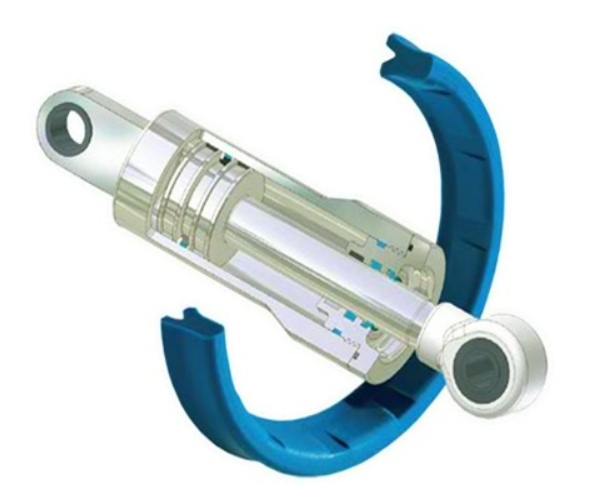
The seals are categorized into several types based on the height-to-width ratio of their cross-sections, such as wide, narrow, and Y-shaped; the Y-shaped seal has a Y-shaped cross-section and is a typical lip seal. The Y-shaped seals are further divided into those with uneven lip heights for shaft use, uneven lip heights for hole use, and equal lip heights for both shaft and hole use. The manufacturing materials of the Y-shaped seals also vary, allowing for classifications such as acrylonitrile butadiene rubber (NBR) Y-shaped seals, fluoroelastomer Y-shaped seals, and polyurethane rubber Y-shaped seals.
Product Application Range
Y-shaped seals are widely used in reciprocating motion sealing devices, with a longer service life than O-rings. The applicable working pressure for Y-shaped seals is not greater than 40MPa, and the working temperature ranges from -30 to 80℃.
Working speed range: 0.01-0.6m/s for nitrile rubber; 0.05-0.3m/s for fluororubber; and 0.01-1m/s for polyurethane rubber. The sealing performance, service life, and working pressure limit at different retaining rings are best with polyurethane rubber for the Y-shaped sealing ring.

Product Performance
Y-seal rings are commonly used sealing elements in hydraulic and pneumatic systems for reciprocating motion, offering longer service life and superior sealing performance compared to O-rings. The lip of the Y-seal is wider than a single V-seal, resulting in better sealing and requiring only one piece, thus reducing friction compared to V-seals. The Y-seal can be adjusted to meet pressure and sealing performance requirements by altering its cross-sectional structure and dimensions. The Y-seal is suitable for working pressures not exceeding 40MPa; operating temperatures of -30 to 80℃; and working speed ranges from 0.01 to 0.6m/s when made of nitrile rubber, and from 0.05 to 0.1m/s when made of polyurethane rubber.
Y-Type Ring Sealing Principle
1. For reciprocating piston sealing, a pair of Y-shaped seals is required, which increases the axial size. The cross-sectional size of a standard Y-seal is larger than that of an O-seal, necessitating larger installation groove dimensions. To facilitate installation, split grooves may be needed. Many countries have now developed Y-seals with smaller cross-sectional sizes, and issues related to size and installation are gradually being improved.
2. The function of the Y-shaped seal is mainly reflected in the piston rod or piston sealing of hydraulic cylinders. The sealing of the Y-shaped seal can be divided into two pressure conditions. When there is no medium pressure, it relies solely on the pre-compression amount of the lip to seal the seal. When there is medium pressure, the medium fills into the groove between the inner and outer lips, exerting a pressure-pushing effect on both lips, causing them to expand and then seal against the sliding parts. Therefore, when installing the Y-shaped seal, the cavity should face the medium. Outeem Sealing would like to remind you that the maximum working pressure the Y-shaped seal can withstand is about 20Mpa. When the pressure exceeds this value, an auxiliary support ring can be used to fix and increase the pressure-bearing capacity. The Y-shaped seal also has a certain self-compensating ability to deal with gradual wear during use.
3. The Y-shaped seal is suitable for sealing reciprocating motion under medium and low pressure, such as the seal between the piston and cylinder, and the piston rod and piston cap. It primarily functions by the lip tightly adhering to the sealed surface, thus providing a sealing effect. Therefore, the sealing lip is prone to wear and heat-induced deformation. Consequently, the dimensions of the lip are a crucial focus during design and measurement, including the outer and inner diameters of the lip. The pre-compressed Y-shaped seal relies on its expanded lip to adhere to the sealing mating surface. In the absence of internal pressure, only a minimal contact pressure is generated due to the deformation of the lip tip. Under sealed conditions, every point in contact with the sealing medium experiences a normal force equal to the medium's pressure, resulting in the bottom of the lip being axially compressed, the lip being circumferentially compressed, the contact with the sealing surface widening, and simultaneously, an increase in contact stress. As internal pressure rises further, the distribution and magnitude of the contact pressure change, the lip and sealing surface fit more closely, thus improving the sealing effectiveness—this is the "self-sealing" action of the Y-shaped seal. Due to this self-sealing action, a single Y-shaped seal can effectively seal pressures up to 32MPa. The effective sealing pressure of pressure-actuated seals equals the sum of the pre-pressure and fluid pressure. The Y-shaped seal applies the fluid pressure effectively to the seal through the lip, allowing the pre-pressure to be reduced to a very small value. Moreover, the higher the fluid pressure, the lesser the effect of the pre-pressure, and in high-pressure scenarios, the effect of the pre-pressure can be negligible. Reducing the sealing friction at this point is beneficial since sealing friction is proportional to the sealing contact pressure. Thus, the Y-shaped seal ensures sealing with less friction than squeeze-type seals. Y-shaped seals are mainly used for reciprocating seals. From their working principle, it is known that during installation, the lip of the Y-shaped seal should face the side with higher pressure to function effectively. Therefore, the Y-shaped seal can only act in one direction.
4. As the mating parts move at working speed, a sealing oil film forms between the sealing lip and the sliding surface. The presence of this oil film enhances the friction conditions of the seal ring, reducing wear; the oil film also serves as a sealing function in pneumatic seals. During the reciprocating motion of hydraulic components, the thickness of the oil film varies when the moving parts extend and retract, and this difference in oil film thickness can lead to leakage. Therefore, even when the Y-shaped ring is operating normally, there is a small amount of leakage, which increases with higher reciprocating speeds. This is because at higher reciprocating speeds, the frequency of reciprocation increases, and the fluid dynamic effect of the oil film causes an increase in its thickness, leading to rapid accumulation. As the viscosity of the working oil increases, the oil film thickness also increases, thereby increasing the amount of leakage caused by reciprocation. However, since the viscosity of hydraulic oil decreases with temperature rise, when hydraulic equipment starts up at low temperatures, there is a greater initial leakage. As the temperature rises during operation due to various losses, the leakage gradually decreases. The leakage conditions of the piston during reciprocating travel differ. When the internal pressure is low, the leakage during the retracting stroke increases with increasing internal pressure; in the inserting stroke, it decreases with increasing internal pressure. When the internal pressure is sufficiently high (approximately greater than 7.5 MPa), the leakage no longer varies with the internal pressure.
5. As the internal pressure within the Y-shaped sealing ring, p1, is low, the frictional force increases with the rise in internal pressure. Once the internal pressure is sufficiently high, the frictional force no longer shows significant changes. If lubrication is good, there may even be a downward trend. International tests on the starting friction of Y-shaped rings indicate that there is little correlation between starting friction and stopping time, which distinguishes it from the O-shaped ring.
6. This is highly beneficial for machinery with intermittent motion. Additionally, when the internal pressure is low, the starting friction increases with the rise of internal pressure. However, once the internal pressure exceeds 5 MPa, the starting friction becomes independent of the internal pressure. Therefore, for high-pressure intermittent machinery, there is no issue of excessive starting friction. After the sealing lip wears, due to the action of the medium pressure, the lip has a certain degree of automatic compensation capability.
Common Material Medium

Y-shaped seals are commonly made of polyurethane rubber, offering excellent sealing performance and a long service life. They also have a high working pressure limit when used with different retaining rings.
For example, common materials for Y-shaped rings include nitrile rubber, fluororubber, and polyurethane rubber.
Nitrile rubber's oil resistance improves with increased Acrylonitrile content. Generally, it exhibits excellent resistance to fuel oils and aromatic solvents, but is not resistant to ketones, esters, and halogenated hydrocarbons.
Fluororubber is generally superior to nitrile rubber, boasting exceptional heat and oil resistance properties.
Polyurethane rubber boasts excellent wear resistance and good impermeability, with moderate temperature resistance, only medium oil, oxygen, and ozone aging resistance. It is not resistant to acids, bases, water, steam, and ketones.
In summary, it depends on which material you choose for the Y-shaped ring.
Recommend fluororubber, with nitrile rubber as a secondary choice; of course, the former offers better performance at a slightly higher price!
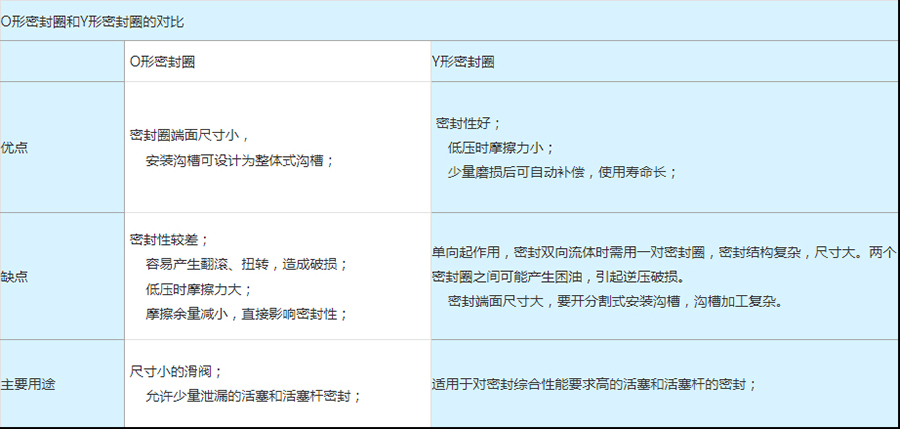
Appendix: Comparison of both products' performance parameters