









I. Applications, Features, Structure, and Operating Process
1. Application
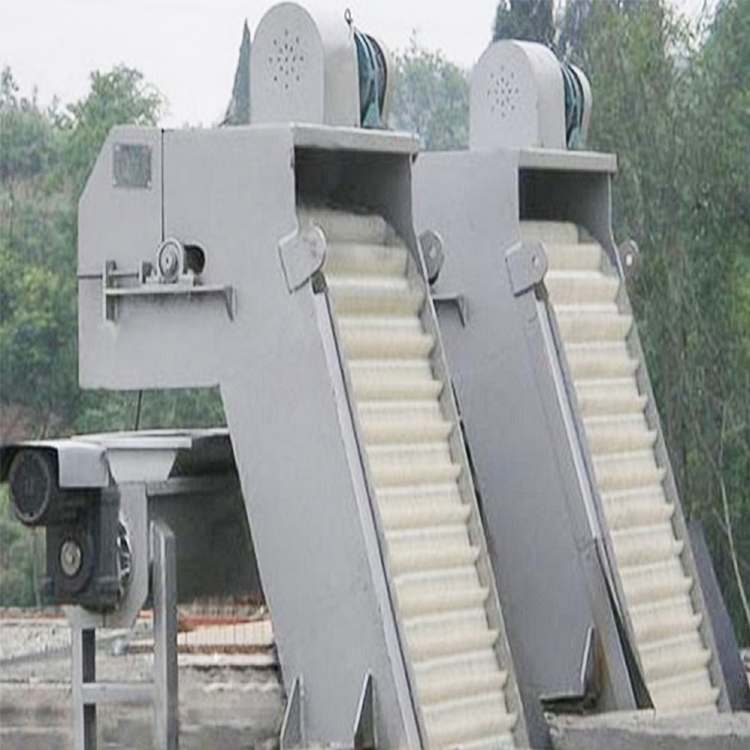
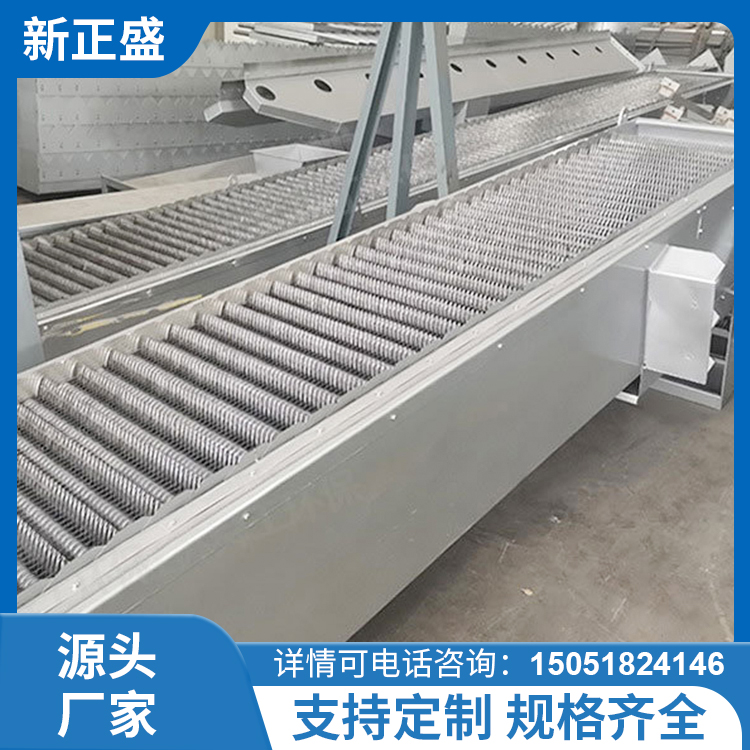
GSHZ series cleaning machines are widely used in water supply and drainage projects to intercept floating debris or separate impurities, ensuring the safe operation of pumps and subsequent processes.
Model Representation Method:
GSHZ—————————— 600 x 2

Channel Depth m
Equipment Width mm
Roto-Grate Debris Cleaning Machine
2、Product Features:
2.1 Fewer transmission components, simple structure, integrated design, easy for maintenance and management.
2.2 Excellent corrosion resistance, energy-saving, and low noise.
2.3 ExcludingContinuous dirty action, clean slag removal, high separation efficiency.
3. Construction and Working Process:
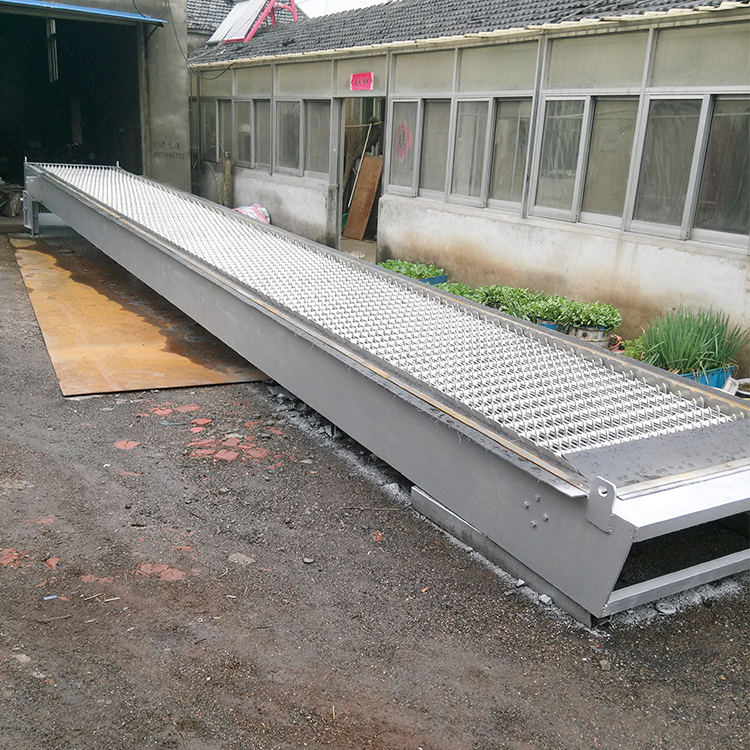
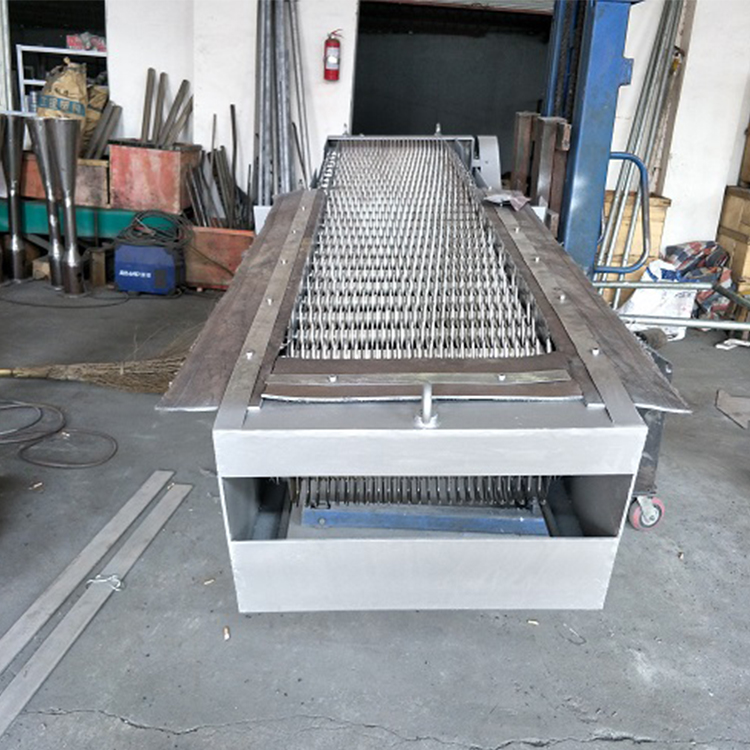
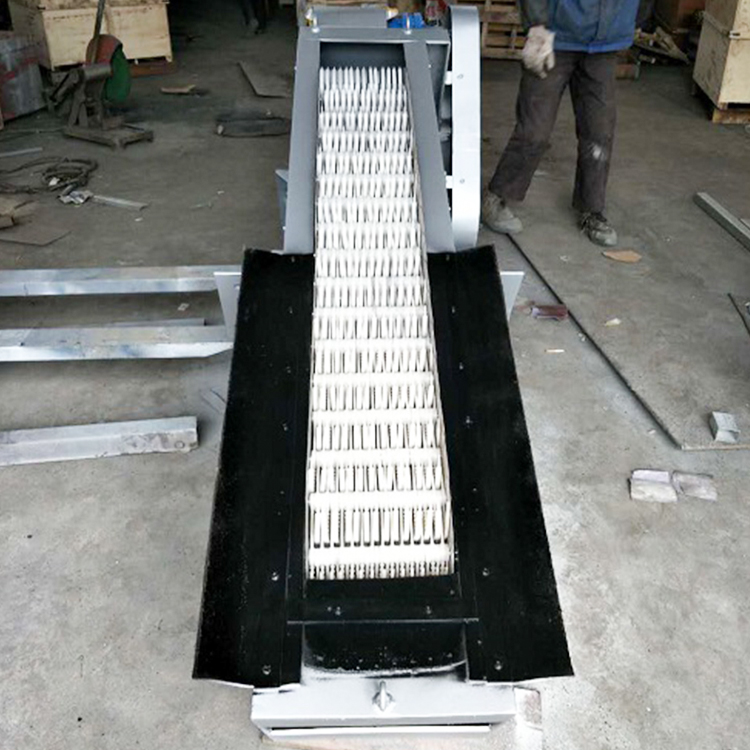
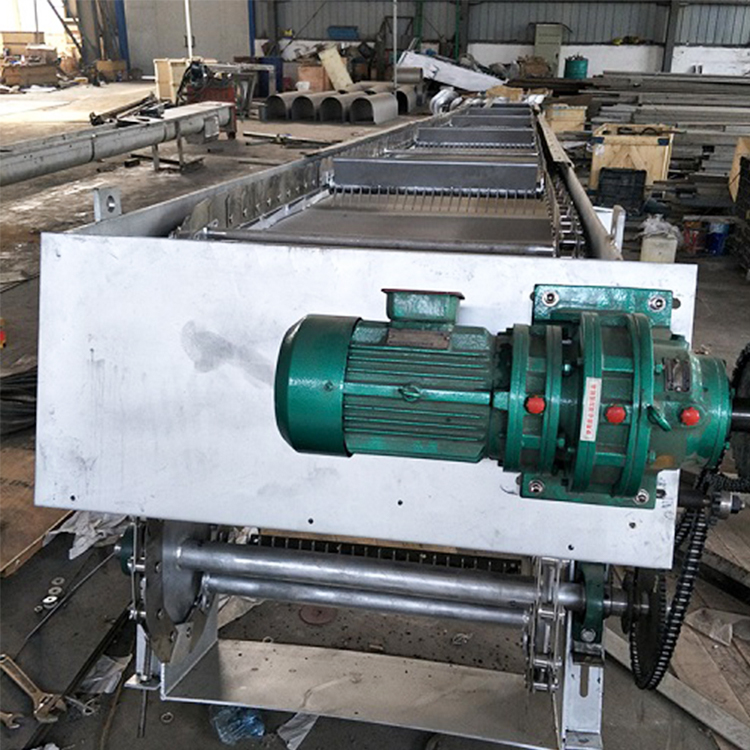
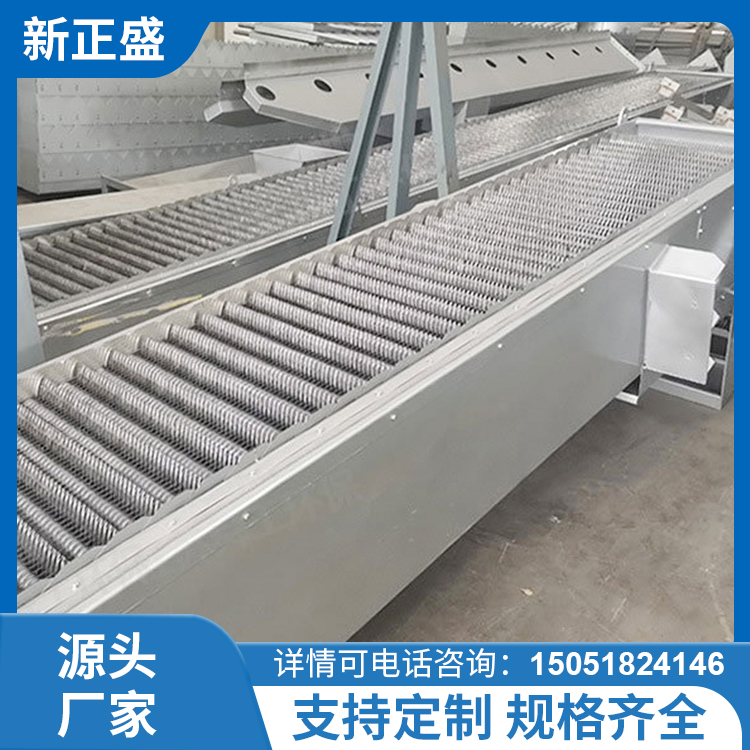
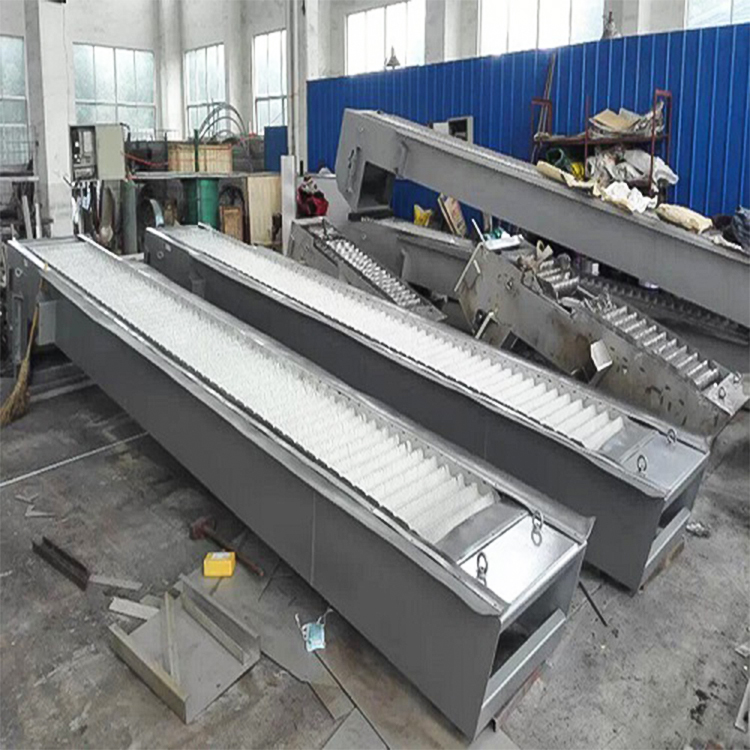
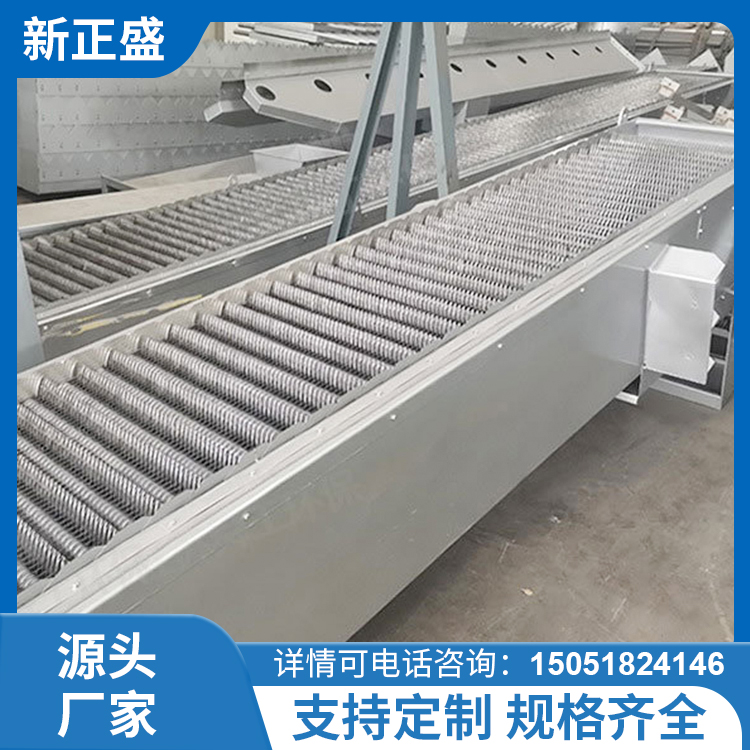
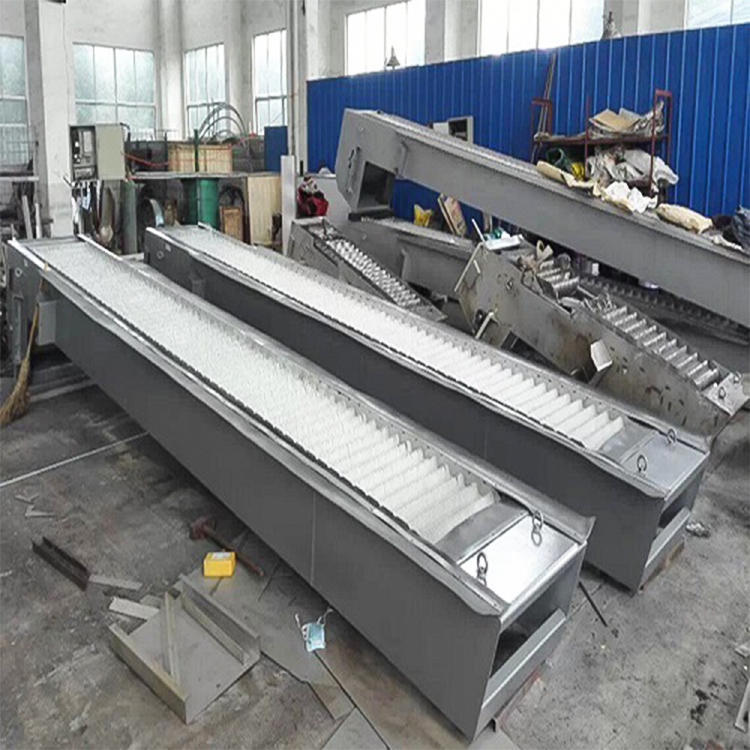
3.1. The rotary grille cleaner is mainly composed of a reducer, frame, scraper chain, chain, and baffles.Control cabinets and other components.
3.2 Grilles are outdoor type, capable of normal operation in an environmental temperature range of -5 to 40°C, all componentsThe design ensures a long service life in harsh environments.
3.The 3 grates operate intermittently but can also run continuously for 24 hours when necessary.
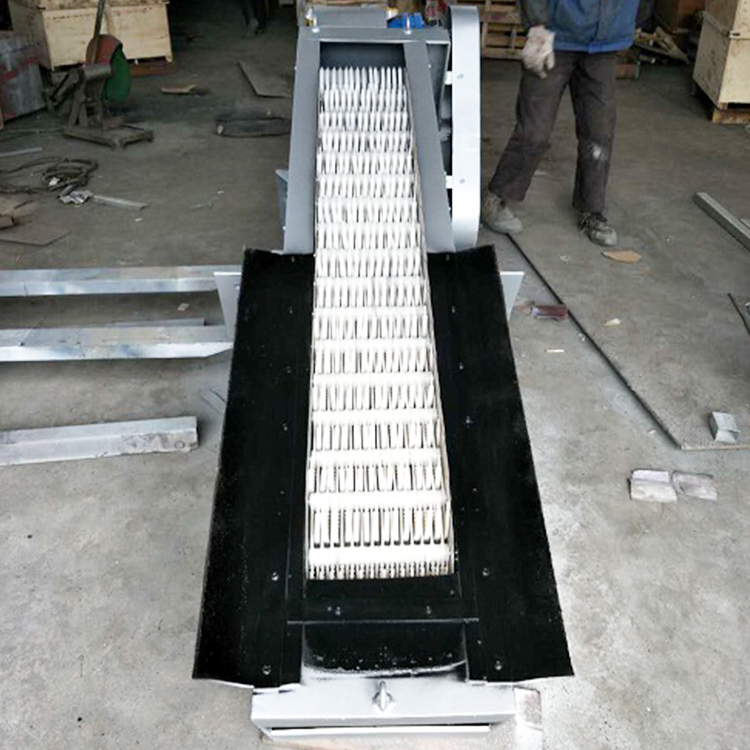
3.The 4-tined chain is composed of several groups of special-shaped tines made of stainless steel or nylon, assembled in a certain order on the tine shaft to form a closed tined chain, with the lower part installed in the water body of the inlet channel. As the drive system drives the sprocket to rotate uniformly and in a fixed direction, the entire tined chain moves from top to bottom, separating solid debris from the liquid. The fluid passes through the gaps between the tines, with the entire working process continuously proceeding.
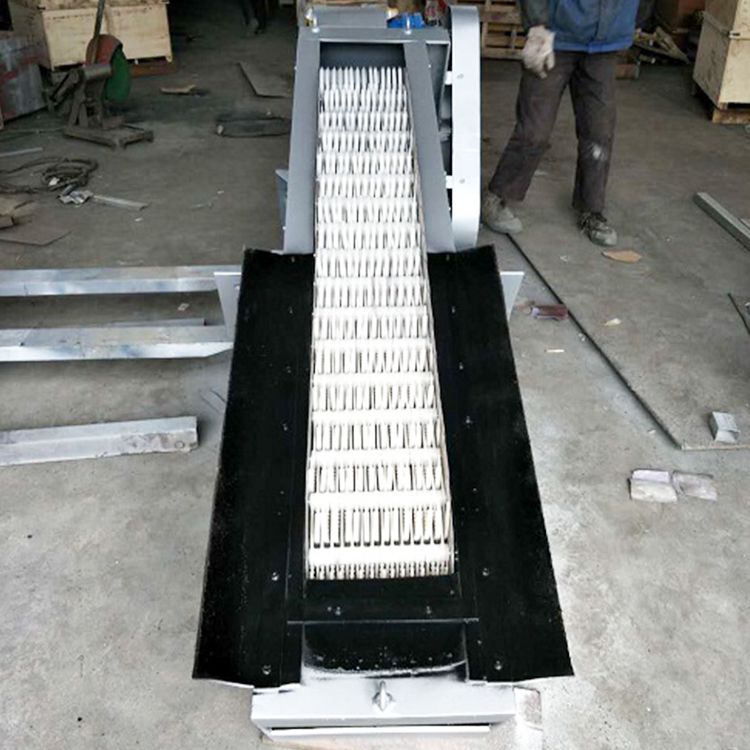
3.5 Due to the unique structural shape of the teeth, the rake chain carries debris to the top for reverse movement.The front and rear rake teeth generate a relative self-cleaning motion, causing debris to fall off under gravity. Additionally, a pair of rubber brush plates is set at the back of the equipment to ensure that each row of rake teeth is thoroughly cleaned when they reach that position.
3.6 Grille brackets are securely fastened to both sides of the concrete channel with base bolts, making them easy to disassemble. GrilleThe grate installation ensures that all wastewater in the channel flows through the格栅, with no dead spots and no accumulation of debris at the bottom.
3.7-bar grille frame can withstand loads of large floating objects, with a rated load of ≥1000N, inOperation at high water level differences results in no significant offset, damage, or deformation.
3.8 Mesh grille equipped with mechanical overload protection, which triggers an alarm within the electrical control box upon overload, and automaticallyPower on/off.
3.The motor drive unit and the grille guard are integrated as one, with the motor power supply at 380V, 3-phase, 50Hz.IP ratingIP55, F Class Insulation.
3.10The stainless steel label is securely fastened in a prominent location on the equipment, featuring embossed numbers.Character MarkAspiration.
II. Main Technical Parameters and Outline Drawing
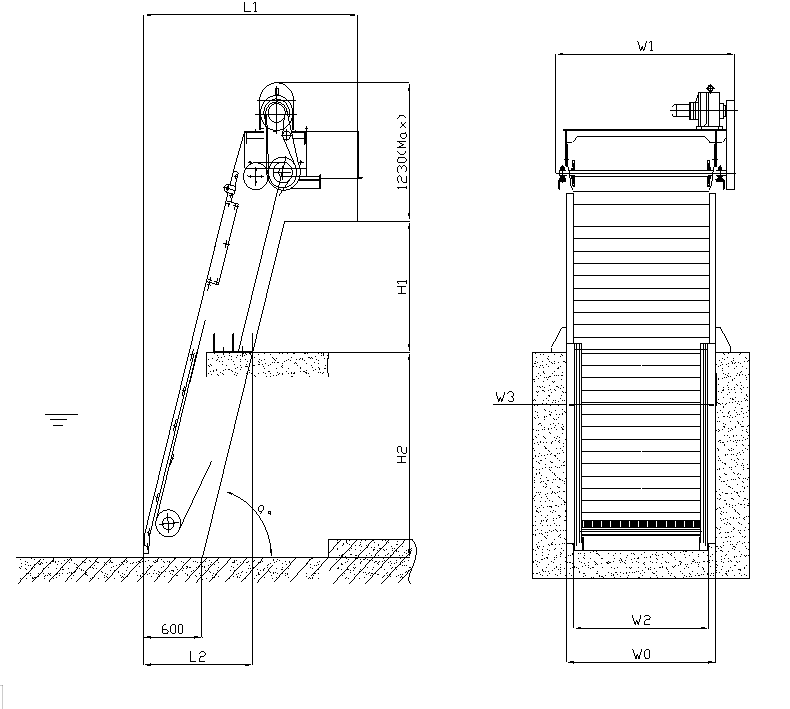
Parameter meaning:
W0: Equipment Width
W1:外形 Width
W2: Effective Grid Width
W3: Channel Width
Installation Angle
H1: Deep Channel
H2: Sludge Height
Total Installation Length
L2: Drainage channel length
Note: The above data can be determined according to the user's requirements, see samples and installation diagrams for details.
Section 3: Equipment Installation and Commissioning Requirements
1. Check if the foundation dimensions match the base size prior to lifting and installation.
2. After verifying the basic dimensions, place the equipment into the base so that the center of the equipment aligns with the center of the grate channel, ensuring the deviation between the two centers does not exceed 20mm.
3. Remove the safety cover and loosen the tension on the belt and pulley, then remove the sprocket chain at the reducer end. Power on and test the reducer to ensure the direction of rotation is correct.
4. Adjust the tension of the tensioner wheel and gear rack.
5. After the unit operates normally under no-load with the power connected, then proceed to operate under load.
6. In operation, if debris such as fiber materials block the sprocket chain, it should be cleared promptly to prevent any disruption to the normal operation of the equipment.
7. If the motor runs normally but the gear rack does not, it indicates that the overload has caused the safety pin to break. The overload safety pin must be replaced.
8. Use grease for lubricating roller bearings and regularly check if there is enough oil. Inject grease through the oil nozzle on the bearing housing using a grease gun.
Four、Gearbox Maintenance
1. Lubrication Method:
Table of lubrication methods for planetary pinion reducer in standard installation form: (See table below)
Lubrication method | Lubricant | ||||||||||
Single-stage | Two-stage | Grade 3 | Ambient Temperature (°C) | Extreme Pressure Gear Oil | ISO Extreme Pressure Gear Oil | ||||||
Model No. | Horizontal installation | Vertical Mount | Model Number | Horizontal installation | Vertical installation | Model Number | Horizontal Installation | Vertical Mount | -5-10 | L-CKC68 | EP68 |
B09-2 | Smooth grease | B10-20 | Lubricating grease | B310 | Lubricating grease | 0-35 | L-CKC100 L-CKC150 | EP150 | |||
B3-9 | Oil Bath | Lubricating pump | B31-95 | Oil Bath | Lubrication Pump | B420-953 | Oil Bath | Lubrication Pump | 30-50 | L-CKC220 L-CKC320 L-CKC460 | EP220-460 |
Note: When the reducer is lubricated with grease, it is recommended to use 2# Lithium Grease, 2# Extreme Pressure Lithium Grease, or 00# Gearbox Grease.
2. The reducer must be lubricated before use. For ease of assembly and transportation, reducers at the factory are generally not lubricated.
3. The gear reducer with oil lubrication has been pre-filled with grease before shipment.
4. When the harmonic drive reducer operates under severe working conditions, frequent start-stop cycles, and high or low temperatures, re-evaluate the lubricant.
5. When adding lubricating oil, the oil level should not exceed the upper limit of the oil gauge nor fall below the lower limit. During operation, the oil level should be regularly checked and the same brand of oil should be replenished promptly.
Helical gear reducer with standard installation form: oil and grease filling quantity:
Model Type (Horizontal, Vertical) | B09 | B0 | B1 | B2 | B10 | B20 | ||||
Lubricant Quantity (kg) | 0.14 | 0.16 | 0.37 | 0.75 | 0.43 | 0.85 | ||||
Model Number | B3 | B4 | B5 | B6 | B7 | B8 | B9 | B31 | B41 | |
Lubricant Volume (L) | Lay | 1.4 | 2.2 | 4.5 | 7 | 14 | 30 | 56 | 1.5 | 2.2 |
Established | 2.5 | 3.8 | 6 | 11 | 14 | 30 | 60 | 3 | 4 | |
Model Number | B42 | B52 | B53 | B63 | B74 | B84 | B85 | B95 | ||
Lubricant Quantity (L) | Lying down | 3.3 | 6 | 6.3 | 10 | 16 | 35 | 36 | 70 | |
Established | 4 | 6 | 6.5 | 11 | 16 | 35 | 36 | 70 | ||
Note: The amount of oil for the reducer should be measured according to the oil gauge; the parameters in the table are for reference only.
6. Lubricant Replacement System:
DI change once, then perform a DI change after the reducer operates for the first 300 hours. During the change, remove any remaining oil. For subsequent changes, if the equipment operates continuously for 10 hours or more per day, change every 3 months; if it operates for less than 10 hours per day, change every 6 hours.
7. Oil Replacement System: Replace every 6 months.
8. Before restarting a reducer that has been unused for a long time, it is necessary to replace the lubricating oil or grease.
9. No injection of unclean or corrosive lubricants is permitted.
5. Control Box Installation, Use, and Maintenance
Installation and Usage Instructions:
Rated voltage is 380V, grounding resistance less than 4Ω, with safe and reliable grounding.
1. Turn on the electric control, and close the circuit breaker inside the box.
2. Control by pressing the button on the box door as needed.
3. Do not use a time-delay circuit breaker and securely lock the box door.
4. The electrical control box is outdoor type, with IP55 protection class.
Maintenance:
1. Regular inspections of the electrical control box are required to check for loose contacts and to remove dust.
2. If water accidentally enters, discontinue use and allow it to air dry or dry naturally.
3. Properly manage the electrical control box to prevent unauthorized access and damage.
4. Maintenance and repairs should be conducted by a qualified electrician.