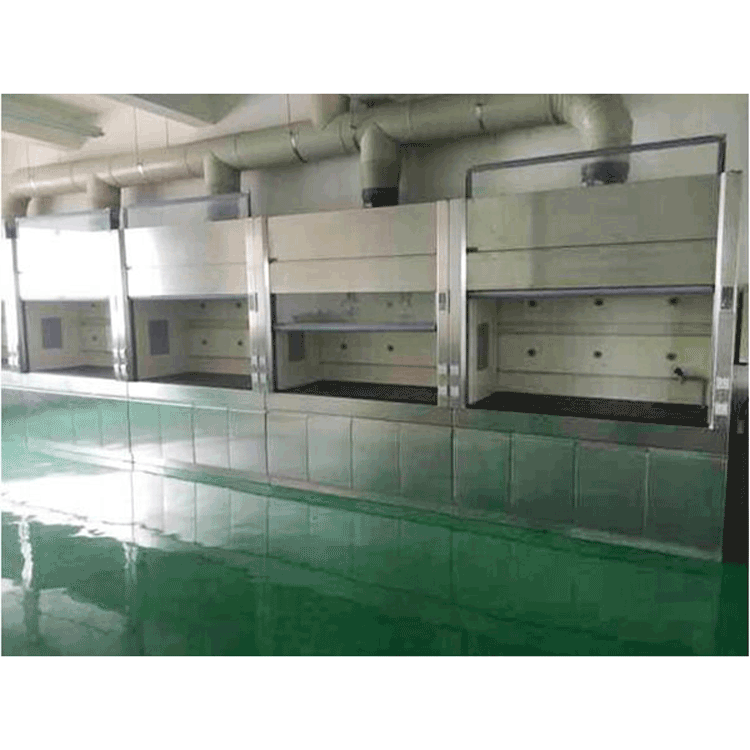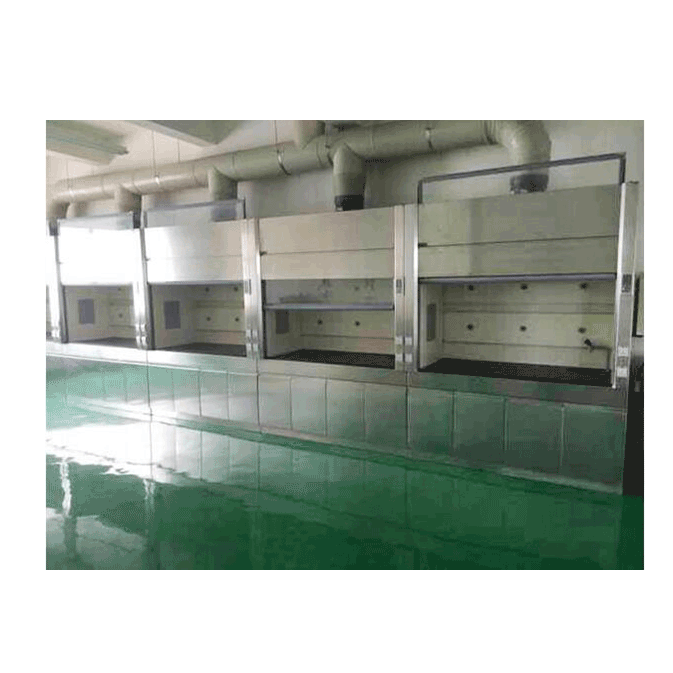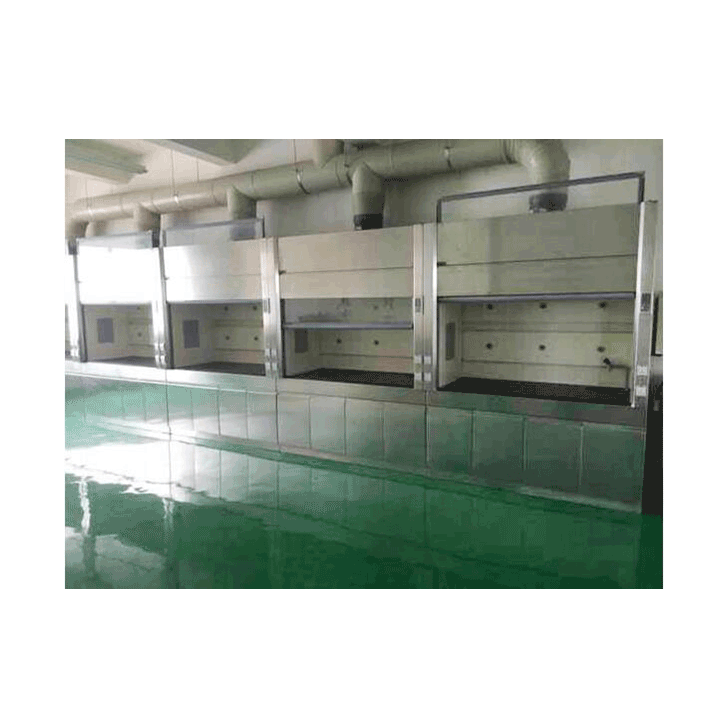









Stainless Steel Fume Hood

Fume hoods are essential safety equipment in laboratories, primarily used for expelling indoor exhaust gases. They are commonly used laboratory equipment in situations where harmful gases need to be vented and for cleaning and waste disposal during experiments.
The primary function of a fume hood: The main function of a fume hood is exhaust, particularly in chemical laboratories where harmful gases, odors, and flammable, explosive, or corrosive substances are produced during experiments. To ensure user safety and prevent the spread of contaminants from experiments, fume hoods are used near the source of pollution. Historically, fewer fume hoods were used, reserved only for experiments involving harmful and dangerous gases or those that generate a large amount of heat. Fume hoods were solely responsible for auxiliary functions of the lab table.
The purpose of using a fume hood is to exhaust harmful gases generated during experiments, thereby protecting the health of the experimenters. This means that the fume hood must have high safety and operability, which requires it to possess the following functions:
Release Function: The system should be equipped with an institution to dilute and discharge harmful gases generated within the fume hood by absorbing external air from outside the cabinet, before releasing them outdoors.
Non-backflow feature: The function should ensure that the airflow generated by the exhaust fan within the fume hood does not reverse and flow back into the room. To achieve this function, it is preferable to connect a single fume hood with a single exhaust fan using a single pipeline. If a single pipeline connection is not possible, the fume hood should only be connected to another within the same room on the same level. The ventilation fan should be installed as close to the end of the pipeline (or at the top of the level) as possible.
Isolation Feature: A non-slip glass viewing window should be installed in front of the fume hood to separate the interior and exterior of the hood.
Supplementary Feature: Must have a channel or alternative device to draw in air from outside the fume hood when releasing harmful gases.
Airflow control function: An intake speed is required to prevent harmful gases from escaping.
Heat and corrosion-resistant properties: Some fume hoods need to be equipped with electric furnaces, and some experiments generate a large amount of corrosive acidic and alkaline gases. The worktop, lining, side panels, and selected water and gas nozzles of the fume hood should all be corrosion-resistant.