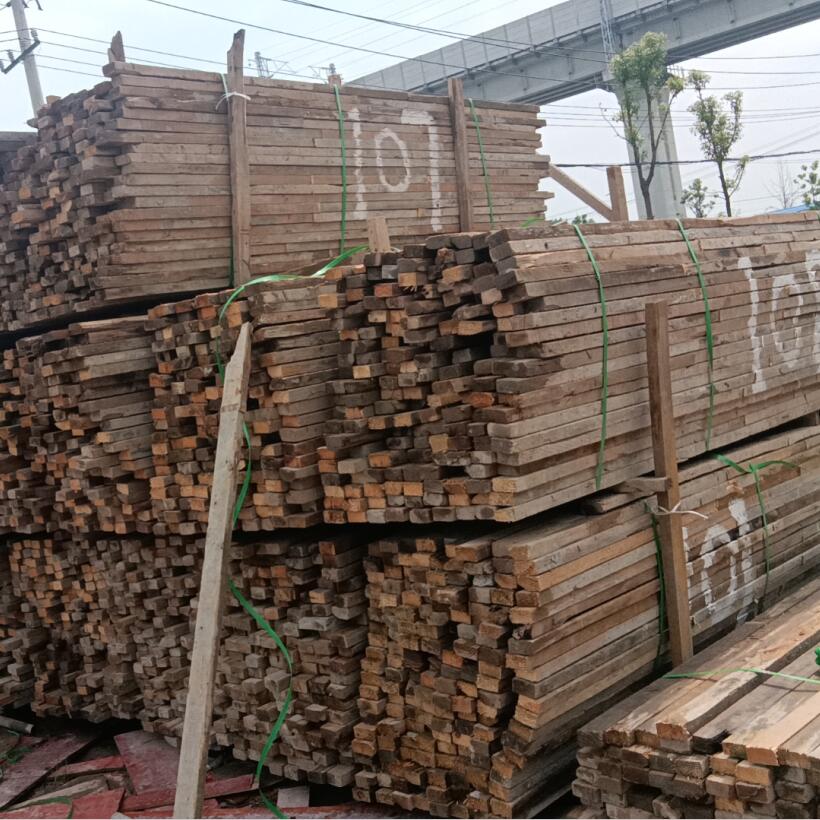



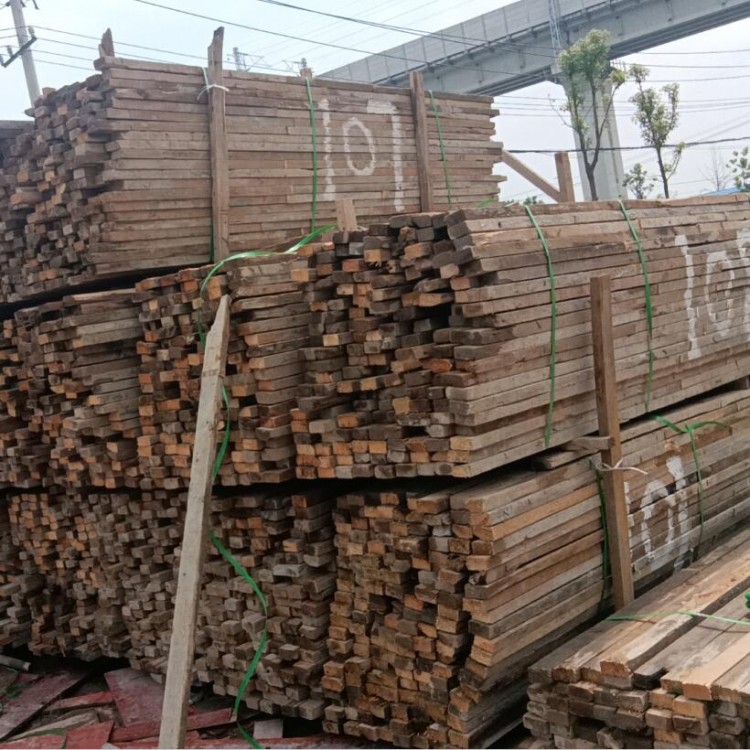










Solid wood strips come in a variety of colors, suitable for various home decoration styles. With the increasing environmental awareness among people, there has been a growing number of users opting for finger-jointed strips over solid wood panels in recent years. Considering all factors, finger-jointed strips are superior to solid wood panels. Finger-jointed boards are constructed from wood units, with the defective parts of the wood removed during the process, thus possessing the same physical and mechanical properties as wood, and some properties even exceed those of the same type of wood. The advantages are summarized as follows.
(1) Offers mechanical strength 1.5 times greater than natural solid wood
Natural wood may have knots, cracks, and decay, but finger-jointed boards are made from material free of such defects, bonded together with strong resin glue. The material is not only even and dry but also has a strength that exceeds that of solid wood by 1.5 times. Additionally, for beams of the same span, the cross-section can be made smaller. For beams of the same cross-section, the span can be larger.

(2) High strength-to-weight ratio
Compared to W-beam steel products and reinforced concrete, they can significantly reduce weight. In terms of strength per unit weight, when using natural solid wood, the tensile strength is four times that of iron, and the compressive strength is about five times that of concrete.
When made from cedar, finger-jointed boards significantly enhance strength. Moreover, compared to buildings constructed with I-beams and reinforced concrete, finger-jointed board buildings can greatly reduce weight, allowing for smaller foundations, easier construction, and decreased building costs.