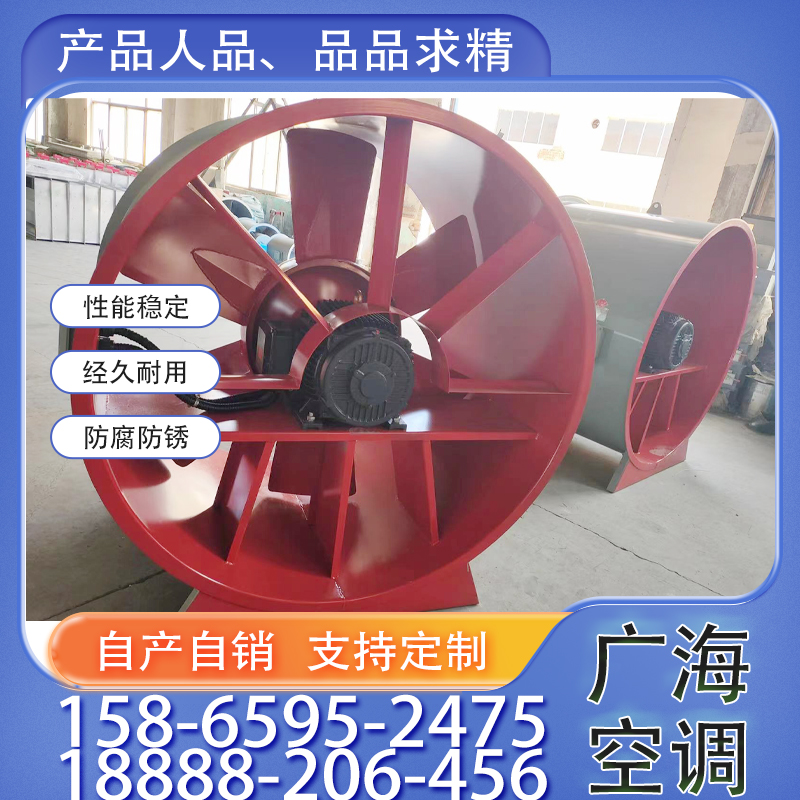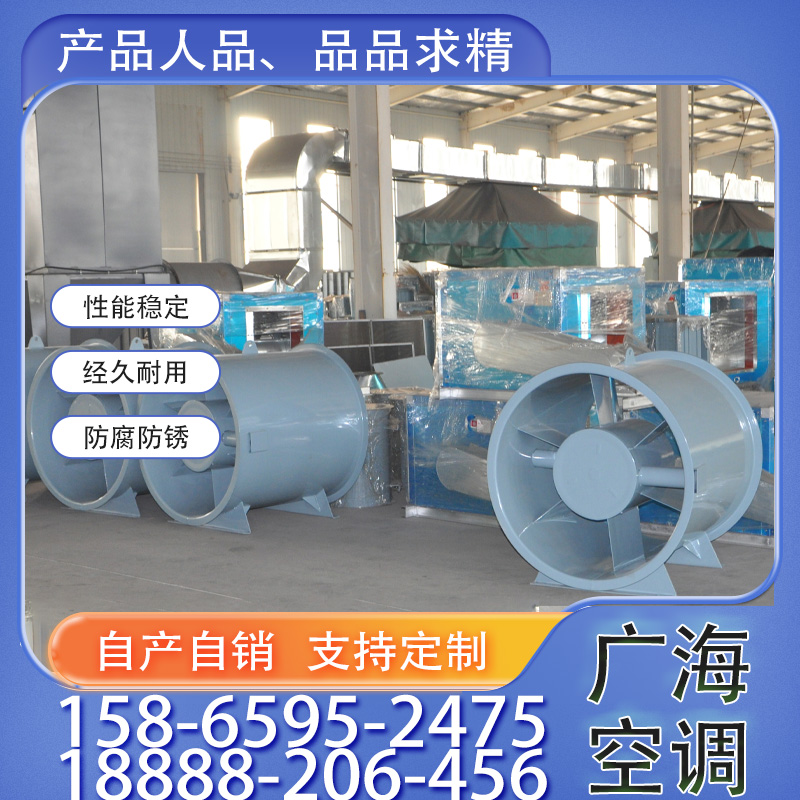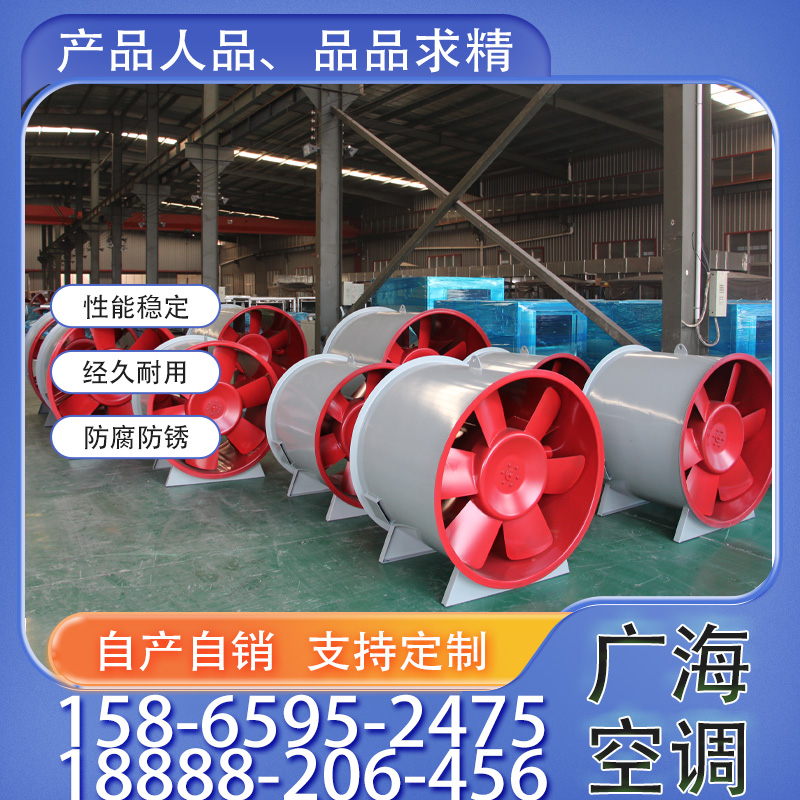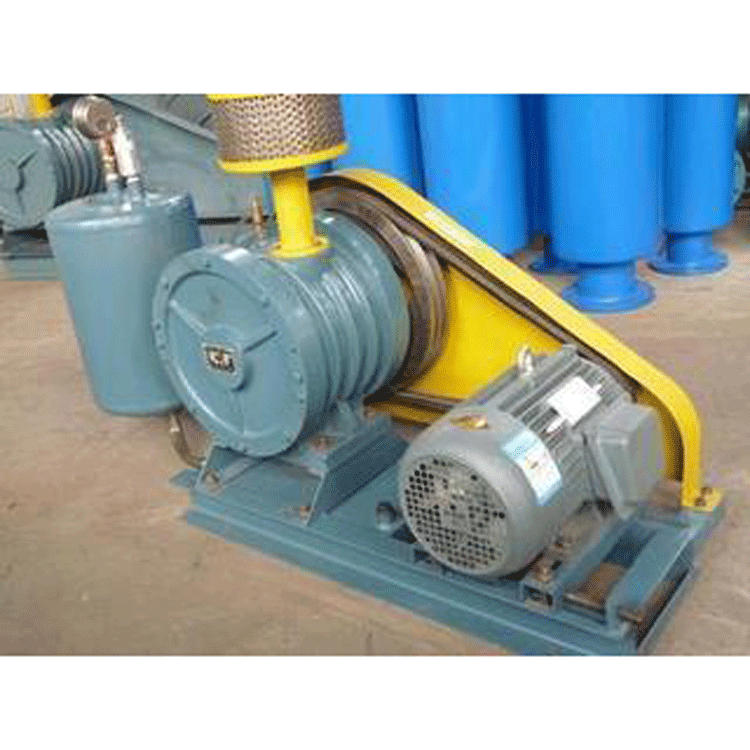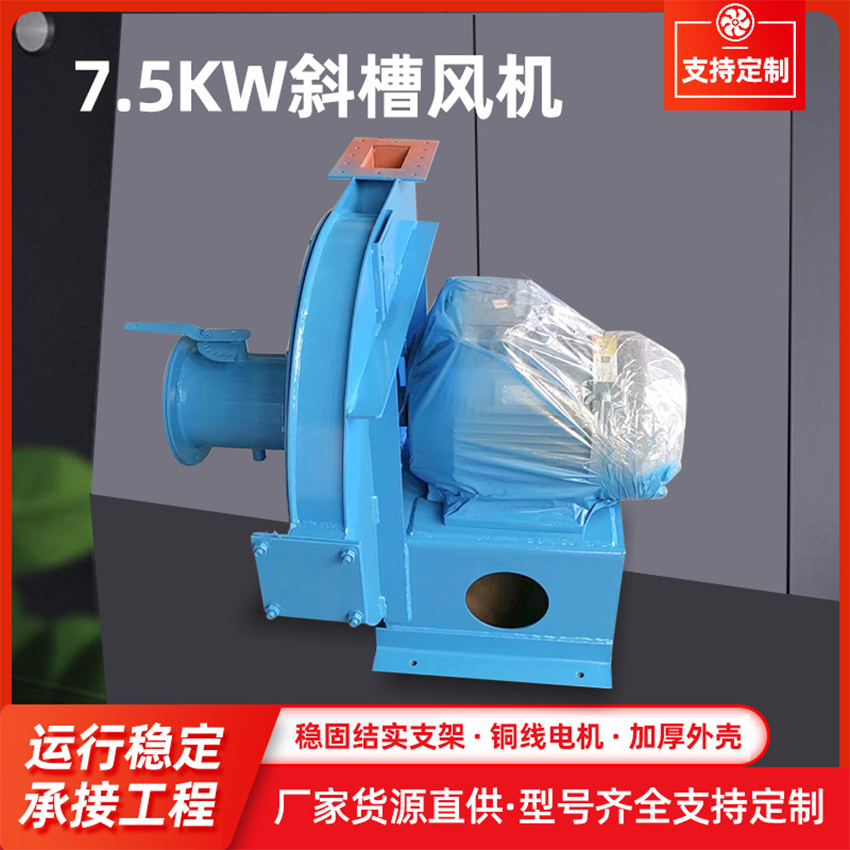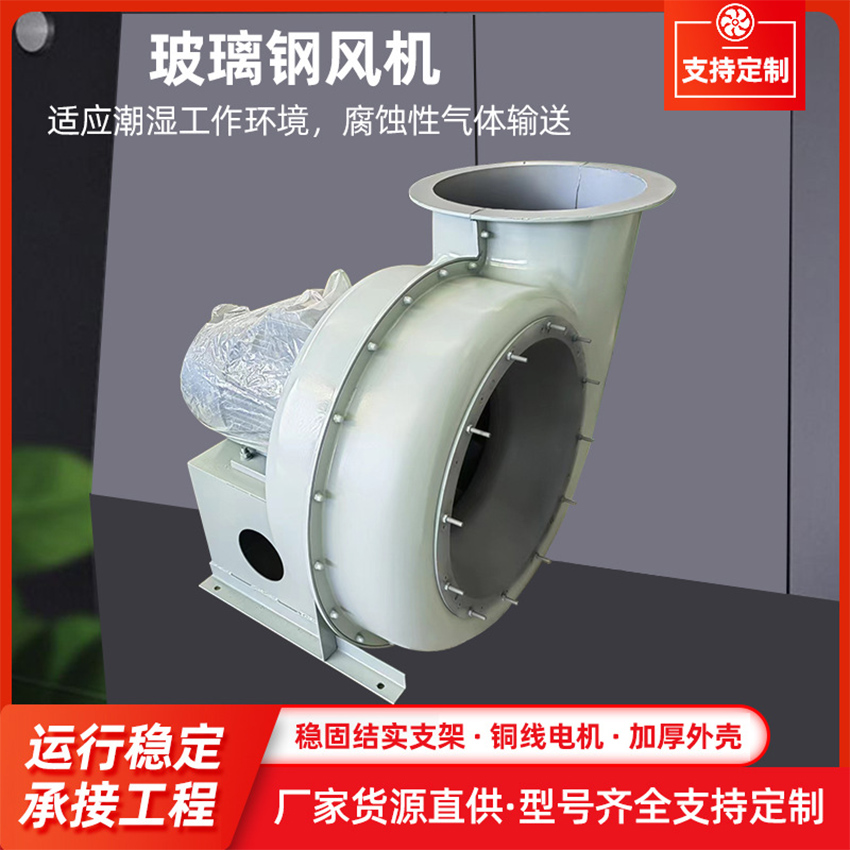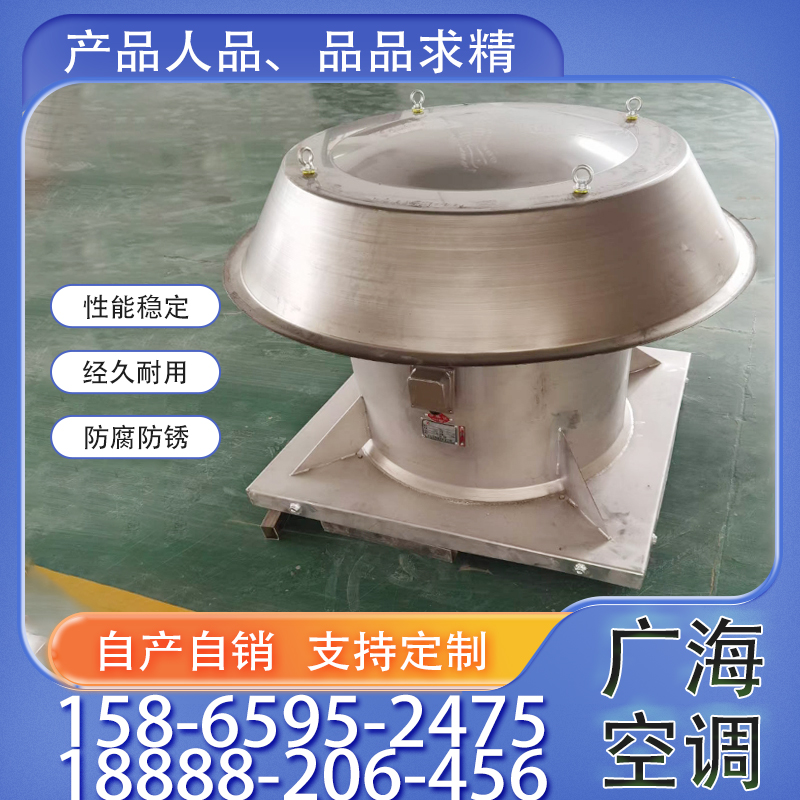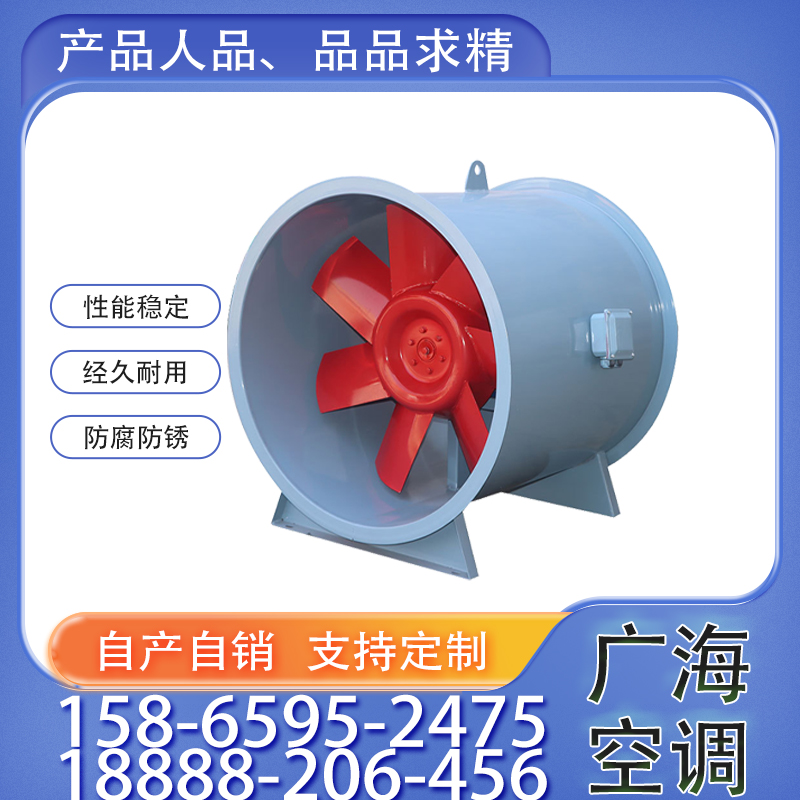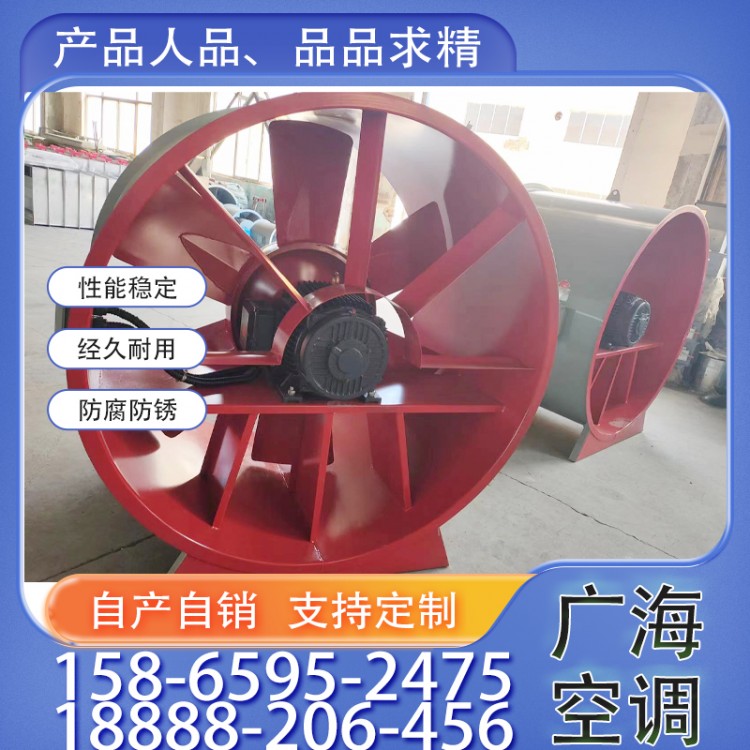

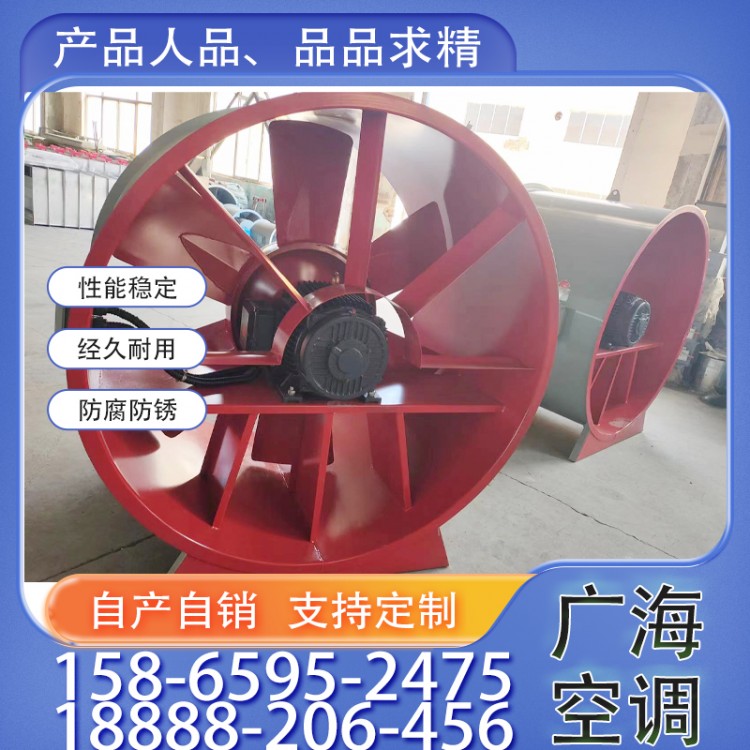
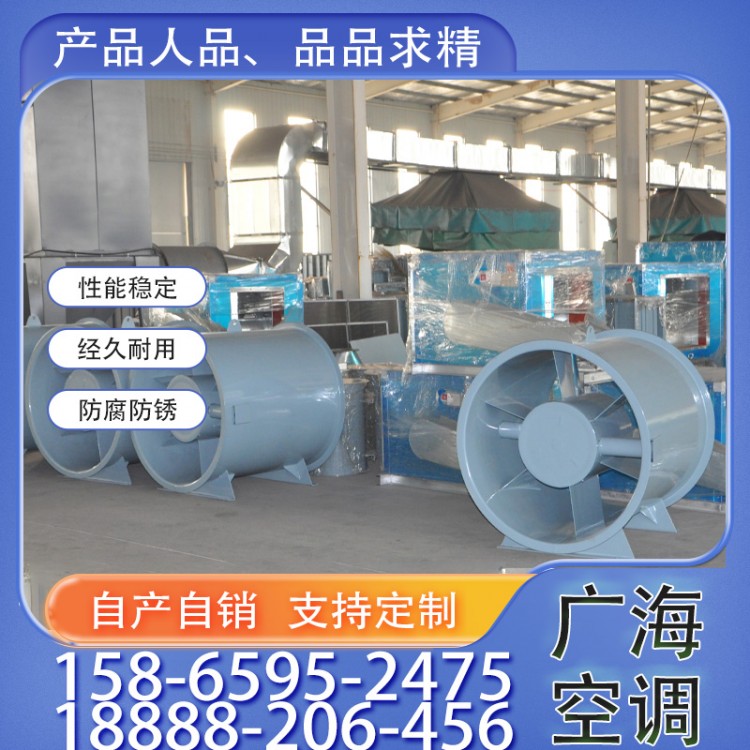
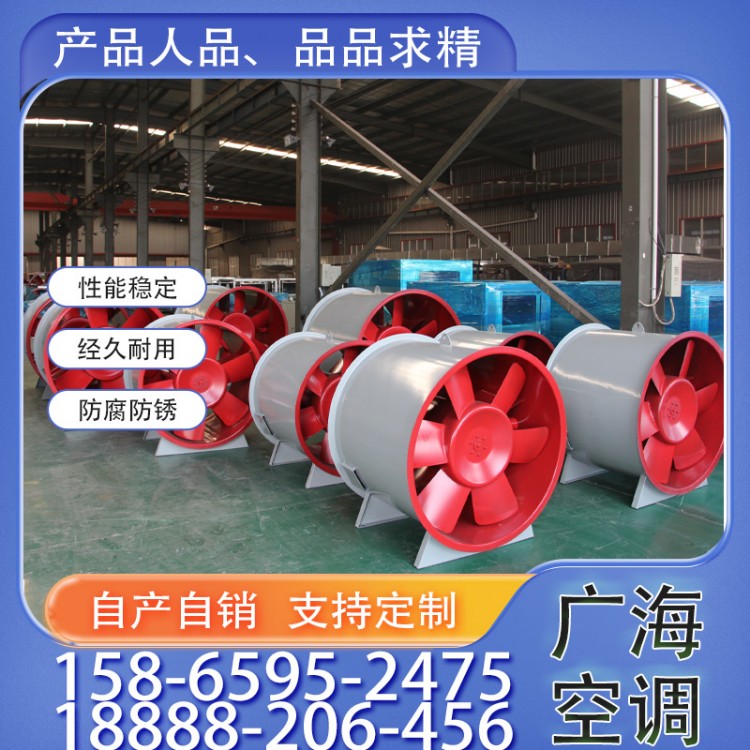


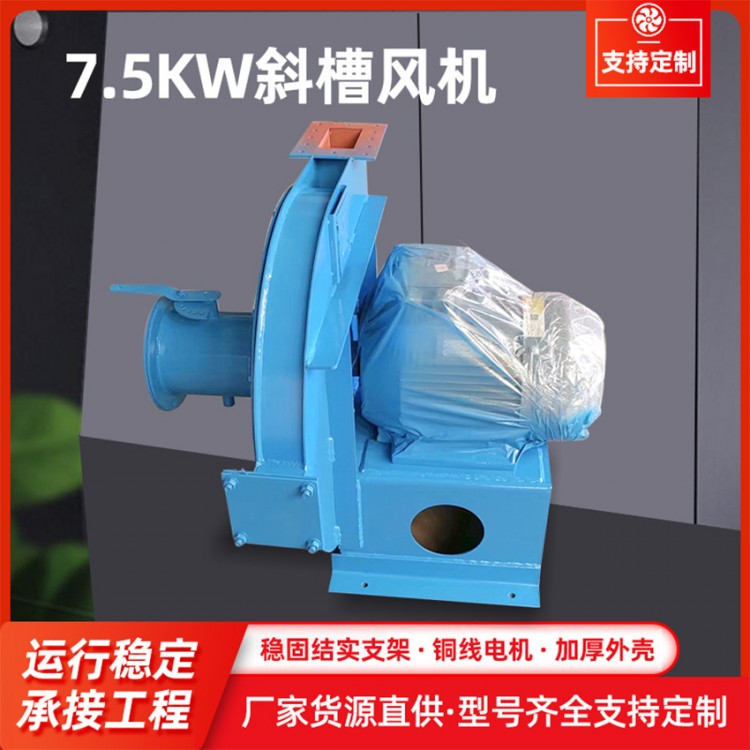
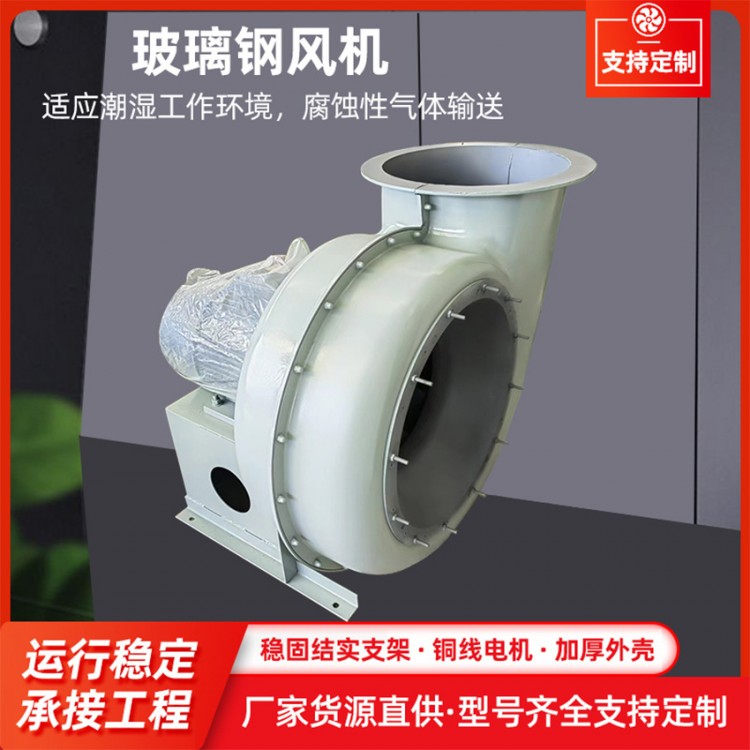
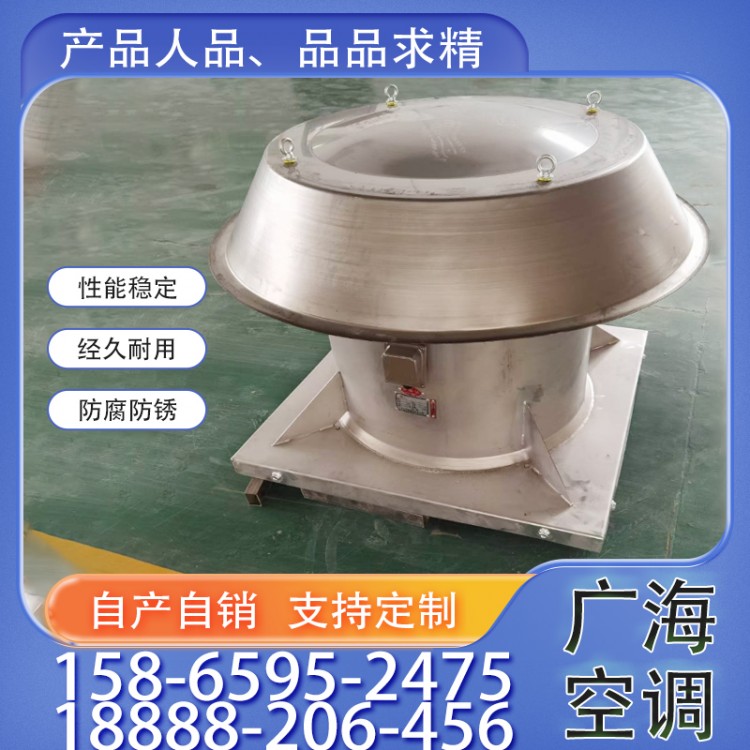








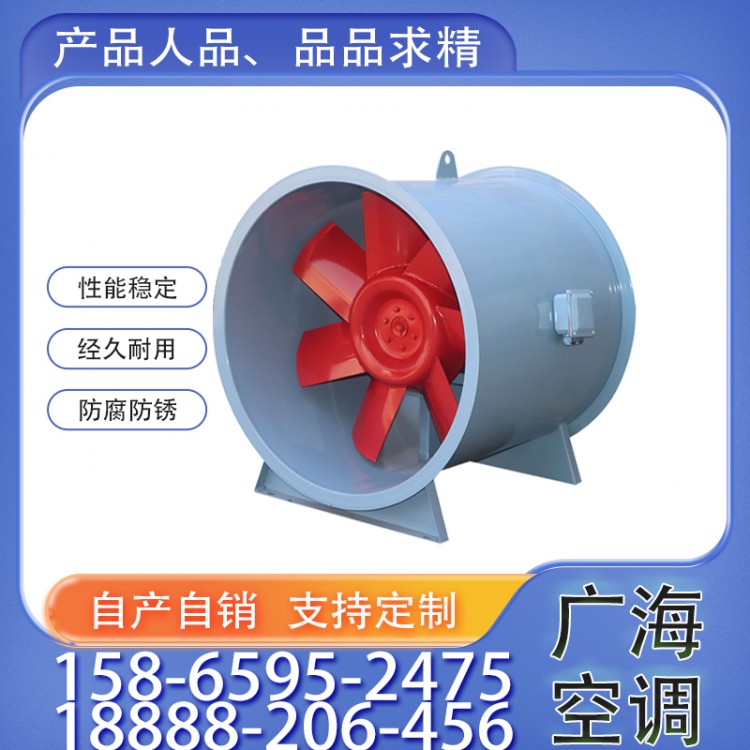
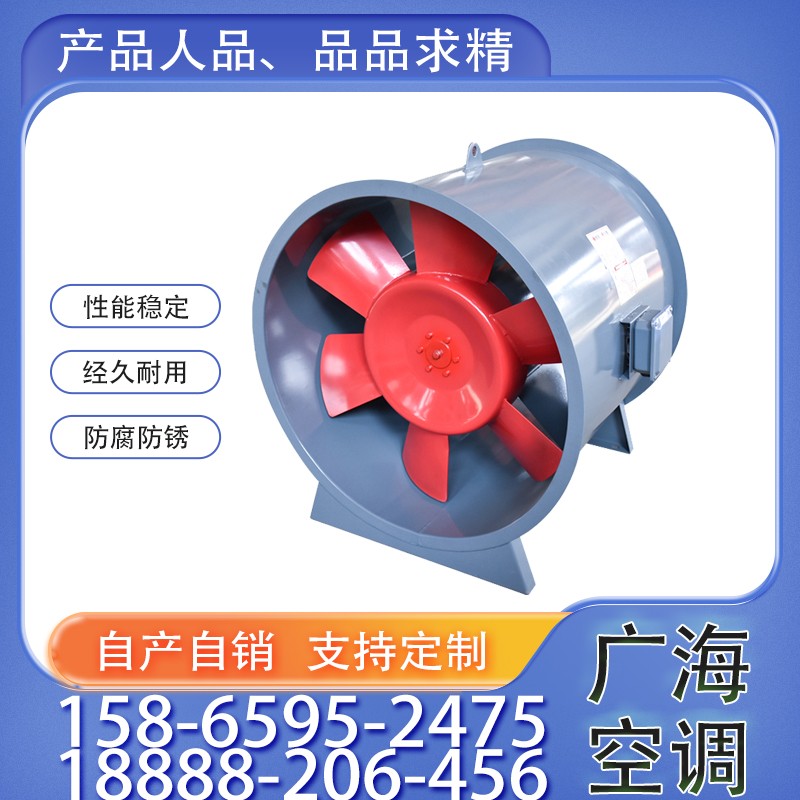
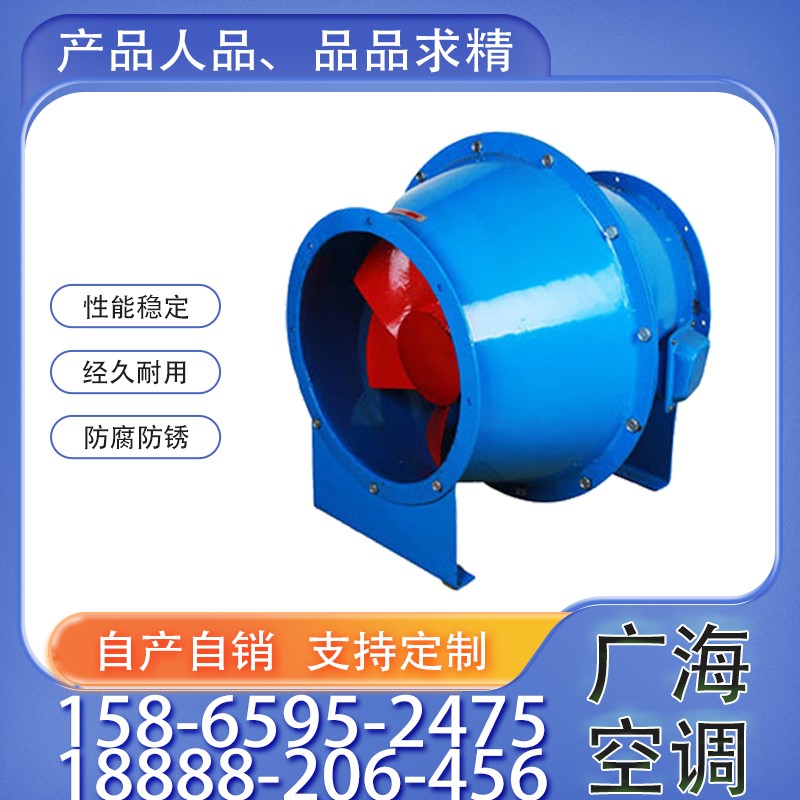

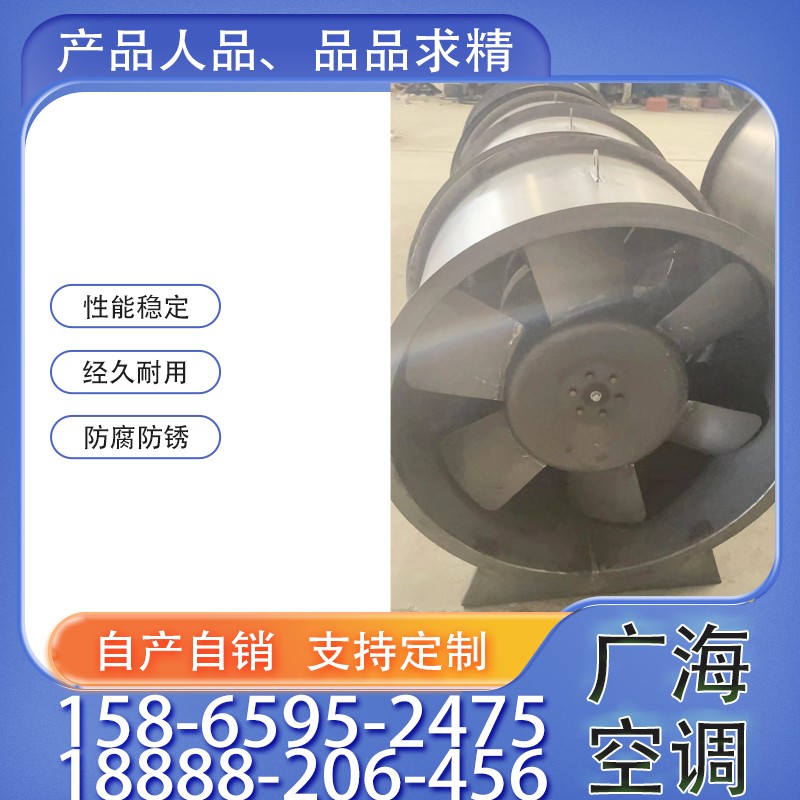

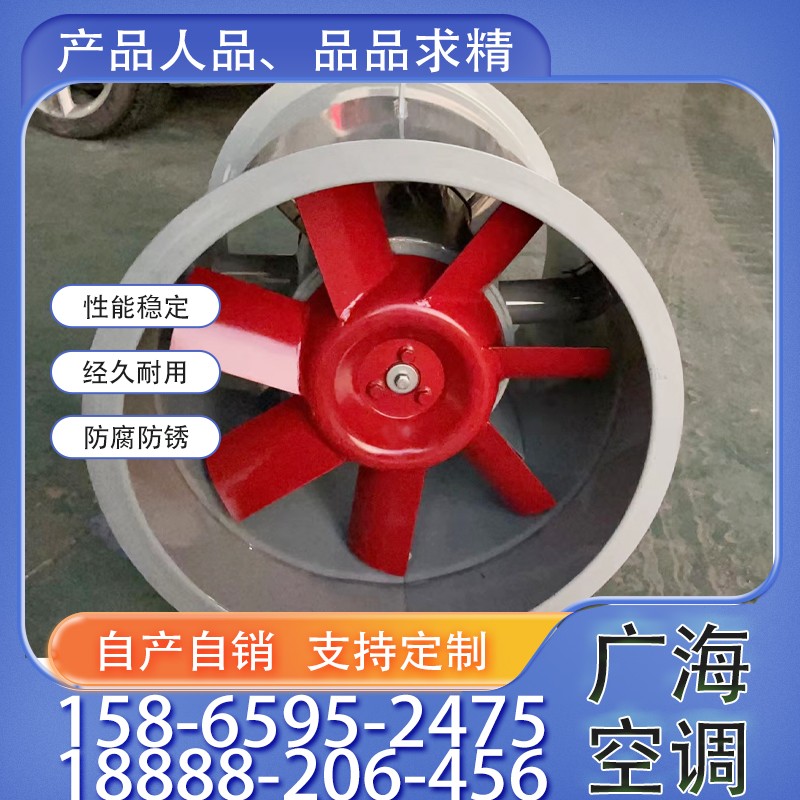
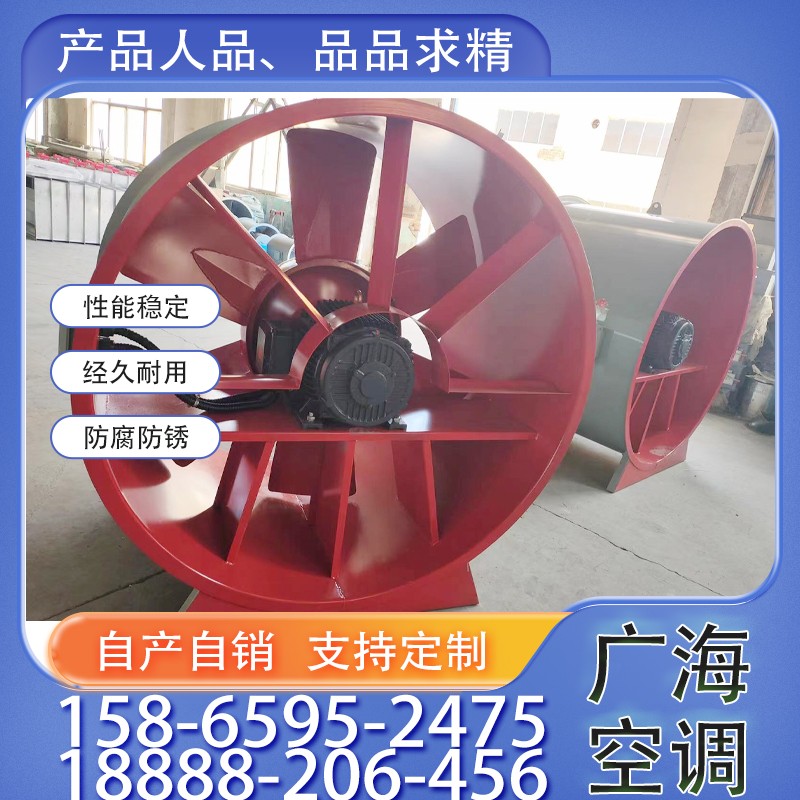
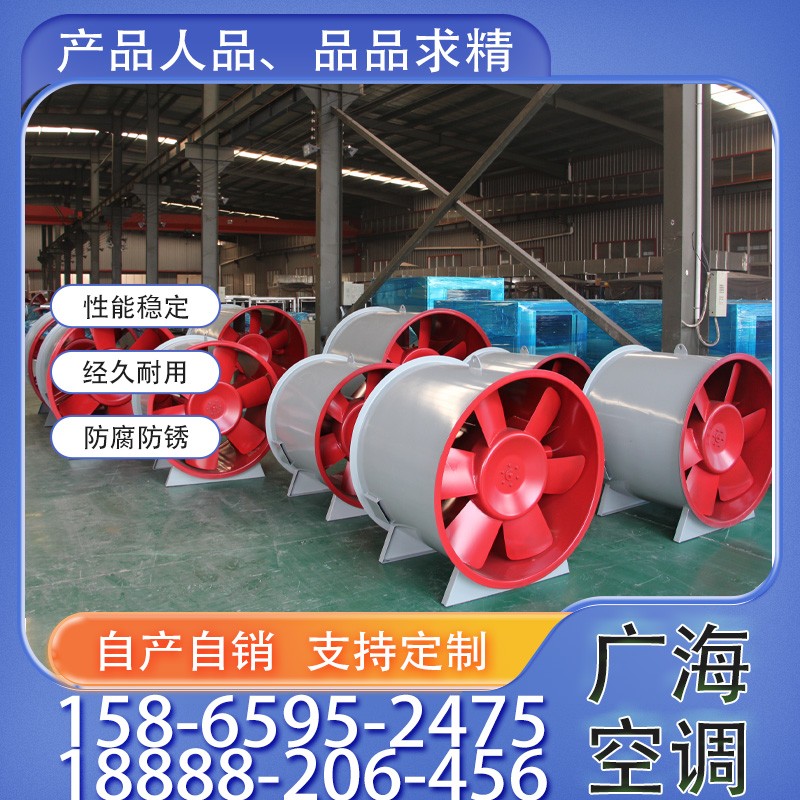
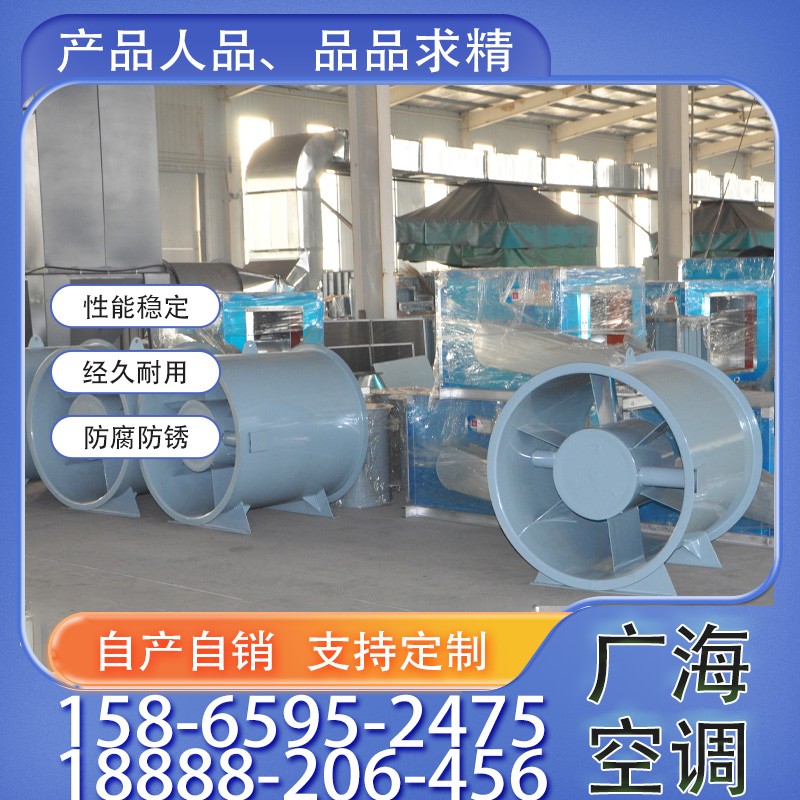
Duct fans are used for exhaust ventilation.
As the impeller rotates, gas enters the impeller axially from the inlet, its energy increases due to the push of the blades on the impeller, and then flows into the guide vanes. The guide vanes redirect the deflected airflow into axial flow and direct the gas into the diffuser, further converting the gas's kinetic energy into pressure energy, which is then introduced into the working pipeline. The operating method of the axial flow fan blades is similar to that of an airplane's wing. However, the latter exerts an upward lifting force on the wing to support the plane's weight, whereas the axial flow fan is fixed in place and moves the air. The axial flow fan'sCross-sectionTypically, it is an aerofoil section. The blades can be fixed in position or rotate around their longitudinal axis. The angle of the blades to the airflow or the blade spacing can be non-adjustable or adjustable. Changing the blade angle or spacing is one of the main advantages of axial flow exhaust fans. A smaller blade spacing angle produces lower airflow, while increasing the spacing yields higher airflow.