










Vibration Aging Equipment Manufacturer Jiugong Co., Ltd. Profile - Eliminates residual stress, welding stress, and casting stress to prevent deformation.
Jinan Jiugong Electromechanical Equipment Co., Ltd. specializes in the research, development, and production of vibration aging equipment, ultrasonic impact equipment, and stress detection equipment. It is a high-tech enterprise integrating R&D, independent production, sales installation, and service maintenance. Our products cover fields such as welding, casting, forging, machining, and more. The company adheres to the business philosophy of "Quality creates the market, service wins reputation," continuously strengthens market operations and brand building, and establishes a positive corporate image.
JG-T6Y LCD Display Vibration Aging Device Technical Specifications:
Model Key Technical Specifications
| JG-T6YK1
| JG-T6Y K2
| JG-T6Y K3
| JG-T6Y K4
| JG-T6Y K5
|
Excitation Force (KN)
| 5
| 15
| 30
| 40
| 50
|
Speed Range (r/min)
| 1000~10000
| 1000~8000
| 1000~8000
| 1000~8000
| 500~6000
|
Weight of Workpiece That Can Be Handled (T)
| 0~2
| 0~20
| 0~50
| 0~100
| 0~500
|
Motor Power (W)
| 600
| 1200
| 1500
| 2200
| 3500
|
Measurement Range of Acceleration (m/s²)
| 0~199.9
| ||||
Printing Function
| Printable a-n, a-t curves, parameter data, and data comparison results
| ||||
JG-T6Y LCD Display Vibration Ageing Machine - Features Briefly:
★Easy to use, operation requires only 4 buttons, easily mastered in a short time.
★High-definition LCD screen display, enabling real-time monitoring of the dynamic stress change curve.
★Features include: fully automatic, semi-automatic, and manual integrated operation programs, comprehensive in functions.
★Automated frequency scanning, automatically confirms the timeliness of processing effects, and provides revision plans.
★If the equipment exhibits abnormal behavior during operation, it can automatically detect and provide the correct usage method.
★Utilizes mature pulse width modulation technology with *superior anti-interference capabilities.
★Automatically select timing processing points during timing processing, with the LCD screen displaying the changes in curve data, real-time monitoring.
★The time-effectiveness processing result curve segments are merged for display, facilitating observation of various data.
★Fault analysis features such as overcurrent, overvoltage, speed frequency signal failure, and wiring issues, the LCD screen will provide clear solutions to the problems, convenient for use.
★High-speed thermal-sensitive printer, capable of printing curve data for easy archiving.
★Utilizing a high-power vibration-proof permanent magnet slotless DC motor, eccentric pole adjustable.
★Small in size, portable at any time, and extremely convenient to use.

During the mechanical processing, especially in casting, forging, welding, and machining, residual stresses are inevitably generated in the parts during both cold and hot processing. Most of these residual stresses are harmful, as they reduce the actual strength of the parts, cause brittle cracks, decrease the fatigue limit, and due to the relaxation of residual stresses, lead to warping deformation of the parts. This greatly affects the dimensional accuracy of the parts. Therefore, it is highly necessary to use vibration aging to reduce the residual stresses within the parts.
Traditional aging methods include: natural aging, heat aging, vibration aging, static natural restoration aging, high-temperature heating gravity impact aging. These methods are all used to reduce the internal residual stress of workpieces. The last two methods are less commonly used due to various constraints and will not be further described here.
Natural aging involves leaving machined workpieces exposed to the open air for an extended period, typically ranging from 8 to 14 months, with the duration potentially being longer depending on the workpiece. Natural aging utilizes environmental, seasonal temperature variations, and time to release residual stresses, promoting relaxation and ensuring dimensional stability. Due to its long cycle times and large land requirements, it is only suitable for single-machine production, although its effectiveness is not significant, and its application is currently limited.
Heat treatment involves uniformly heating the workpiece to 860 degrees Celsius, holding it for 36 hours, and then carefully controlling the temperature to slowly cool it down to the point of removal, thereby eliminating residual stresses. Only strict temperature control can ensure the workpiece's processing accuracy and the elimination of residual stresses. The heat treatment cycle is long, and the process is complex, so it is rarely used currently.
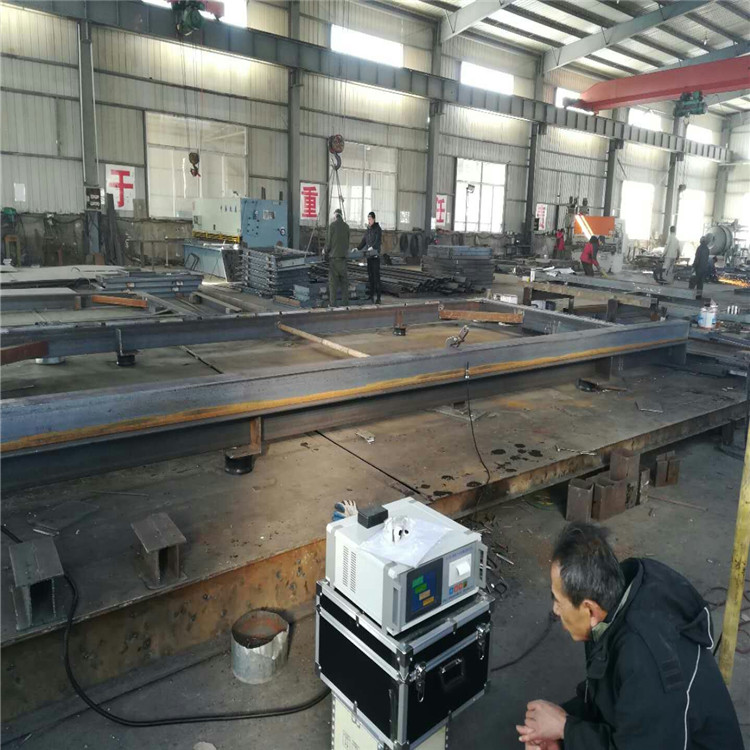
Vibration Aging Technology, also known as the "Vibration Stress Relief" method, is abbreviated as "VSR" abroad. The process involves controlling the rotational speed of the exciter and the eccentric force applied to the workpiece by the vibration aging equipment's control system, generating centrifugal force that causes the workpiece to resonate (vibrate). This results in a certain amplitude and periodic alternating motion at the aging areas of the workpiece, absorbing energy. After a certain period of vibration, the workpiece undergoes slight plastic deformation and the internal dislocations within the grains gradually slide, re-entangle, and pin, thereby eliminating and equalizing residual stresses. This prevents deformation and cracking of the workpiece, enhancing dimensional stability and the workpiece's resistance to deformation, as well as increasing fatigue life. During the manufacturing processes such as casting, welding, forging, and machining, residual stresses are inevitably produced within the workpiece, which can lead to deformation and cracking. Practically proven, vibration aging can replace heat aging and save up to 90% of energy. The aging process typically takes only 15-45 minutes and is not limited by the workpiece's size, shape, or weight, making it capable of handling workpieces ranging from a few kilograms to several hundred tons.
Eliminate residual stresses that may occur within the workpiece during the manufacturing process, such as casting, welding, forging, and machining.
Table of various time-sensitive stress relief comparisons
|
|
Time-sensitive process
Project
Natural aging
Hot aging
Vibration Aging
Stress Relief Rate
Long-term, large footprint.
Approximate stress relief rate is about 60%.
Complex process, lengthy cycle
Stress relief approximately 50% to 80%
User-friendly, high process precision, stress elimination rate
Achievable up to 85% - 96%
Dimensional stability
Good stability
Poor stability
Meets national standards
Processing Cost
Large land area, inventory holding costs
High cost
Low cost with rapid results
Time frame
12Over a month
36—72Hour
A few minutes to several tens of minutes
Work Adaptability
Subject to environmental constraints
Subject to size and material restrictions
Without any conditions or restrictions
Resistance to deformation
Poor
Good
Meets national standards
Operation TrainingOur company's trained engineers provide on-site, complimentary training for new equipment operators. The training concludes only upon the operator's acknowledgment and signature, ensuring they are proficient. We sell a full range of vibration aging equipment with guaranteed quality. Free installation and commissioning on-site, as well as operator training, are provided.
Installation and debuggingBuyers of our company's equipment will be provided with installation and debugging services by experienced equipment installation engineers. Free technical guidance for equipment installation and engineering services is offered to customers, ensuring comprehensive support.
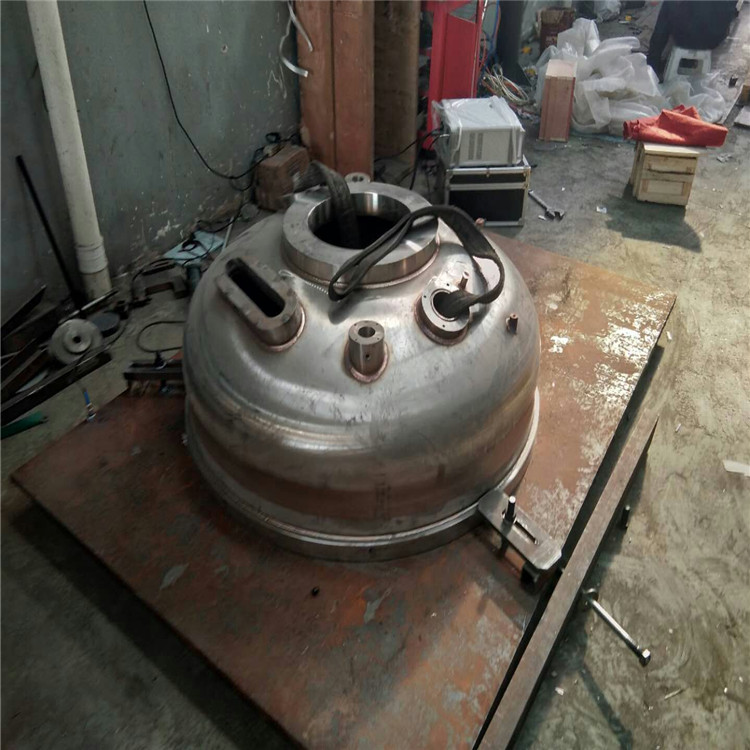
Application Scope:Vibratory aging is suitable for carbon structural steel, low-alloy steel, stainless steel, cast iron, and various castings, forgings, welded parts, as well as machinery and equipment for machining and manufacturing.Vibration aging treatment typically takes only 20 to 40 minutes for workpieces, yielding comprehensive effects and significant benefits. In recent years, it has been widely adopted by some large-scale manufacturing enterprises in China.