








What is the difference between the compensation wire type K KVVP-2*1.5 and KX-GA-VVP2*1.5?
All are flame-retardant compensation wires, the compensation wires are used in pairs (positive and negative poles), the former consists of 8 pairs, which can pass through 8 signal paths, while the latter is a single pair, which can only pass through one signal path.
Thermocouple compensation wire and cable product standards: Compensation wire: GB/T 4989-94 equivalent to IEC
584-3(89);
Compensation Cable: JB/T 7495-94
Product Application: Suitable for environments with explosive hazards in oil, chemical industries, and other sectors that require high explosion-proof safety performance. It is used to extend the connection between explosion-proof thermocouples and explosion-proof automatic temperature measurement instruments, forming an intrinsic safety explosion-proof temperature measurement system.
Features: The intrinsic safety explosion-proof temperature measurement system utilizes compensation wires or cables made of low capacitance and low inductance materials, offering explosion-proof safety performance. It is suitable for connecting explosion-proof thermocouples and temperature measurement instruments in environments with explosion hazards, forming an intrinsically safe thermocouple temperature measurement system.
Operating Temperature: Heat-resistant grade: -65℃ to +200℃ and 65℃ to +260℃ both types.
Standard Grade: -40℃ to 70℃ and -40℃ to +
Three types: 105, 150℃.
Minimum bending radius: Compensation wire: Not less than 8 times the outer diameter of the wire.
Compensation Cable: Sheathed cable should not be less than 12 times the diameter of the cable, and unjacketed cable should not be less than 6 times the diameter of the cable.
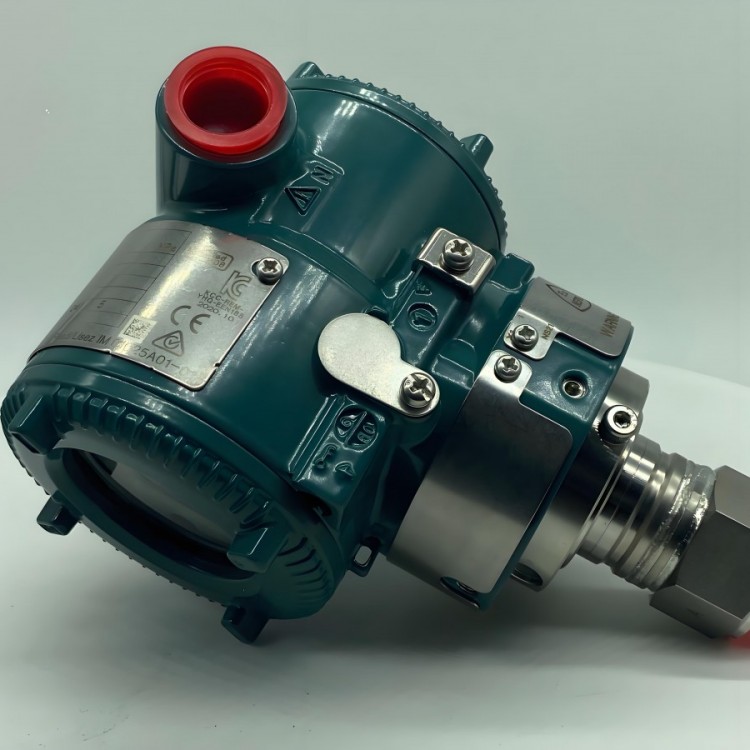
Integrated temperature transmitters can achieve actual vacuum by adjusting at the circuit processing stage to obtain pressure. Gauge pressure transmitters are equivalent to P2 reference atmospheric pressure when compared to atmospheric pressure measurement, which is similar to the reference atmospheric pressure P0. Most pressure measurements on-site are of this nature, such as main steam pressure measurement. Differential pressure transmitters are mainly categorized into level measurement and flow measurement.
An extended understanding of the integrated temperature transmitter's level sensor is based on the principle that the static pressure of the measured liquid is proportional to its height. It employs advanced isolated diffusion silicon sensitive elements or ceramic capacitor pressure sensitive sensors from overseas, converting static pressure into electrical signals. These signals are then temperature-compensated and linearly corrected to become standard electrical signals.
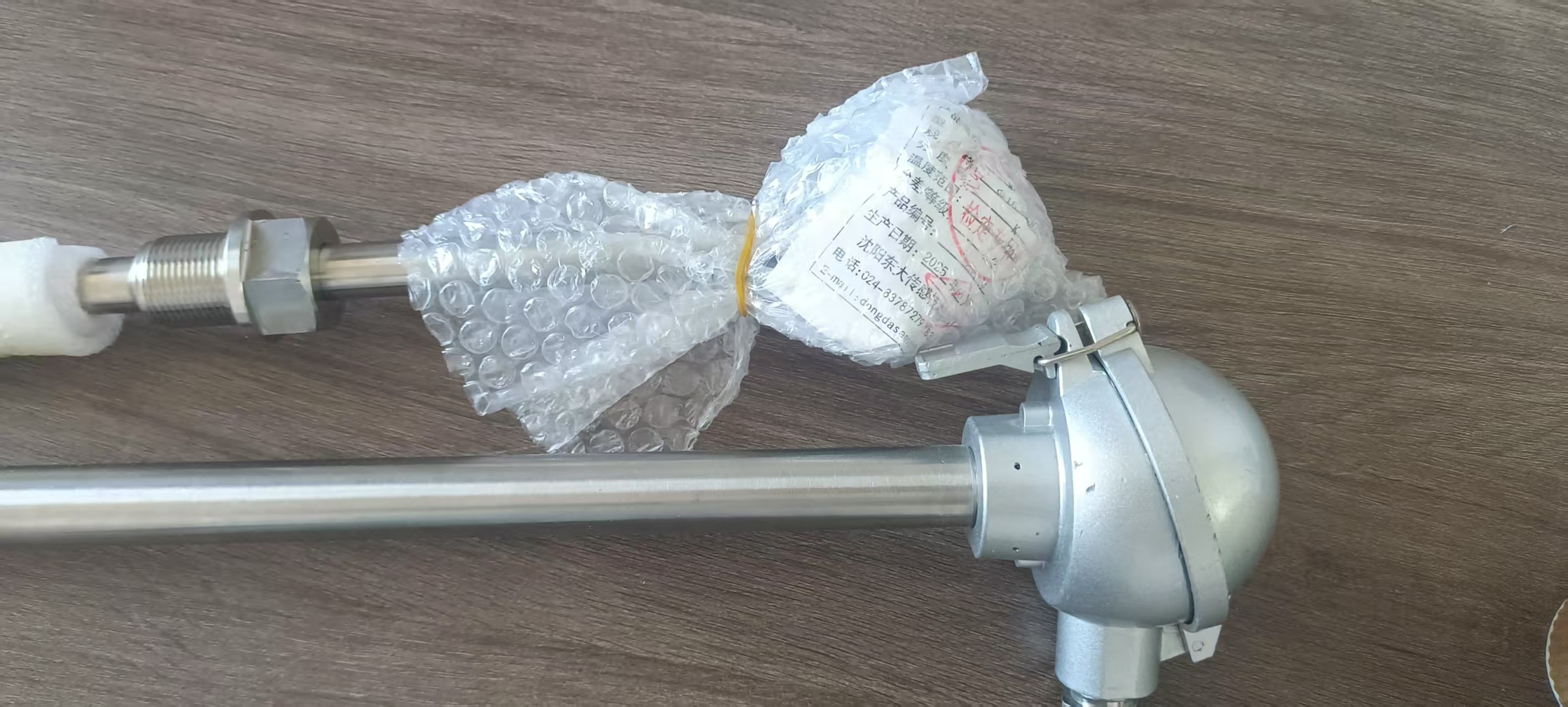
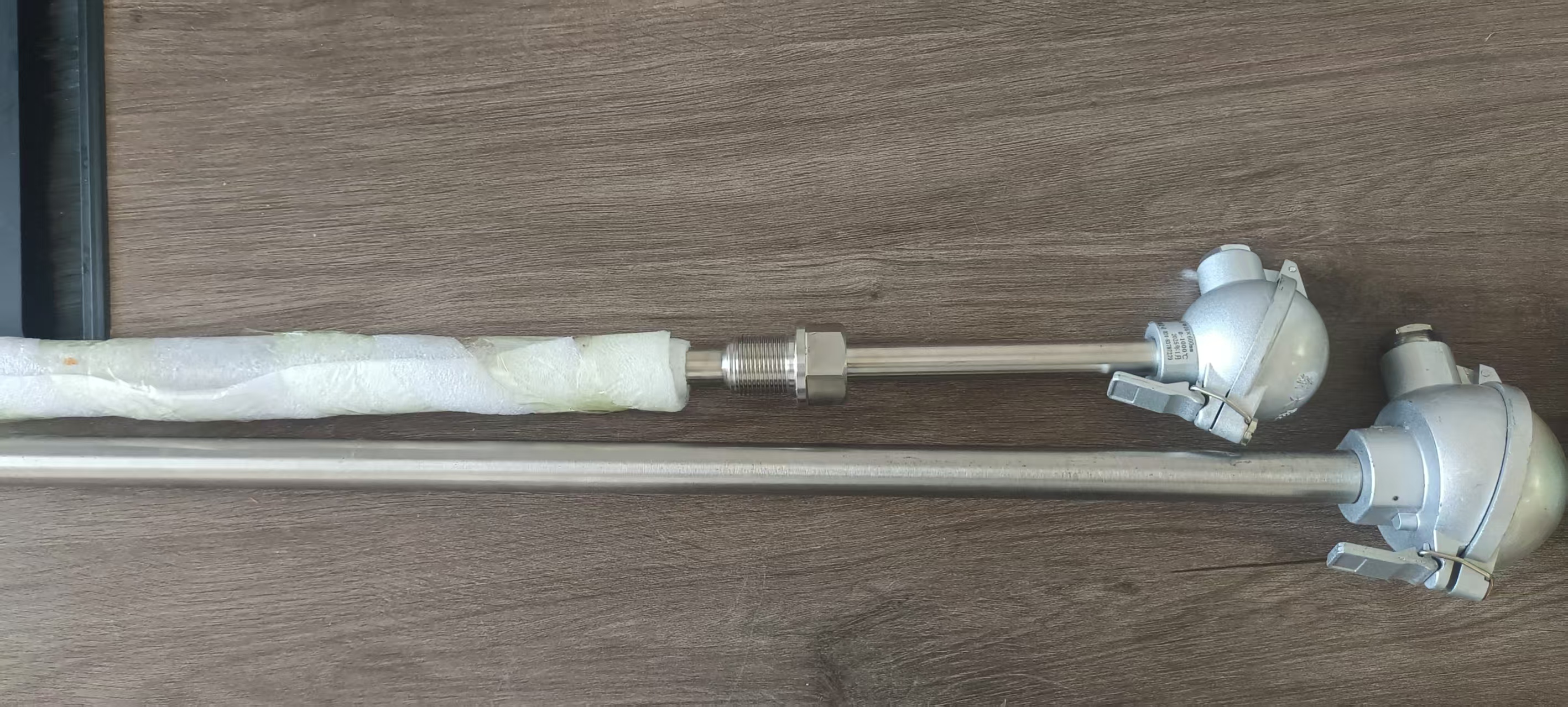
Explosion-proof thermocouple applications
Industrial explosion-proof thermocouples are a type of temperature sensor widely used in chemical industry automatic control systems, through temperature measurement
Model Naming
Temperature sensors, which convert the temperature parameters of the controlled object into electrical signals, transmit them to display, record, and control instruments, and perform detection, adjustment, and control of the system. In chemical factories, the production site often has various flammable and explosive chemical gases and vapors. Using ordinary thermocouples is extremely unsafe and can easily cause environmental gas explosions. Therefore, explosion-proof thermocouples must be used as temperature sensors in these situations.
Application Industry
Our products are widely used in industries such as steel and iron smelting, petrochemicals, machinery manufacturing, glass and ceramics, plastics and rubbers, brewing and pharmaceuticals, light industry and textiles, food, tobacco, water treatment, thermal power, and nuclear industry.
Technical Documentation
Industrial-grade thermistors, as temperature sensors and meters for measurement and control, are paired with display instruments to directly measure and control the temperature of gases, liquids, and steam in the production process. Explosion-proof thermocouples have a structure, principle, and assembly method similar to thermistors. The main difference lies in the explosion-proof product's junction box (housing), which is designed from high-strength aluminum alloy die-casting and features sufficient internal space, wall thickness, and mechanical strength. The thermal stability of the rubber sealing rings also complies with national explosion-proof standards.
◆ Features
Multiple explosion-proof types, excellent explosion-proof performance.
Coil spring type temperature-sensitive element, good vibration resistance.
Wide temperature range.
High mechanical strength, excellent pressure resistance.
◆ Working Principle
Explosion-proof thermocouples utilize gap-type explosion-proof principles, designing components such as junction boxes with sufficient strength. All parts that could generate sparks, arcs, and dangerous temperatures are sealed within the junction box cavity. In the event of an explosion within the cavity, the fire can be extinguished and cooled through the gap between the mating surfaces, preventing the spread of flames and temperature to the outside of the cavity, thereby achieving explosion-proofing.
◆ Main Technical Parameters
Product Execution Standard
IEC584
IEC1515
GB/T16839-1997
JB/T5582-91
GB3836
◆ Ambient Temperature Insulation Resistance
Thermocouples feature an insulation resistance between the electrode and sheath of >1000 Ω.m at an ambient temperature of 20±15°C, with relative humidity not exceeding 80%, and a test voltage of 500±50V (DC).
Working Principle
If a closed loop consists of homogeneous conductors (thermocouples) made of two different components, and there is a temperature gradient at both ends, current will flow through the loop. In this case, there will be a thermoelectric potential. To prevent explosion,防爆原理 is utilized by designing components with sufficient strength, such as junction boxes, to seal all parts that can generate sparks, arcs, and dangerous temperatures within the junction box. In the event of an explosion inside the box, the fire can be extinguished and cooled through the joint surface gap, preventing the flame and temperature from spreading outside the box.
Platinum Rhodium 10-Platinum Thermocouple (Type S Thermocouple) is a precious metal thermocouple. The wire diameter is specified as 0.5mm, with a permissible deviation of -0.015mm. Its positive pole (SP) has a nominal chemical composition of platinum rhodium alloy, containing 10% rhodium and 90% platinum, while the negative pole (SN) is pure platinum, hence commonly referred to as single platinum rhodium thermocouple. The long-term operating temperature of this thermocouple is 1300°C, and the short-term operating temperature is 1600°C.
The S-type thermocouple boasts accuracy, stability, a wide temperature measurement range, and a long service life among thermocouples. It has excellent physical and chemical properties, good thermal electromotive force stability, and excellent oxidation resistance at high temperatures, making it suitable for oxidizing and inert atmospheres. Due to its superior comprehensive performance, the S-type thermocouple, which conforms to international temperature scales, has long been used as an interpolation instrument for international temperature standards. Although "ITS-90" stipulates that it will no longer be used as an interpolation instrument for international temperature standards, the International Temperature Consultative Committee (CCT) believes that the S-type thermocouple can still be used to approximately realize the international temperature scale.
The disadvantages of the S-type thermocouple include its lower electromotive force, electromotive force rate, and sensitivity. It also experiences a decrease in mechanical strength at high temperatures and is highly sensitive to contamination. Additionally, the expensive noble metal materials contribute to a higher initial investment.
(R-Type Thermocouple) Platinum Rhodium 13-Platinum Thermocouple
Platinum Rhodium 13-Platinum Thermocouple (Type R Thermocouple) is a precious metal thermocouple. The wire diameter is specified as 0.5mm, with an allowable deviation of -0.015mm. Its positive pole (RP) has a nominal chemical composition of platinum rhodium alloy, containing 13% rhodium and 87% platinum, while the negative pole (RN) is pure platinum. The long-term operating temperature is 1300°C, and the short-term operating temperature is 1600°C.
The R-type thermocouple boasts advantages such as accuracy, stability, wide temperature measurement range, and long service life within the thermocouple series. It has excellent physical and chemical properties, good thermal electromotive force stability, and excellent resistance to oxidation at high temperatures, making it suitable for oxidizing and inert atmospheres. Due to the comparable comprehensive performance of the R-type thermocouple to the S-type, it has been difficult to promote its use in China, with limited applications in temperature measurement on imported equipment, and rarely used domestically for temperature measurement. Between 1967 and 1971, the UK's NPL, the US's NBS, and Canada's NRC conducted a cooperative research project, which showed that the R-type thermocouple has better stability and reproducibility than the S-type, and this aspect has not yet been researched in China.
The disadvantages of Type R thermocouples include lower electromotive force, lower electromotive force rate, low sensitivity, decreased mechanical strength at high temperatures, high sensitivity to contamination, and expensive noble metal materials, resulting in a substantial initial investment.
Type B Thermocouple: Platinum Rhodium 30-Platinum Rhodium 6 Thermocouple
Platinum Rhodium 30-Platinum Rhodium 6 thermocouples (Type B thermocouples) are precious metal thermocouples. The wire diameter is specified as 0.5mm with an allowable deviation of -0.015mm. The positive pole (BP) has a nominal chemical composition of platinum rhodium alloy, containing 30% rhodium and 70% platinum, while the negative pole (BN) is also a platinum rhodium alloy with 6% rhodium content, hence commonly referred to as double platinum rhodium thermocouples. The long-term operating temperature for this thermocouple is 1600°C, with a short-term operating temperature of 1800°C.
Type B thermocouples offer high accuracy, stability, wide temperature measurement range, long service life, and high temperature measurement limits in the thermocouple series. They are suitable for oxidizing and inert atmospheres and can be used short-term in vacuums, but not in reducing atmospheres or those containing metallic or non-metallic vapor. A distinct advantage of Type B thermocouples is that they do not require compensation wires, as the thermoelectric potential is less than 3μV within the 0~50℃ range.
The disadvantages of Type B thermocouples include lower electromotive force, lower electromotive force rate, lower sensitivity, reduced mechanical strength at high temperatures, high sensitivity to contamination, and expensive noble metal materials, resulting in a larger initial investment.
Type K Thermocouple - Nickel-Chromium-Nickel Silicide Thermocouple
Nickel-chromium-nickel-silicon thermocouples (Type K thermocouples) are currently the most widely used inexpensive thermocouples, with their usage exceeding the total of all other thermocouples. The nominal chemical composition of the positive pole (KP) is Ni:Cr = 90:10, and the nominal chemical composition of the negative pole (KN) is Ni:Si = 97:3. Their operating temperature range is -200 to 1300°C.
Type K thermocouples offer excellent linearity, high electromotive force, high sensitivity, good stability and uniformity, strong antioxidant properties, and affordable pricing. They are suitable for use in oxidizing inert atmospheres and are widely adopted by users.
Type K thermocouples should not be used directly in high-temperature environments with sulfur, reducing, or alternating reducing and oxidizing atmospheres, nor in vacuums. They are also not recommended for use in weak oxidizing atmospheres.
Type N Thermocouple: Nickel-Chromium-Silicon-Nickel-Silicon Thermocouple
Nickel-Chromium-Silicon-Nickel-Silicon thermocouple (Type N thermocouple) is a low-cost metal thermocouple, an internationally standardized thermocouple developed by an Australian laboratory in the early 1970s. It overcomes two significant drawbacks of Type K thermocouple: thermal electromotive force instability due to the short-range ordered lattice of nickel-chromium alloy between 300~500℃; and thermal electromotive force instability around 800℃ caused by preferential oxidation of the nickel-chromium alloy. The nominal chemical composition of the positive pole (NP) is: Ni:Cr:Si = 84.4:14.2:1.4, and the nominal chemical composition of the negative pole (NN) is: Ni:Si:Mg = 95.5:4.4:0.1. Its operating temperature range is -200~1300℃.
The N-type thermocouple boasts excellent linearity, high thermal electromotive force, high sensitivity, good stability and uniformity, strong anti-oxidation properties, affordable pricing, and is unaffected by short-range ordering. Its comprehensive performance surpasses that of the K-type thermocouple, making it a thermocouple with great potential for development.