









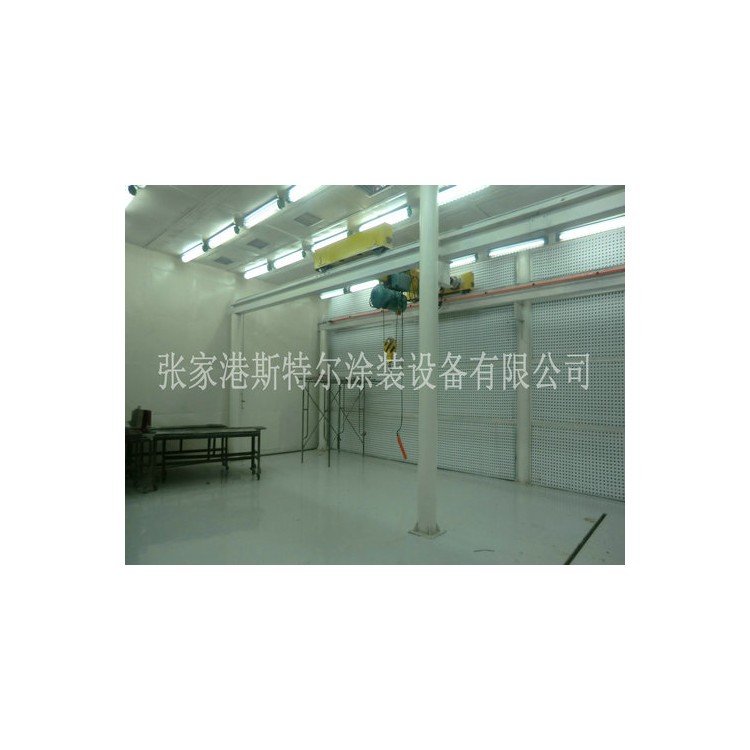
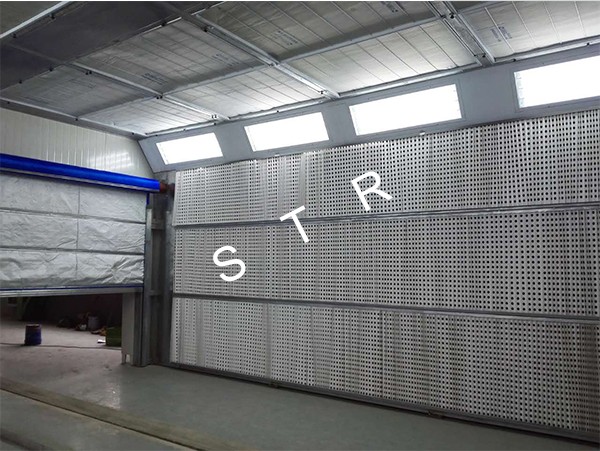
Design Principles:
Utilize reliable production technology and equipment, along with modern management to replace traditional, outdated painting processes, equipment, and management. Meet requirements for painting processes, paint quality, environment, hygiene, and production guidelines; equipment is reliable, advanced, aesthetically pleasing, economically operational, user-friendly, and easy to handle.
Painting workshop layout principles:
The manual and non-manual operation areas are relatively separated.
2. The clean and non-clean zones are relatively separated.
3. Minimize the volume of shipping.
4. Minimize noise pollution.
Process Design:
Based on the absorption and digestion of advanced domestic and international coating technologies and mature experiences, ensure that this process design is practical, reliable, and advanced.
The equipment design and manufacturing are strictly in compliance with national standards related to environmental protection, hygiene, and safety. Noise reduction measures are implemented on all equipment, ensuring noise levels in the workshop are below 85 decibels.
The equipment meets the product's usage requirements, operates reliably, is easy to operate, and convenient for maintenance and care.
The selected accessories, materials, and electrical components are all renowned domestic products, ensuring reliable quality and guaranteeing the equipment's performance and service life.
Thoroughly consider the interconnectivity between systems, implement protective measures for equipment failures, and prevent equipment accidents.
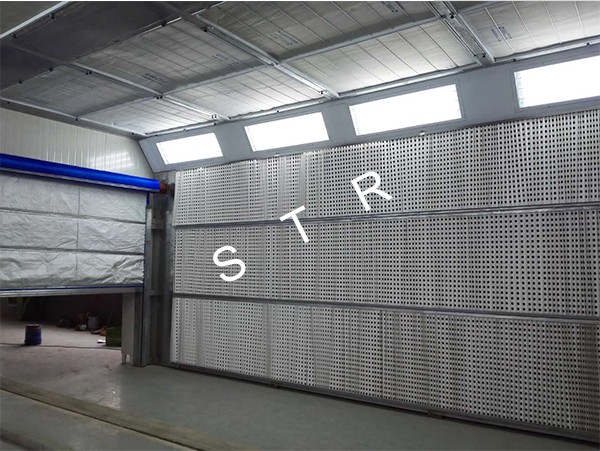
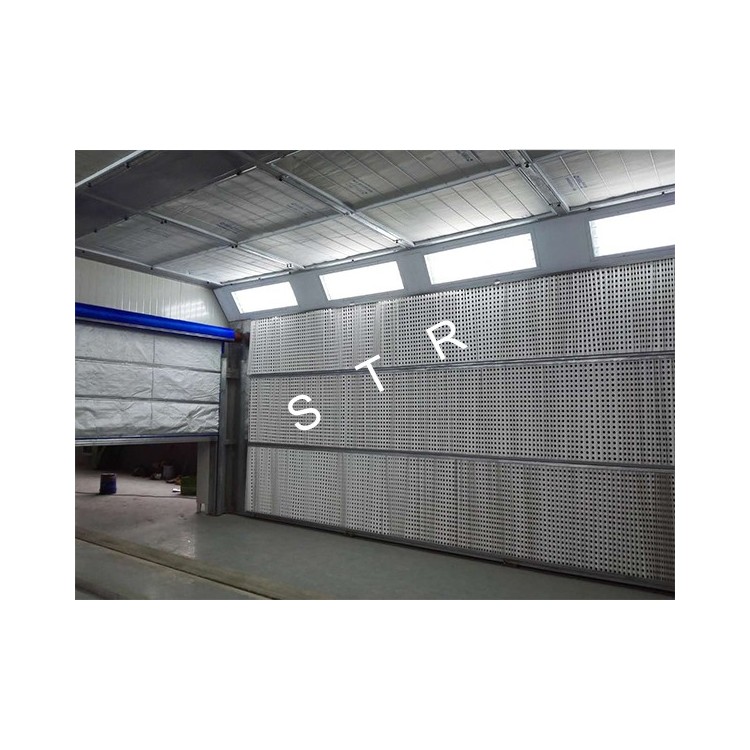
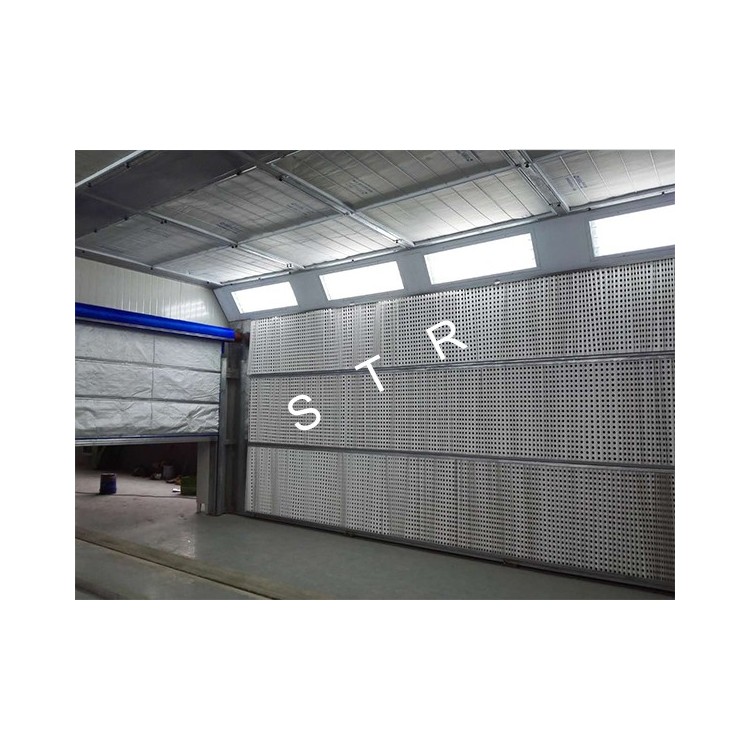
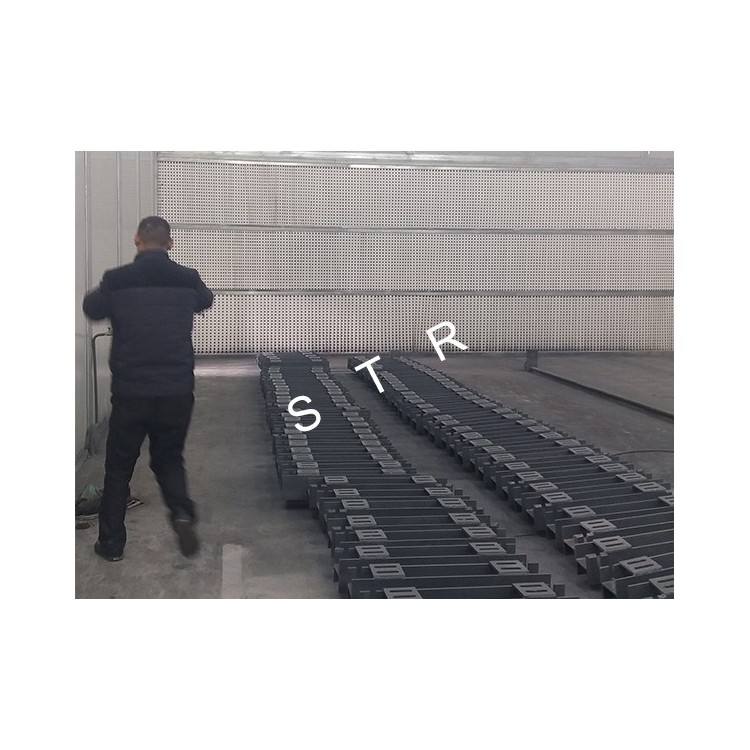
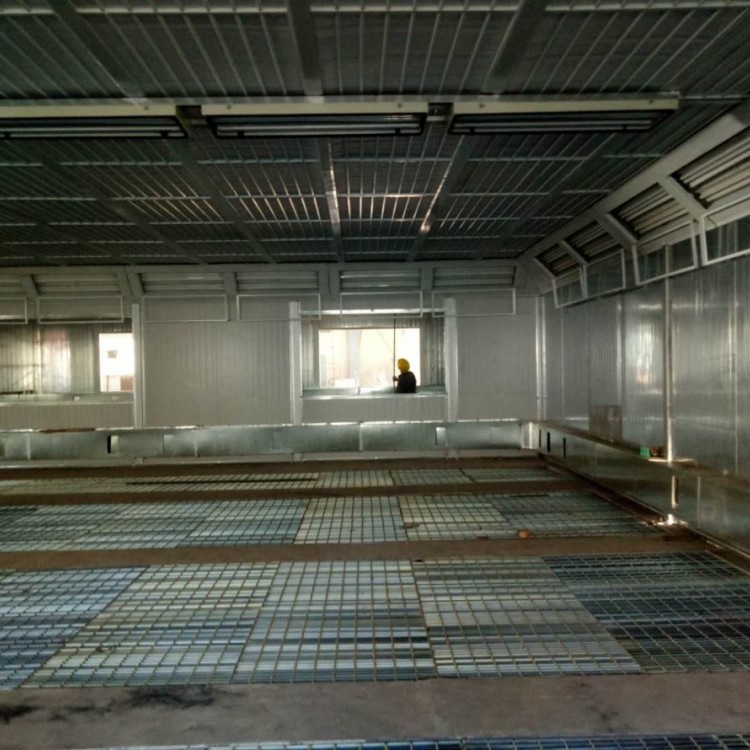
(6) The paint booth is a dry type with top air supply and bottom exhaust.
Equipment specifications and structural design
1. Working Principle:
During painting, the external air is filtered through the primary filter net and then delivered to the roof by the blower (heating system activated during winter), allowing the gas to uniformly fill the paint room through the static pressure room and form a wind curtain around the workpiece. At this point, the empty load wind speed in the paint room exceeds 0.23 m/s, preventing paint mist from staying in the operator's breathing zone and causing it to rapidly descend with the air flow. Subsequently, the air flow is directed through the exhaust gas treatment system by the exhaust fan and released through the environmental protection box, ensuring the discharged gas meets the GB16297-1996 standard.
2. Main Structure and Components of the Equipment
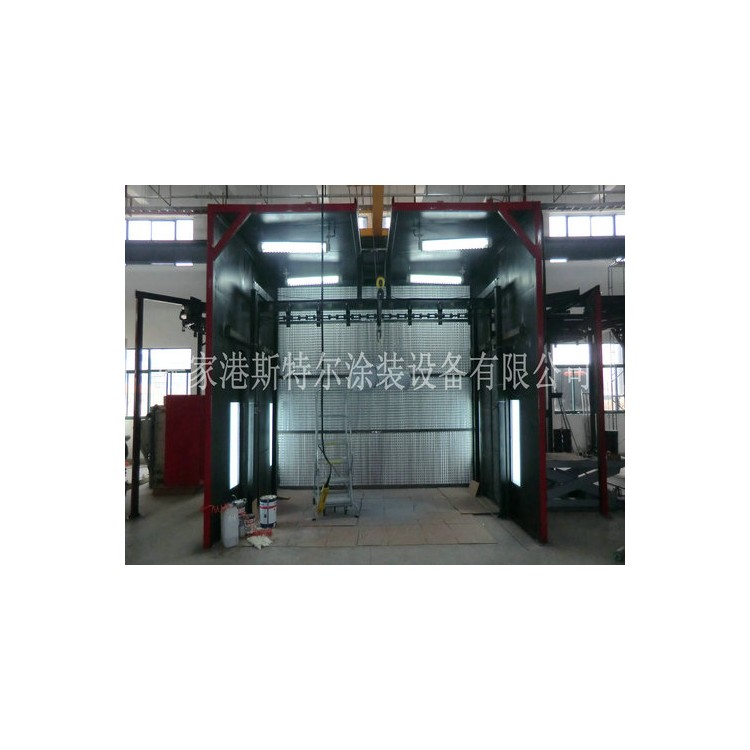
Structure Composition: Comprises the room body, lighting system, air filtration system, air distribution system, heating system, exhaust system, paint mist and waste gas treatment system, electrical control system, and safety system, among other components.
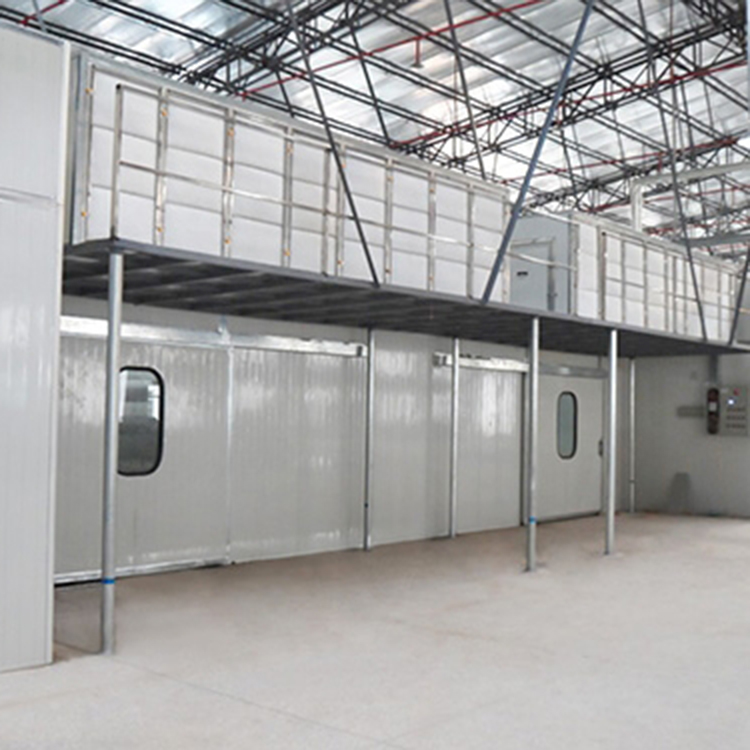
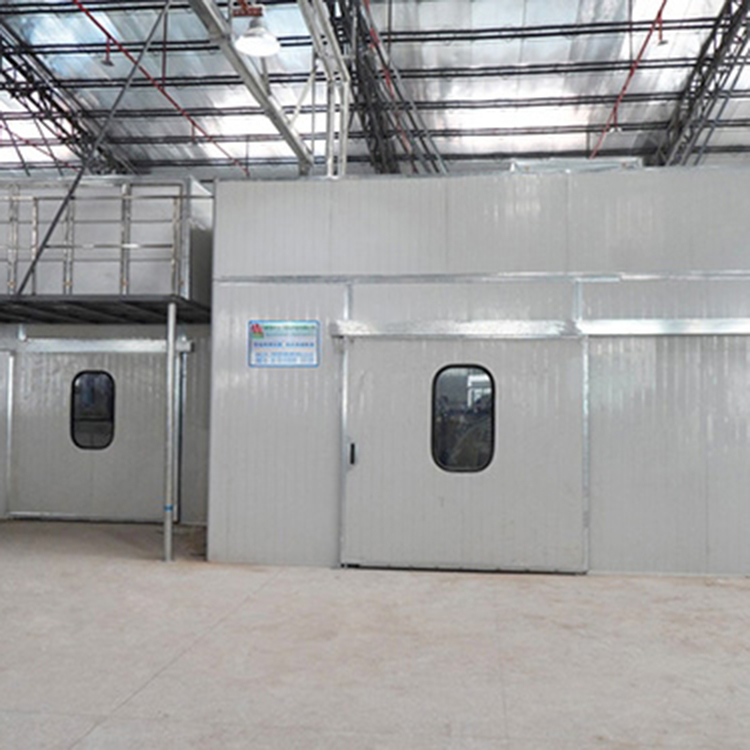
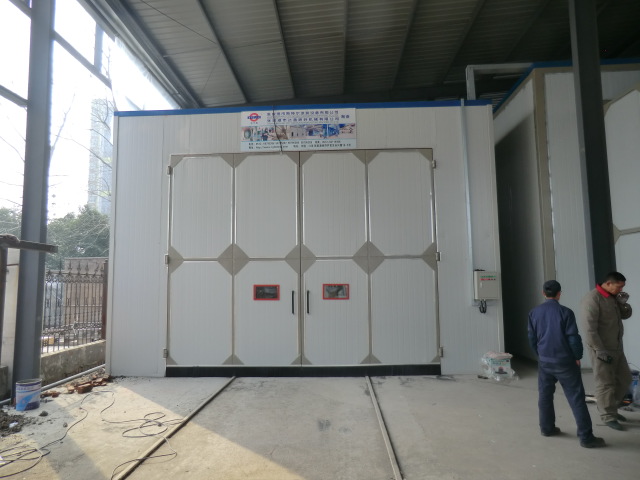
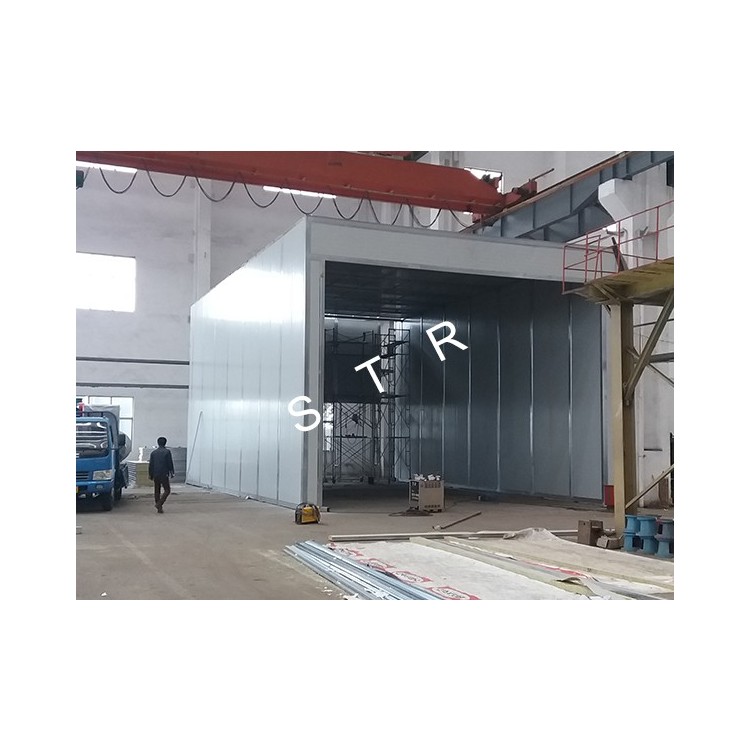
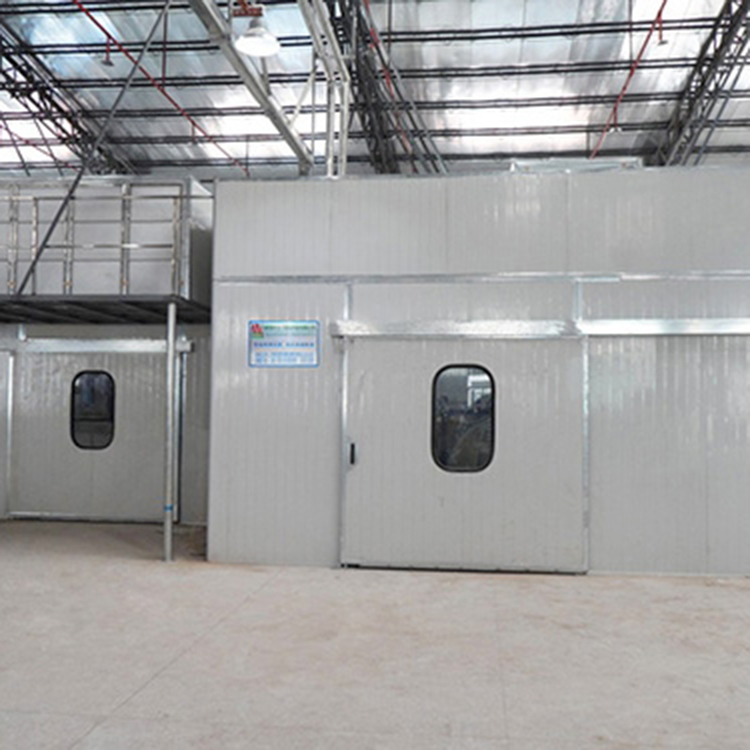
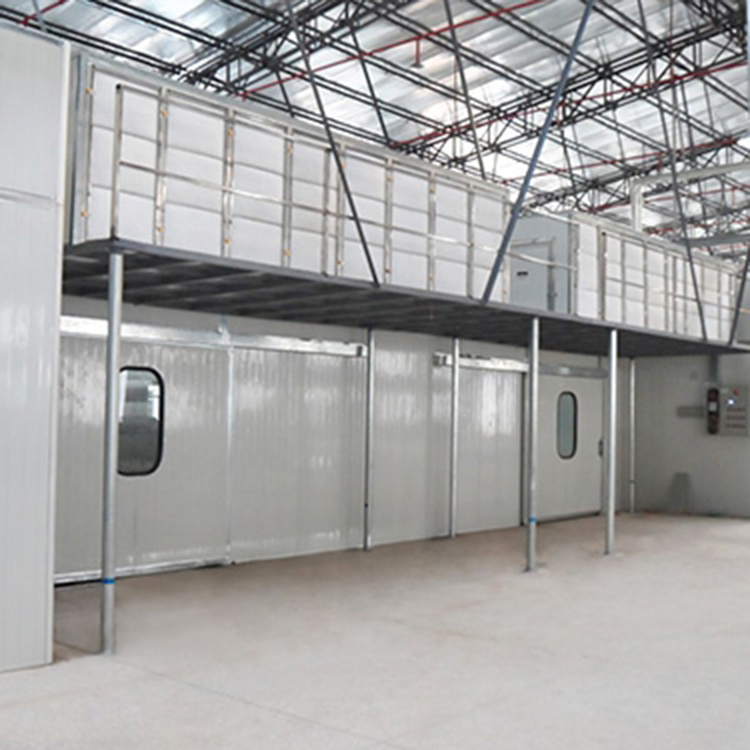
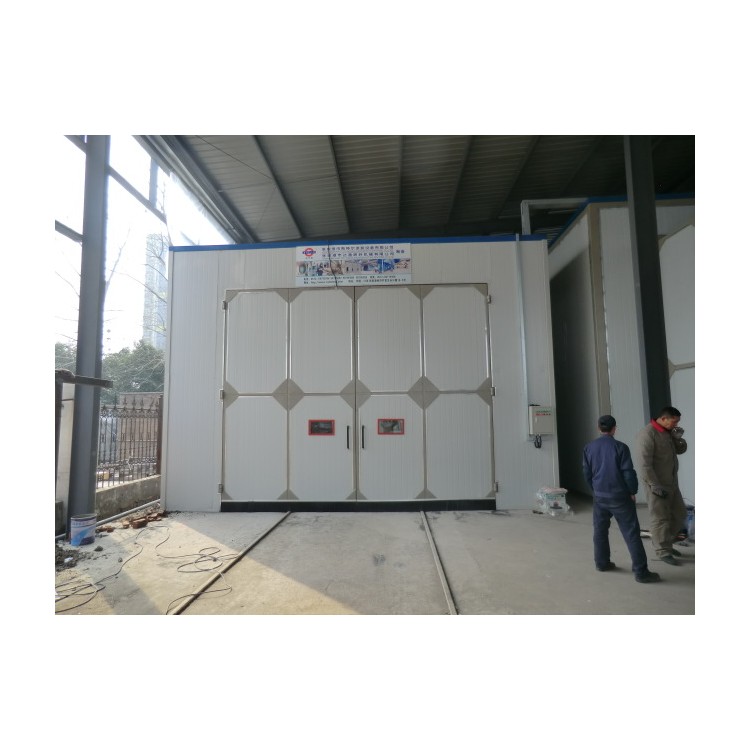
2.1. Body: Composed mainly of the frame, wall panels, workpiece entrance and exit doors, and safety doors. The body meets the national or relevant industry standards for strength, stability, thermal insulation, sealing, shock resistance, and seismic resistance.
Frame
The chamber frame is made by bending and welding square steel tubes and galvanized steel plates.
② Wall Panels
The room panels are made of composite thermal insulation boards, with both inner and outer plates being color steel plates, filled with 58mm thick polyurethane insulation material. Total thickness is 75mm. All panels are assembled for easy installation and disassembly. The color is white.
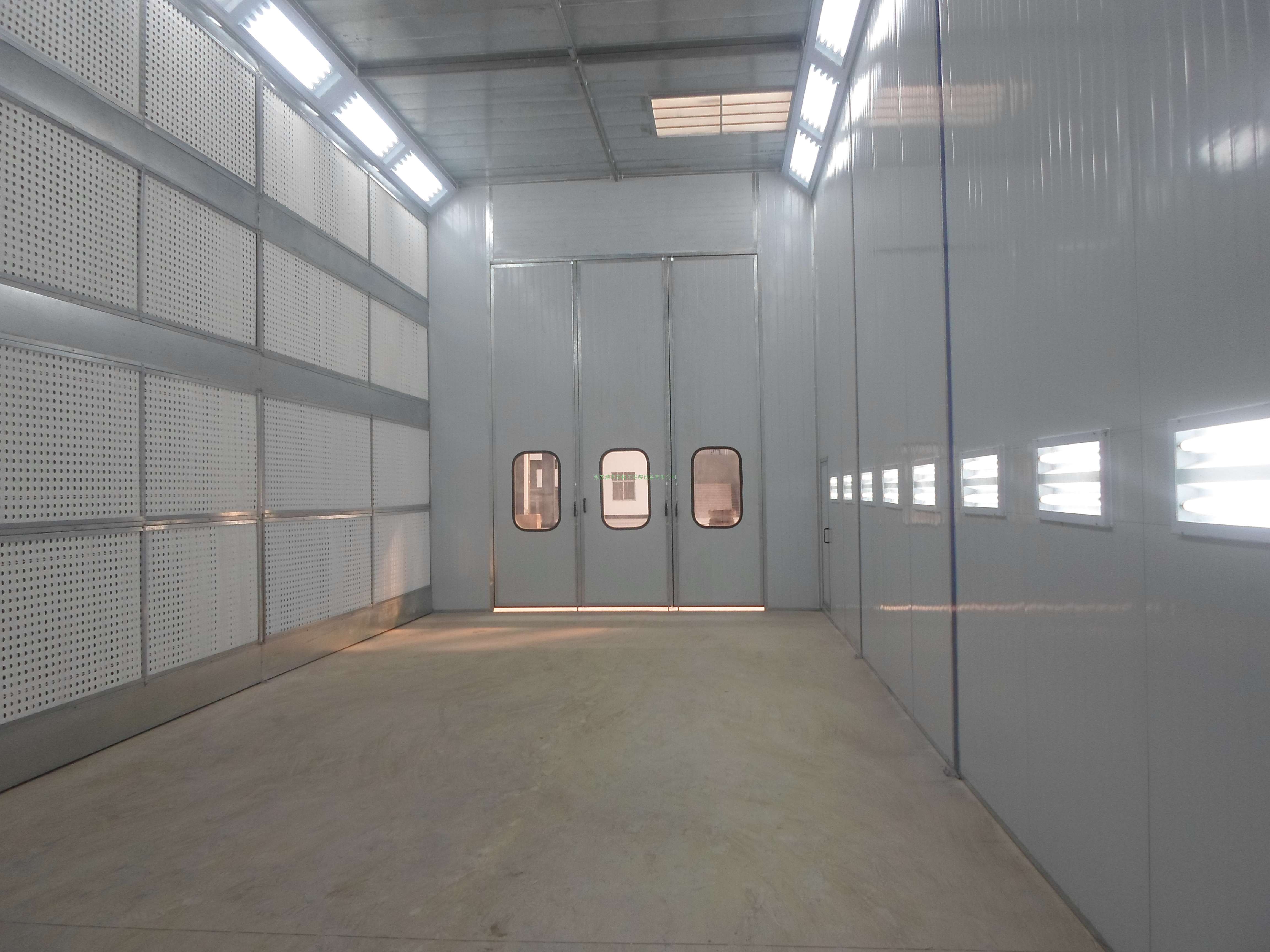
Lighting System: Explosion-proof lighting units are installed at the top and side sections of the room. The top section lights are mounted at a 45-degree angle, while the side section lights are installed within the wall panels. The tubes use explosion-proof Philips high-efficiency sources, ensuring safety, energy-saving, and easy maintenance. The ballasts are designed specifically for our spray booth by our company, guaranteeing an illumination intensity of approximately 700Lux.
Each side of the waist features a two-layer lighting arrangement.
2.3 Air Filtration System
Air filtration is a two-stage process, including preliminary filtration (inlet air filtration) and high-efficiency filtration (top filtration). The preliminary filtration is set at the inlet, featuring a mesh structure, which effectively filters particles larger than 15μm.
The primary technical specifications of the initial efficiency filter cotton are:
Raw Resistance 24 Pa
Final Resistance 250 Pa
Average Capture Rate (Calculation Method) 86%
Dust Holding Capacity: 620g/²m
Thickness: 20mm
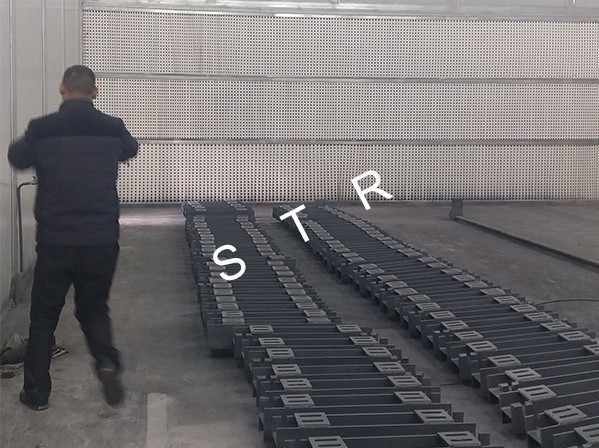
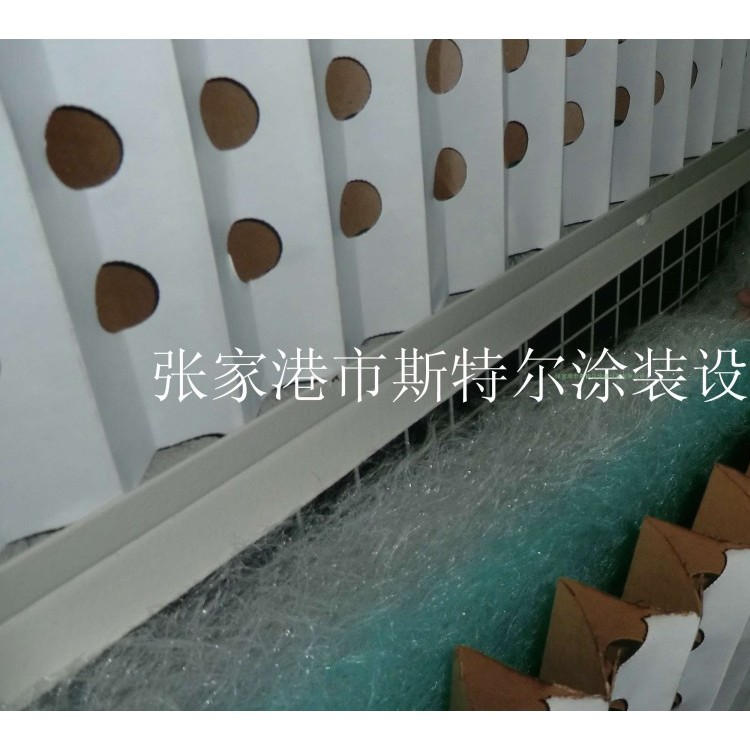
High-efficiency filtration material is chosen, with 600G precision-grade filter cotton laid flat on the galvanized mesh at the bottom of the static pressure chamber. It is tightly secured with a round steel frame, achieving a secondary filtration of the air and ensuring a more uniform airflow into the operation area, thereby guaranteeing the uniformity of air volume and cleanliness. The filter cotton features a multi-layer structure, with an intermediate oil-impregnated layer that provides strong adhesion, ensuring air cleanliness with dust content ≯1.5mg/m3, dust particle count ≯200 per cm3, and large dust particles ≯5µm. Differential pressure gauges are set on the top and bottom of the filter cotton. An alarm is triggered when the filter cotton becomes severely clogged, causing a significant decrease in airspeed and an increase in pressure differential, prompting a change. This prevents mismatched air supply and exhaust, which can lead to excessive indoor-outdoor pressure differentials and affect the painting effect. Its main technical specifications are:
Model: 600
Original Resistance 19 Pa
Final resistance: 230Pa
Average Capture Rate: 98%
Dust Holding Capacity: 419g/m2
Thickness: 25mm
Flame Retardant Ability: Meets F5 Standard
2.4 Air Distribution System: Mainly composed of an air blower, blower base, and steel frame. The blower bases are filled with sound-absorbing material to reduce noise and vibration.
Based on the workpiece characteristics, the empty wind speed in the paint room is above 0.23 m/s, calculated as follows,
Q1=3600FV=3600×(14×10)×0.23=115920m3/h
Considering aerodynamic resistance and interference coefficient, a total air volume of 120,000 m³/h is selected, with a total of 4 groups of supply systems, consisting of 8 units of YDW-type centrifugal fans.
Fan parameters as follows:
Model: YDW
Airflow: 15,000 m³/h
RPM: 950 rpm
Pressure: 801 pa
Power: 5.5 kW
Quantity: 8 units
2.5, Exhaust System: Composed mainly of exhaust fans, ducts, and profiles. During painting, to discharge the filtered air at a high altitude, two sets of exhaust systems are installed, each with a flow rate of 35,201 m3/h, to maintain the chamber in a slightly positive pressure state during painting, thereby ensuring the quality of the coating. Each set is equipped with one centrifugal fan, model 4-82.
2.6 Paint Mist and Waste Gas Treatment System: Utilizes dry treatment, with treated gases emitted into the air at high altitudes, in compliance with the national standard GB16297-1996.
Fan exhaust ducting