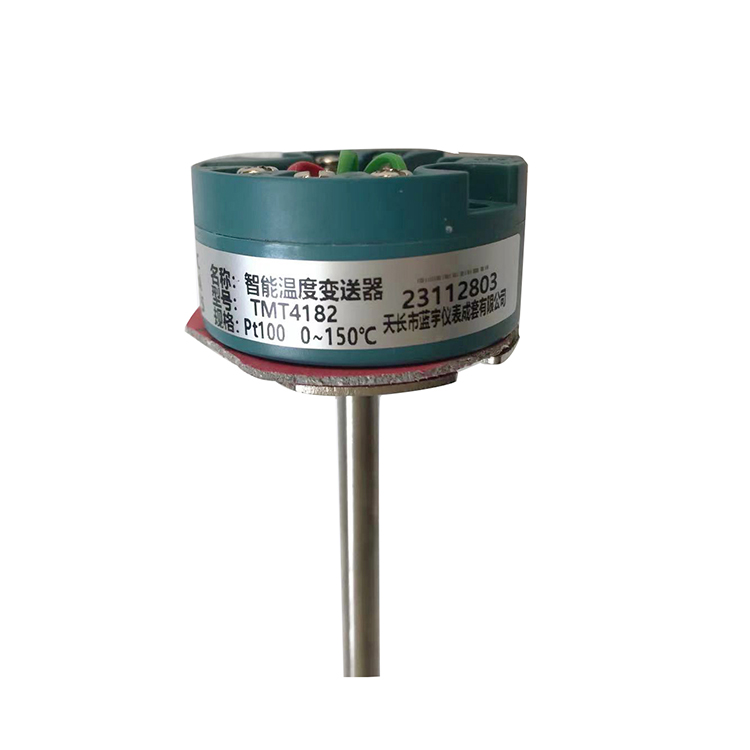

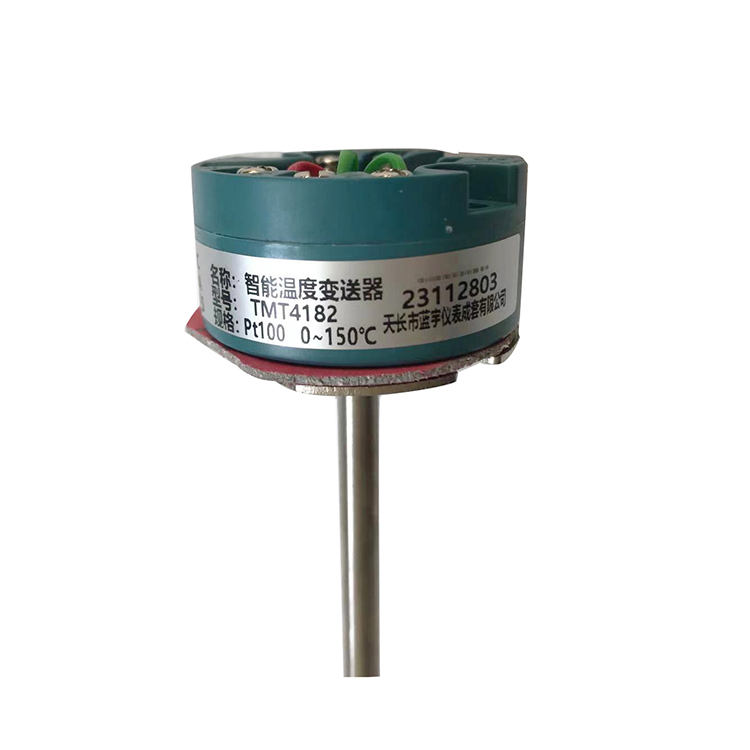







Temperature Transmitter
Temperature transmitter adoptsthermocouple、thermal resistorAs a temperature measuring element, the output signal from the temperature measuring element is sent to the transmitter module, which undergoes voltage stabilization filtering, operational amplification, nonlinear correctionV/IAfter circuit processing such as conversion, constant current, and reverse protection, it is converted into a linear relationship with temperature4~20mAcurrent signal0-5V/0-10VVoltage signal,RS485Digital signal output.
effect
A device that converts physical measurement signals or ordinary electrical signals into standard electrical signals or outputs them in a communication protocol. A temperature transmitter is an instrument that converts temperature variables into standardized output signals that can be transmitted, mainly used for measuring and controlling temperature parameters in industrial processes. The current transmitter converts the AC current of the measured main circuit into a constant current loop standard signal, which is continuously transmitted to the receiving device.
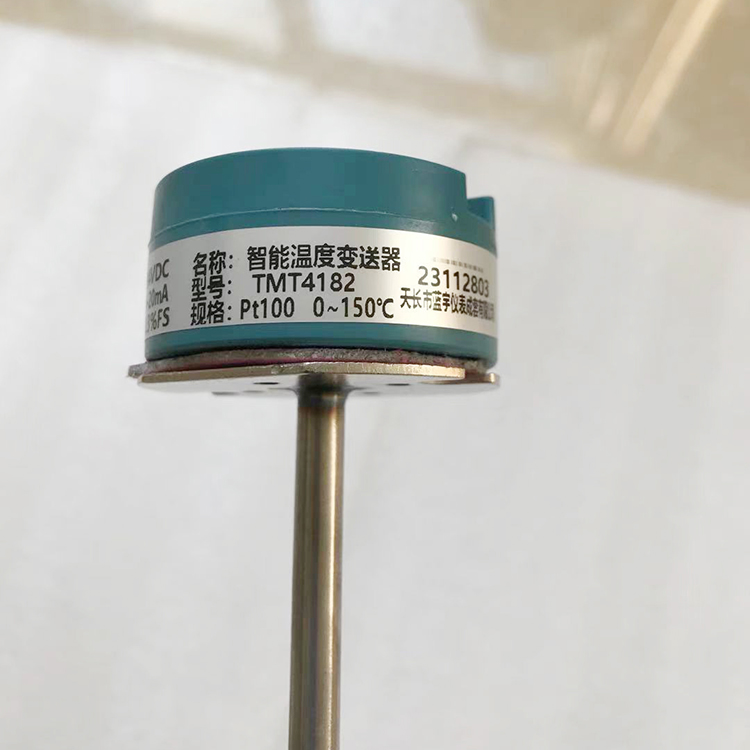
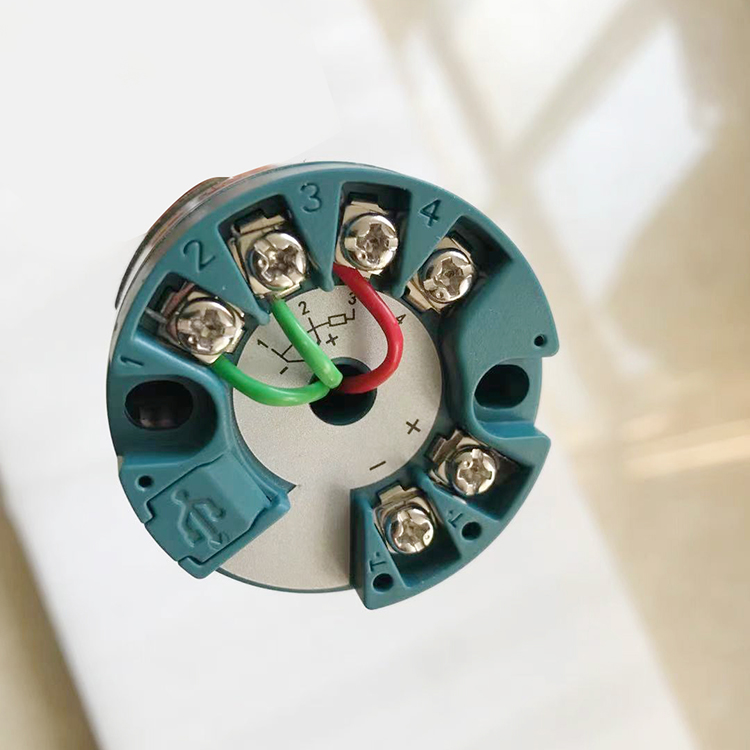
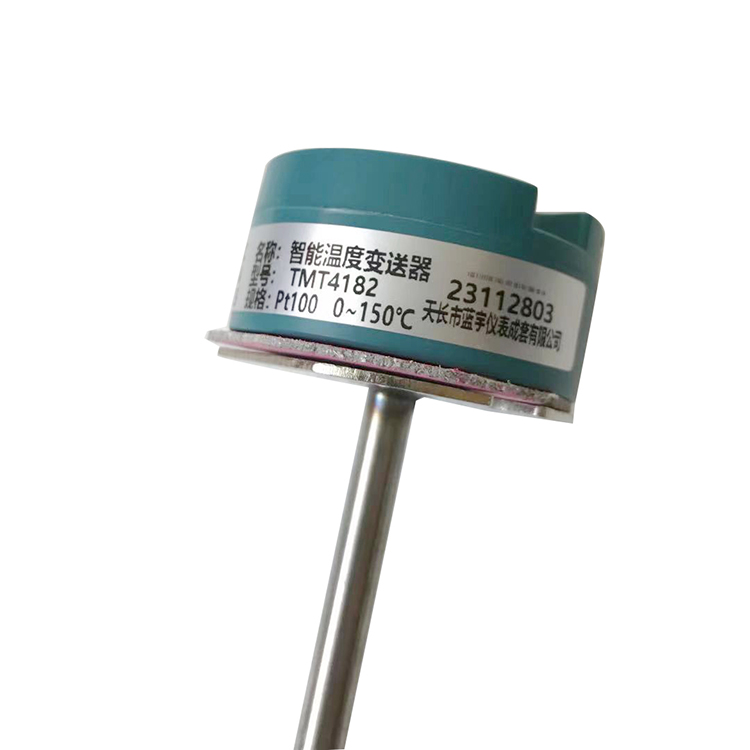
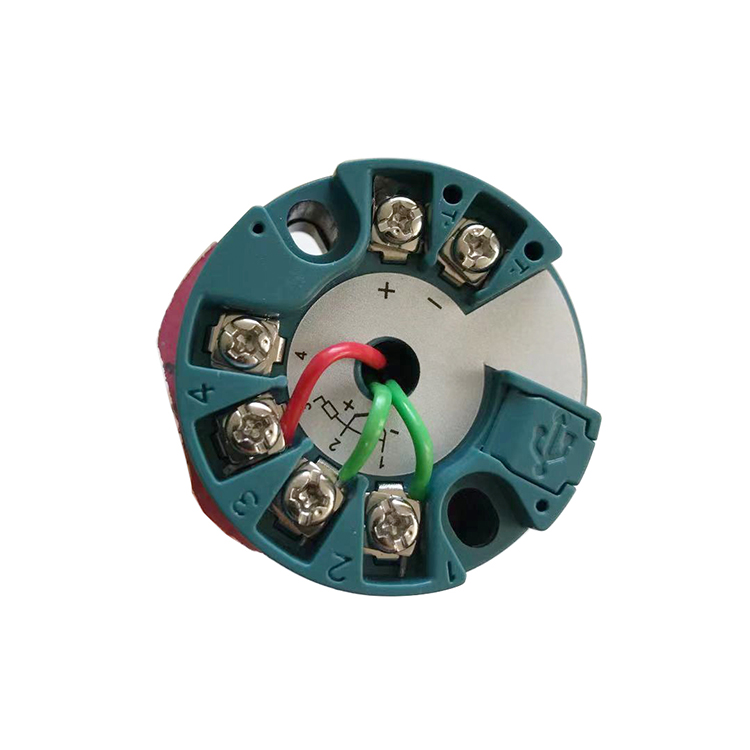
temperaturecurrent transducerIt is to convert the signal of the temperature sensor into a current signal, connect it to the secondary instrument, and display the corresponding temperature. For example, the model of the temperature sensor in the figure isPT100So the function of the temperature current transmitter is to convert the resistance signal into a current signal, input it into the instrument, and display the temperature.
performance metrics
Isolation type temperature transmitter:
Execution standard:IEC688:1992,QB
Input range:-60℃~175℃Accuracy level:≤0.5%.F.SWhole machine power consumption:≤0.5VAinsulation resistance≥20MΩ(DC500V)Response time:≤350mSWork environment:-10℃~50℃,20%~90%Non condensing storage environment:-40℃~70℃,20%~95%no condensation
Convert the temperature isolation of the tested environment into a single standard DC voltage or DC current output in linear proportion; Low power consumption and high reliability; Excellent anti-interference ability; Plug and unplug terminal interface, standard rail(35mm)Installation; Small size and external dimensions(mm):95(L)×37(W)×32(H);
temperaturetransmitterIt is an instrument that converts temperature variables into standardized output signals that can be transmitted. Mainly used for measuring and controlling temperature parameters in industrial processes.
A transmitter with sensors usually consists of two parts: the sensor and the signal converter. Sensors are mainlythermocoupleorthermal resistorThe signal converter mainly consists of a measurement unit, a signal processing unit, and a conversion unit (due toIndustrial thermistorThe thermocouple calibration table is standardized, so the signal converter, as an independent product, is also called a transmitter. Some transmitters have added display units, while others also haveFieldbusfunction
If a transmitter consists of two sensors used to measure temperature differences, there is a given continuous functional relationship between the output signal and the temperature difference. Therefore, it is called a temperature transmitter.
transmitterThere is a given continuous function relationship (usually a linear function) between the output signal and the temperature variable, and early produced transmitters had a linear function relationship between the output signal and the resistance value (or voltage value) of the temperature sensor.
The standardized output signals are mainly0mA~10mAand4mA~20mA(or1V~5Vofdirect currentSignal. Other standardized output signals with special regulations cannot be excluded. Temperature transmitters can be divided into two-wire and four wire systems according to the power supply wiring method, except forRWBThe temperature transmitter is a three wire system.
The transmitter has electric powerUnit combination instrumentSeries and miniaturized modular, multi-functional intelligent. The former does not come with sensors, while the latter two types of transmitters can be easily combined with thermocouples or thermistors to form transmitters with sensors.
Temperature Transmitter
The temperature transmitter uses thermocouples and thermistors as temperature measuring elements. The output signal from the temperature measuring element is sent to the transmitter module, and after being processed by circuits such as voltage stabilization filtering, operational amplification, nonlinear correction, V/I conversion, constant current and reverse protection, it is converted into a 4-20mA current signal of 0-5V/0-10V voltage signal that is linearly related to temperature, and RS485 digital signal output.
effect
A device that converts physical measurement signals or ordinary electrical signals into standard electrical signals or outputs them in a communication protocol. A temperature transmitter is an instrument that converts temperature variables into standardized output signals that can be transmitted, mainly used for measuring and controlling temperature parameters in industrial processes. The current transmitter converts the AC current of the measured main circuit into a constant current loop standard signal, which is continuously transmitted to the receiving device.
temperaturecurrent transducerIt is to convert the signal of the temperature sensor into a current signal, connect it to the secondary instrument, and display the corresponding temperature. For example, if the model of the temperature sensor in the figure is PT100, the function of the temperature current transmitter is to convert the resistance signal into a current signal, input it into the instrument, and display the temperature.
performance metrics
Isolation type temperature transmitter:
Execution standard: IEC688:1992, QB
Input range: -60 ℃~175 ℃ Accuracy level: ≤ 0.5% F. S Whole machine power consumption: ≤ 0.5VA Insulation resistance: ≥ 20M Ω (DC500V) Response time: ≤ 350mS Working environment: -10 ℃~50 ℃, 20%~90% no condensation Storage environment: -40 ℃~70 ℃, 20%~95% no condensation
Convert the temperature isolation of the tested environment into a single standard DC voltage or DC current output in linear proportion; Low power consumption and high reliability; Excellent anti-interference ability; Plug and unplug terminal interface, standard rail (35mm) installation; Small size, external dimensions (mm): 95 (L) × 37 (W) × 32 (H);
A temperature transmitter is an instrument that converts temperature variables into standardized output signals that can be transmitted. Mainly used for measuring and controlling temperature parameters in industrial processes.
A transmitter with sensors usually consists of two parts: the sensor and the signal converter. Sensors are mainly thermocouples or thermistors; Signal converters are mainly composed of measurement units, signal processing and conversion units (due to the standardization of industrial thermal resistance and thermocouple calibration tables, signal converters are also called transmitters when they are independent products). Some transmitters have added display units, and some also have fieldbus functions.
If a transmitter consists of two sensors used to measure temperature differences, there is a given continuous functional relationship between the output signal and the temperature difference. Therefore, it is called a temperature transmitter.
There is a given continuous function relationship (usually a linear function) between the output signal of the transmitter and the temperature variable. Early produced transmitters had a linear function relationship between the output signal and the resistance value (or voltage value) of the temperature sensor.
The standardized output signals are mainly DC electrical signals of 0mA~10mA and 4mA~20mA (or 1V~5V). Other standardized output signals with special regulations cannot be excluded. Temperature transmitters can be divided into two wire and four wire systems according to the power supply wiring method, except for the RWB type temperature transmitter which is a three wire system.
The transmitter comes in both electric unit combination instrument series and miniaturized modular, multi-functional intelligent types. The former does not come with sensors, while the latter two types of transmitters can be easily combined with thermocouples or thermistors to form transmitters with sensors.
Related models: TMT5182-PC TMT5192H TMT4182 SBW-644S TMT5182-PC