
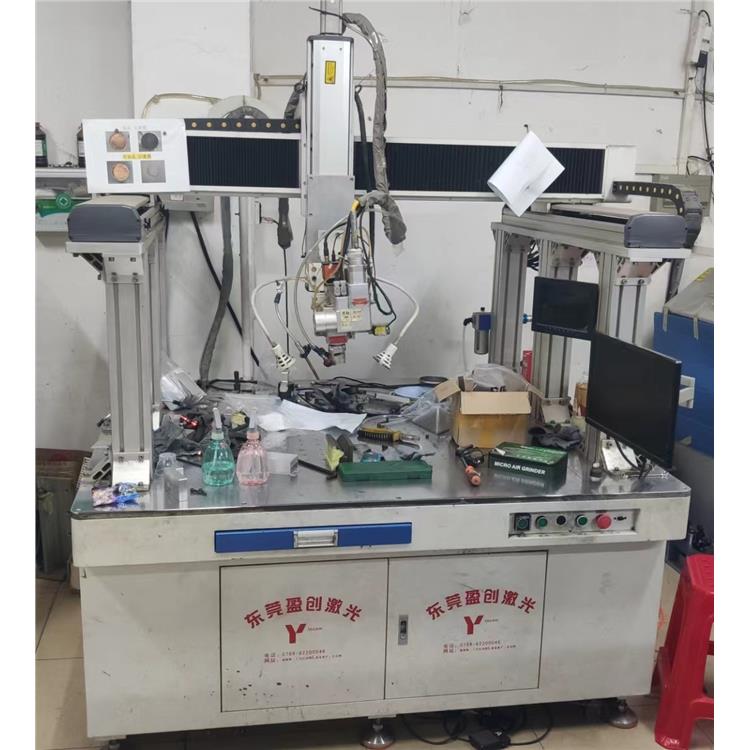














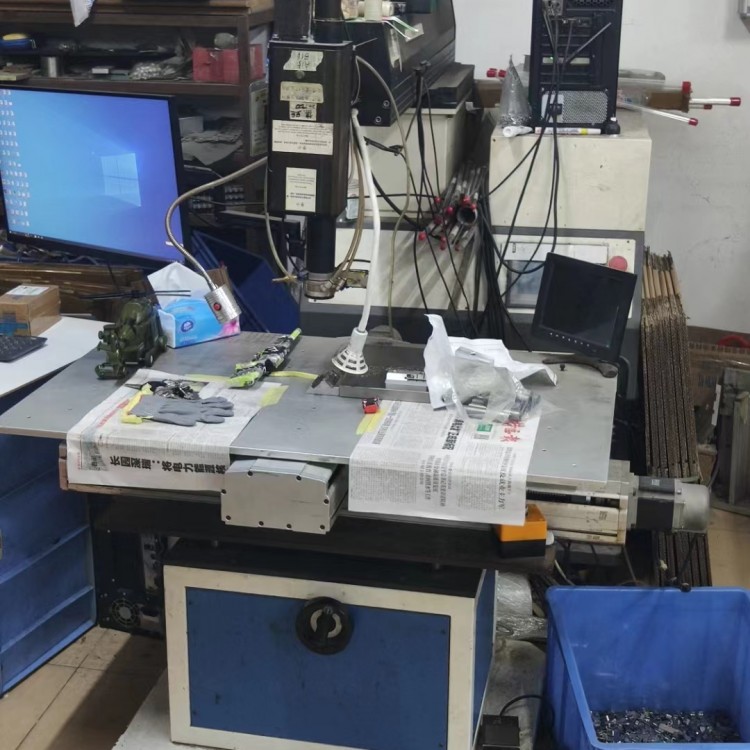


Aluminum alloy laser welding processing is a type of welding technology, widely used in fields such as automotive manufacturing and electronic equipment. Here are several key points about aluminum alloy laser welding:
1. **Welding Principle**: Laser welding focuses a high-energy laser beam on the surface of aluminum alloy, rapidly heating the local area to form a molten pool, followed by the solidification of the melted metal to create a weld seam.
2. **Equipment Selection**: Laser welding equipment typically includes solid-state lasers, fiber lasers, etc. Choosing the appropriate laser wavelength, power, and welding speed is crucial for ensuring welding quality.
3. **Material Characteristics**: Aluminum alloy has good thermal conductivity and a low melting point, but it is prone to form an oxide film on its surface. The surface must be cleaned before welding to enhance the quality of the weld joint.
4. **Welding Technology**: Laser welding can be performed in either continuous or pulsed modes, with methods including butt welding, corner welding, and lap welding, among others. Select appropriate welding parameters based on the specific aluminum alloy material and thickness.
5. **Welding Advantages**: Laser welding offers fast speed, minimal heat-affected zone, low deformation, and high precision, making it suitable for high-strength and high-performance aluminum alloys.
6. **Application Fields**: Aluminum alloy laser welding is commonly used in automotive bodywork, aircraft fuselages, electronic product casings, and other fields, offering good economic benefits and technical advantages.
7. **Post-Welding Treatment**: Post-welding, heat treatment, surface treatment, or defect detection may be required to ensure the welding quality meets specifications.
When performing laser welding on aluminum alloys, safety precautions must be taken to prevent harm to the human body from the laser, while ensuring good ventilation and an appropriate working environment.
Laser welding technology for aluminum alloy products offers various functions and advantages, primarily including the following:
**Property**: Laser welding offers fast speed, significantly enhancing production efficiency, and is suitable for mass production.
2. **High Precision**: The laser beam focuses energy with high density, resulting in small welding gaps and enabling high-precision, quantitative welding. Particularly suitable for aluminum alloy products that demand high welding precision.
3. **Small Heat Affected Zone**: Laser welding results in a minimal heat affected zone, effectively reducing deformation and stress during the aluminum alloy welding process, enhancing the strength and stability of the weld joint.
4. **High Versatility**: Laser welding is capable of joining various types of aluminum alloys, including thick and thin plates, and even allows for dissimilar material welding with other metals such as stainless steel and copper.
5. **High Automation Level**: Laser welding can be integrated with robotic technology to achieve automated production, reducing labor costs and improving production consistency.
6. **Environmentally Friendly**: The laser welding process is relatively clean, as it does not require materials like welding wire or rods, thereby reducing pollution and waste during welding.
7. **Excellent Welded Joints Appearance**: The joints after laser welding are smooth and aesthetically pleasing, suitable for products with high appearance requirements.
These features make aluminum alloy laser welding widely applied in industries such as automotive manufacturing, electronics, and electrical engineering.
The laser welding process for radiators boasts several characteristics:
1. **High Precision**: Laser welding technology achieves high precision in welding, making it suitable for stringent joint requirements, such as in radiators.
2. **Small Heat Affected Zone**: The lower heat input during the laser welding process results in a smaller heat affected zone, which helps to minimize material deformation and residual stress, maintaining the radiator's performance.
3. **Rapid Welding Speed**: Laser welding is fast, enhancing production efficiency and ideal for mass production.
4. **Weldable with Various Materials**: Laser welding is effective for welding different metals and alloys, offering strong adaptability.
5. **Reduced Welding Reinforcement:** Laser welding typically requires no additional welding materials, simplifying the process and reducing costs.
6. **High Automation Level**: Laser welding can be integrated with robots and automated equipment to enhance the automation and intelligence of the production line.
7. **Good Weld Quality**: Laser-welded seams are typically smooth and free of pores, ensuring high welding quality that meets the requirements of radiators for airtightness and strength.
8. **Environmental Protection**: The laser welding process produces minimal smoke and waste, meeting modern environmental protection standards.
These features make laser welding a crucial and efficient processing method in the manufacturing of heat sinks.
Laser welding of aluminum products features the following characteristics:
High welding quality: Laser welding achieves high precision and quantity, resulting in even welds with high strength, suitable for applications with strict requirements.
2. **Small Heat Affected Zone**: Laser welding has a low heat input, resulting in a small heat affected zone, which reduces material deformation and stress, and simplifies subsequent processing.
3. **Rapid Welding Speed**: Laser welding offers quick speeds, enhancing production efficiency and is ideal for mass production.
4. **Versatile**: Capable of welding thin-walled aluminum components and complex-shaped workpieces, suitable for processing various aluminum alloy materials.
5. **High Automation Level**: Laser welding allows for automated production, reducing manual operations and enhancing production consistency and stability.
6. **Contactless Processing**: The laser welding process requires no physical contact, thereby avoiding material damage that may occur in traditional welding methods.
7. **Environmentally Friendly**: Laser welding produces minimal smoke and harmful gases, benefiting environmental protection and the health of operators.
8. **Minimal Post-Processing Required**: Due to high welding quality, complex post-processing procedures are often unnecessary, saving time and costs.
In summary, laser welding is a highly efficient and eco-friendly process for aluminum product manufacturing, which is increasingly being adopted across various industries.
6061 aluminum alloy is a commonly used material due to its excellent mechanical properties and corrosion resistance, widely applied in industries such as automotive and construction. The laser welding processing of 6061 aluminum alloy features the following:
Fast Welding Speed: Laser welding achieves high energy density welding with quick welding speed, suitable for mass production.
2. **Small Weld Heat Affected Zone**: During the laser welding process, the heat input is relatively low, resulting in a smaller heat affected zone (HAZ), which reduces material deformation and performance degradation.
3. **High-Quality Welded Joints**: Laser welding achieves deep penetration welding with smooth welds and high strength. There is a reduced amount of gas pores and inclusions produced during the welding process, thereby enhancing the quality of the weld joints.
4. **Versatile**: Capable of welding various thicknesses of 6061 aluminum alloy and can be welded with other metal materials.
5. **High Automation Level**: Laser welding is well-suited for integration with robots and automated equipment, enhancing production efficiency and consistency.
6. **Easy to Control Welding Parameters**: Laser welding technology allows for easy adjustment of welding parameters such as energy density, welding speed, and welding angle, which can be optimized to meet various requirements.
7. **Low Deformation Rate**: Due to the localized heating characteristic of laser welding, there is minimal deformation after welding, which helps maintain the overall structural geometric accuracy.
8. **Environmental Friendliness**: The laser welding process produces minimal waste gases and pollutants.
In summary, laser welding processing of 6061 aluminum alloy is gaining increasing attention in modern manufacturing due to its high efficiency, volume, and low deformation advantages.
Laser welding of aluminum alloy products is widely used in various fields, primarily applicable to scenarios such as:
1. **Automotive Manufacturing**: Aluminum alloys play a crucial role in automotive lightweighting, with laser welding used for joining body, chassis, and other structural components, enhancing strength and reducing weight.
2. Laser Welding Technology: Utilized in the manufacturing of aircraft structural components, wings, and parts, this technology meets stringent requirements for welding quality and material properties.
3. **Electronics**: In electronic devices such as smartphones, computer casings, and heat sinks, laser welding of aluminum alloy ensures excellent thermal conductivity and structural strength.
4. **Appliance Industry**: Aluminum alloy components are commonly used in appliances like refrigerators and air conditioners, where laser welding offers precise connection solutions.
5. **Building and Structure**: Aluminum alloy is increasingly utilized in the construction industry, with laser welding suitable for welding aluminum alloy doors, windows, and curtain walls.
6. **Equipment**: In equipment, aluminum alloy is commonly used for precise component connections due to its lightness and corrosion resistance, often via laser welding.
7. **Rail Transit**: Includes aluminum alloy carriages and structural components for high-speed trains and similar vehicles, with laser welding providing a high-strength and durable connection solution.
Laser welding is suitable for the manufacturing of aluminum alloy products requiring high-quality welds, thanks to its speed, high precision, and minimal heat-affected zone.
WeChat Official Account

Scan to follow Official Account



















