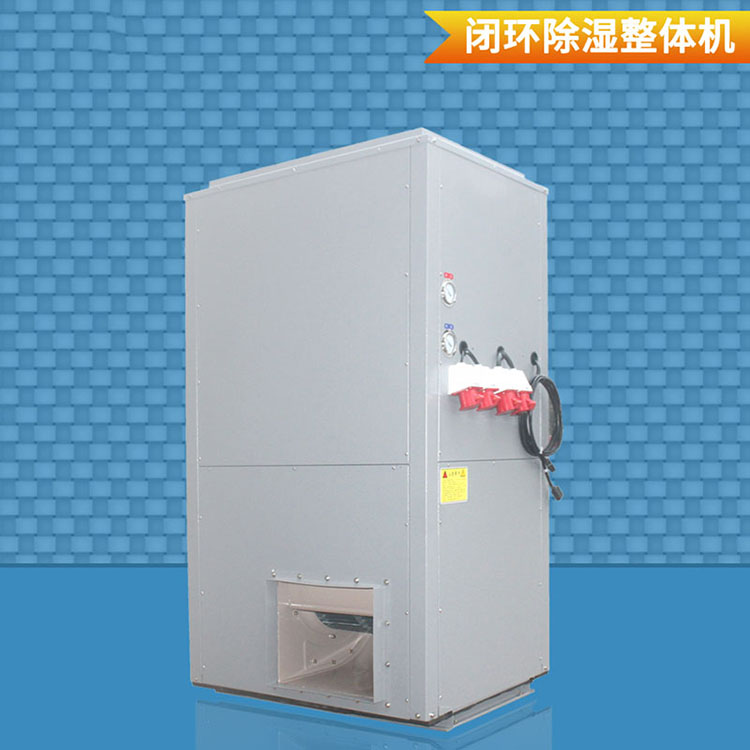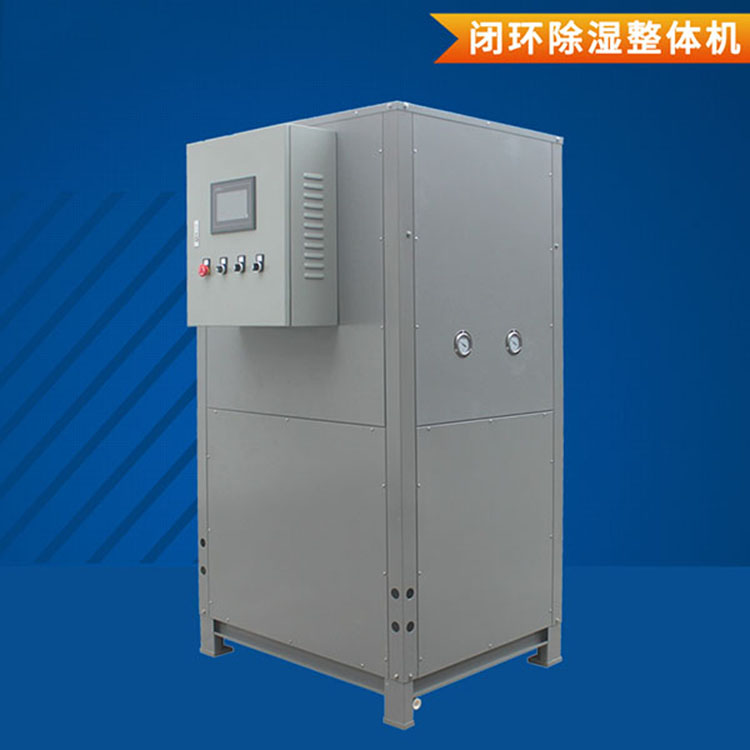

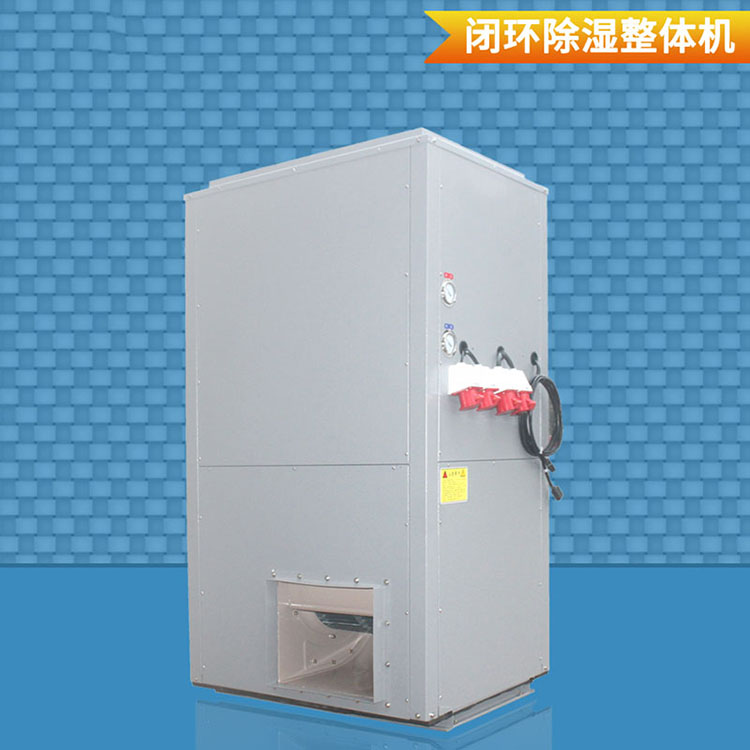

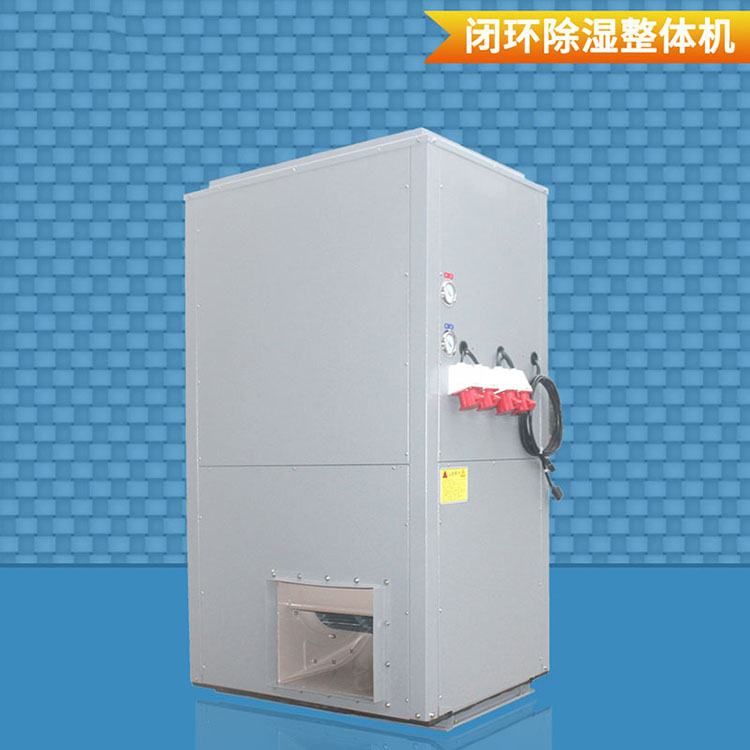

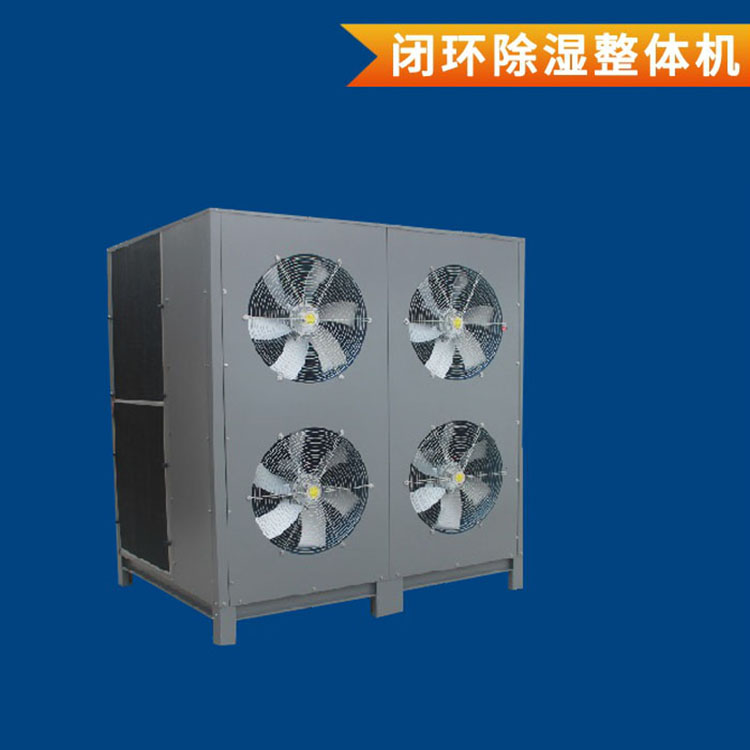







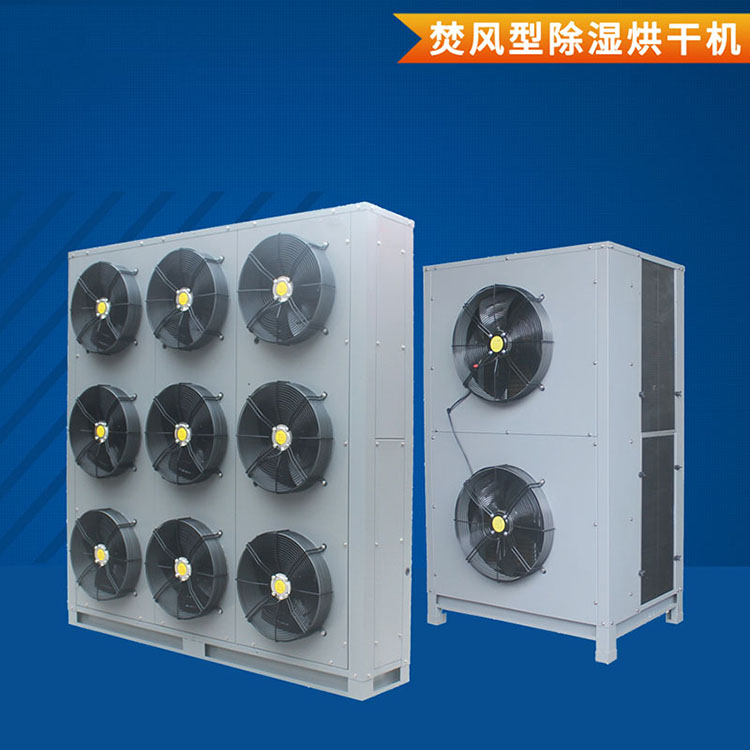

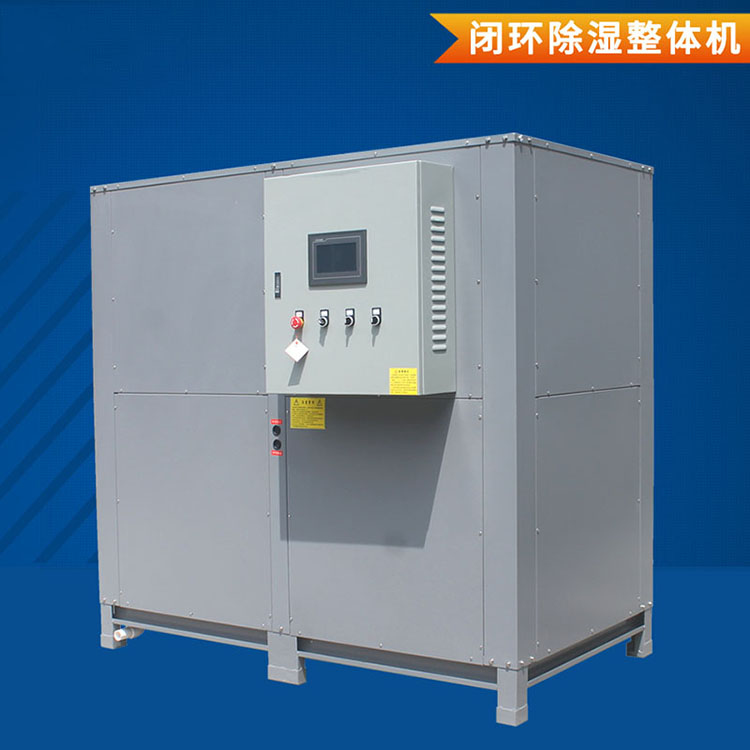
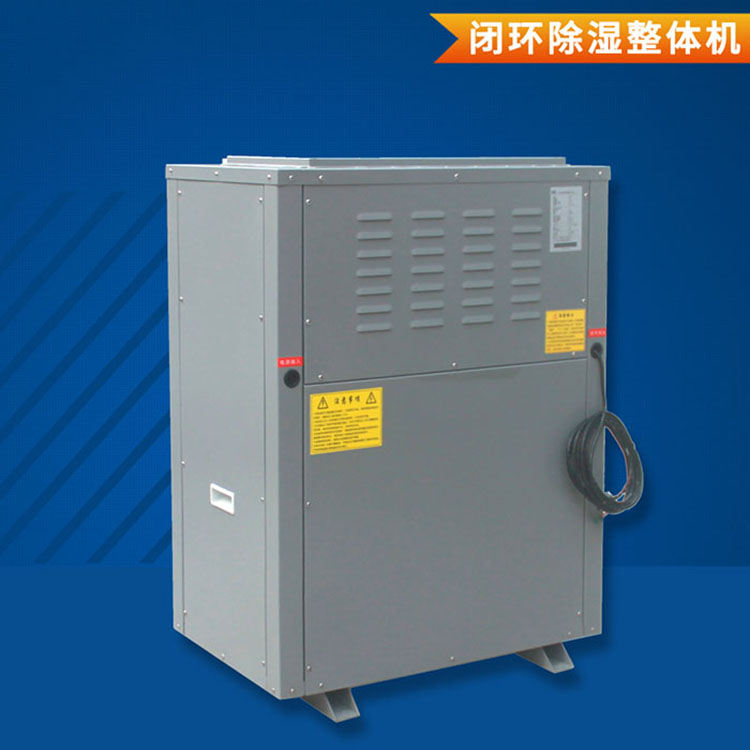
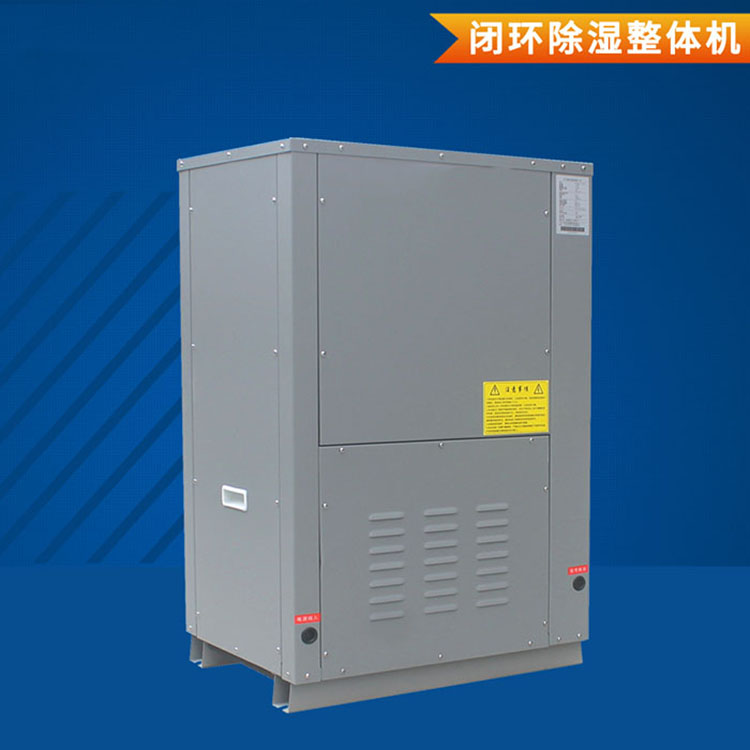
Downflow closed-loop dehumidifier drying machine, bottom exhaust and top return air, available in 5-7HP options, can be used as a single unit or combined with multiple units.
Principle of closed-loop dehumidification heat pump dryer drying
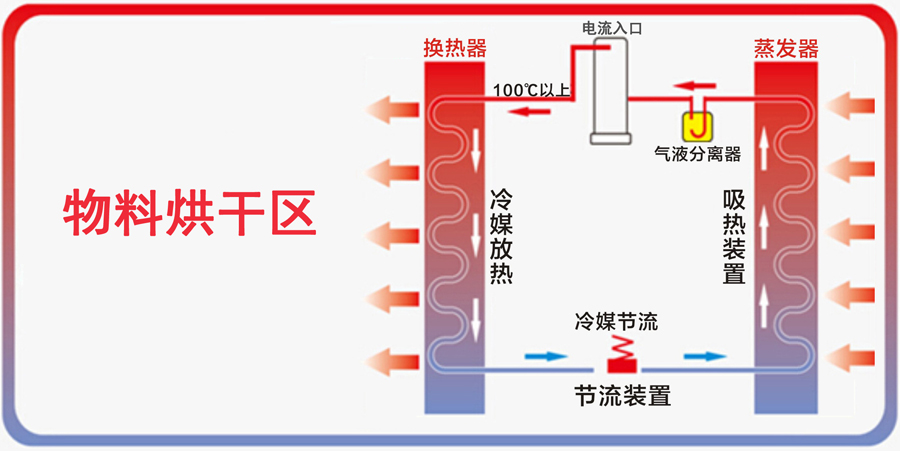
Closed-loop dehumidification heat pump dryers are used in the drying process. The main principle is to use the heat pump compressor to work, repeatedly circulating and heating the hot air inside the drying room, absorbing moisture from the material. While the heat pump evaporator condenses and removes water, it also absorbs heat from the humid air, providing heat for drying and dehumidifying. This process repeats, achieving continuous drying of the material.
Closed-loop desiccant dehumidifier dryer, utilizing a patented constant temperature dehumidification technology, significantly enhances dehumidification capacity compared to conventional heat pump dryers. The closed design ensures stable operation at low temperatures with minimal impact from ambient temperature changes. It can guarantee both drying time and effectiveness in cold and humid regions.
Heat Pump Dryer Principle
Heat Pump Dryer Principle: The heat pump dryer utilizes the reverse Carnot principle to absorb heat from the air and transfer it to the room, thereby increasing the drying room's temperature and配合相应设备 achieving the drying of materials. The heat pump dryer consists of a compressor——heat exchanger (internal unit)——throttle valve——absorber (external unit)——compressor, forming a circulating system (main unit + drying room).
The refrigerant circulates within the system under the action of the compressor. Inside the compressor, it completes a pressurization and temperature rise process (up to 115℃), then enters the indoor unit to release high-temperature heat to warm the air in the drying room, while it cools down and turns into a liquid state. After running to the outdoor unit, it quickly absorbs heat and evaporates back into a gaseous state, with the temperature dropping to -20℃ to -30℃. At this point, the air surrounding the heat absorber continuously transfers heat to the refrigerant. The continuous circulation of the refrigerant accomplishes the transfer of heat from the air to the drying room, thereby heating the air inside.
Heat Pump Dryer Application Range
The heat pump dryer is suitable for a wide range of materials. Mainly suitable materials for drying are those that can withstand temperatures between 20~80℃ during the drying process, or materials that can tolerate higher temperatures but are more energy-efficient or safer to dry using a heat pump. Materials that have been extensively researched and applied include wood (such as oak), grains, seeds, edible fungi (such as mushrooms, wood ear), seafood (such as fresh oysters, scallops, etc.), bioactive products (such as cells, enzymes), tea, paper, and more.
New EnergySolution
Tailored engineering solutions at no cost, customized to fit your specific industry needs.
Drying Equipment Solutions
Materials suitable for dry processing mainly include a wide range of materials that can withstand temperatures between 20-80°C during the drying process, or materials that can tolerate higher temperatures but are more energy-efficient or safer to dry using a heat pump.



Water Treatment Engineering Solutions
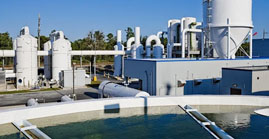
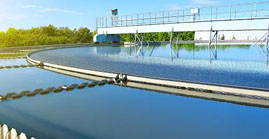
Water treatment engineering is widely used in various fields, such as industrial wastewater treatment, urban solid waste management, urban pollution outlet control, and rural wastewater treatment. It not only helps protect the environment but also enhances water resource utilization efficiency and reduces resource waste.

Direct-Drinking Water Solutions
Utilizing reverse osmosis water treatment technology, a professional manufacturer of drinking water systems, crafting superior drinking water equipment. Employing cutting-edge recycling technology, energy-saving, all imported components, extensive project case history, high-quality assurance, offering professional fully automatic water softening systems, comprehensive production management, and quality assurance, years of research and development, trustworthy.



Hot Water Solutions
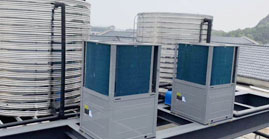
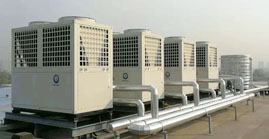
Hot water engineering is primarily used in residential areas, schools, factories, and other locations with a high population density, where water usage is concentrated. It is essential to ensure a 24/7 uninterrupted supply, along with maintaining a reasonable water temperature and stable pressure. Usage is mainly concentrated at night, often leading to peak periods, but comfort must be guaranteed. Additionally, efforts should be made to minimize installation, operational, and maintenance costs.