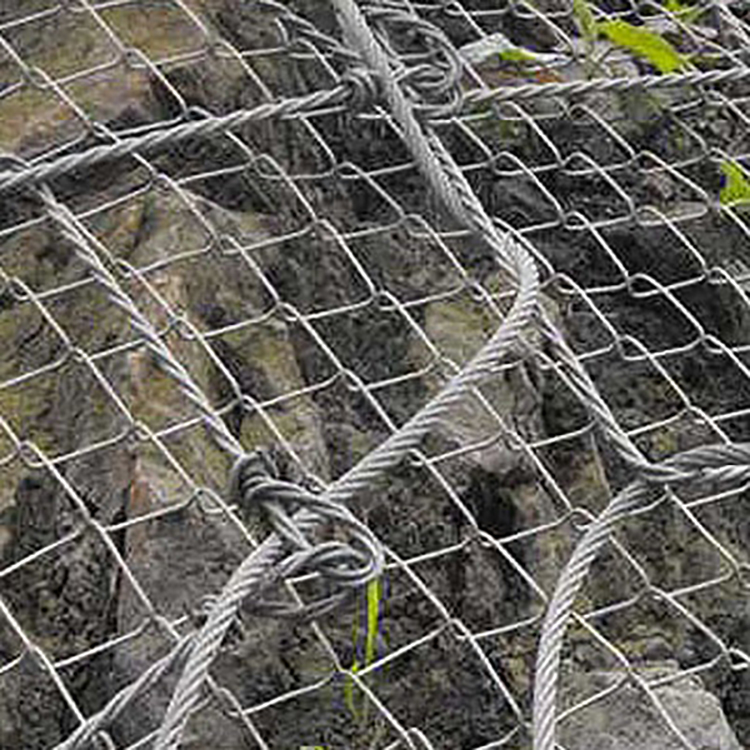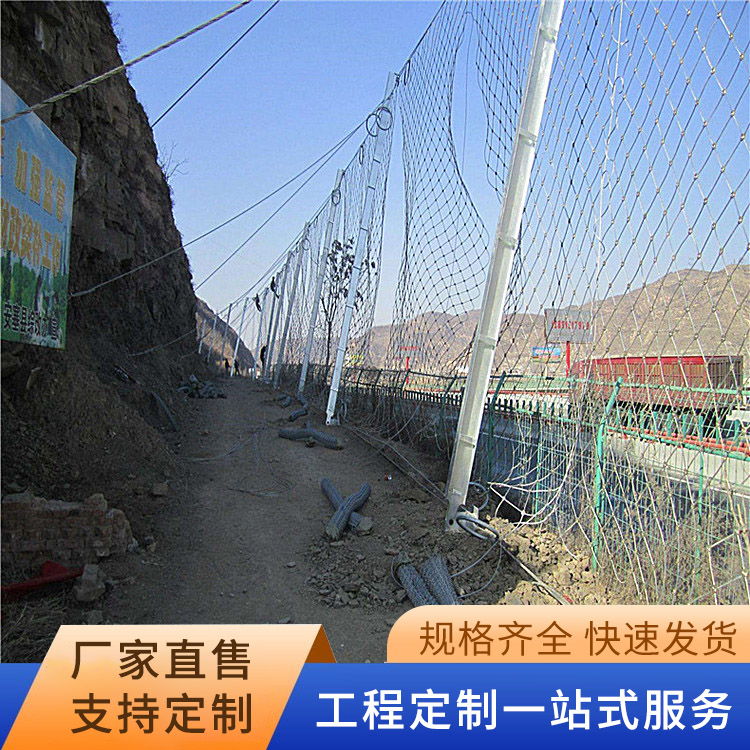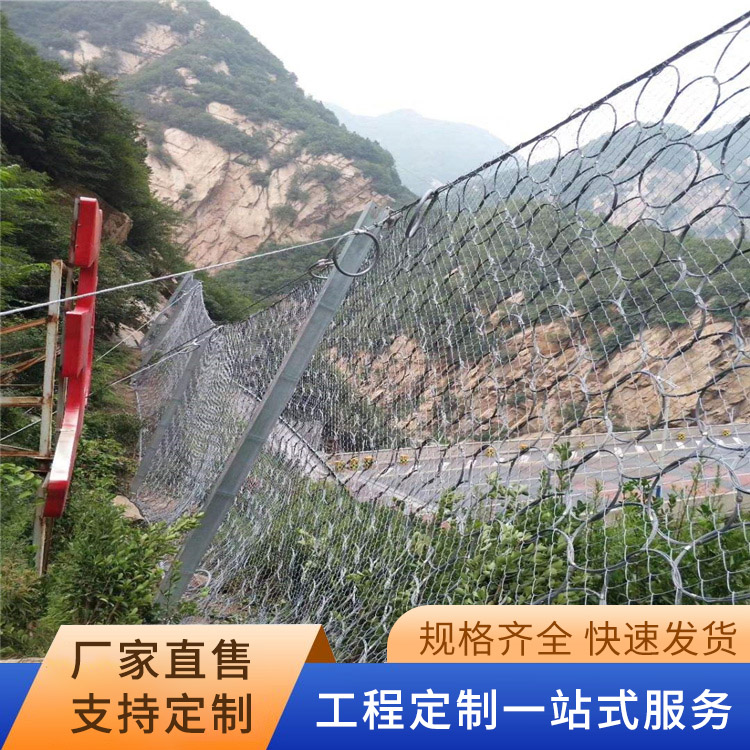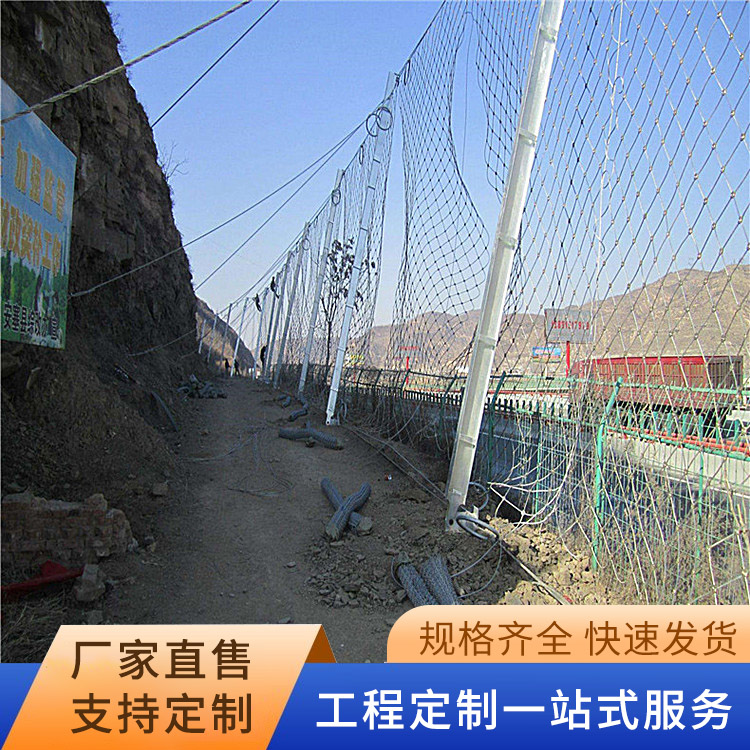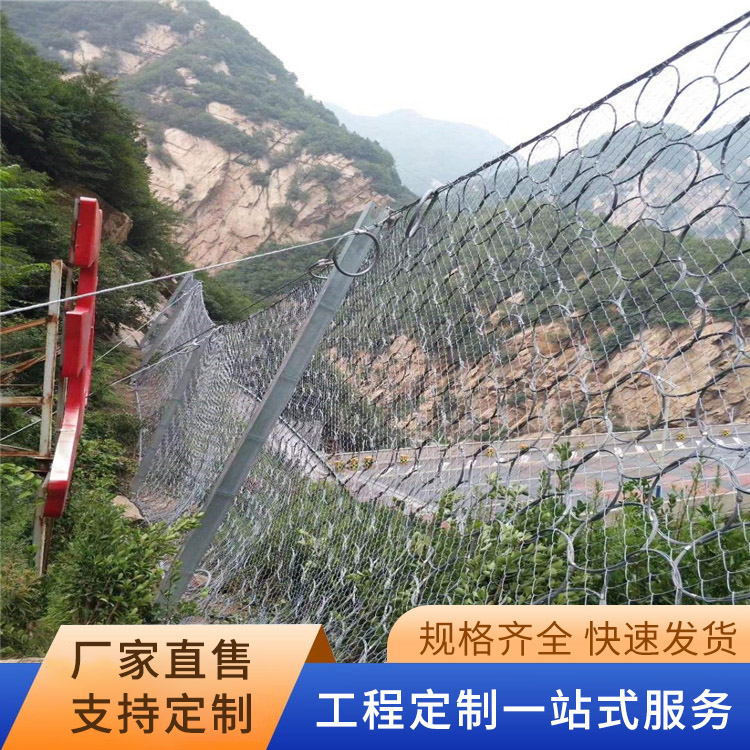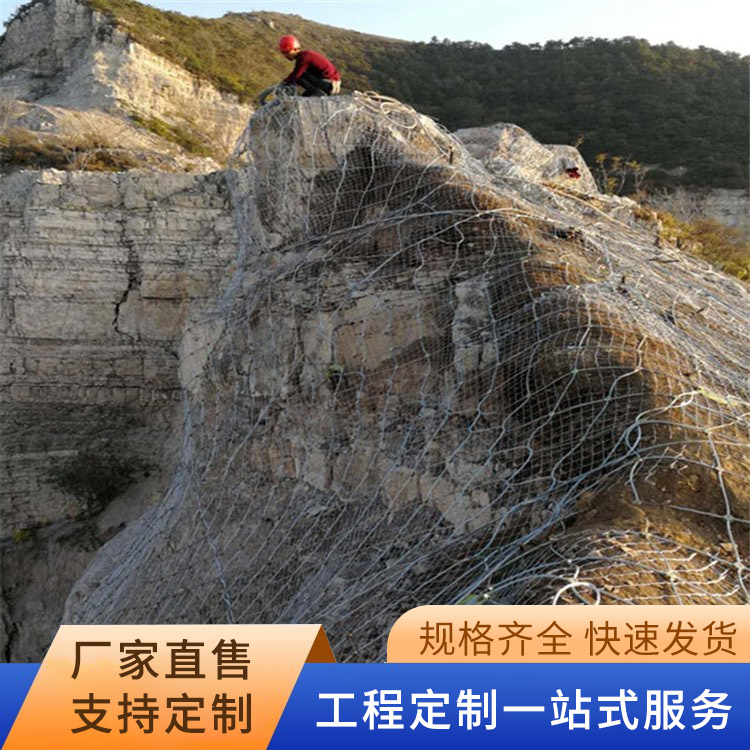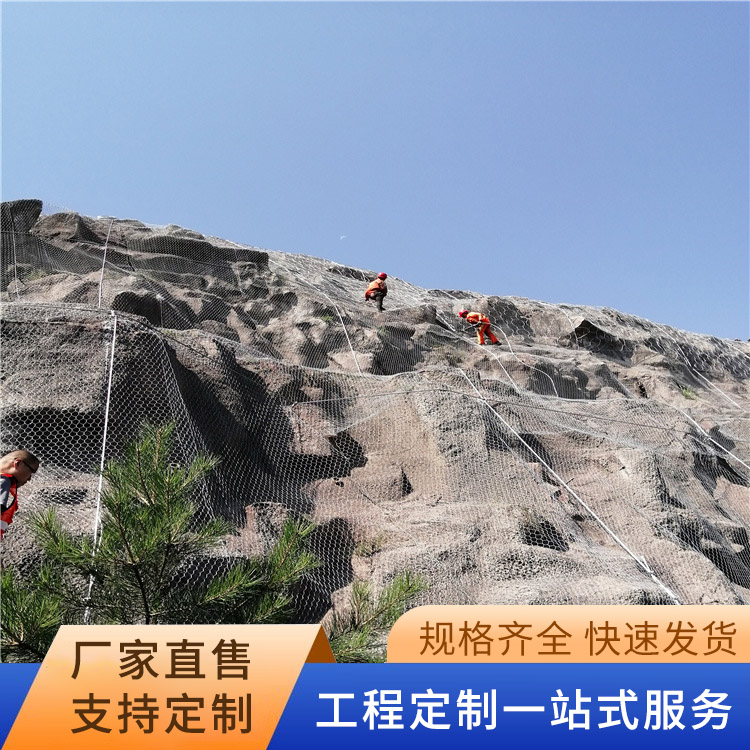

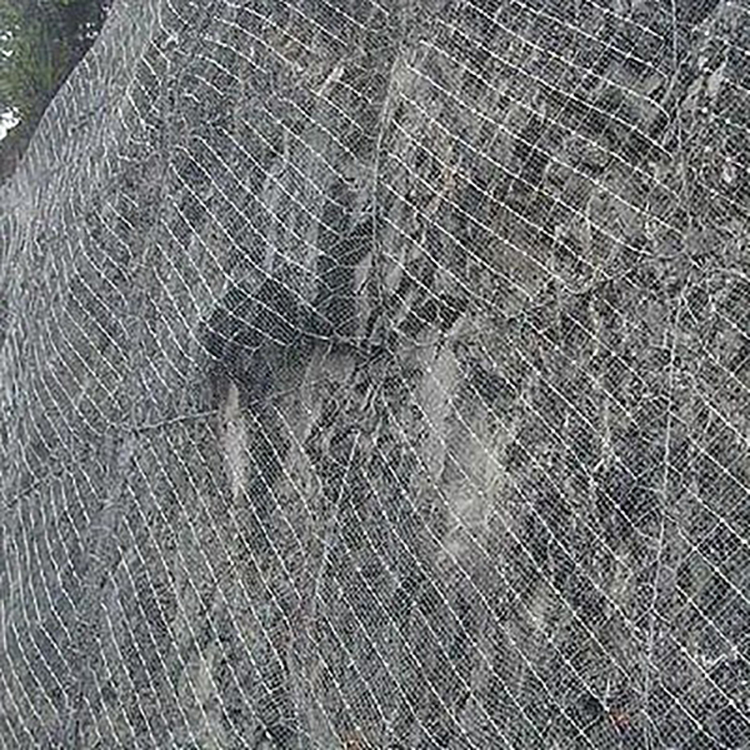


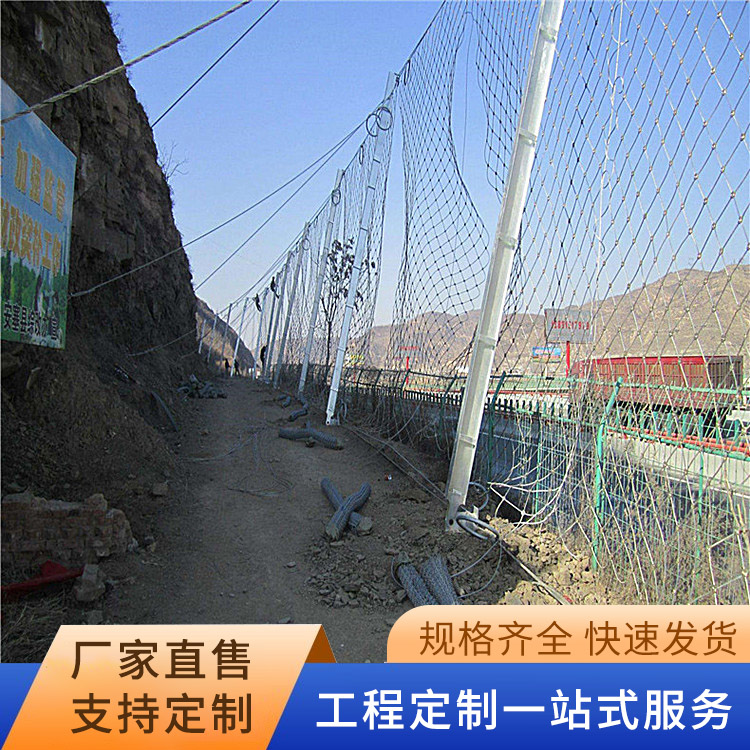
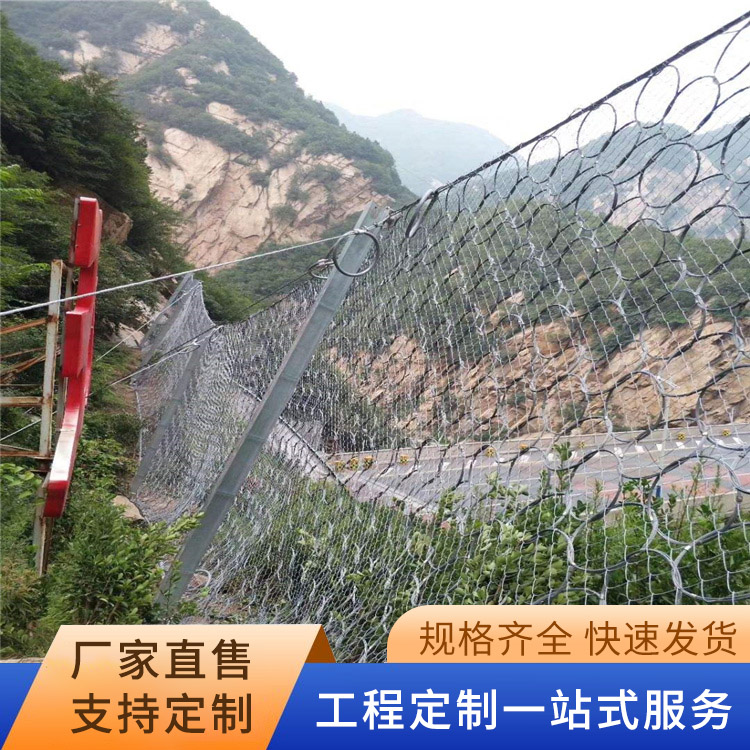





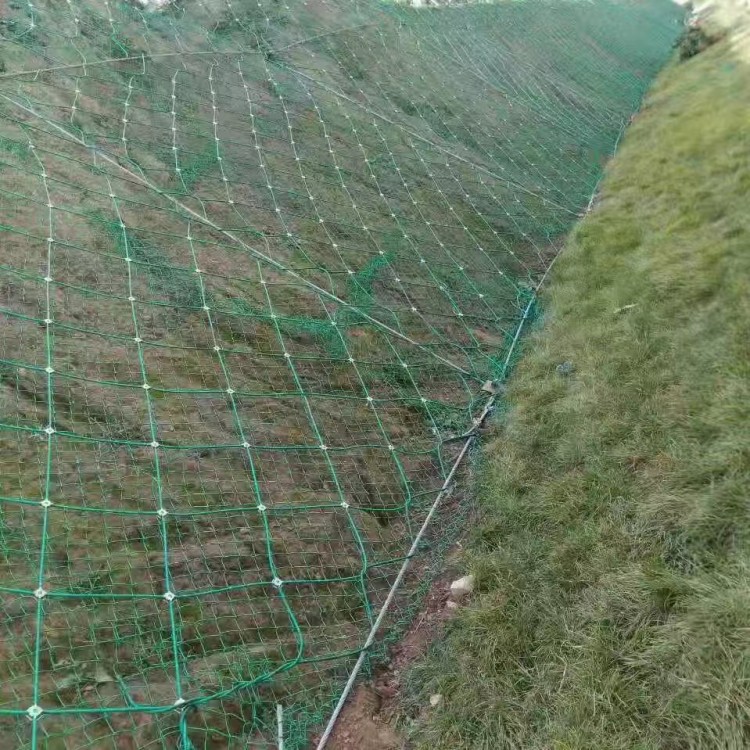
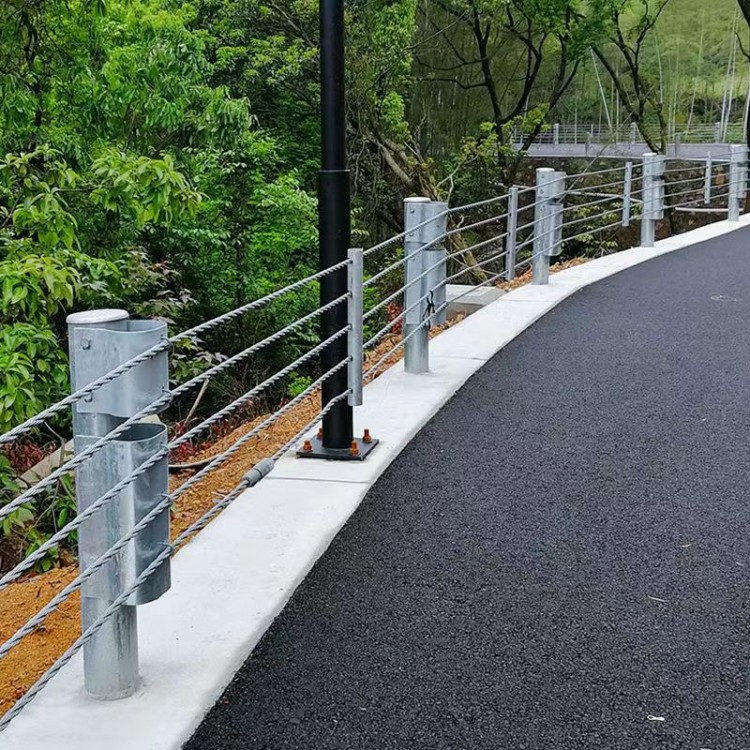
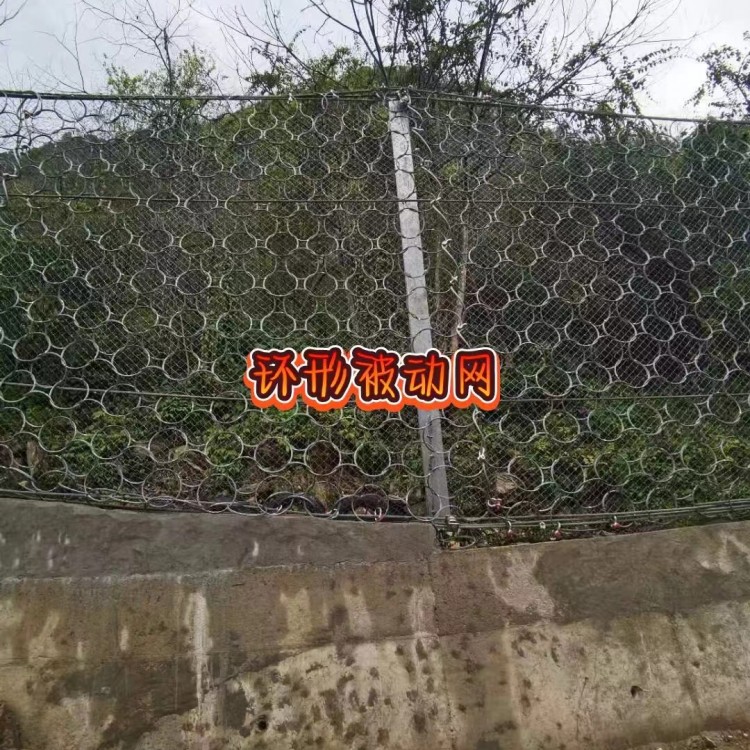


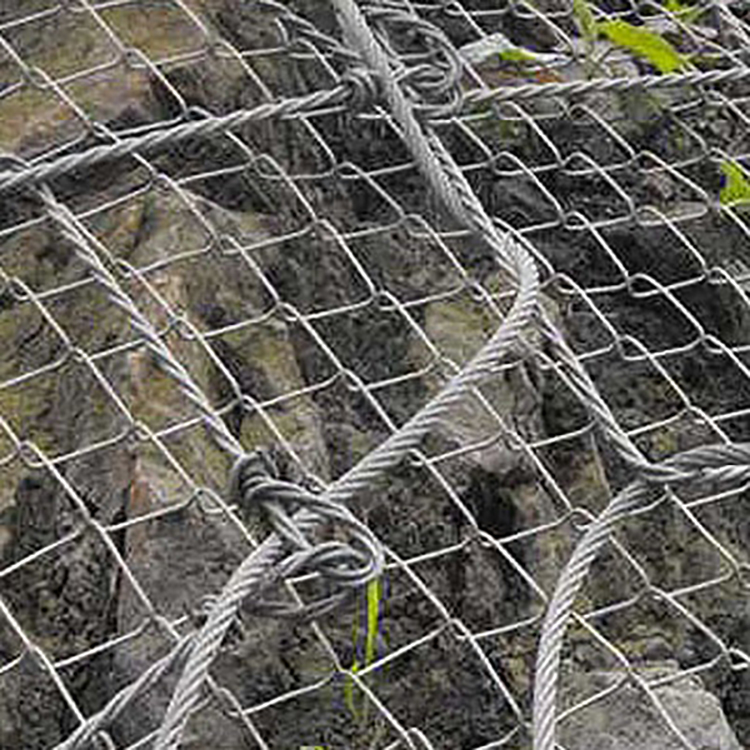
The Spider Web, also known as the Tripod Net, is a slope protection system made primarily of hot-dipped galvanized steel wire and cable, offering high tensile strength, high protective strength, excellent corrosion and rust resistance, and ease of deployment. It is suitable for protecting against geological hazards such as slope collapses, weathering, slippage, or landslides. The active protection net has no special requirements for the morphological characteristics of the slope surface, does not disrupt or alter the original landform and vegetation conditions, and also preserves the necessary conditions for artificial greening.
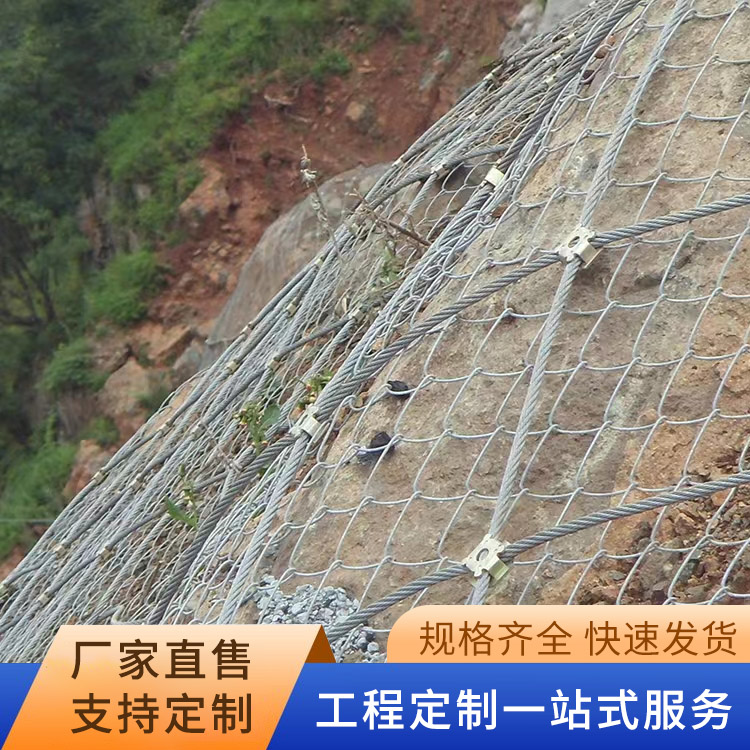
Primarily used in GSS2A and GSR2A, it serves a similar function to the GPS2 active protection net. The general active net is typically 3.5*10m in size, with anchor rods designed to be spaced 3-4.5m apart based on requirements, with depths ranging from 2-8m. The spider net features the use of anchor pads for connecting the anchor rods to the spider net system, allowing for a variable distribution of anchor rods that can be sparse or dense. This enables the placement of anchor rods at any point on the slope, with lengths that can be long or short, providing diverse mechanical strength indicators for slope reinforcement, an advantage over the traditional GPS-type diamond net series. The spider web slope stabilization system is a new type of active protection, primarily consisting of high-tensile steel wire spiral mesh sheets. For reinforcing steep rocky slopes, isolated rocks, and loose rock fragments, the spider web system offers a high-quality protection solution.
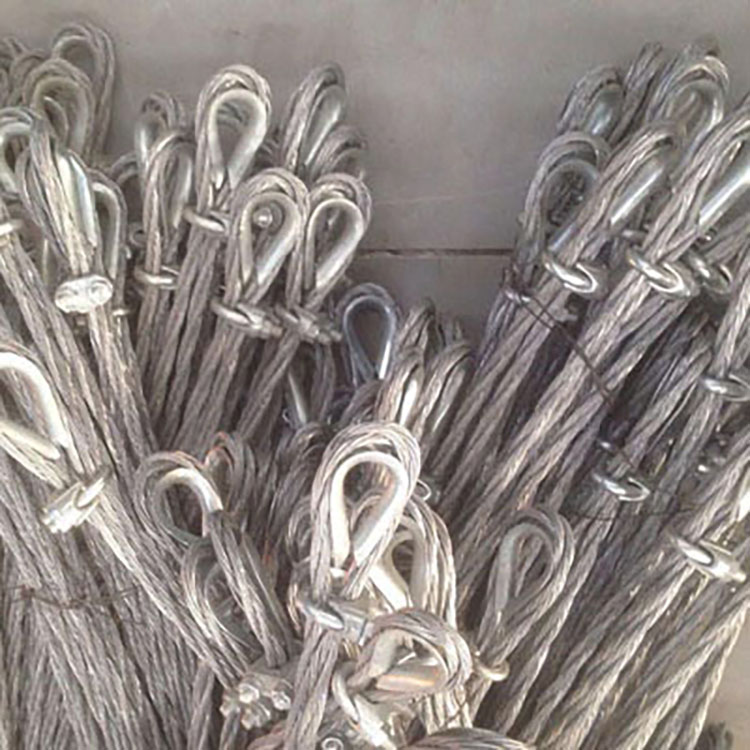
Product Characteristics: High-tensile steel wire rope spiral mesh, prestressed steel bar anchor bolts, and special anchor pad plates; Fixing Method: Prestressed steel bar anchor bolts, special anchor pad plates; Load-bearing Capacity: Superior to all current flexible slope stabilization systems; Design Method: Design system based on the RUVOLUM theory; Application Range: Overall stabilization and reinforcement of soil and rocky slopes, reinforcement of various isolated rocks and dangerous rocks, and also for sliding treatment by combining the spider web with deep anchoring measures.