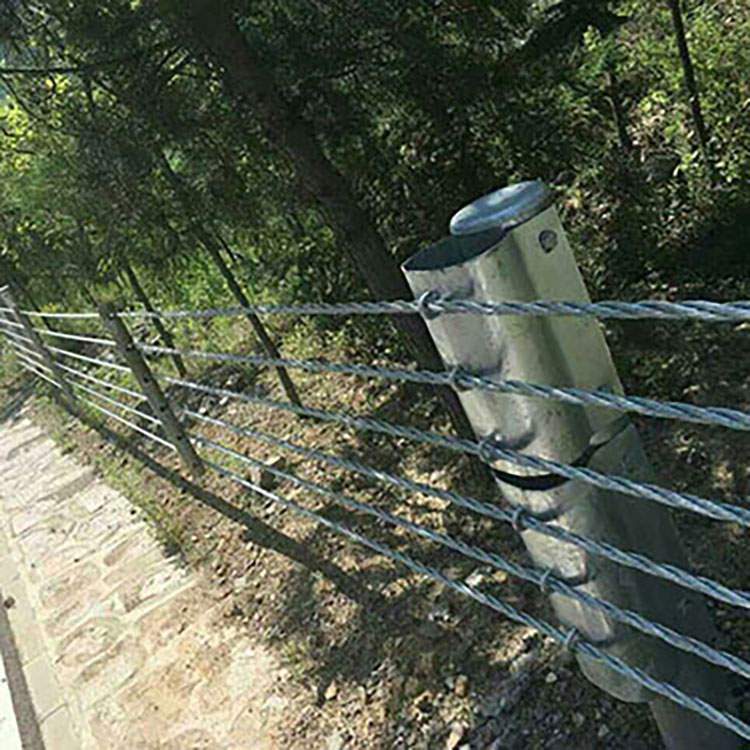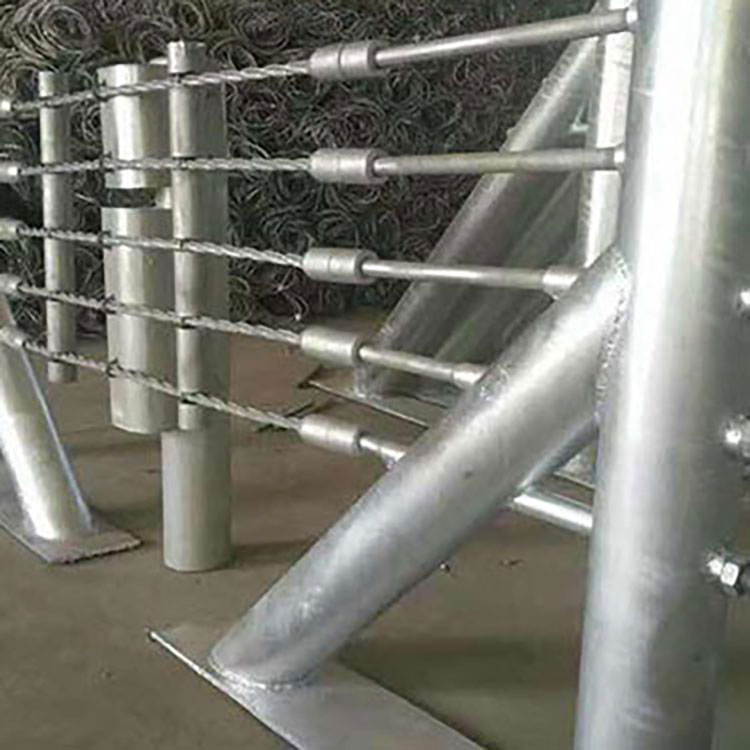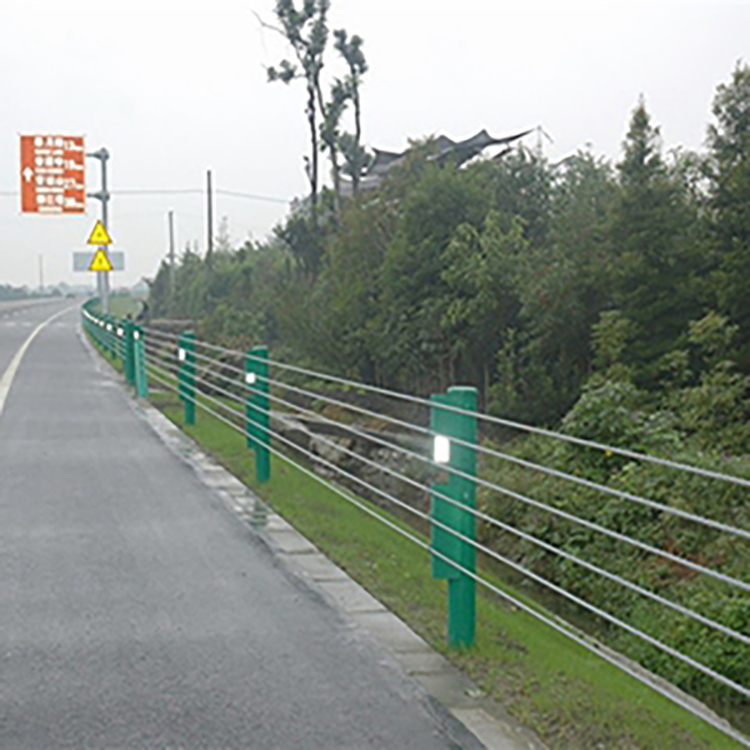

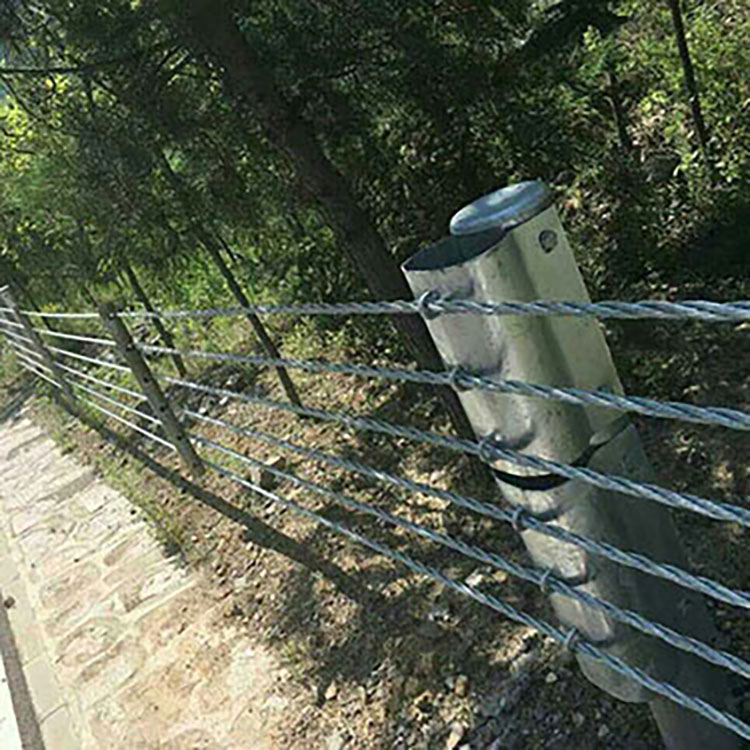

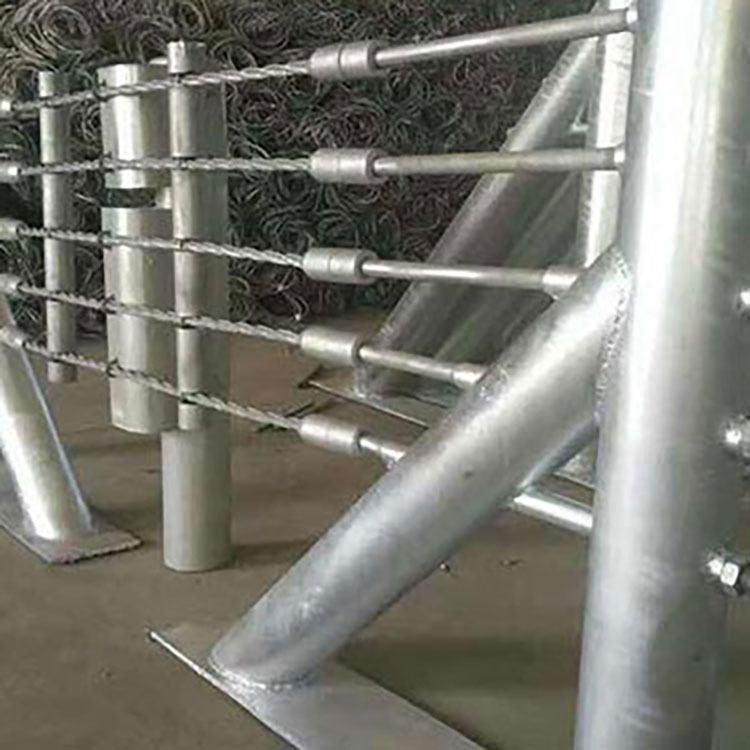
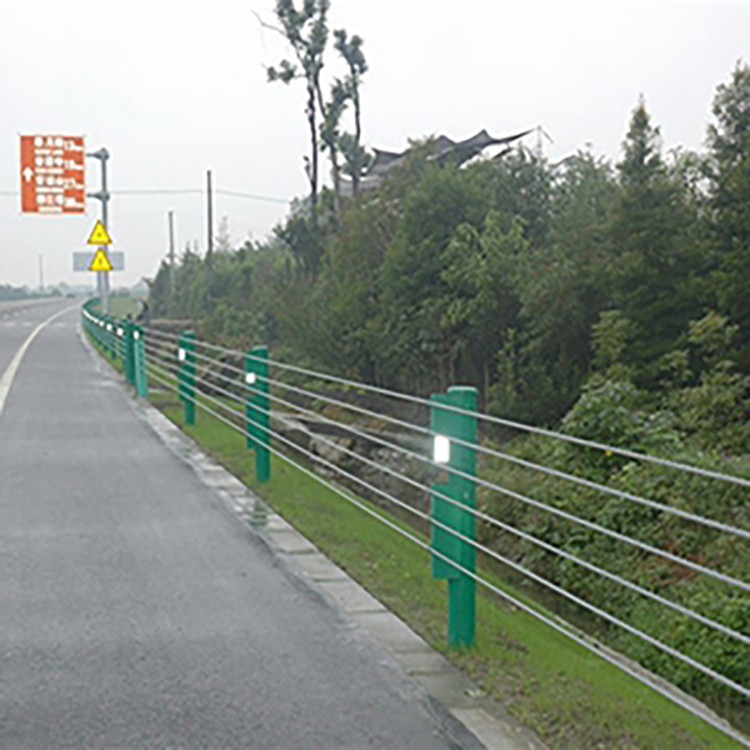


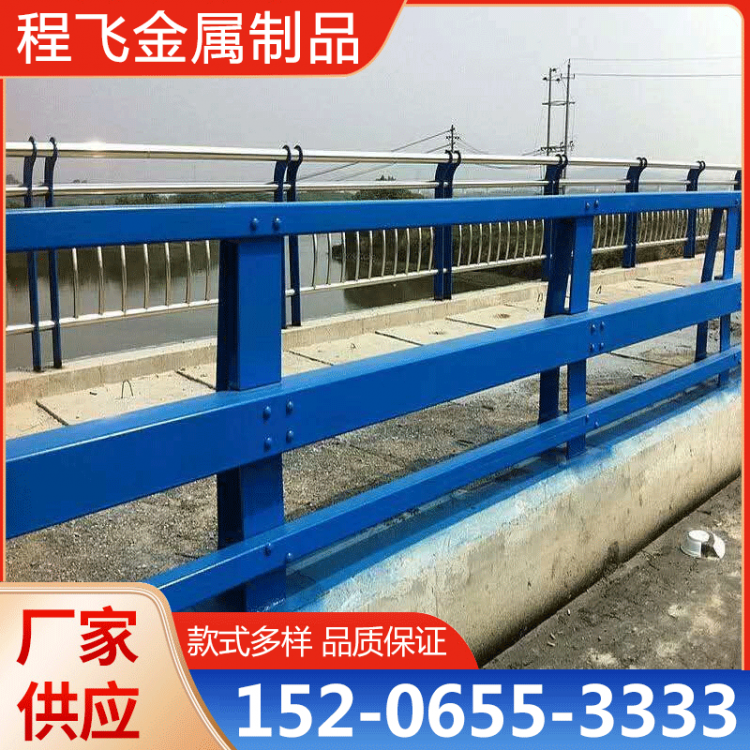
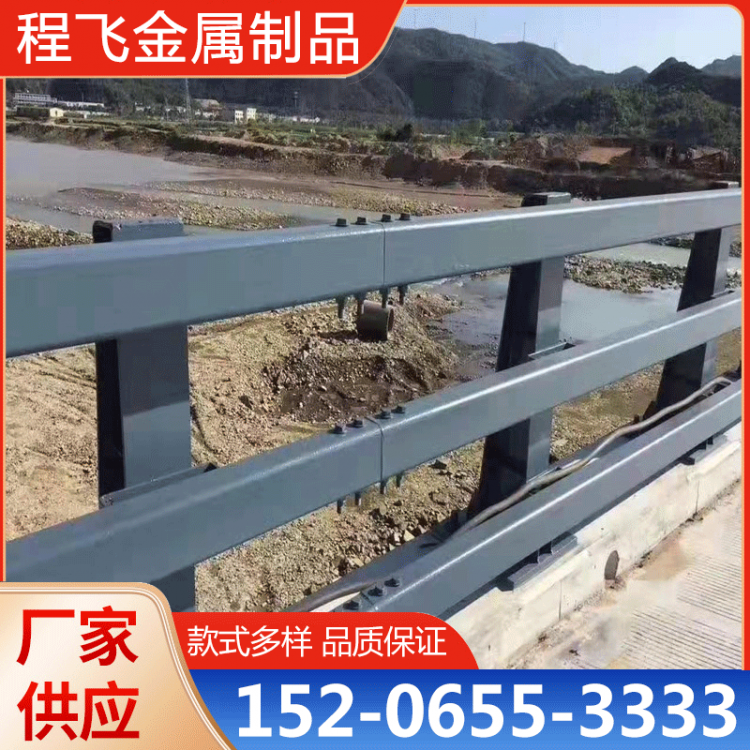
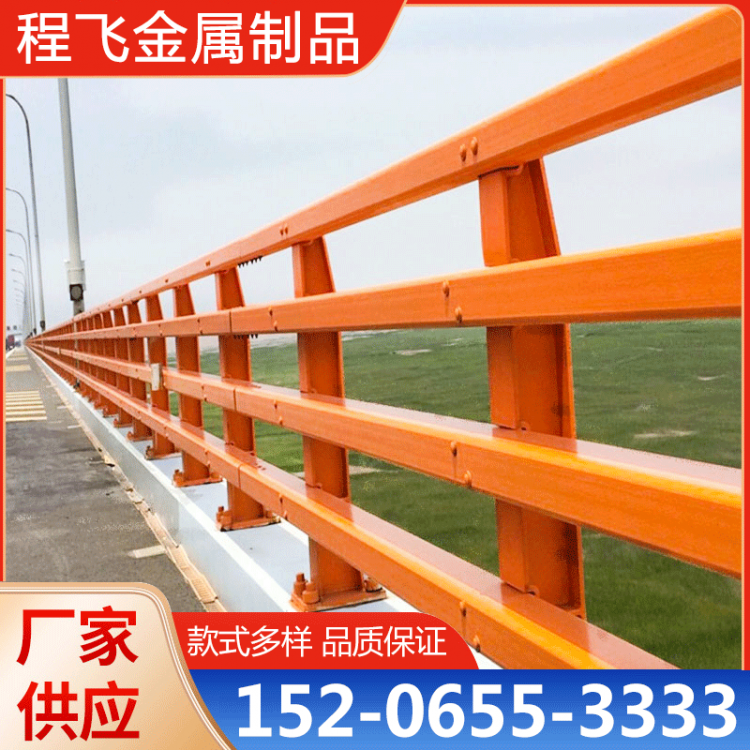
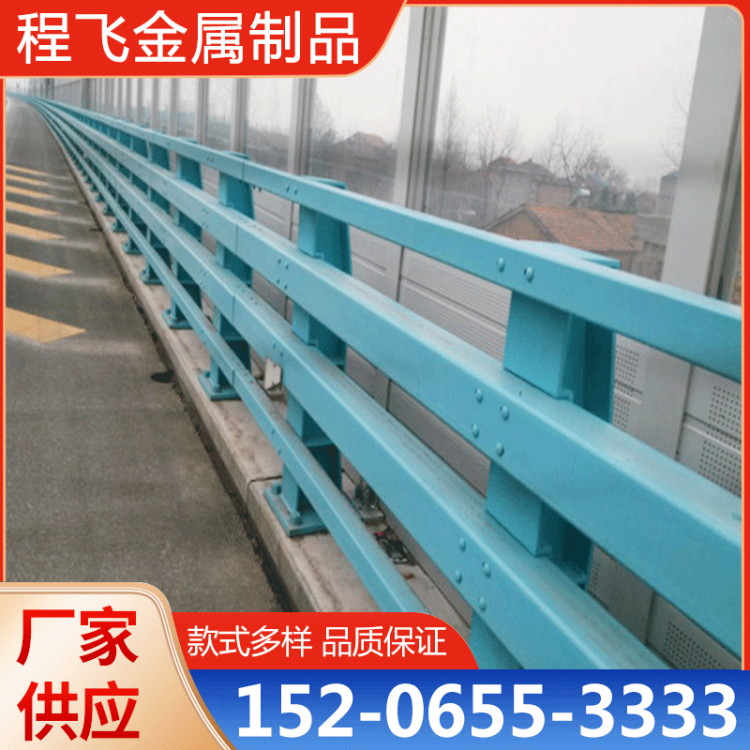





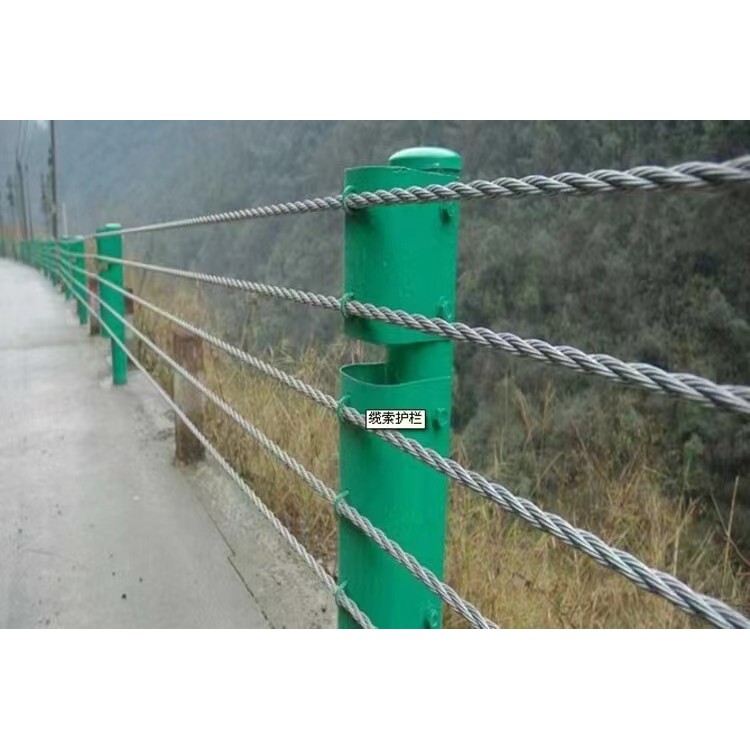


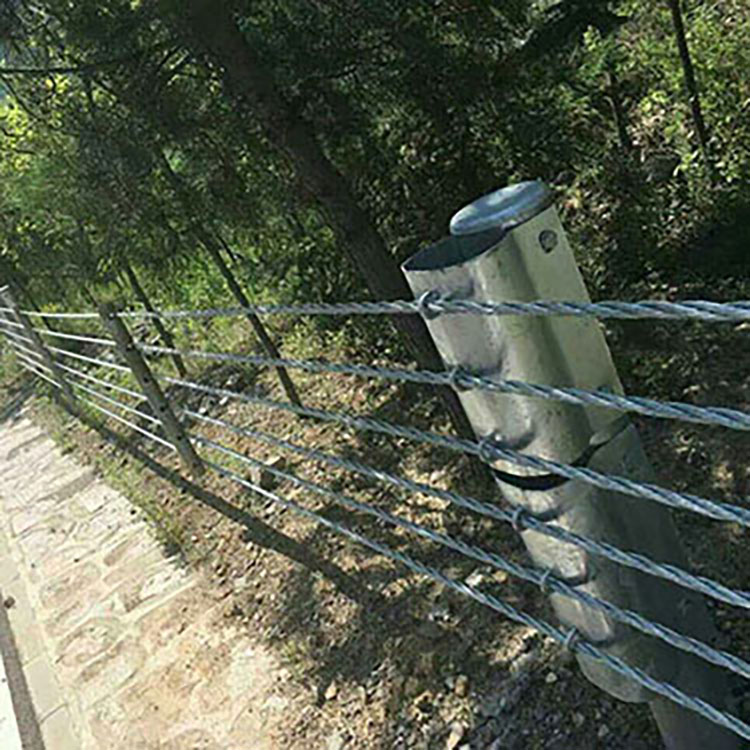
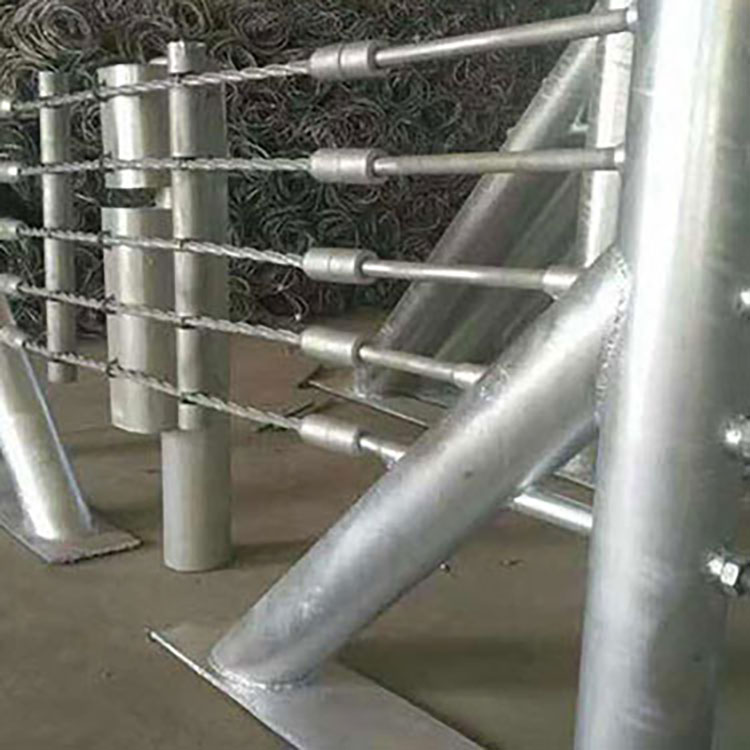
End posts of roadside cable guardrails, which are the main structures bearing the tension force of the cables and the impact force of out-of-control vehicles, consist of triangular brackets, a bottom plate, and a concrete foundation.
The end structures can be of embedded or assembled types. The embedded end structures are integrated with the concrete foundation, with the embedding depth of the end pillars varying from 400 to 500 nm depending on the category. The inclined pillars of the triangular支架 form a 45° angle with the ground, with a steel plate welded at the bottom. This not only forms a stable frame for the triangular支架 but also significantly increases the bonding strength with the concrete foundation through the bottom steel plate, making it easier to control the elevation position. The assembled end structures are connected to the concrete foundation through pre-embedded parts, which differ in structure and category. The Grade A triangular支架 uses 6 pieces of 8mm long rebar, pre-embedded anchor bolts, with 6 anchor bolts welded to the steel plate and angle steel to form a frame. This serves both to locate the position of the anchor bolts and to greatly enhance the bonding strength with the concrete.
The terminal structure is installed at the starting and ending points of the cable guardrail. To maintain the initial tension of the cable and simplify the tensioning equipment during installation, ensure a certain level of cable horizontality to prevent deflection, and also for ease of maintenance, the cable installation length is generally set at 200-300 meters, meaning no cable exceeds 300 meters in length.
(2) Intermediate End Poles. For cable guardrails exceeding 200-300m in installation length, an intermediate end structure should be used. The intermediate end structure of roadside cable guardrails is triangular. The end poles consist of a triangular bracket, a base plate, and a concrete foundation, with the construction and dimensions of the end poles.