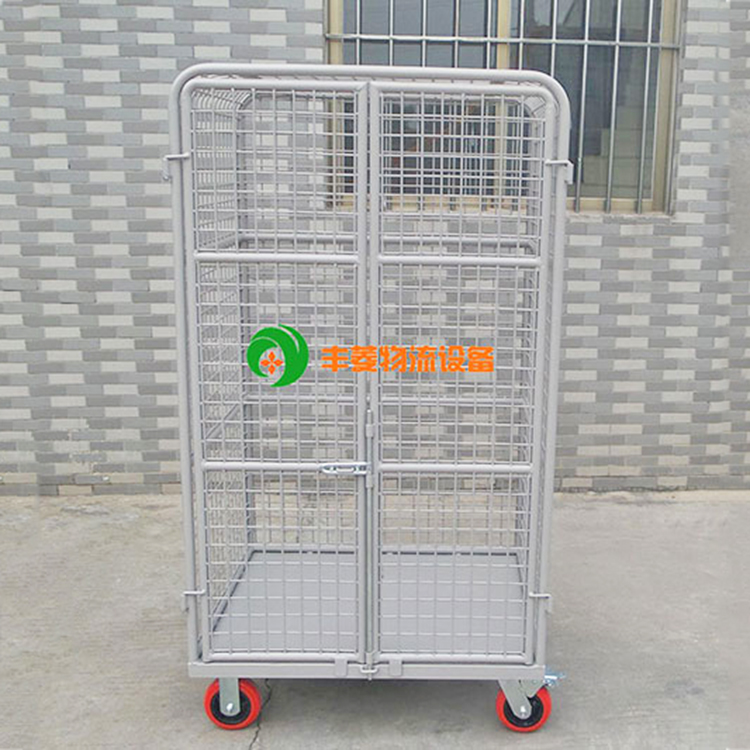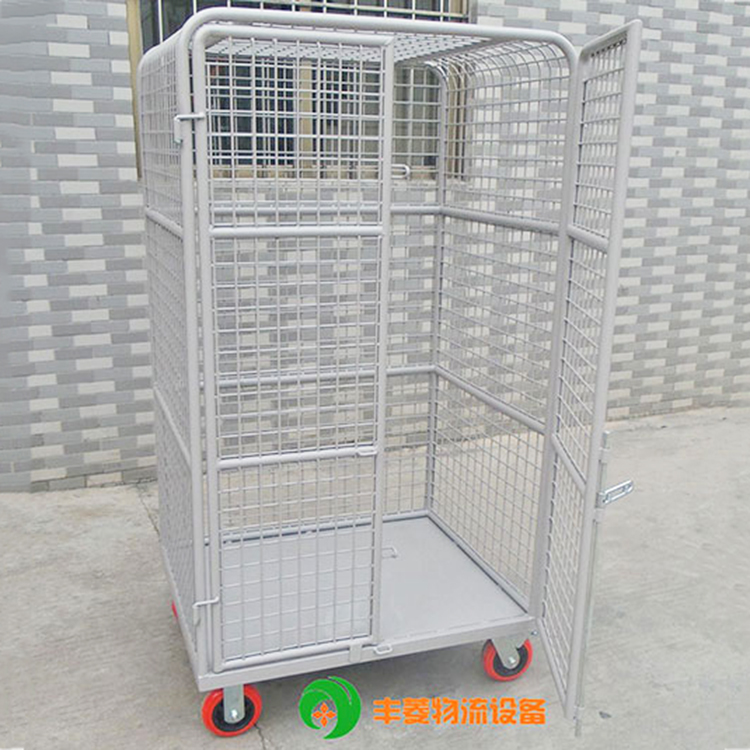


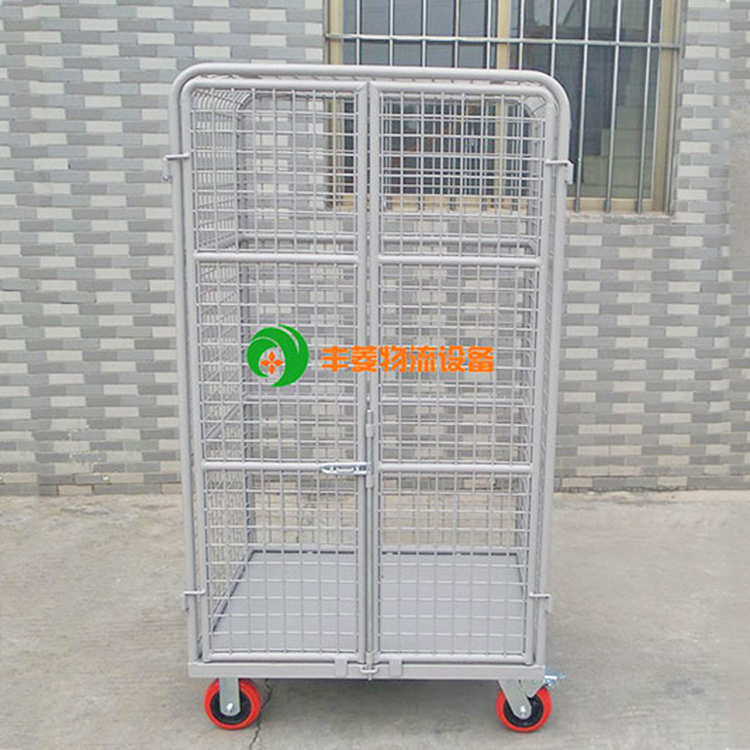
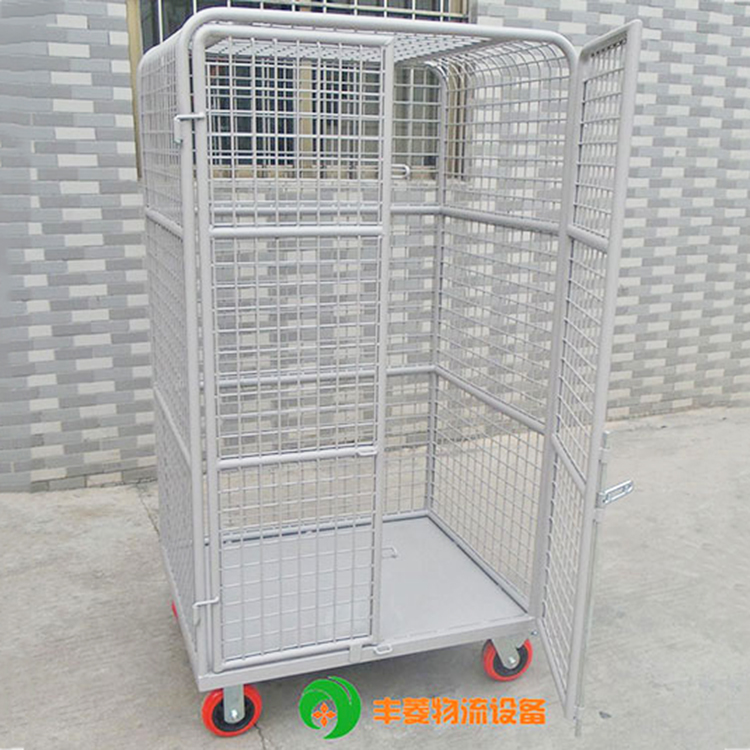









Fengling Logistics Trolley (with lid and door) Basic Introduction
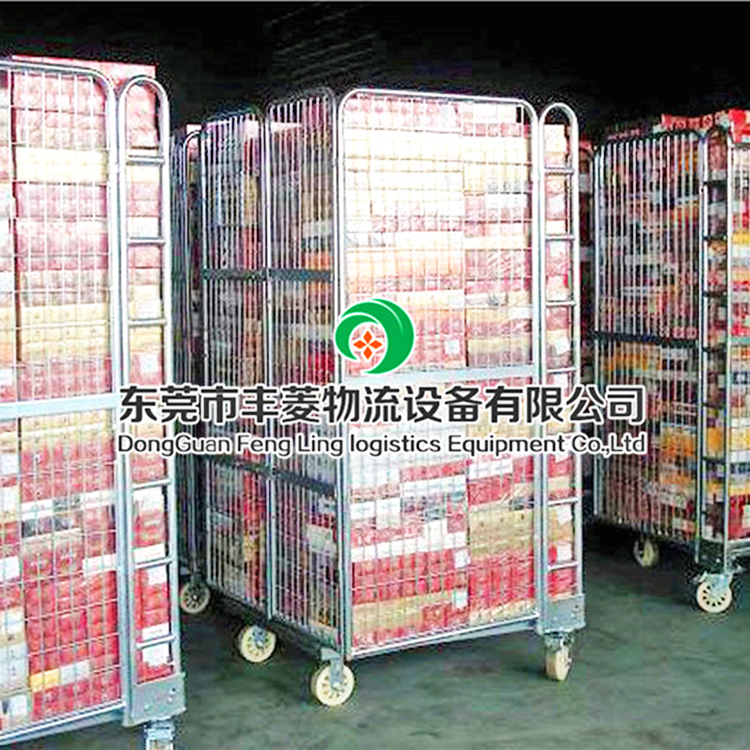
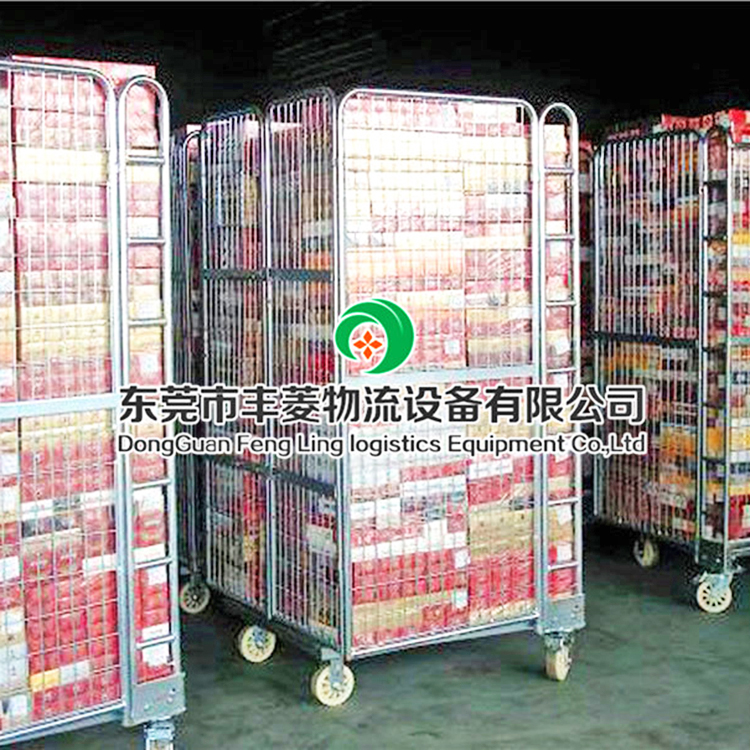
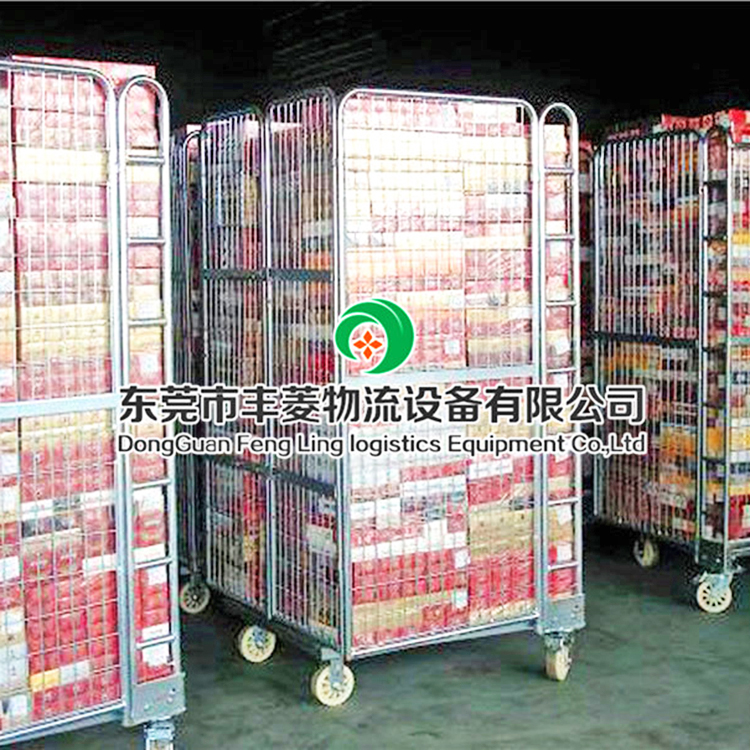
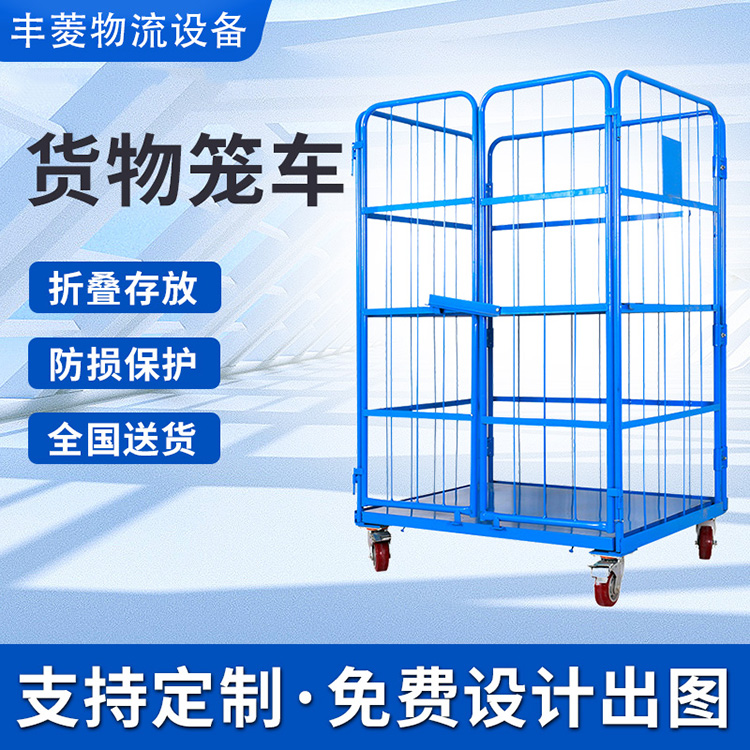
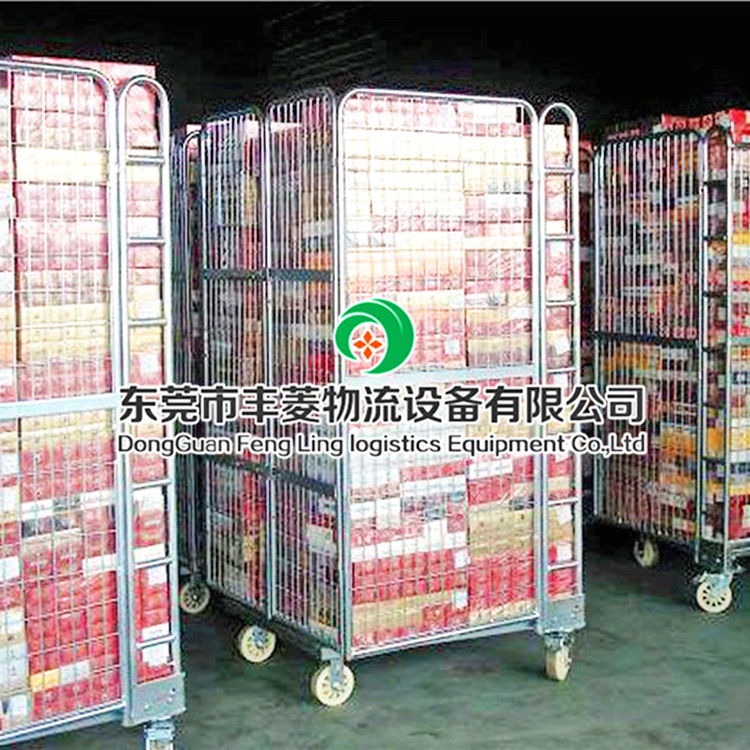
Logistics Trolley (Abbreviated as Trolley) is also known as cargo trolley, turnover trolley, or cage trolley. It is a mobile unit for transporting and storing materials, equipped with four wheel legs. Commonly used in logistics distribution in large supermarkets or for logistics turnover between production processes in factories. The products stored in the trolley are prominently displayed, ensuring: 1) protection of material safety during transportation; 2) preventing sorted and ready-to-use products from becoming disorganized. Loading and unloading is extremely easy; the wheels are typically designed with two directional wheels and two swivel casters with brakes (common wheel sizes include 4 inches and 5 inches) for easy manual pushing.
Fengling Logistics Carts (with lid and door) Advantages:
1. Compatible with unloading platforms for easy cargo handling.
2. Ensures more standardized temporary storage of production.
3. Fully enclosed for safe storage, offering strong stability.
4. Grid-style design, high density, suitable for storing small-volume items, less likely to fall.
5. Equipped with a lockable door bolt for securing and storing valuable items.
Fengling Logistics Trolley (with door and lid) Application Range:
1. Suitable for categorizing and storing components on the production line, for easy identification.
2. Assembly line is convenient and efficient, enhancing work productivity.
3. Material is conveyed by line quickly and accurately, without error.
4. Equipped with 5-inch polypropylene casters—two fixed and two swivel with brakes, offering easy operation, shock resistance, and flexible movement.
5. Professional design, easy to operate, time and labor-saving, cost-efficient logistics, and enhanced corporate image.
Fengling Logistics Trolley (with door and lid)缺点:
It is non-folding, and cannot be folded away for storage when empty, thus occupying space.
Surface Treatment Requirements:
Process Flow: Rough Casting → Degreasing → Rust Removal → Surface Adjustment → Phosphating → Drying → Electrostatic Powder Coating → Curing → Packaging
2. Surface treatment is done via electrostatic powder coating with epoxy resin, with a coating thickness of 60~80 micrometers.
3. Electrostatic powder coating meets the required adhesion standards.
4. Hardness (wear resistance) is over 100 times that of ordinary nitrocellulose paint, meaning it passes the 2H pencil test without any scratches.
5. Corrosion resistance (hydrochloric acid test) GB1771-91 exceeds 500 hours.