







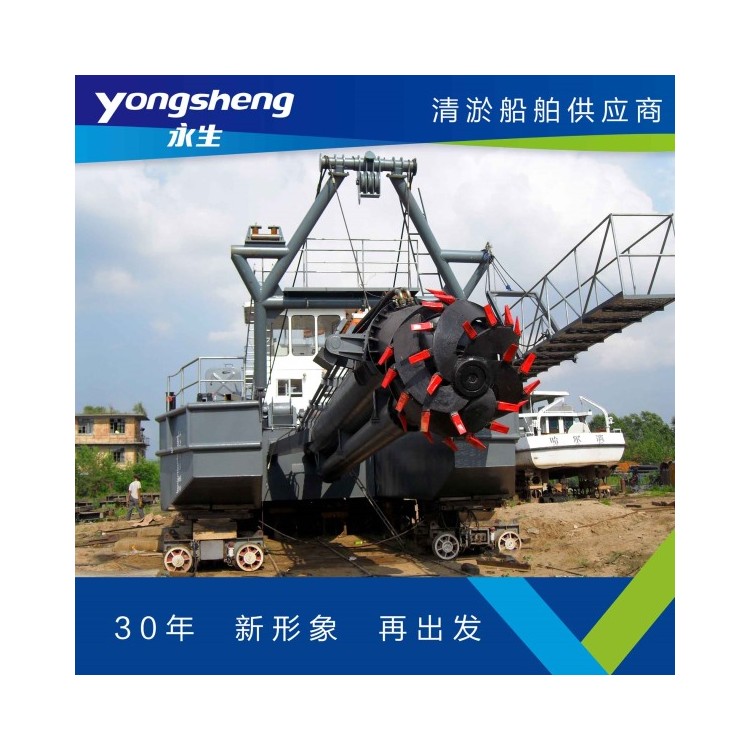
Cutter suction dredger construction method
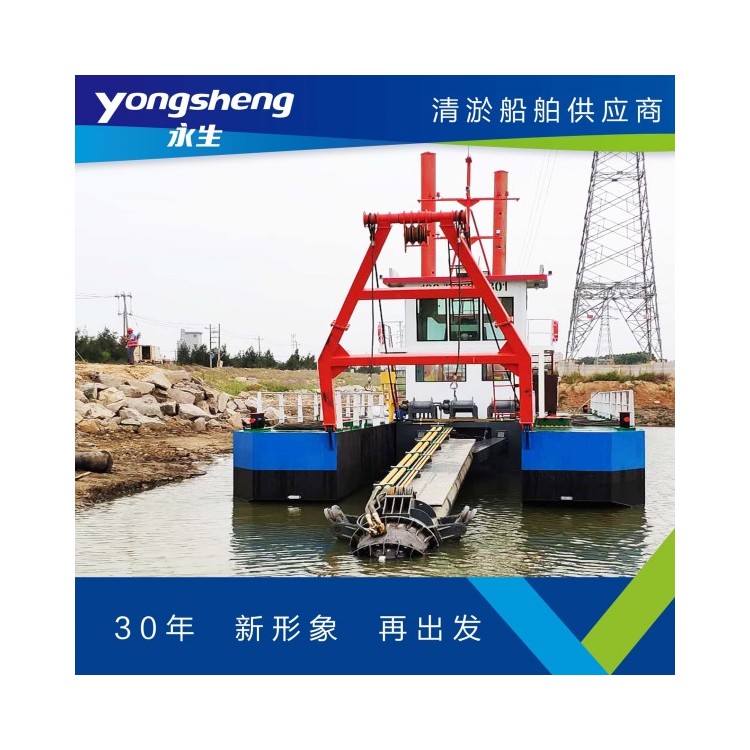
The basic construction method for cutter suction dredgers is the horizontal excavation method. This method can be further divided into pile positioning horizontal excavation and anchor cable positioning horizontal excavation. The pile positioning horizontal excavation utilizes two steel piles that are alternately inserted into the riverbed, acting as oscillation centers for each other. It also employs the alternating retraction and extension of the left and right swing cables (whisker cables) at the front of the cutter bridge to cause the vessel to swing back and forth for sand excavation.
When the winch is positioned at the right (left) edge of the groove, lower the left (right) steel pile and raise the right (left) steel pile, while relaxing the right (left) side cable and tightening the left (right) side cable, allowing the winch to swing back to the left (right). The distance the hull moves forward at this point is called the forward movement distance.
Due to the vessel having two oscillation centers, the sand excavation path will have overlapping and omitted sections. To overcome this drawback, the master and auxiliary pile method (also known as the single pile forward method) can also be adopted. This involves using one steel pile as the main pile, with the centerline of the intended excavation trench serving as the oscillation center for the transverse excavation. The other steel pile is used as the auxiliary pile for the purpose of forward movement and replacement.
Due to the single mud displacement center, the cutterhead mud trajectories are parallel. As long as the forward displacement of the steel piles is maintained appropriately, over-digging and under-digging can be avoided. To accurately control the pile change position, a pair of sight marks must be added on both sides of the centerline of the excavation groove.
The width of excavation by the steel pile horizontal挖掘 method is limited by the ship's length (including the reach of the cutter), and based on experience, the width is generally 1.2 to 1.4 times the ship's length. The angle between the swing of the dredger and the centerline of the excavation should be around 40°. When the width of the excavation exceeds the dredger's width, construction must be done in strips.