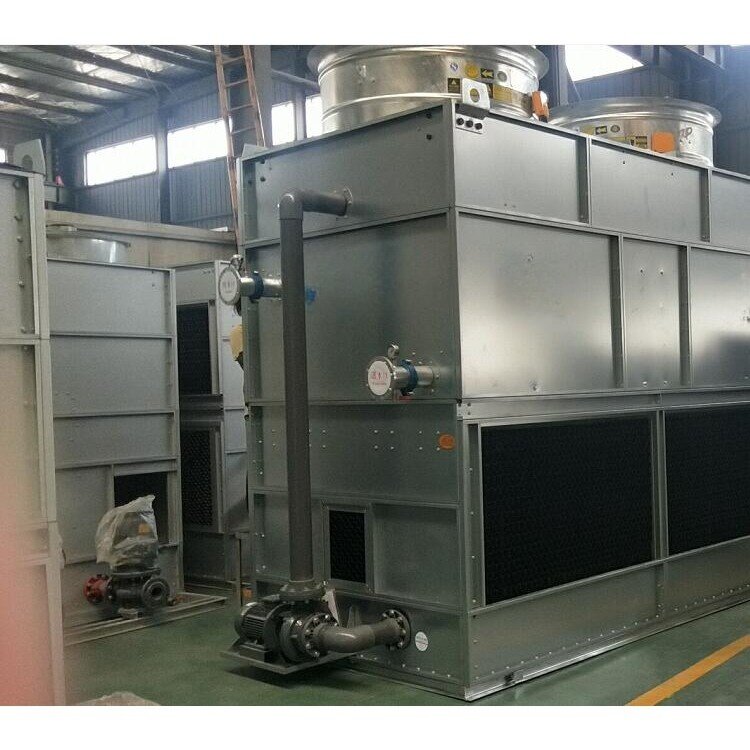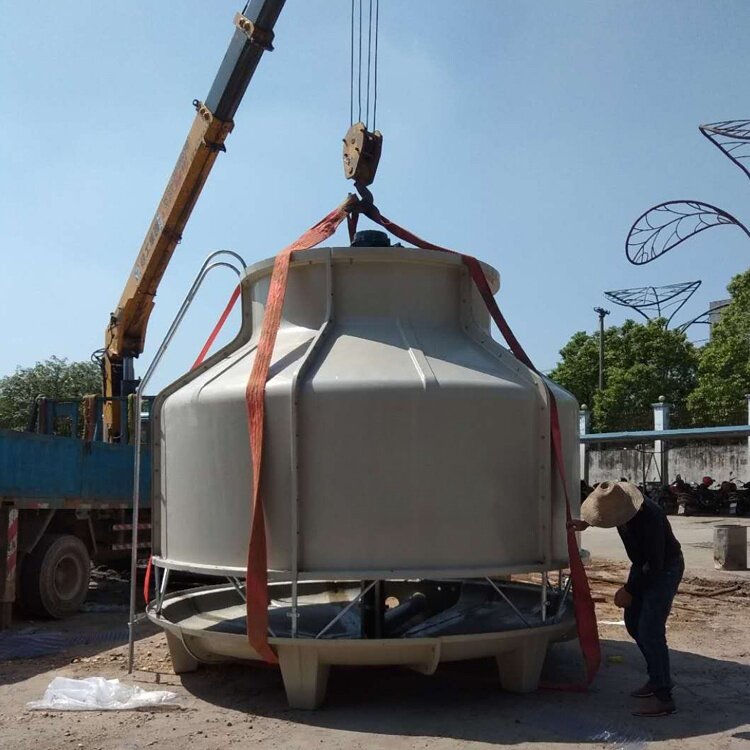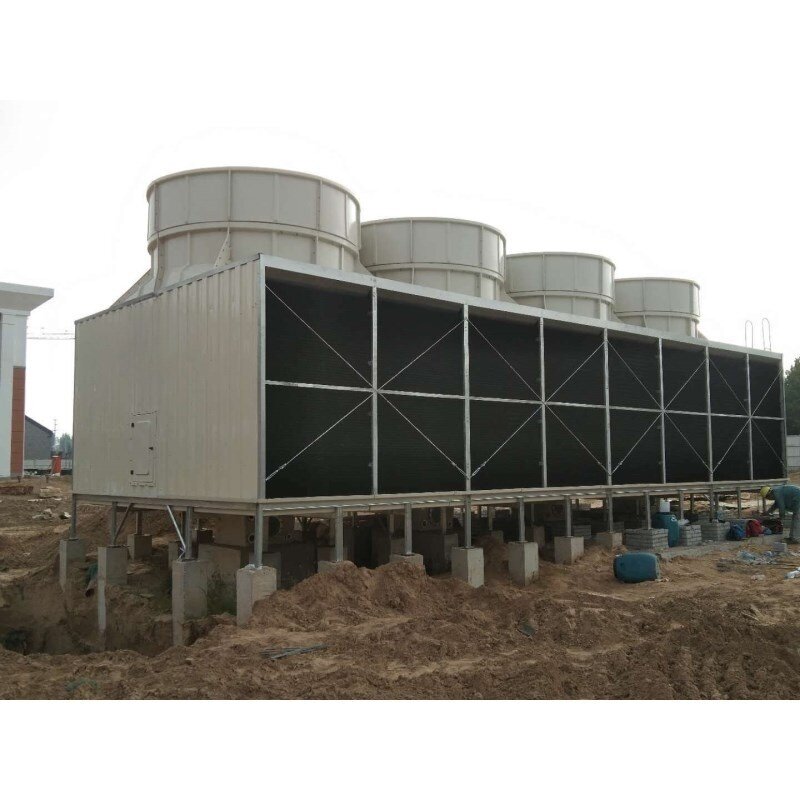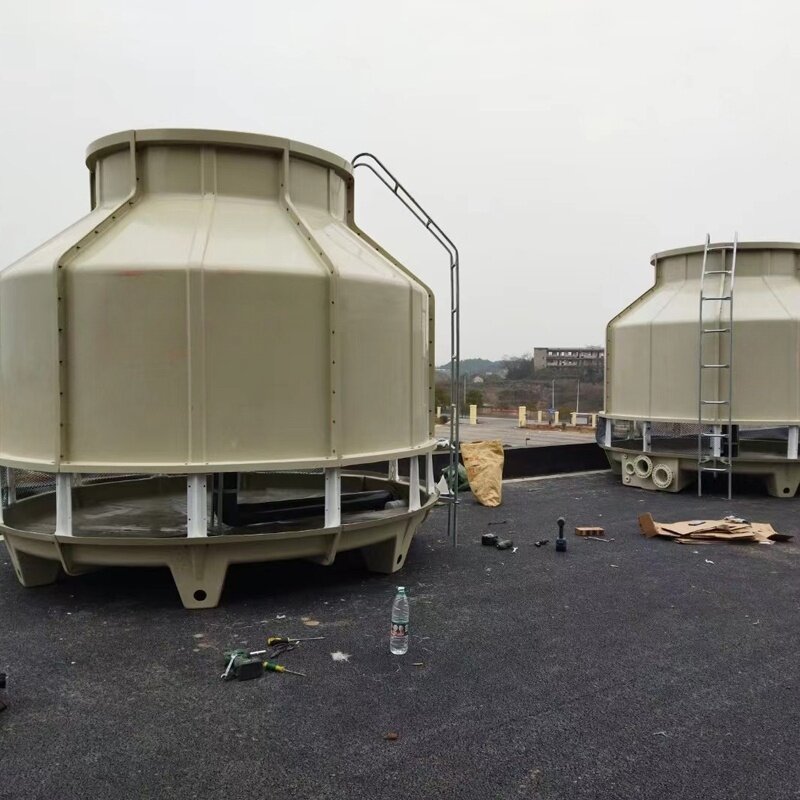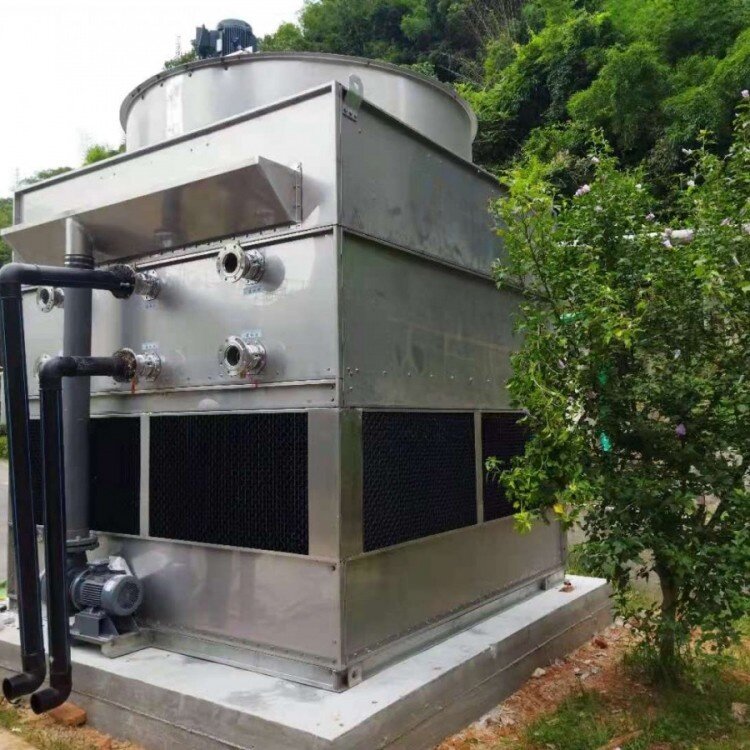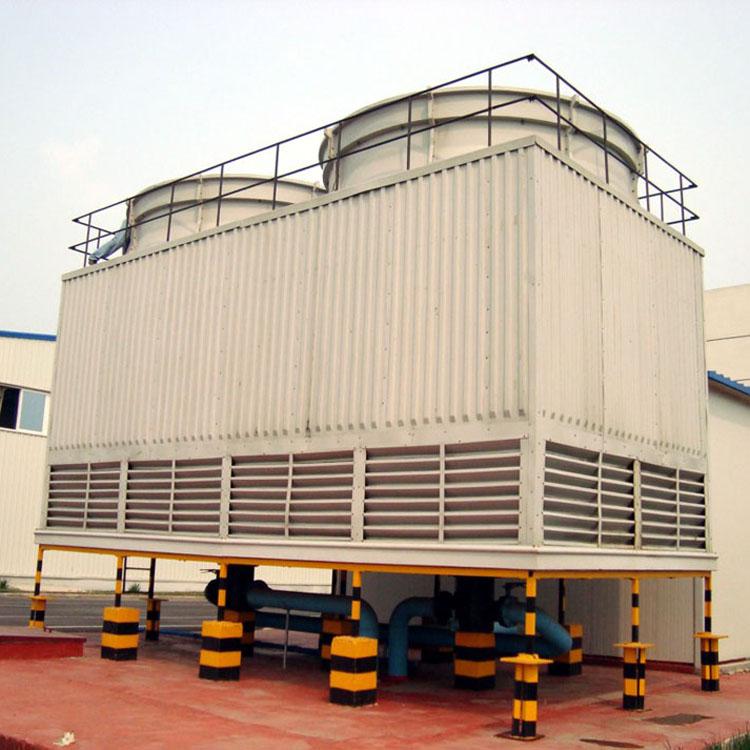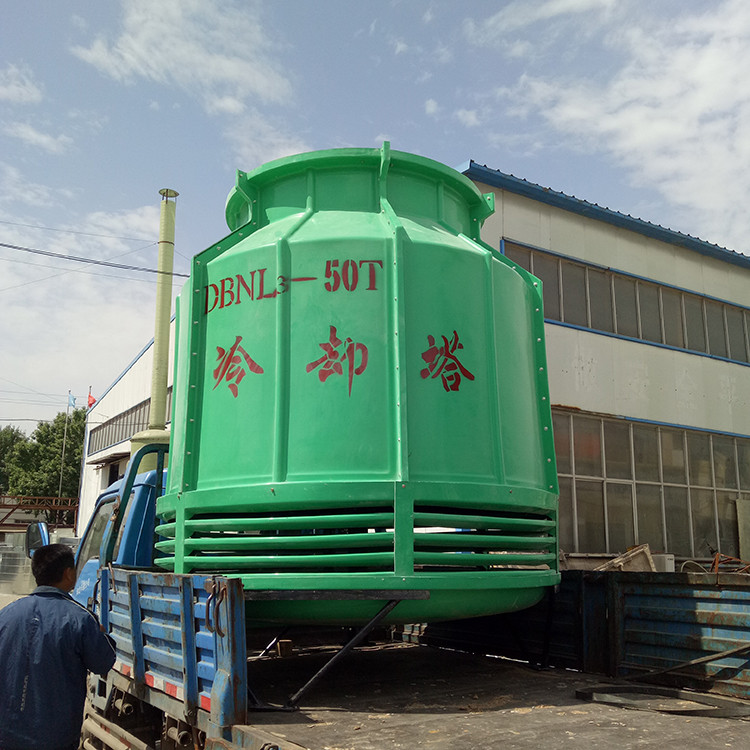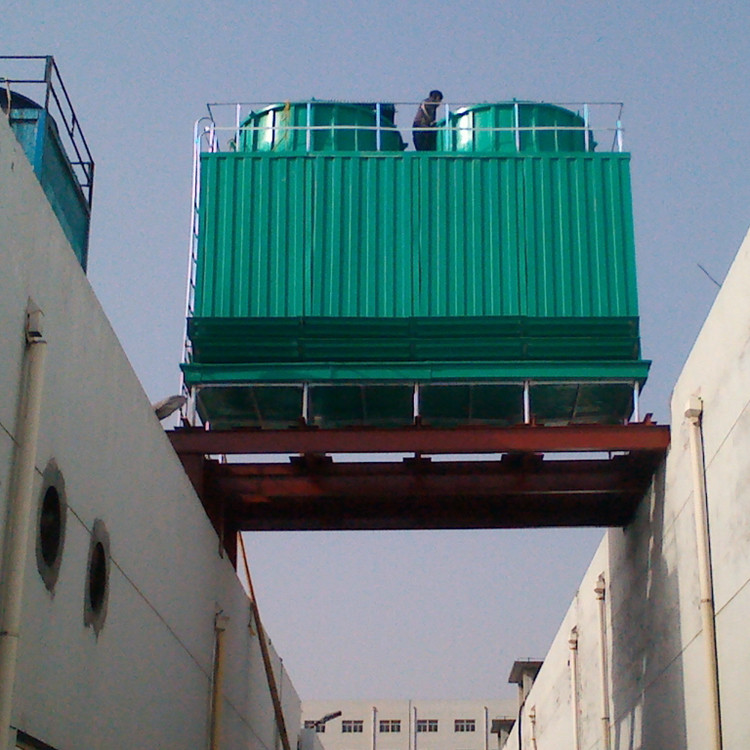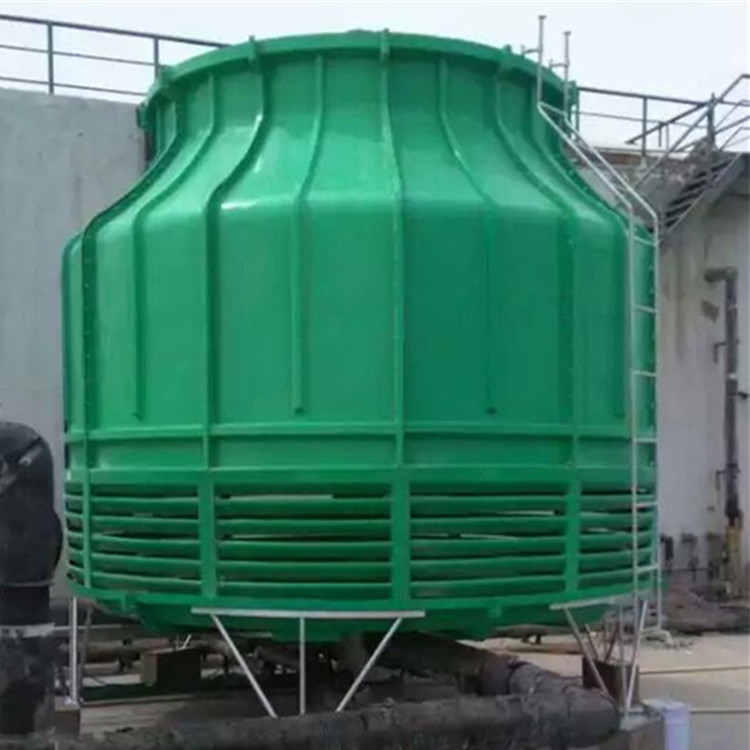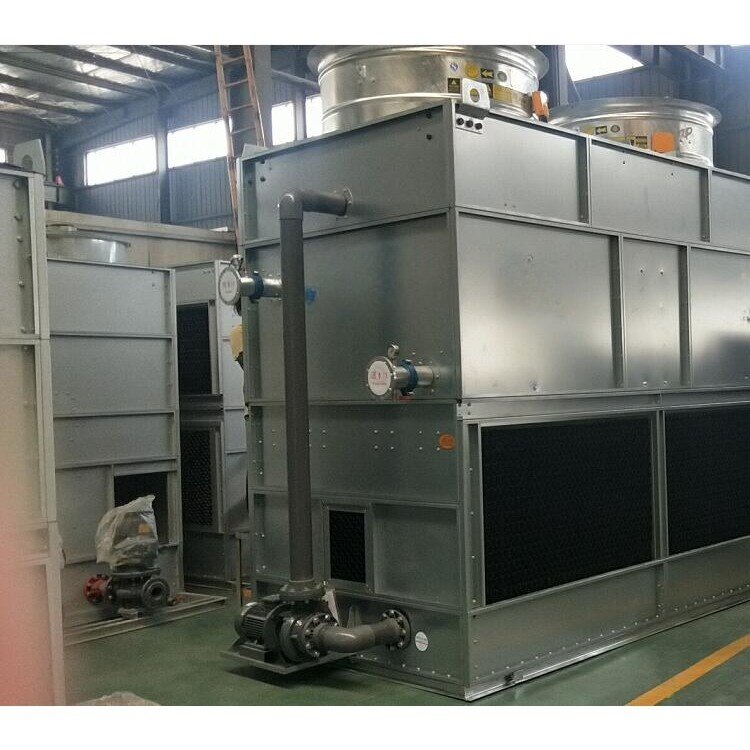


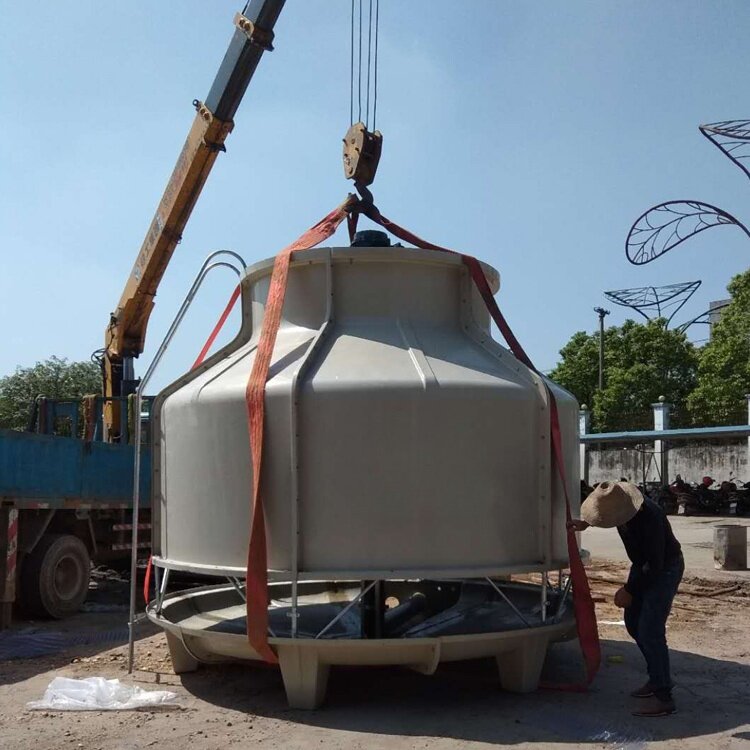
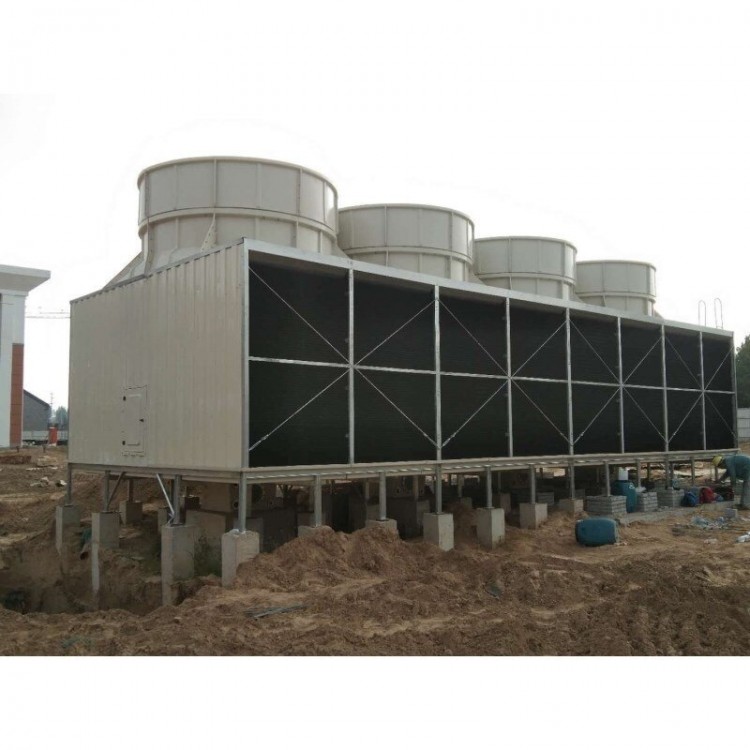







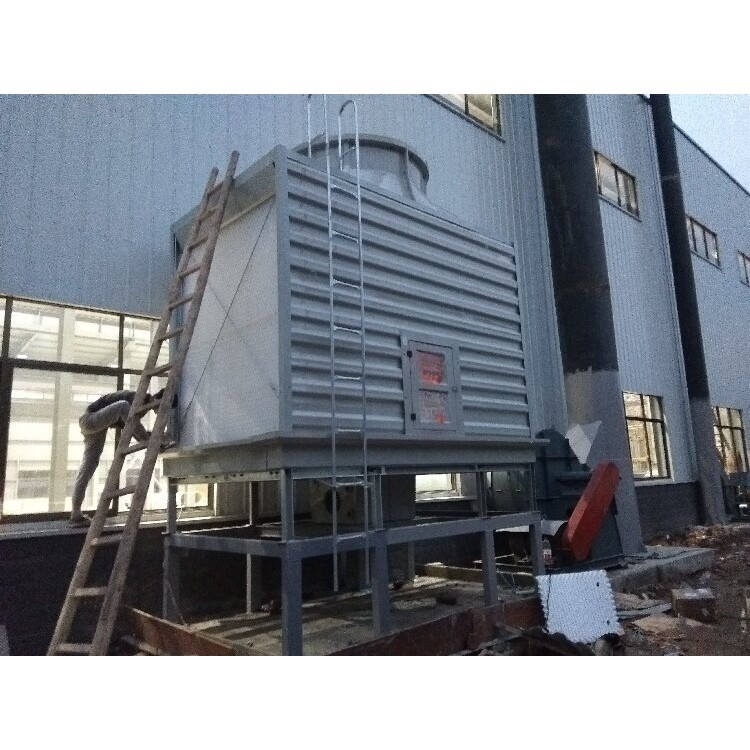
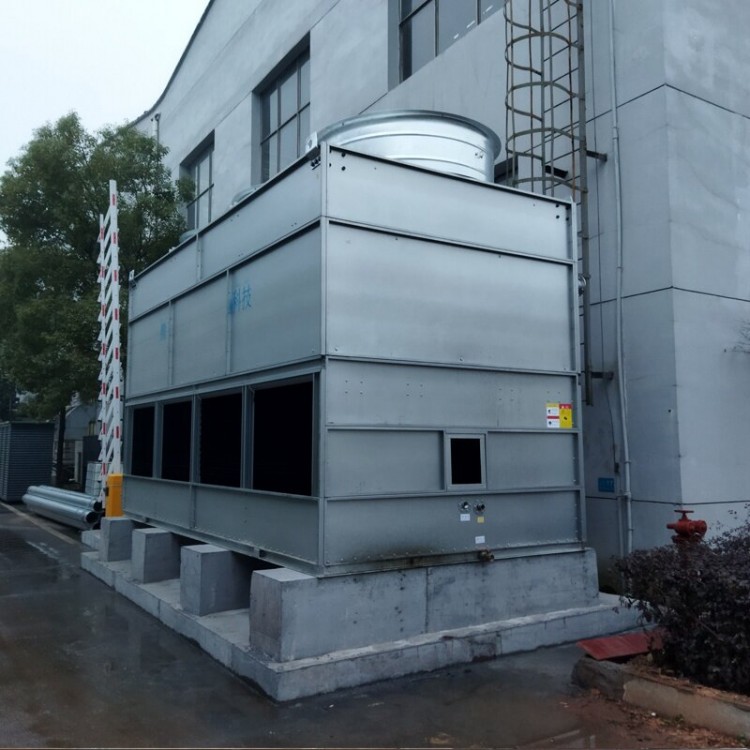

Cooling Towers * Closed-loop Cooling Towers, also known as sealed cooling towers or evaporative cooling towers, are further categorized in the industry based on their structure into counterflow closed-loop cooling towers, crossflow closed-loop cooling towers, and composite flow closed-loop cooling towers. Each structure has its own features, and there is no definitive answer as to which one is better or worse.
The closed cooling tower operates on the principle that the heat is absorbed by the medium being cooled as water evaporates. The spray water (i.e., cooling water) is stored at the bottom of the cooling tower. The working fluid (soft water or other liquid) circulates in an enclosed loop within the cooling tower's fin tubes. The cooling water is evenly sprayed onto the tube surface by the spray pump through the spray nozzles. Due to the lower temperature of the cooling water compared to the working fluid, a temperature difference causes some of the cooling water to evaporate, absorbing heat and thereby reducing the temperature of the working fluid. After heat exchange, the cooling water becomes hot water, flowing through PVC heat dissipation sheets to form a water film. The large amount of cold air is drawn in by the fan at the top of the cooling tower, vaporizing the heat in the cooling water to create saturated warm air, which is then carried away to cool down. The hot water then flows back into the storage basin at the bottom of the closed cooling tower, where it is again pumped by the spray pump to spray onto the heat dissipation tubes, thus continuously circulating and cooling.
Cooling Towers * Closed Circuit Cooling TowersAlso known as closed-circuit cooling towers or evaporative cooling towers, based on the cooling towerThe significant advantage of ) isEnsures that the cooling equipment's circulating pipeline remains free of scale, maintaining a good heat exchange coefficient for stable equipment operation and safeguarding product quality.