







Product Application:
Coal washing, inorganic salts, mining, alcohol, oil, chemical industry, fuels, metallurgy, food, textiles, dyeing and printing, papermaking, and municipal wastewater treatment fields.
Product Advantages:
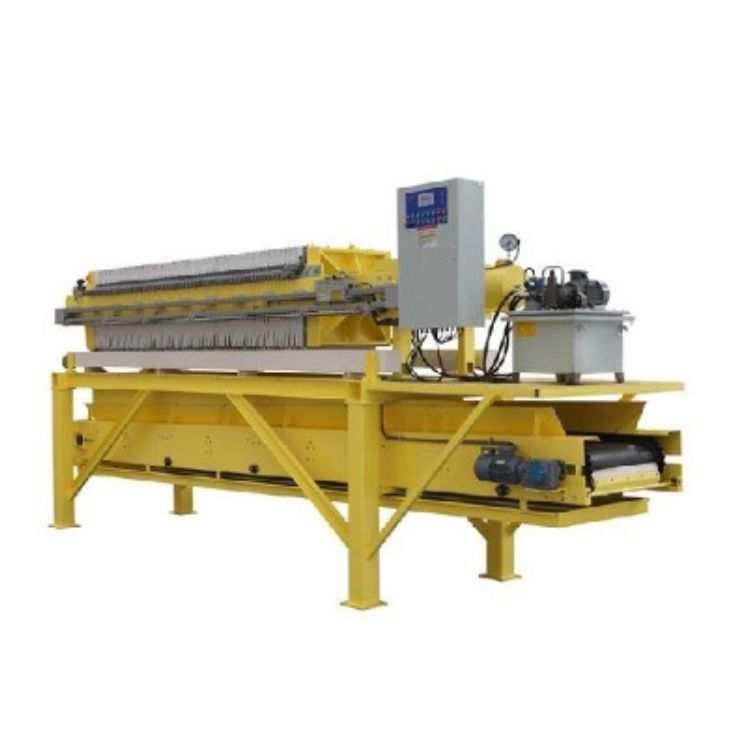
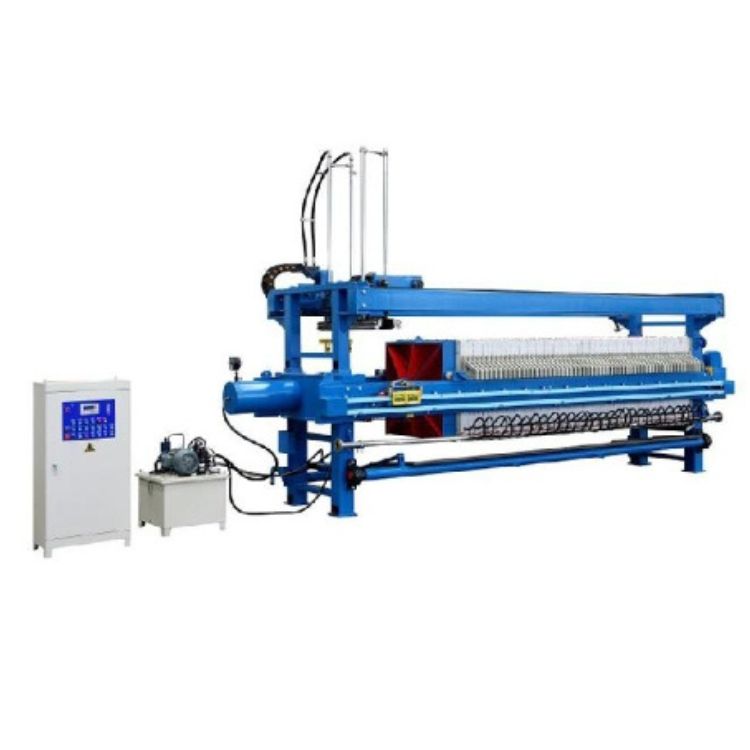
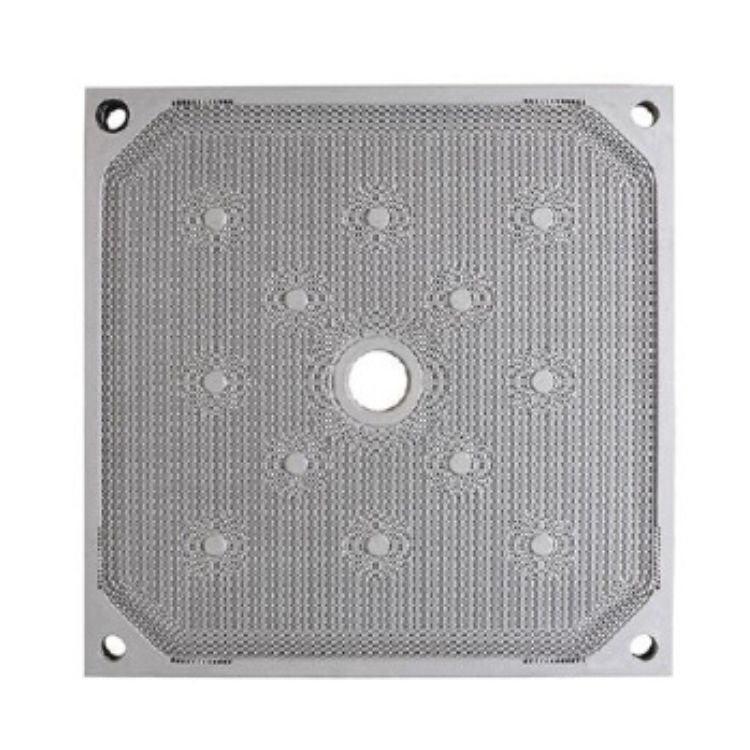
The filter plate is made of alkali-free glass fiber polypropylene, offering the elasticity of rubber filter plates and the toughness and rigidity of reinforced polypropylene filter plates. The thickness tolerance is 0.02mm, processed through a specialized machining center. The flatness is 0.015mm.
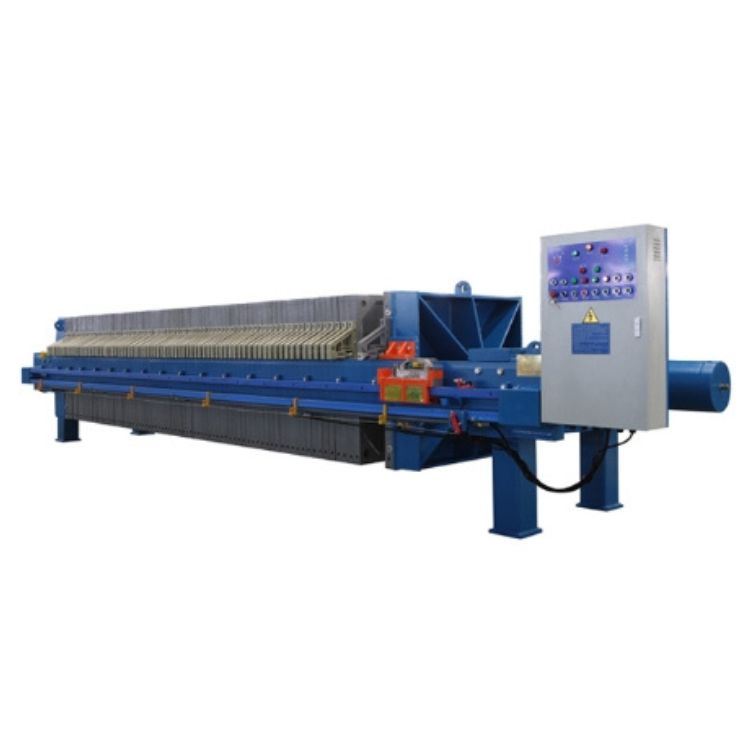
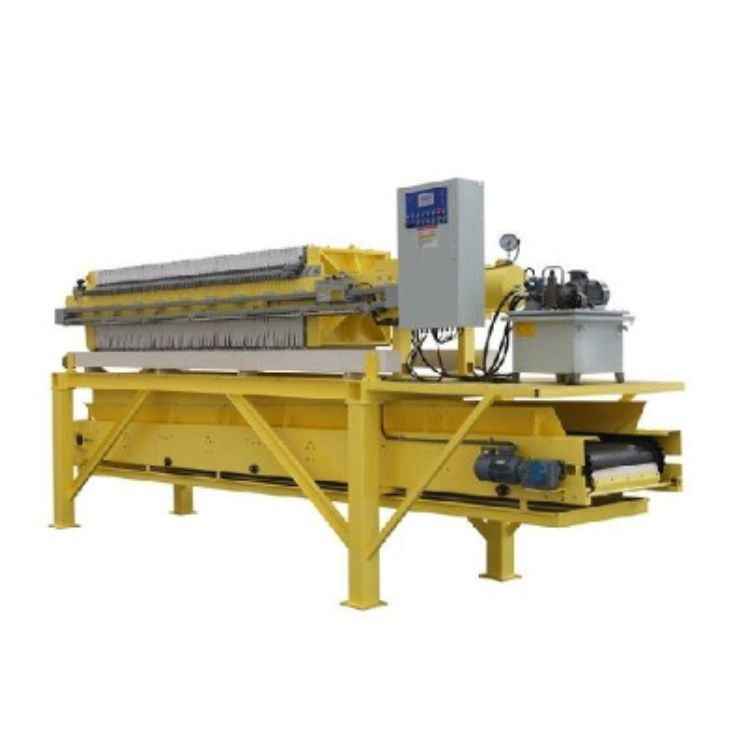
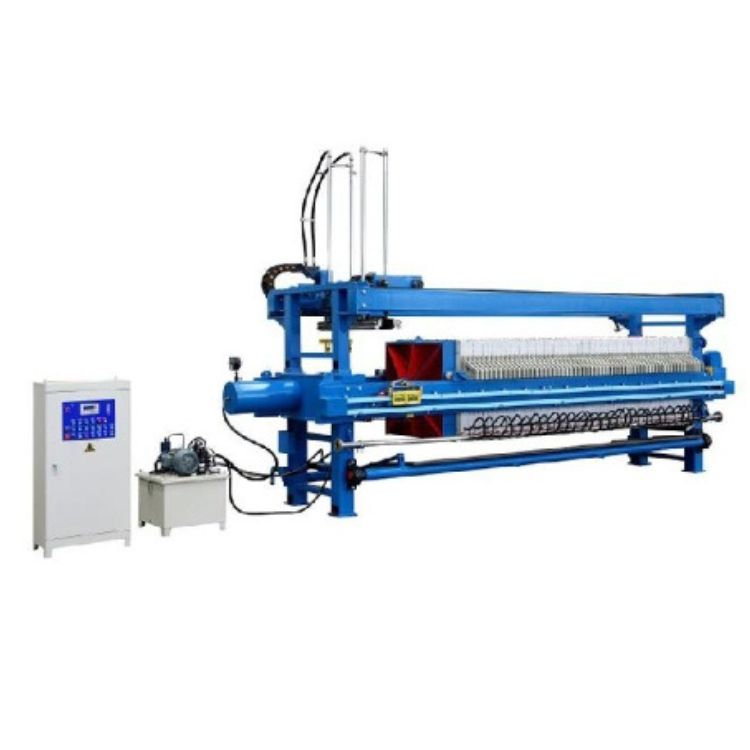
Box Type Filter PressThe filter chamber consists of a flat filter plate and a hollow filter frame, with the filter cloth secured to the frame. This was the primary form of pressure filter in the early stages.
The filter chamber of the box filter press is composed of two adjacent concave filter plates. Its main advantage is the ease of replacing the filter cloth, but it has drawbacks such as low efficiency, poor filtration effect, and fragile filter plates.
Working Principle:
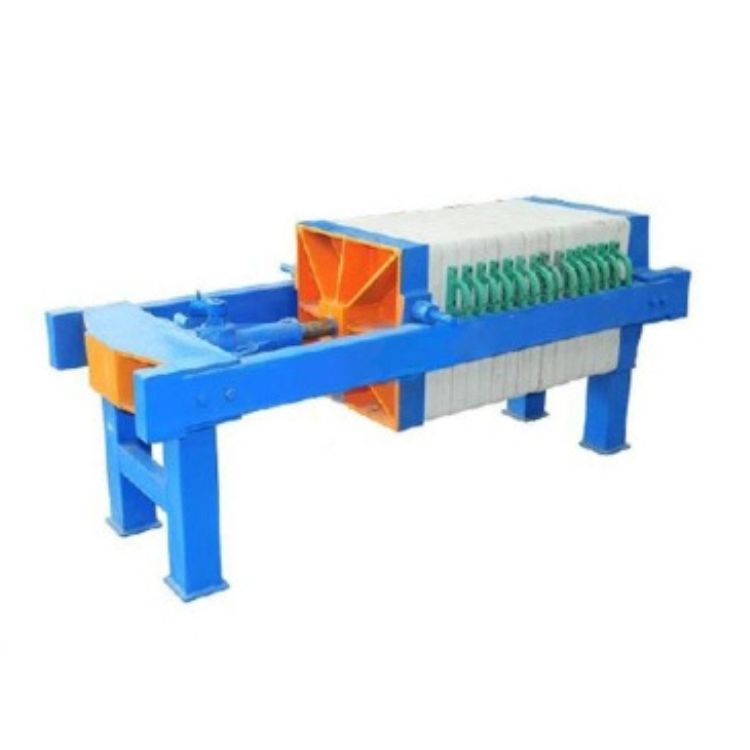
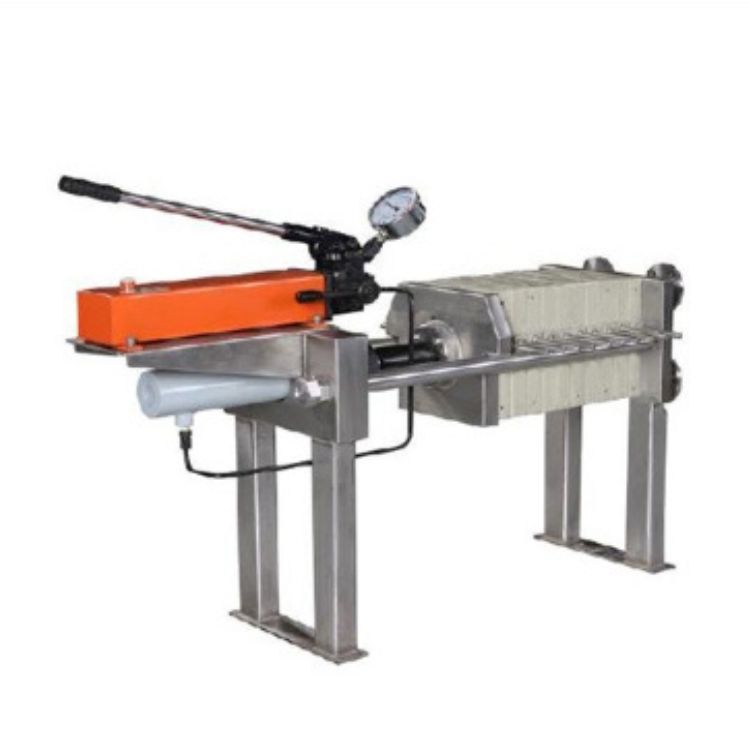
The hydraulic clamping mechanism of the press consists of a hydraulic station, oil, piston, piston rod, and Heflan card connecting the piston rod to the clamping plate. The structure of the hydraulic station includes an electric motor, oil, overflow valve (pressure regulation), directional valve, pressure gauge, and oil.
Roads, fuel tank. Filtration methods include open flow filtration and concealed flow filtration. Open flow filtration features a water nozzle installed below each filter plate's outlet hole, with the filtrate flowing directly out of the nozzle. Concealed flow filtration involves each filter plate having an outlet channel hole, and the outlet holes of several plates form a single outlet channel, which is then drained through a pipe connected to the outlet hole below the thrust plate.
Washing Method: When filter cakes require washing, it may involve single-direction washing and bidirectional washing, as well as submersible single-direction and bidirectional washing.