








Guangzhou Lego Building Materials Co., Ltd., with its exquisite craftsmanship and exceptional sales service, has provided cutting-edge high-tech products to large-scale domestic infrastructure projects, writing a magnificent chapter of the fusion of architecture and art.
The aluminum grid market is expanding, with intense competition among many manufacturers. They are seeking more suitable marketing channels to promote their products. To find the best source, it's advisable to compare offers from multiple suppliers. At the same time, don't solely chase cheap products, as there might be quality discrepancies.
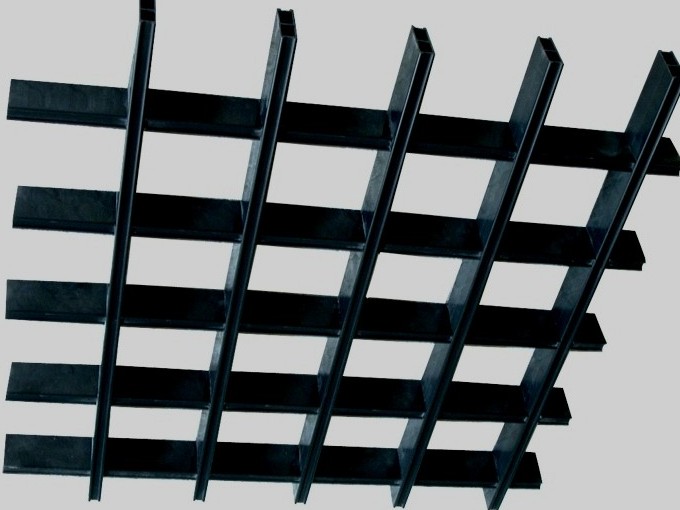
Aluminum grating ceilings and iron grating ceilings have different application scopes: Although aluminum grating is more expensive, it is widely used in large-scale decoration due to its resistance to corrosion. A variety of colored grates can beautifully accentuate the decorative space. Iron grating, though cheaper, is typically used for small-scale decoration to save on costs. It's an excellent choice for places with limited decorative space, such as small restaurants, supermarkets, or temporary venues, as it offers cost-effective pricing. Both aluminum and iron grating ceilings have their own advantages, and customers can choose the appropriate material based on their needs.
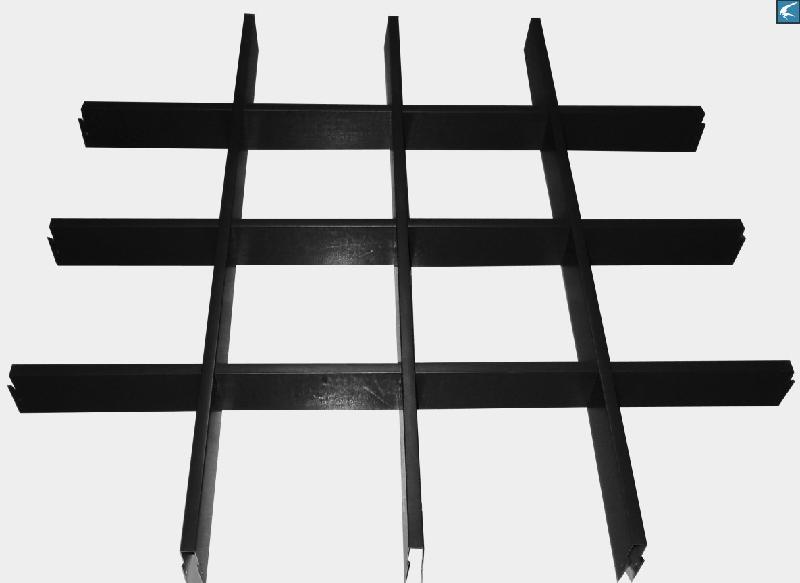
Aluminum grid is a highly innovative type of grid, also known as engineering grid, composed of six equilateral triangles to form a hexagon; hence, it is also referred to as hexagonal aluminum grid and profiled aluminum grid. However, it offers a more avant-garde, dynamic, and aesthetically pleasing appearance compared to other standard square grid ceilings. Its decorative effect is particularly novel and eye-catching.
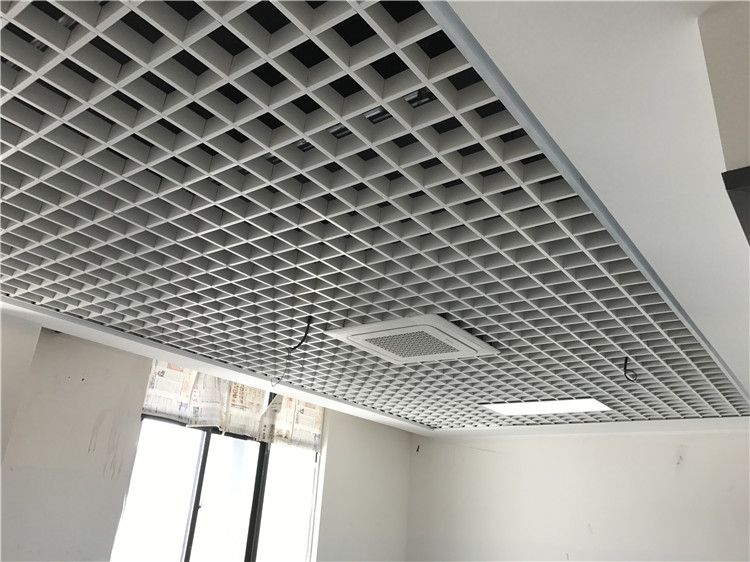
Aluminum grid ceiling process and operation technique:
1. Mark a level line on the wall using a plumb line after determining the height.
2. Secure the hanger with an expansion bolt and fasten it to the ceiling. The light steel joist below the hanger should be kept level (no hanger is needed if the grid span does not exceed 3 meters).
3. Secure aluminum angle strips along the horizontal line with cement nails.
4. Lay out the aluminum grille on the ground and assemble it completely.
5. Place the assembled grid ceiling on top of the aluminum angle iron, securing it in the middle with fine wire directly through the light steel frame.
⑴ Leveling Lines: Use a level instrument to mark horizontal points at each corner of the room's walls (columns). If the walls are long, appropriate points should be marked in the middle as well. Draw a level line (usually 500mm above the ground), measure from the level line to the ceiling design height, and use a chalk line to mark the level line along the wall (column), which will be the bottom line of the ceiling grid. At the same time, according to the ceiling plan, mark the position of the main beam on the concrete ceiling. The main beam should be divided from the center of the ceiling to both sides with a large spacing of 1000mm, and the fixed points of the hangers should be marked, with a spacing of 900mm to 1000mm between the fixed points. If the fixed points for beams and pipes exceed the design and specification requirements, additional fixed points for the hangers should be added.
⑵ Fixed Hanging Rod Components: Use expansion bolts to secure the hanging rod components. φ6 hanging rods can be used. The rods can be made of cold-drawn steel bars or round steel bars, but if round steel bars are used, they should be straightened by machinery. One end of the rod is welded to an L30*30*3 angle iron (the hole diameter of the angle iron should be determined according to the diameter of the rod and expansion bolt), and the other end can be threaded to exceed 100mm or can be purchased as a finished threaded rod for welding. The finished rod should be treated to prevent rust. The rod is fixed to the floor with expansion bolts, using a hammer drill to make holes slightly larger than the diameter of the expansion bolts.
③ Light Steel Stud Installation: The light steel studs should be suspended on hangers (this process can be omitted if the ceiling is low, and proceed directly to the next step). Generally, 38mm light steel studs are used with spacing of 900mm to 1000mm. The light steel studs should be installed flat and in the longitudinal direction, with a rise in the center to a height of 1/200 to 1/300 of the room span. The cantilever section of the light steel stud should not exceed 300mm; if it does, additional hangers should be added. The extension of the main stud should be done by butt joint, with the joints of adjacent studs staggered. Once the light steel studs are hung, they should be roughly leveled.
Ceilings spanning over 15m should have an additional large joist installed every 15m on the main joist, securely welded perpendicular to the main joist.
⑷ Spring Plate Installation: Connect the hanger with light steel studs (if the ceiling is low, you can install the spring plate directly on the hanger to skip this step), spacing 900mm to 1000mm, then clip the spring plate onto the hanger.
⑸ Grille Main and Sub Frame Assembly: Pre-assemble the main and sub frames of the grille according to the design drawings below.
⑥ Grid Installation: Hang the pre-assembled grid ceiling with hooks through the main bone holes, connect the entire grid ceiling, and adjust it to be level.
Lego's experienced design, production, and sales team, with a comprehensive pre- and post-sales system, fully implements the ISO9001:2000 quality management system, achieving comprehensive development in production, supply, and sales. Lego adheres to the quality philosophy of "Quality First, Customer-Centric, and Sustainable Development," and the Lego principle of "Optimism and Sincerity, Quality Above All." Winning the market with high-quality products, Lego earns the trust and support of customers.