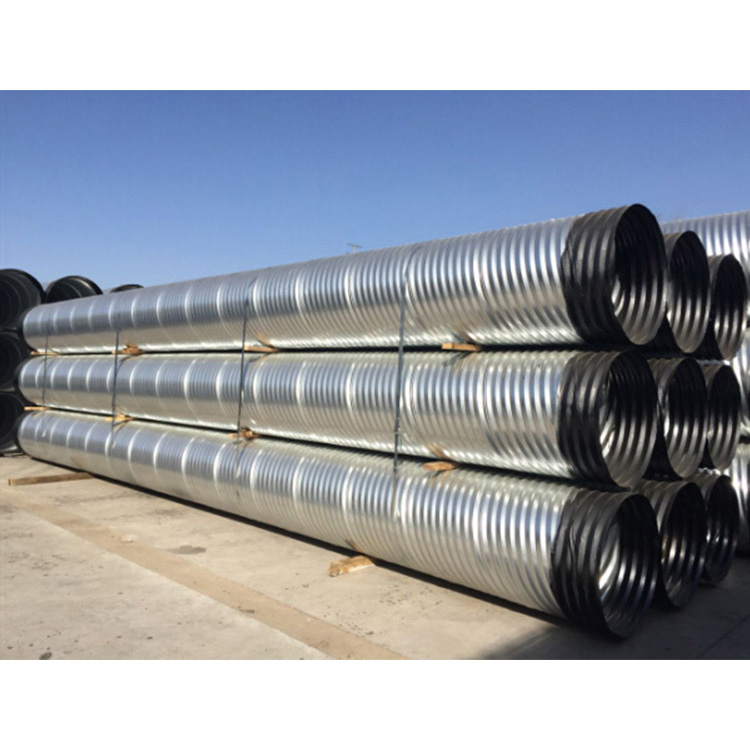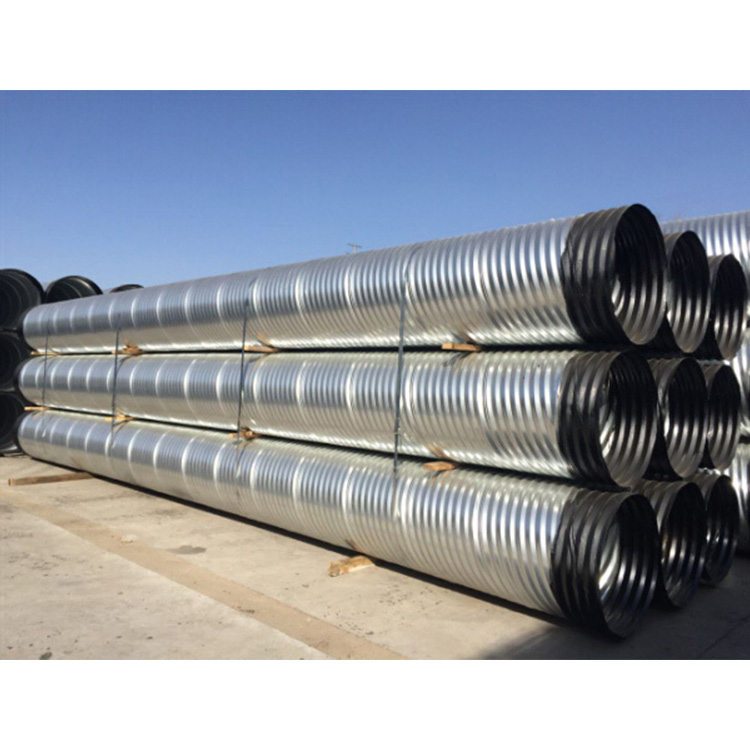

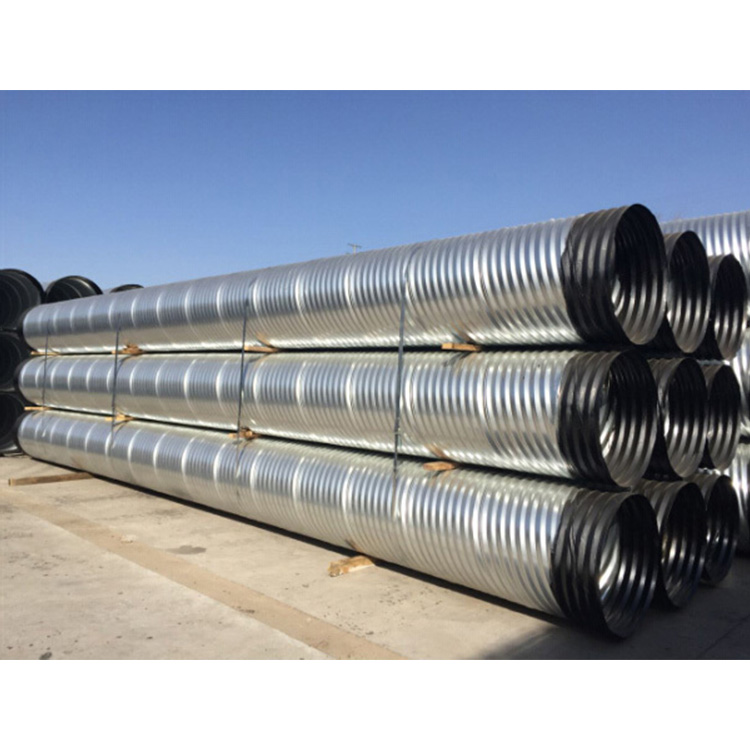

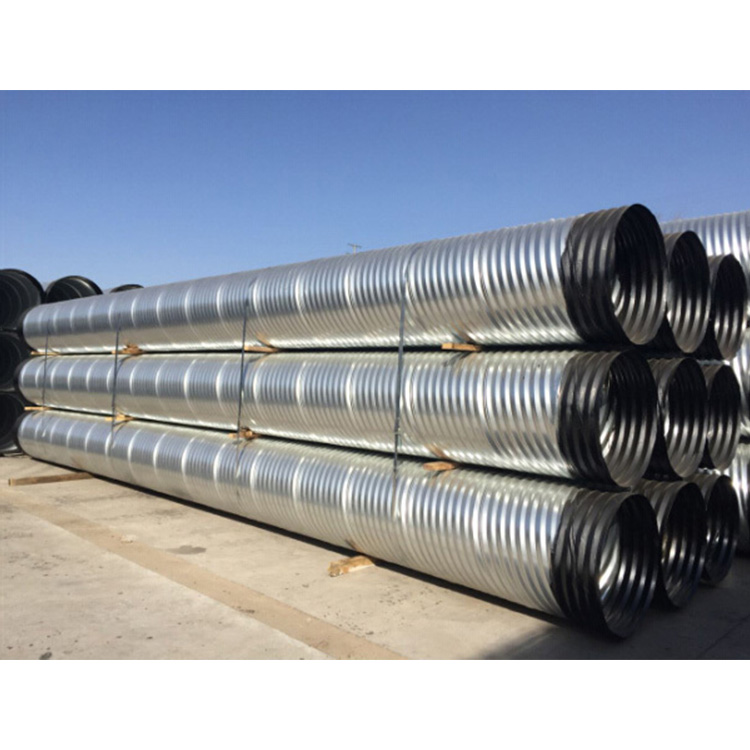
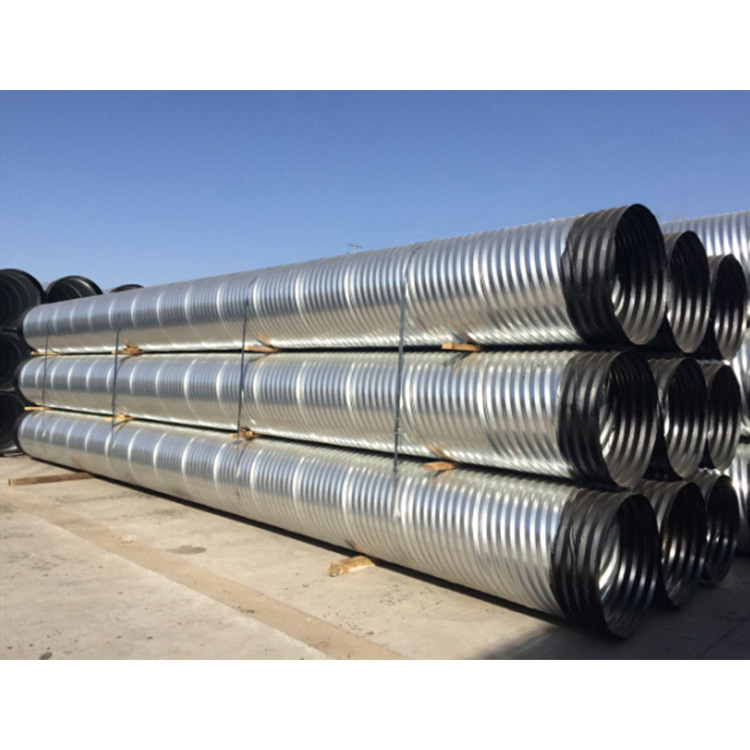












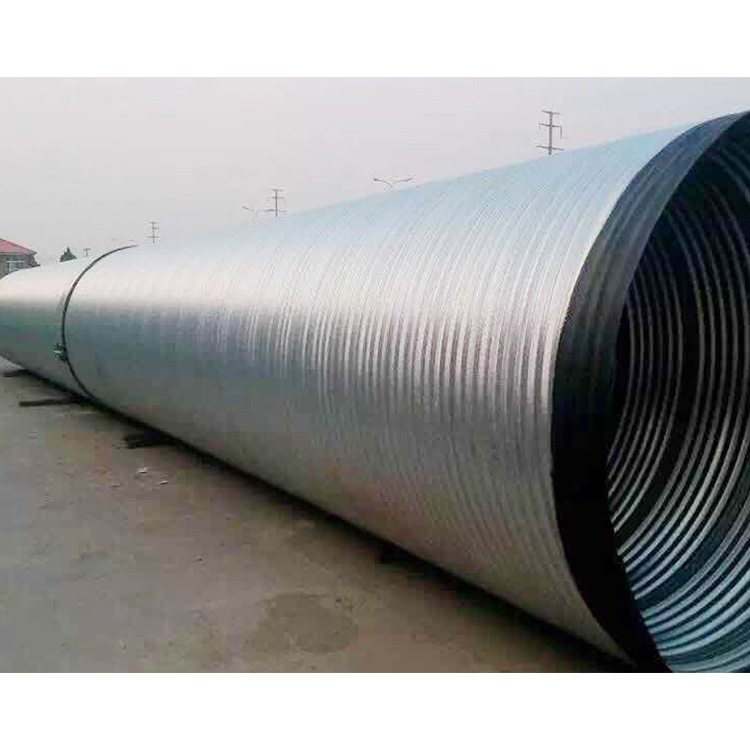
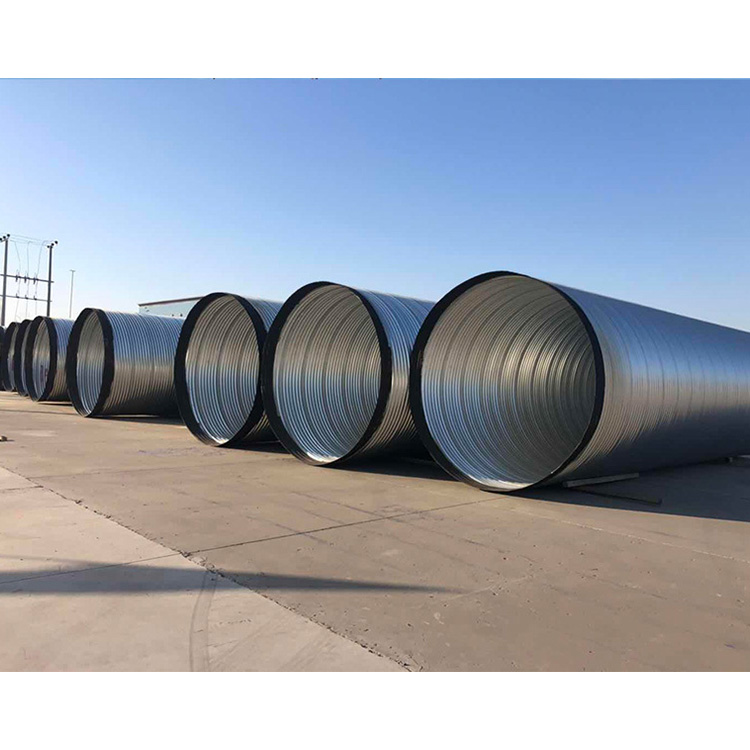
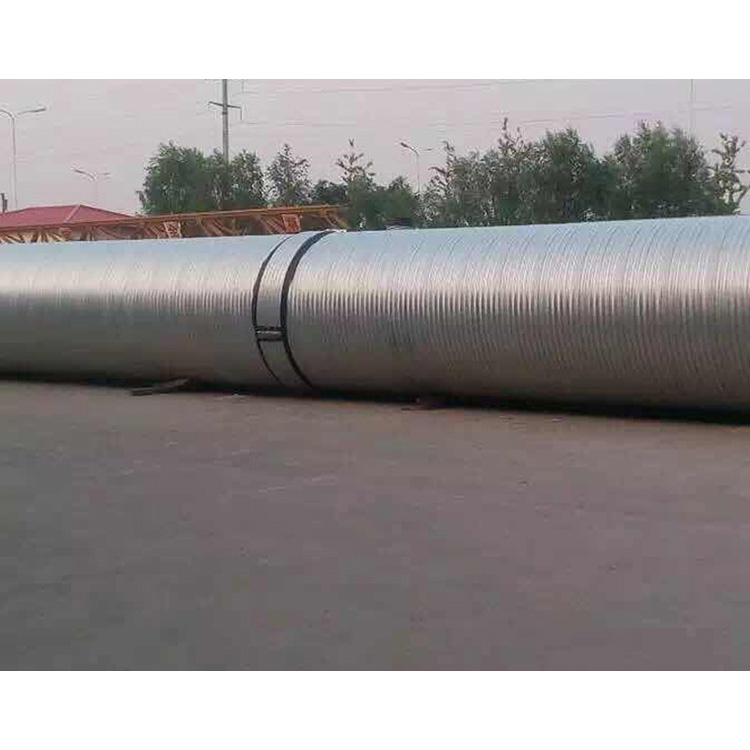
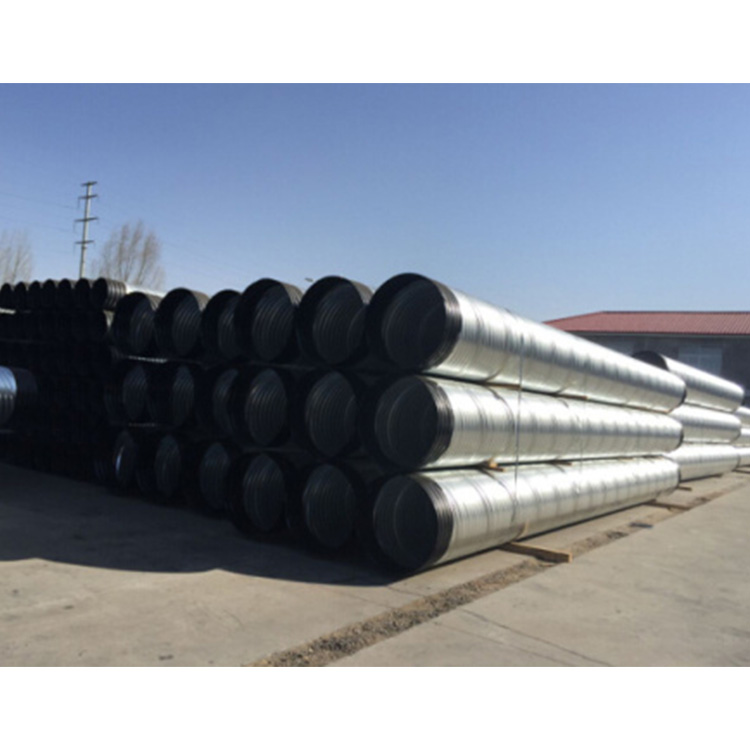
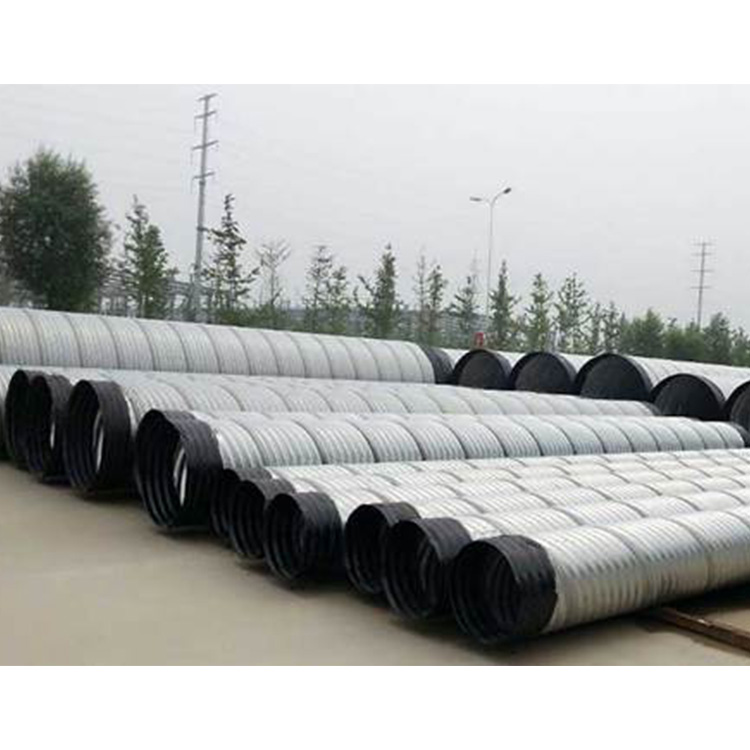
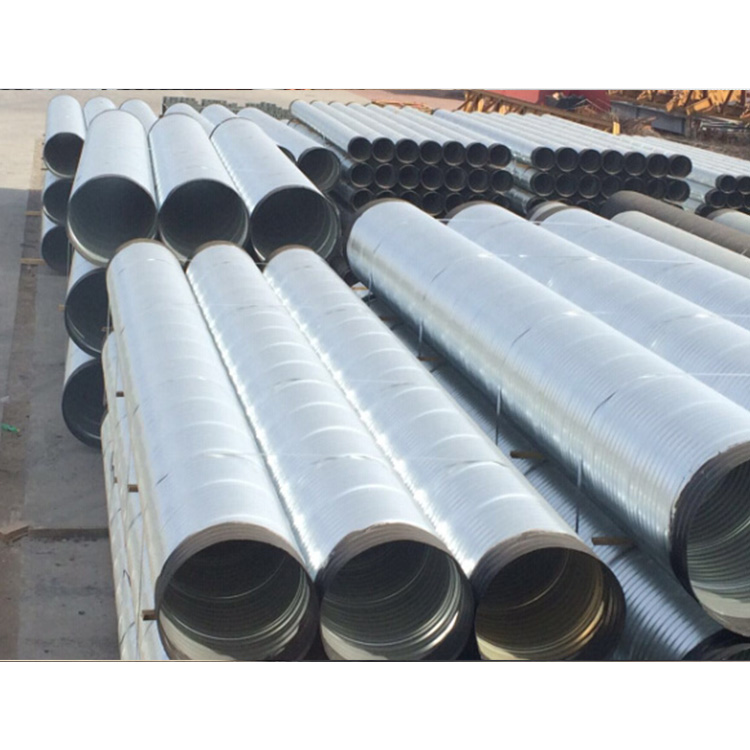
Spiral corrugated steel pipes are formed by rolling galvanized steel strips into a specific wave pattern, then bending and spiraling them so that the edges interlock to create a continuous, circular tube. Invented in the United States in 1896, spiral corrugated steel pipes have been in use for over a century and serve as an ideal alternative to concrete pipes and reinforced concrete structures.
Helical corrugated steel pipe features
High compressive strength: 1.5 to 5 times that of the same diameter cement pipe
Lightweight and easy to transport: Weighs 1/5 to 1/10 of the same diameter cement pipe
Construction Fast: Pipe sections (adjustable from 1 to 12 meters), clamp quick connection
Helical ribbed steel pipe applications
Drainage: Domestic water discharge, industrial wastewater discharge, road culvert drainage
Passageways: Highway-rail animal-human passages, vehicle passages, small open tunnels, sheltered passages
Protection: Underground communication cables, pipeline protection for gas networks, urban utility tunnels
Industrial: Coal mine ventilation pipes, coal mine shafts, pile foundation shells, industrial chimneys
Agriculture: farm well casing, canal irrigation, siphon pipe, grain storage
Technical Specifications of Spiral Woven Steel Pipe
1. Material: JS-SGHC galvanized steel plate or SS400 or Q235 hot-rolled steel plate
2. Plate Thickness: 1.2 ~ 4.2mm
3. Channel Cross-Section Shape: Circular, Elliptical, Horsehoe, Scoop-shaped, etc.
4. Import/Export Forms: Orthogonal, Oblique, Straight Mouth, Oblique Mouth, etc.
5. Soil Filling Height: 0.3~70m 6. Diameter Range: 200~3600mm
7. Pipe Section Connection Type: Clamp connection.
8. Wavelength Parameters: Wavelength x Depth mm <Type: >75x25< >
9. Corrosion Treatment: Hot-Dipped Galvanized Thickness 600g/m² (Both Sides)