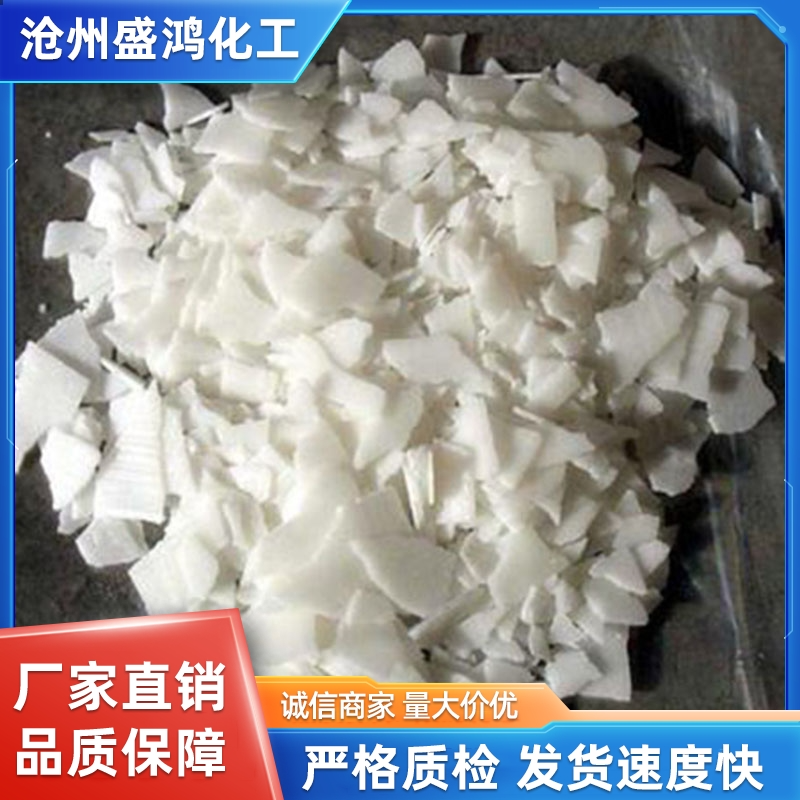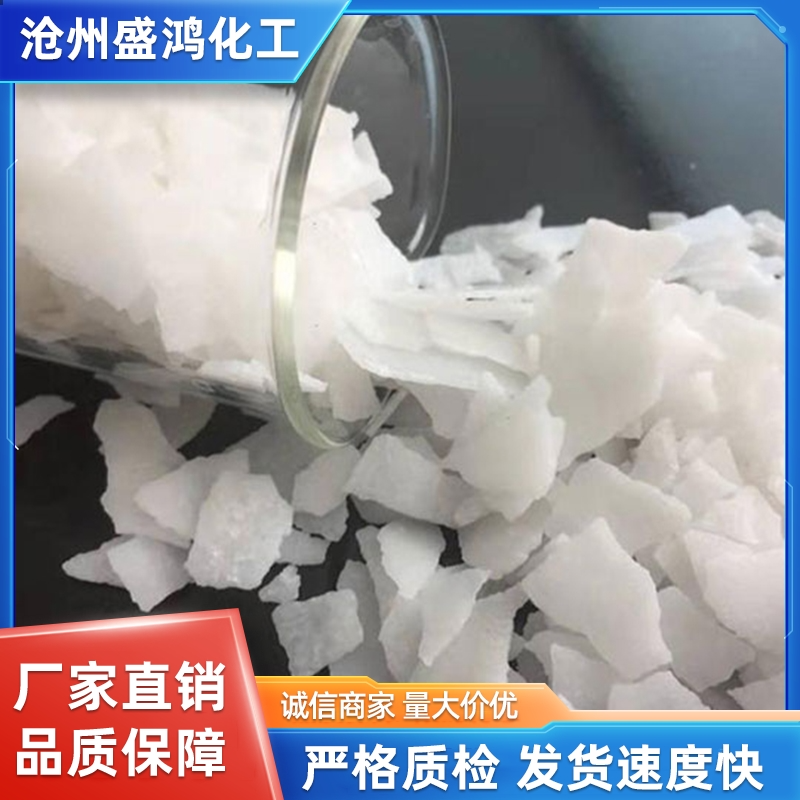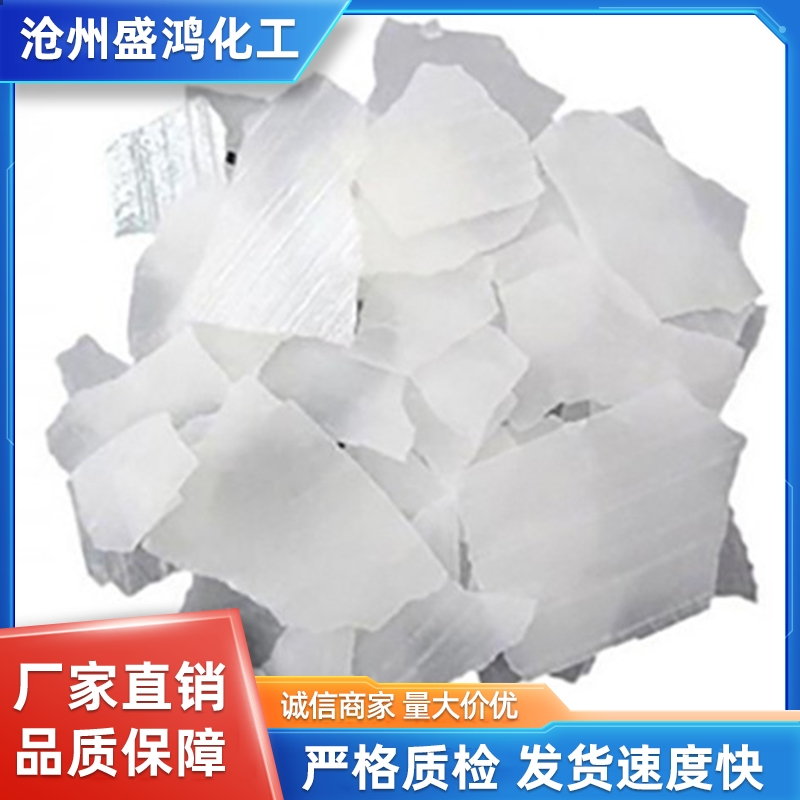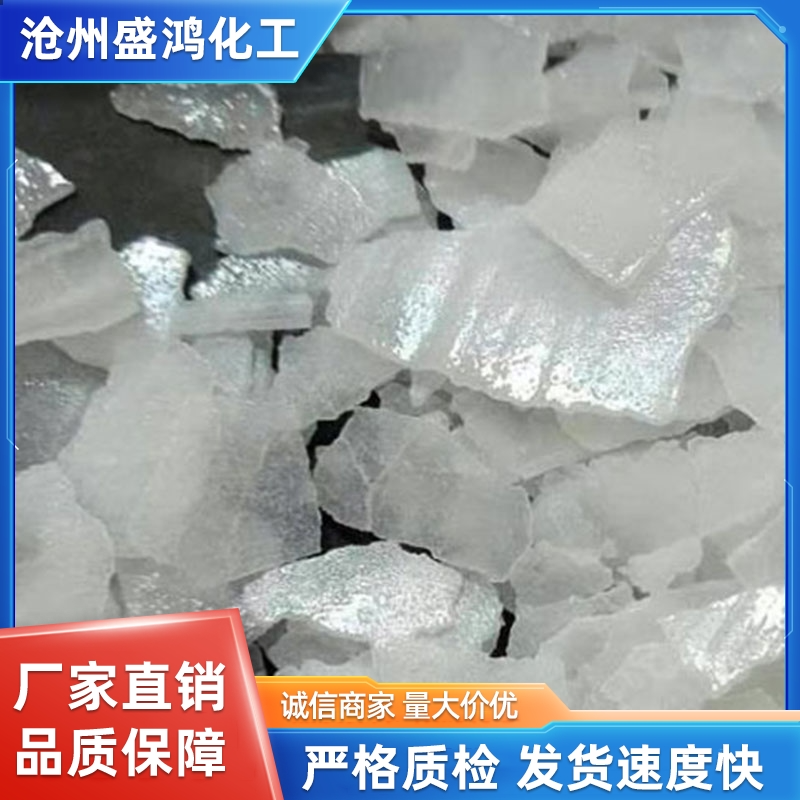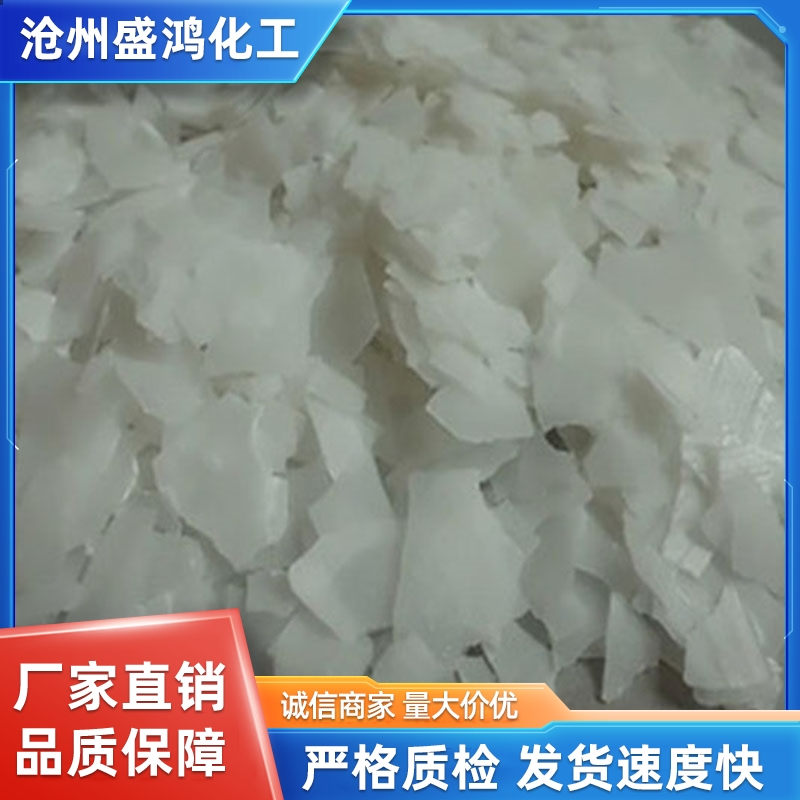

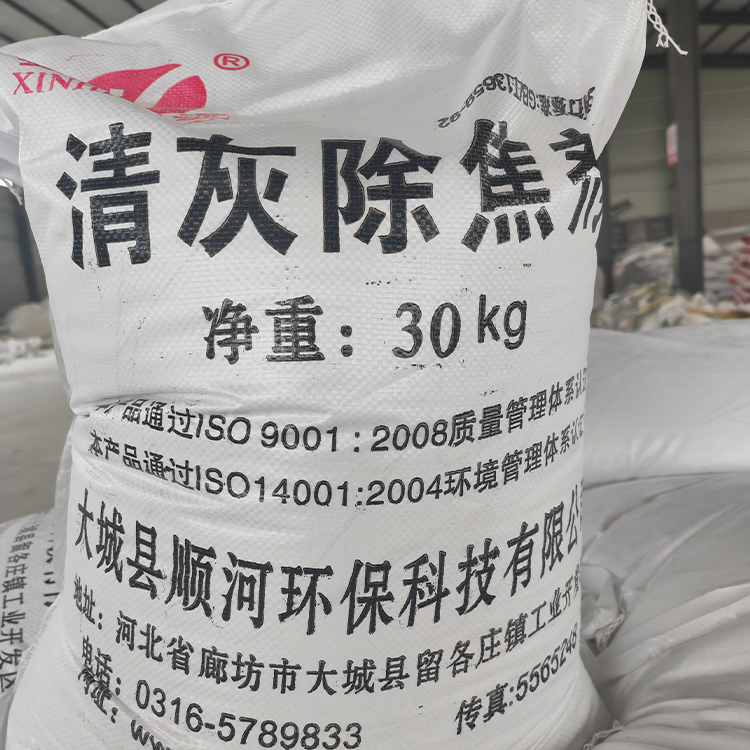

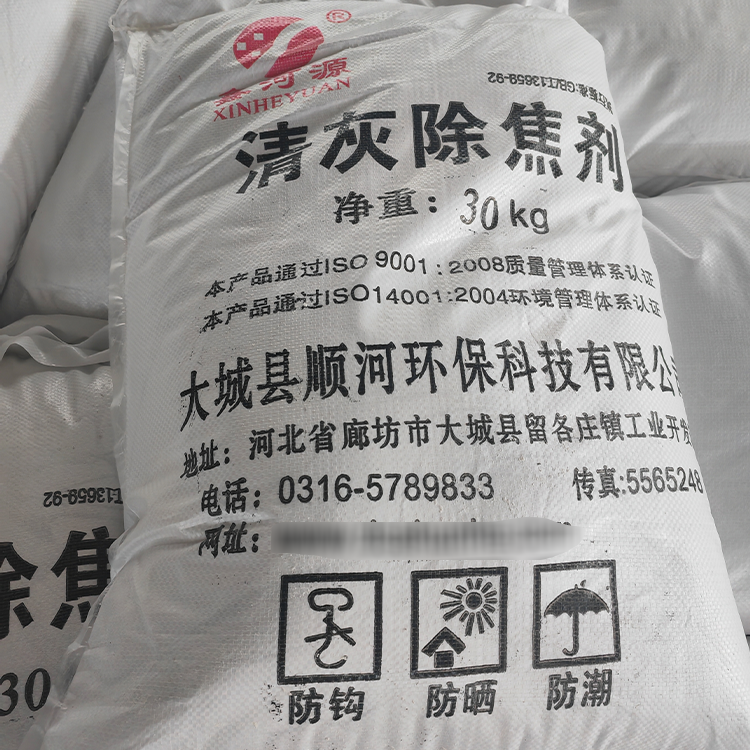


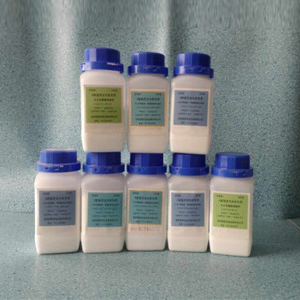
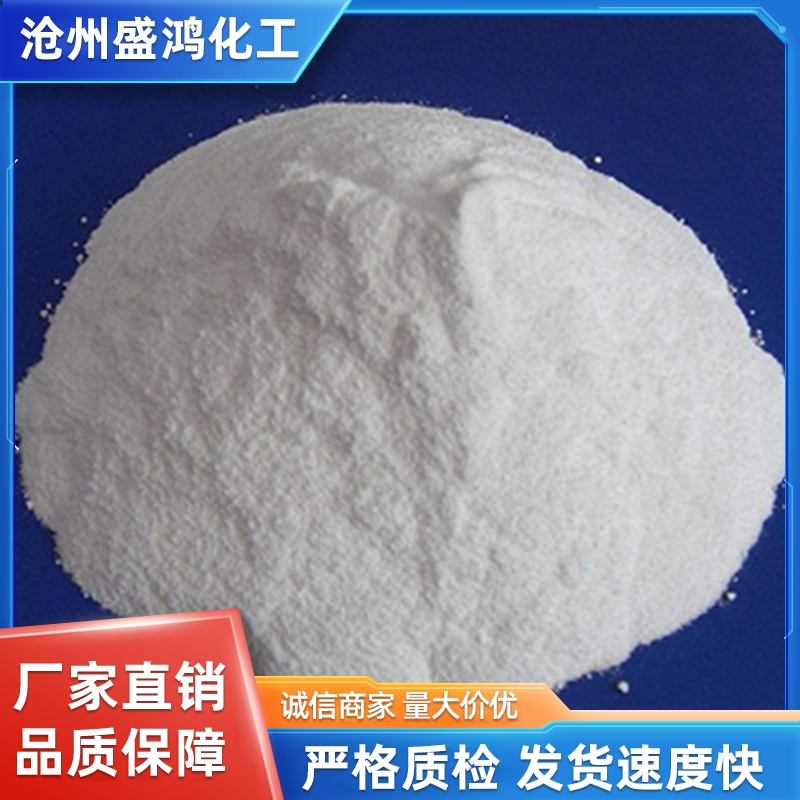
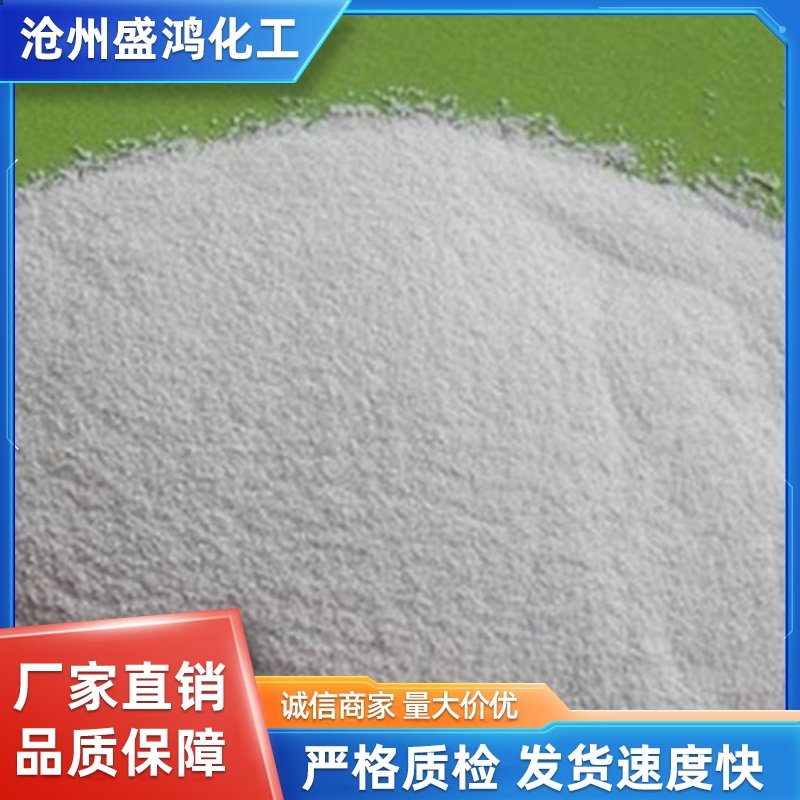
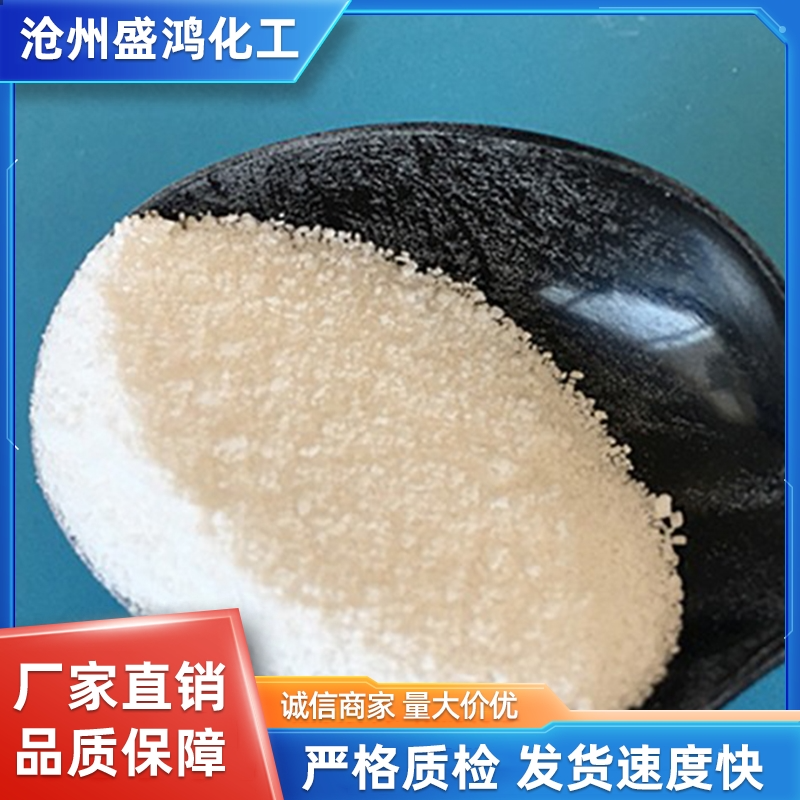
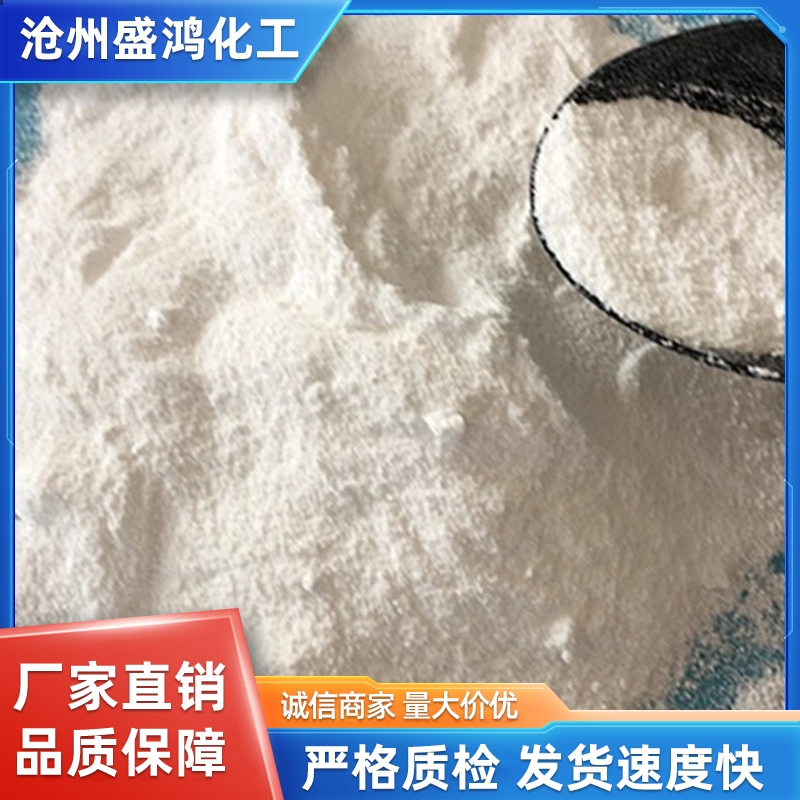





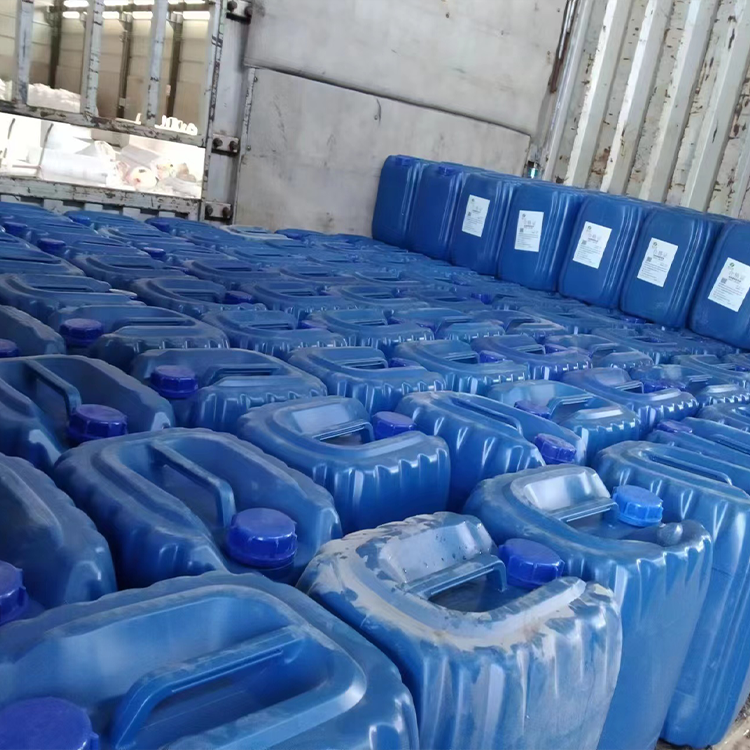
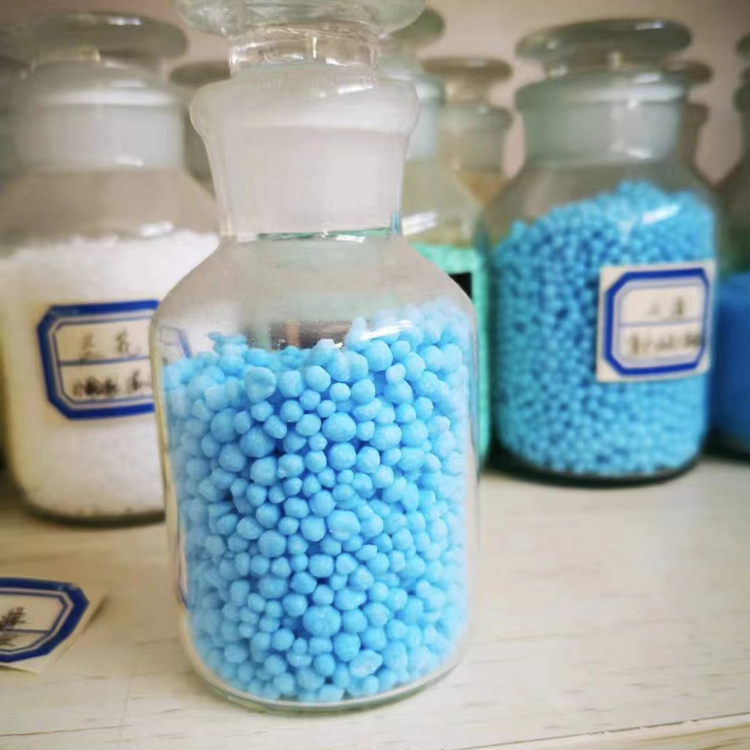
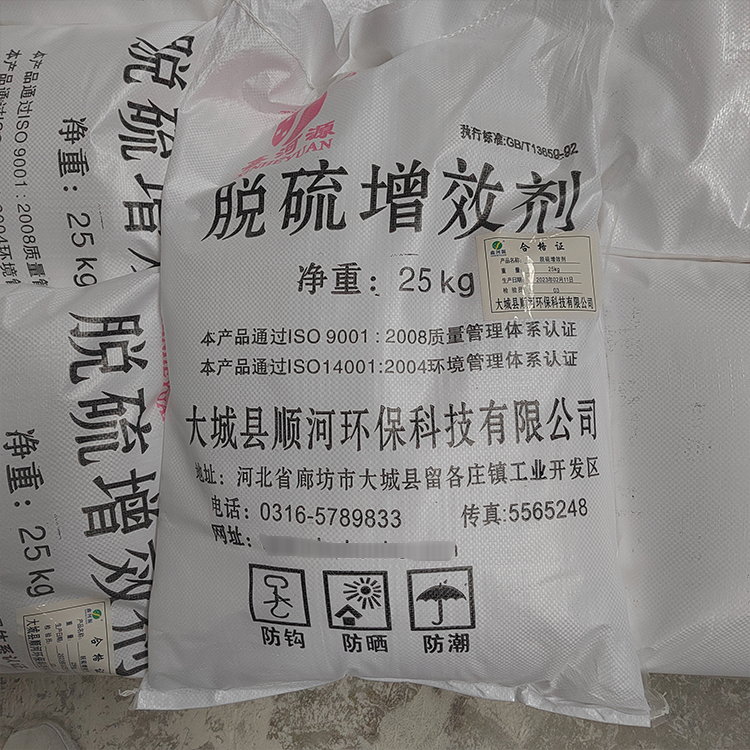
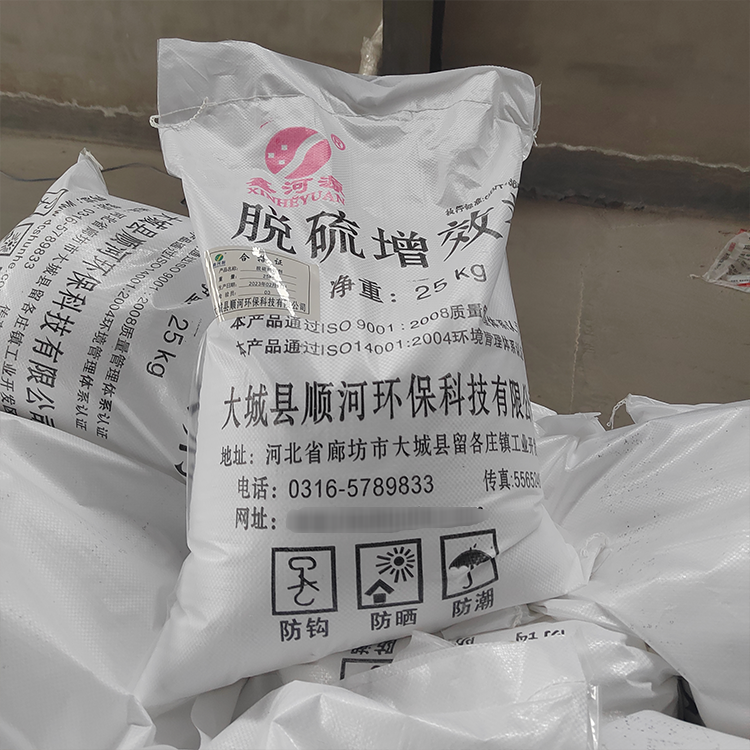
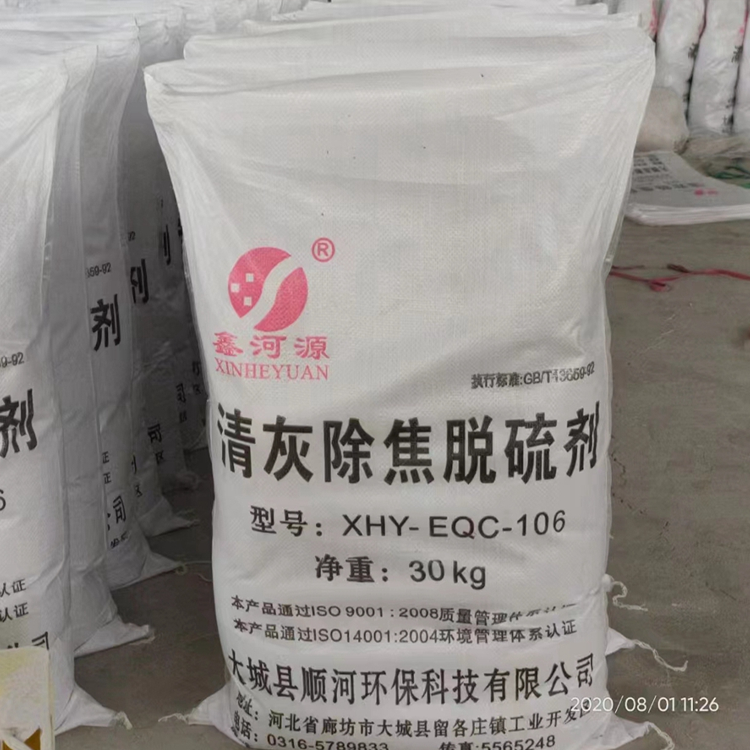
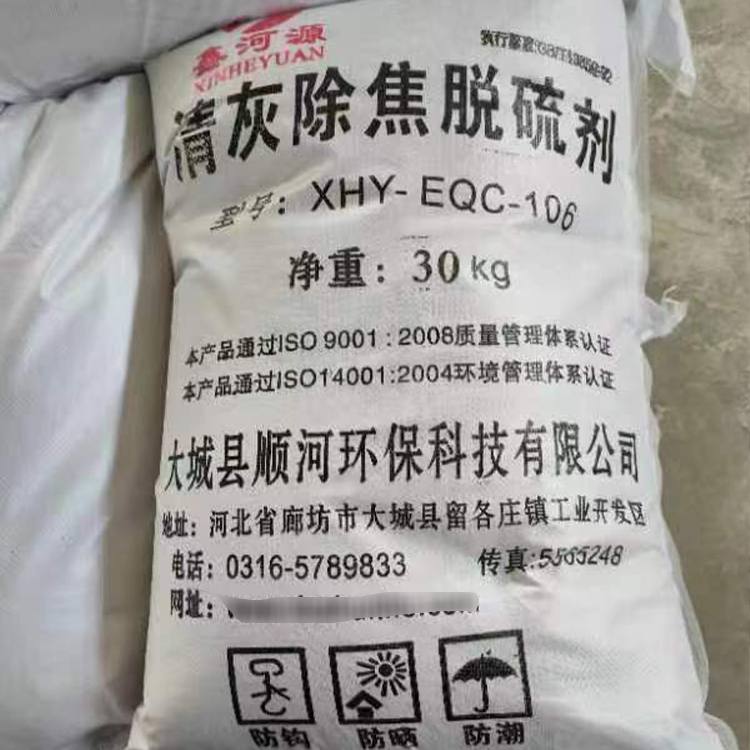
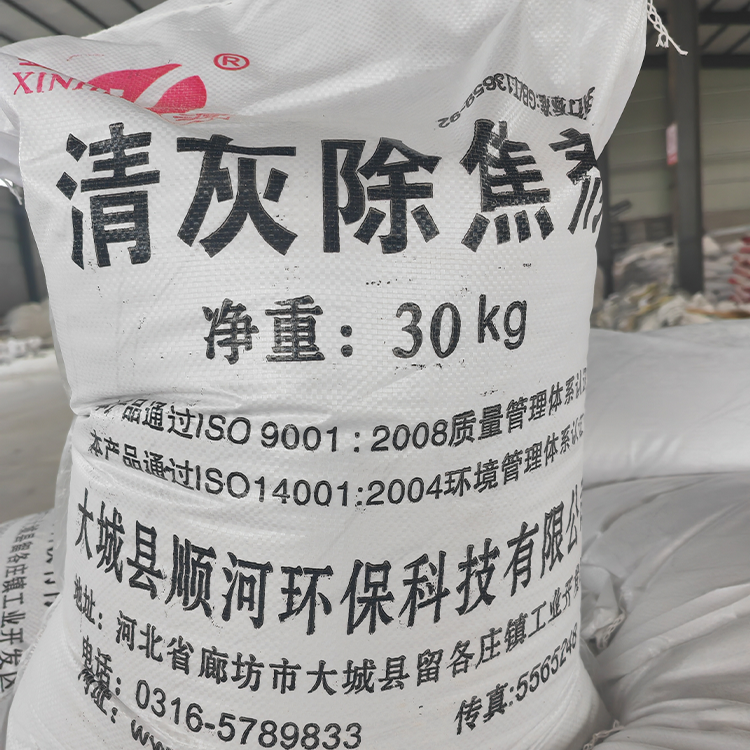
5. XHY-EQC-101 Type Dust Removal and Ash Detergent
Mechanism for removing ash scale and slag residues
When the ash and slag remover is added to the high-temperature zone of the furnace, it melts and volatilizes. Under the action of the promoter and catalyst, part of it burns completely with the volatile matter in the flue gas to weaken the possibility of forming ash and slag; the other part decomposes into oxides and peroxides, which, along with unreacted alkaline substances and borides, fly away to the surface of the ash and slag at lower temperatures, forming a film. The alkaline substances and borides are powerful fusible agents for ash and slag. Their particles penetrate into the slag, causing chemical reactions that make it more porous and friable. At the same time, they react with the metal silicates in the ash and slag (which form the rigid skeletal structure of the ash and slag), melting the metals from the silicates in the form of oxides, thereby destroying the rigid skeleton of the ash and slag. The alkaline substances and borides can also penetrate from the interface between the ash and slag and the heated surface, separating the two and reducing adhesion. As a result, the ash and slag will spontaneously fall off or come off upon slight contact.
Mechanism for Preventing and Slowing Boiler Corrosion
Sulfates in soot absorb SO3 from flue gas, forming highly acidic sodium pyrosulfate and sodium sulfate iron double salts, which directly corrode iron. At low-temperature heated surfaces, SO3 and moisture condense directly into sulfuric acid, corroding the iron. The alkaline substances and acidic gas absorbents in the XHY-EQC101 chemical prevent the formation of corrosive substances by reacting with their precursors before corrosion occurs, forming corresponding salts that are then carried away with the flue gas or coal ash, effectively stopping the formation of corrosion at its source.
Mechanism of coal-saving combustion assistance
During the fuel combustion process, adding a descaling and ash-removing agent product catalyzes, activates, and facilitates ion exchange reactions, thereby enhancing the combustion rate of coal. It also catalytically decomposes water in the coal at high temperatures, leading to more intense combustion, increased furnace temperature, enhanced heat output, and greater steam production, thus improving the boiler's output and thermal efficiency.
Mechanism for preventing ash and soot from forming
After the gray scale and slag are removed, continue using this agent. It can still form a film on the boiler heating surface. When the substances that form scale and slag adhere to the surface of the film, the agent reacts chemically with them immediately, producing non-corrosive, easily removable substances, thus preventing the formation of scale and slag.
The mechanism of flue gas purification for environmental protection
The addition of an acidic gas absorbent not only slows down the corrosion of the boiler but also reduces the concentration of SO2 in flue gas. It ensures the complete combustion of hydrocarbons in dust, decreases CO content in the flue gas. The reductants formed by this chemical can convert nitrogen oxides in the flue gas into N2, reducing the emissions of nitrogen oxides into the air. In summary, using this product significantly reduces the levels of SO2, NO, NO2, and CO in the emitted flue gas. According to national environmental protection department tests, the harmful substances emitted from the boiler using this cleaning and deashing agent are below the national (GB3814/83) standards for flue gas dust emissions.
Mechanism for cost reduction and comprehensive benefit enhancement
This chemical is easy to use without any additional equipment, and the operation is straightforward. For old boilers that haven't been cleaned of soot and ash, using this chemical for 15 days will cause the soot and ash to fall off automatically without the need to shut down the boiler. This reduces the physical strain on workers and saves time and effort. Continuous use prevents both new and old boilers from accumulating soot and ash. It keeps the heating surface clean, ensures the flue is clear, slows down corrosion, enhances the boiler's adaptability to different coal qualities, and reduces the power consumption of the fan, resulting in a significant improvement in overall benefits.