







Main Parameters of Ball Screw
Main Parameters of Ball Screw
When it comes to selecting ball screw types, it's essential to first discuss their common parameters, then you can proceed to determine the specific model based on these parameters.
Nominal Diameter
The outer diameter of lead screws, common specifications include 12, 14, 16, 20, 25, 32, 40, 50, 63, 80, 100, and 120. However, please note that for 0804 ball lead screws, among these specifications, 2010 ball lead screw manufacturers typically only stock sizes from 16 to 50. This means that most other diameters are on backorder (produced to order, with lead times of about 30 to 60 days, Yangzhou ball lead screws, Japanese products are about 2 to 2.5 months, and European or American products are about 3 to 4 months).
Nominal diameter and load are generally proportional; the larger the diameter, the greater the load. Specific values can be found in the manufacturer's product samples. This section only explains two concepts: dynamic rated load and static rated load. The former refers to the rated axial load under motion, while the latter refers to the rated axial load under stationary conditions. For design purposes, refer to the former. It should be noted that the rated load is not the maximum load; the smaller the ratio of actual load to rated load, the higher the theoretical lifespan of the ball screw provided by the 1605 ball screw manufacturer. Recommendation: choose diameters from 16 to 63.

Ball screw structure
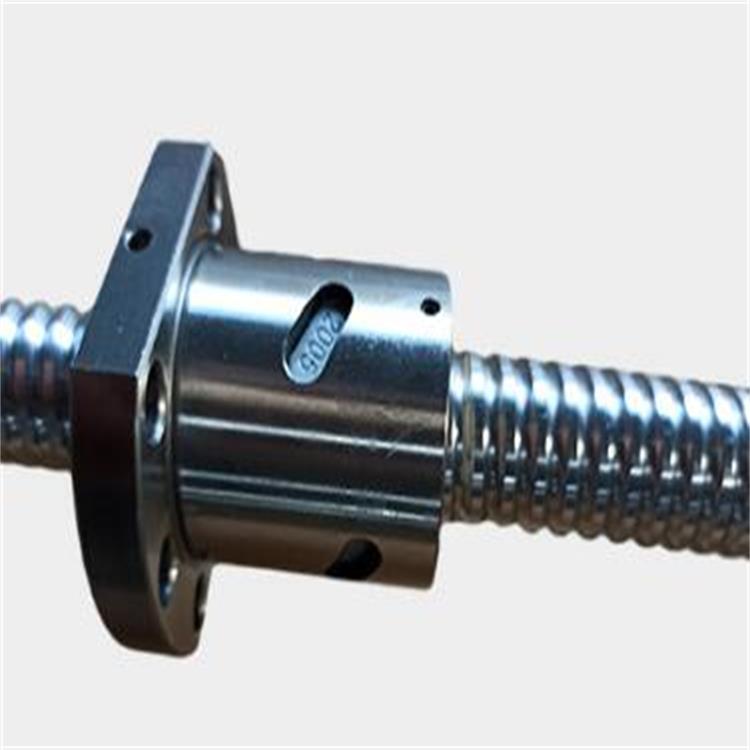
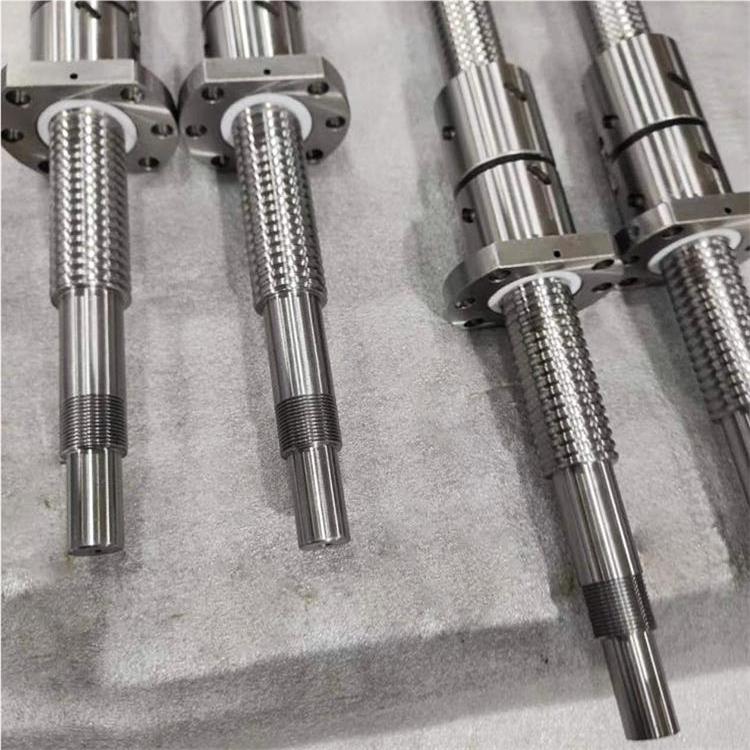
The structure of ball screws includes three main components: the screw shaft, the nut, and the ball bearings. The screw shaft is typically a long, strip-like part with a series of threaded grooves on its surface. It can be either straight or rotating, depending on the specific application requirements. The nut is a mating part to the screw shaft, featuring guide slots that match the ball bearings. The ball bearings are the critical component located between the screw shaft and the nut, transferring force between them through rolling.
The long service life and high reliability of ball screws in automation equipment are significant reasons for their status as critical components. As is well-known, automation equipment often requires continuous operation for extended periods, thus demanding exceptional durability and stability from its internal parts. Ball screws, with their meticulously optimized design and precision manufacturing, are not only capable of bearing heavy workloads but also maintain consistent performance over long periods. This characteristic greatly reduces equipment failure rates and downtime for maintenance, thereby significantly enhancing production efficiency and stability, creating greater economic value.

Suzhou Dibit (Photo) - 1605 Ball Screw Manufacturer Offers - Yangzhou Ball Screw Provided by Suzhou Dibit Precision Machinery Co., Ltd. Suzhou Dibit Precision Machinery Co., Ltd. is a witness to the hardware accessories industry in Jiangsu, Suzhou. Over the years, the company has implemented scientific management, innovative development, and honest trustworthiness to meet customer needs. Dibit leadership and all staff warmly welcome inquiries and negotiations from all sectors, striving to create a brighter future for Dibit.