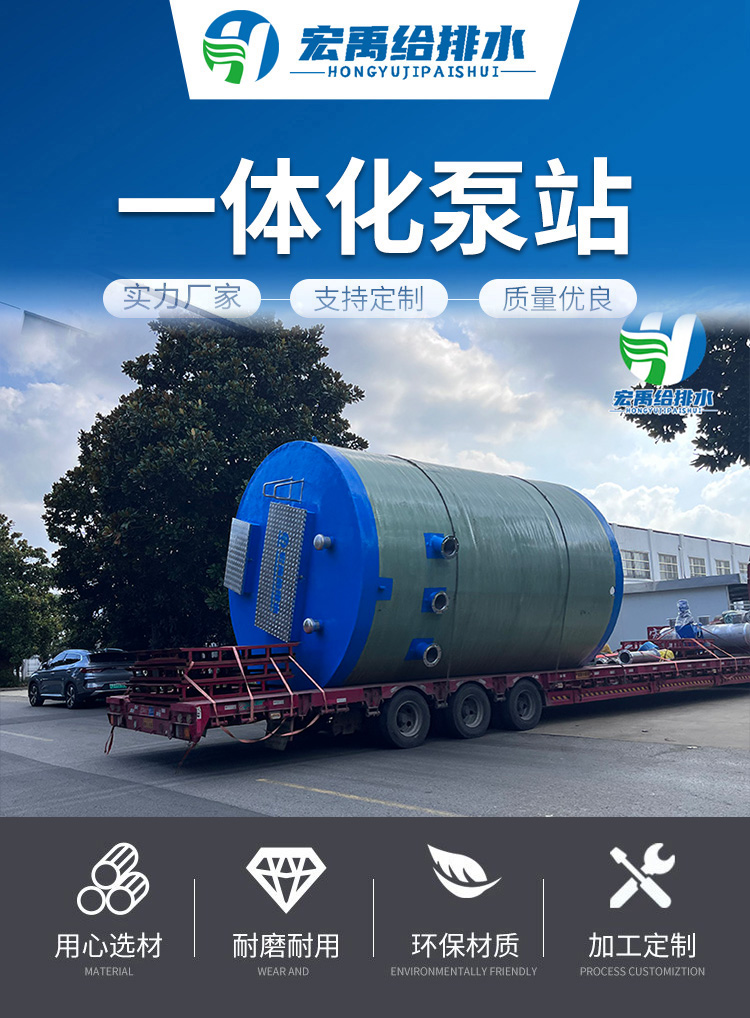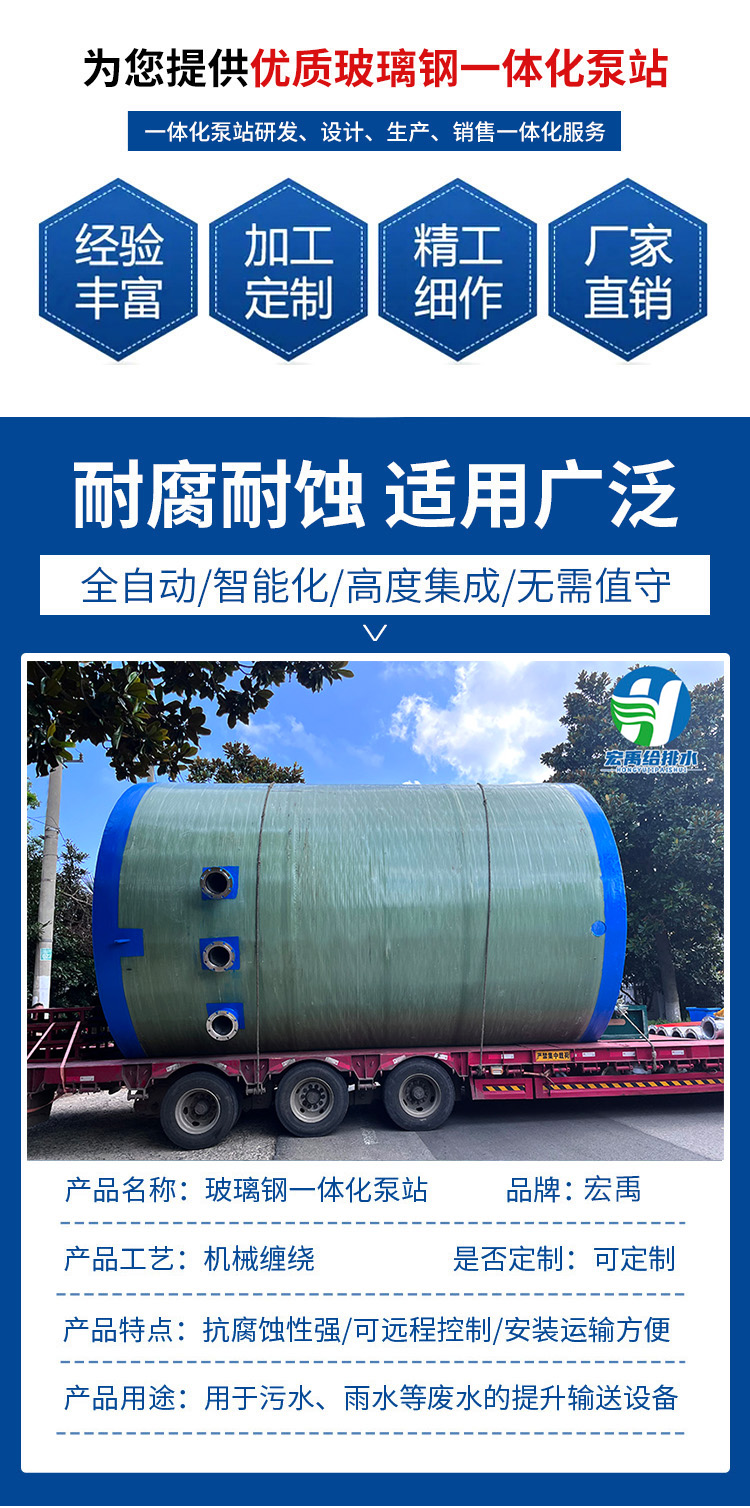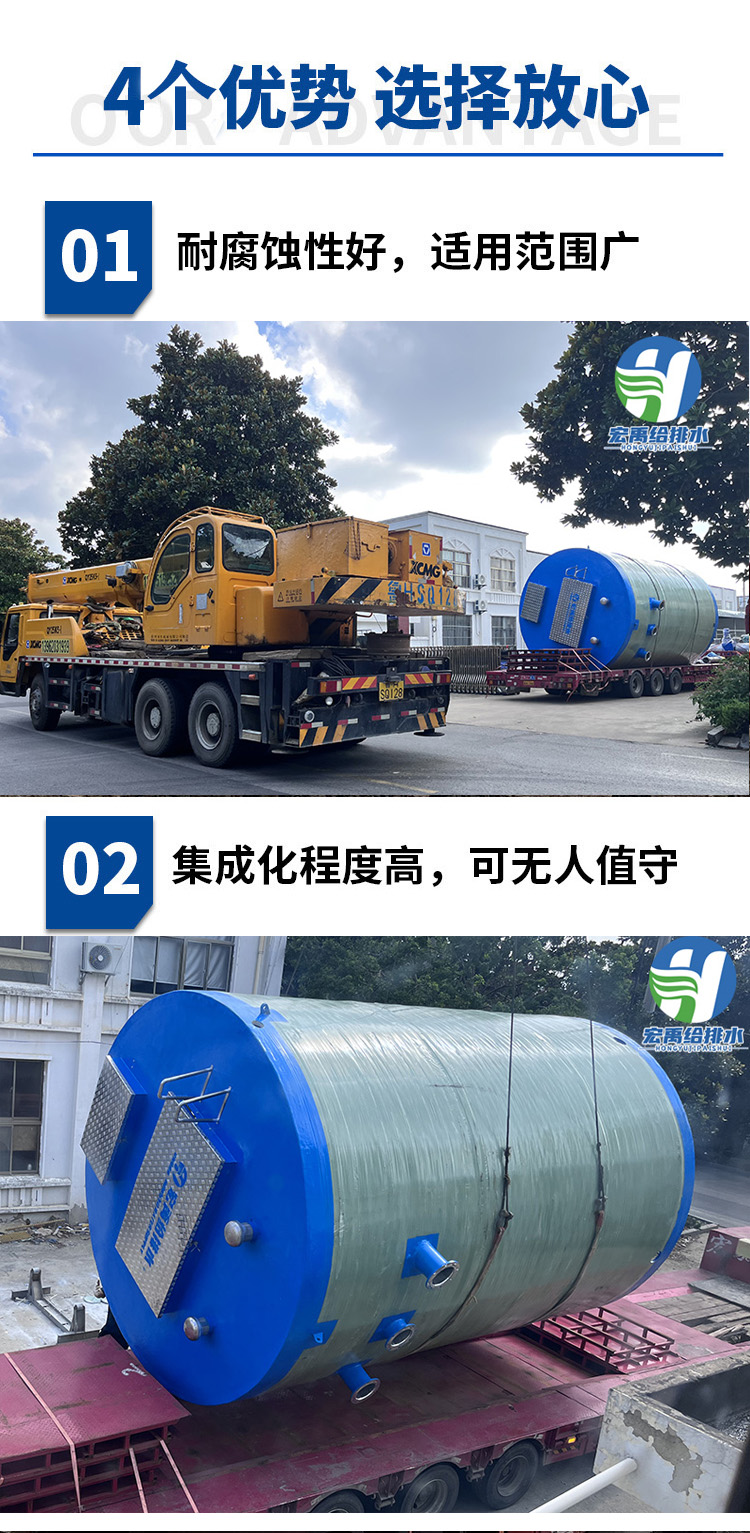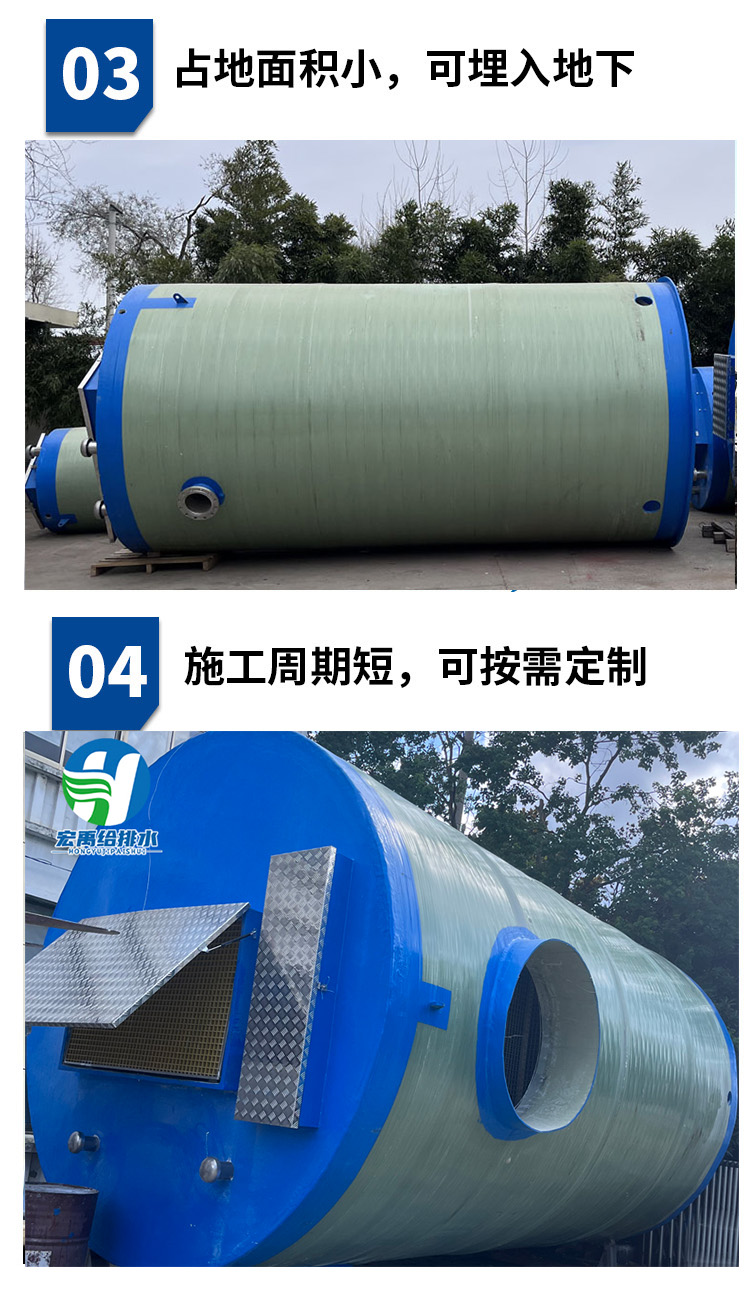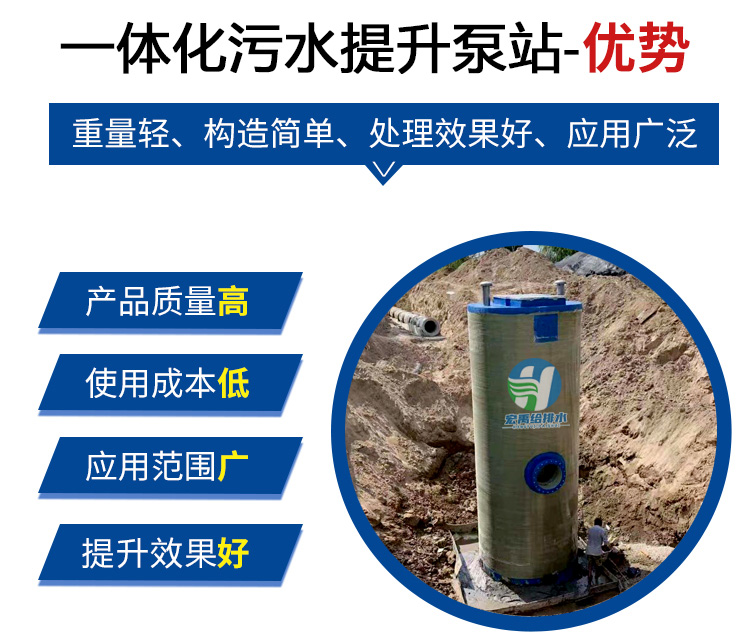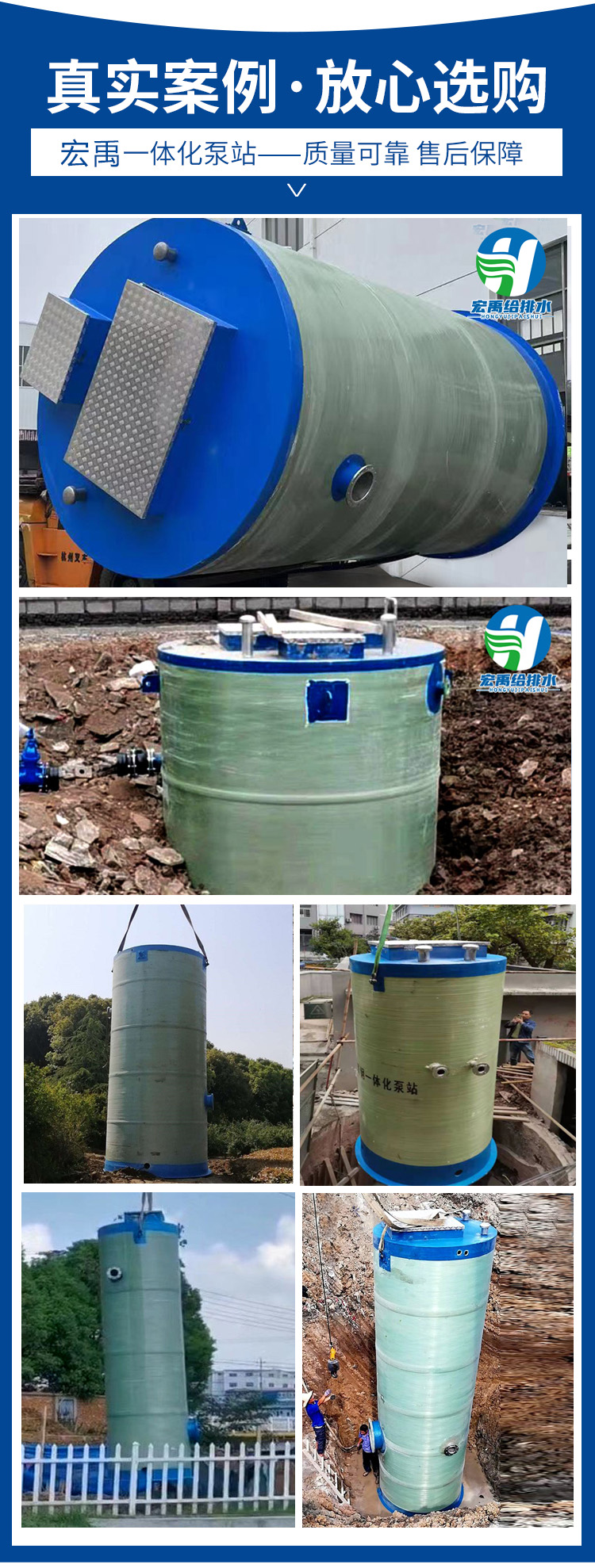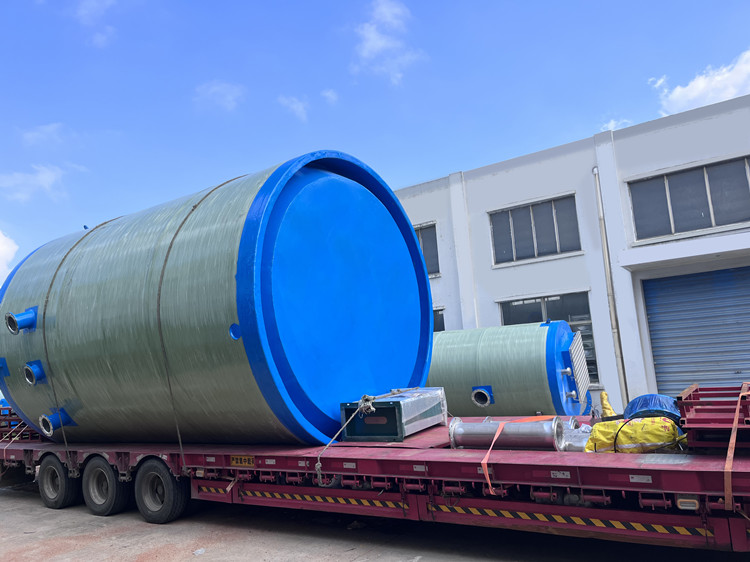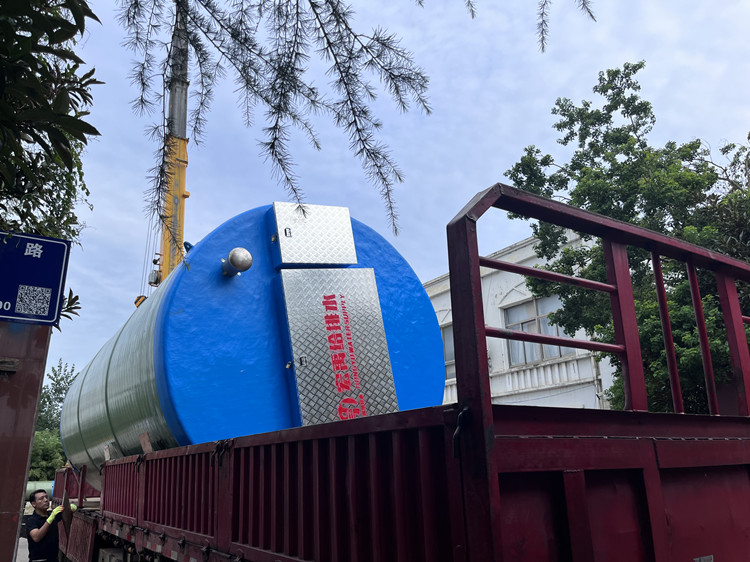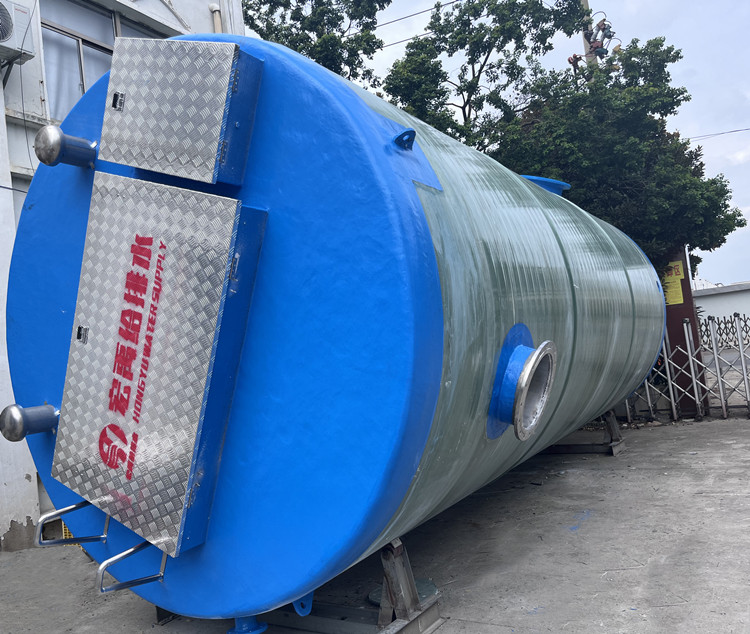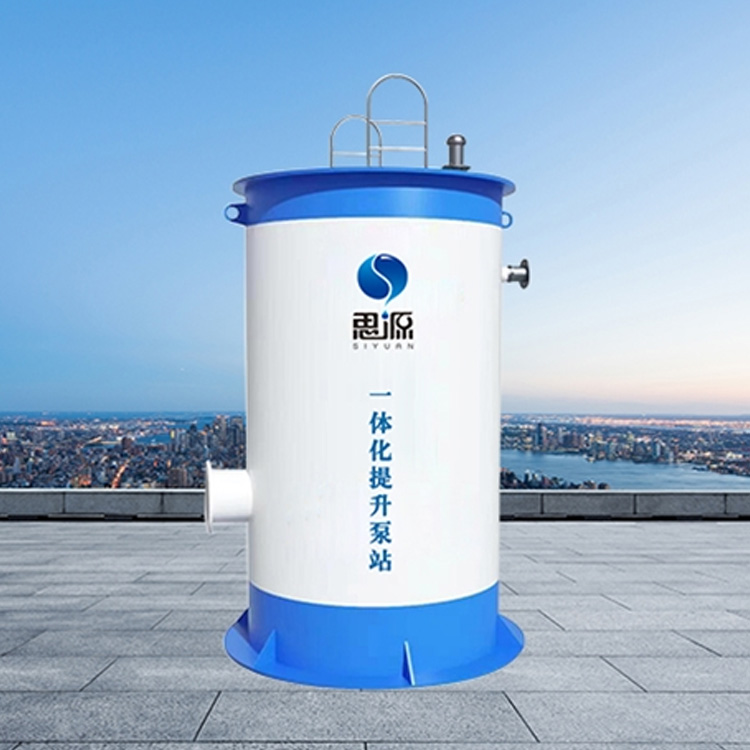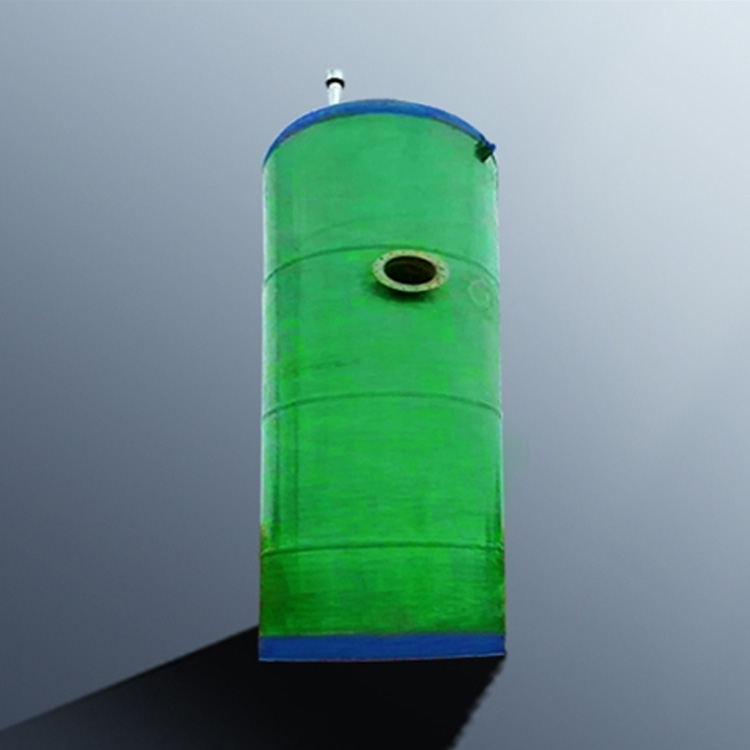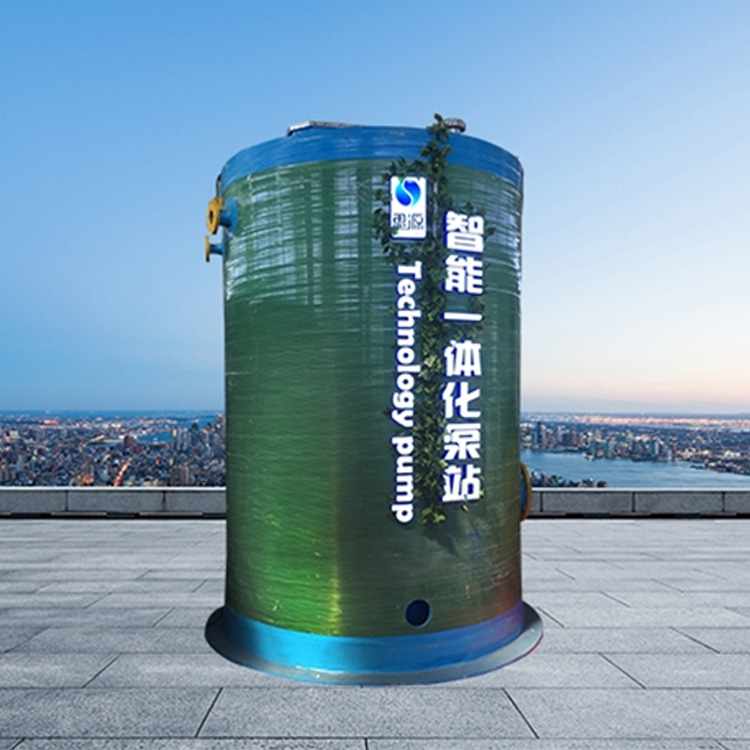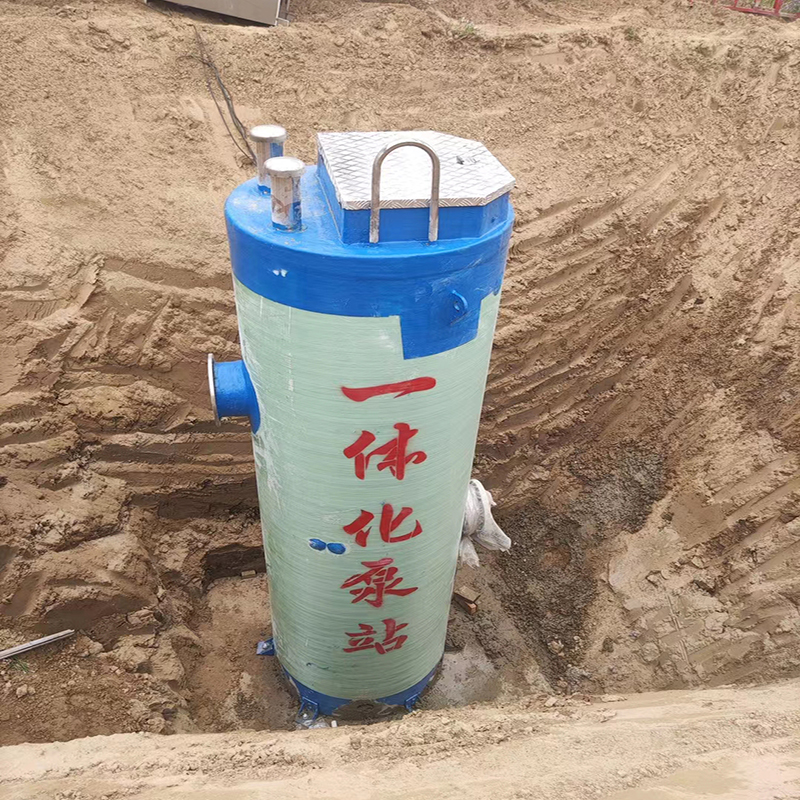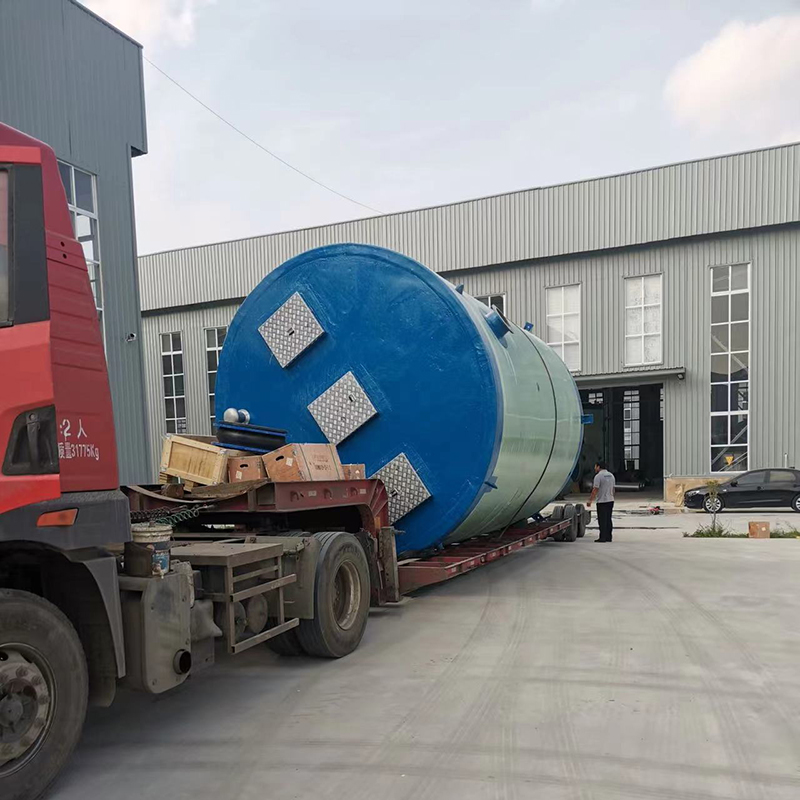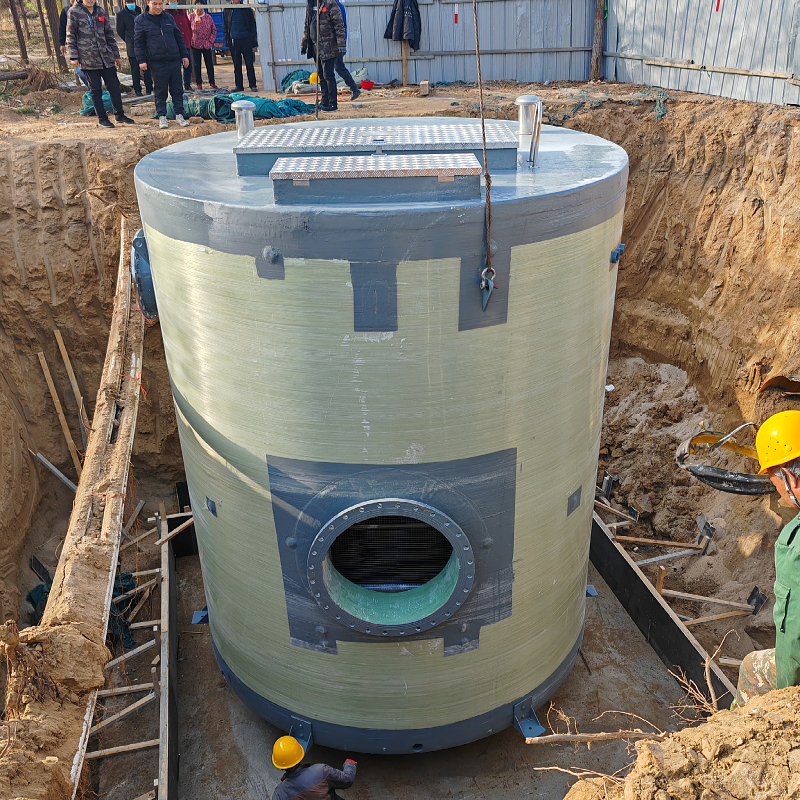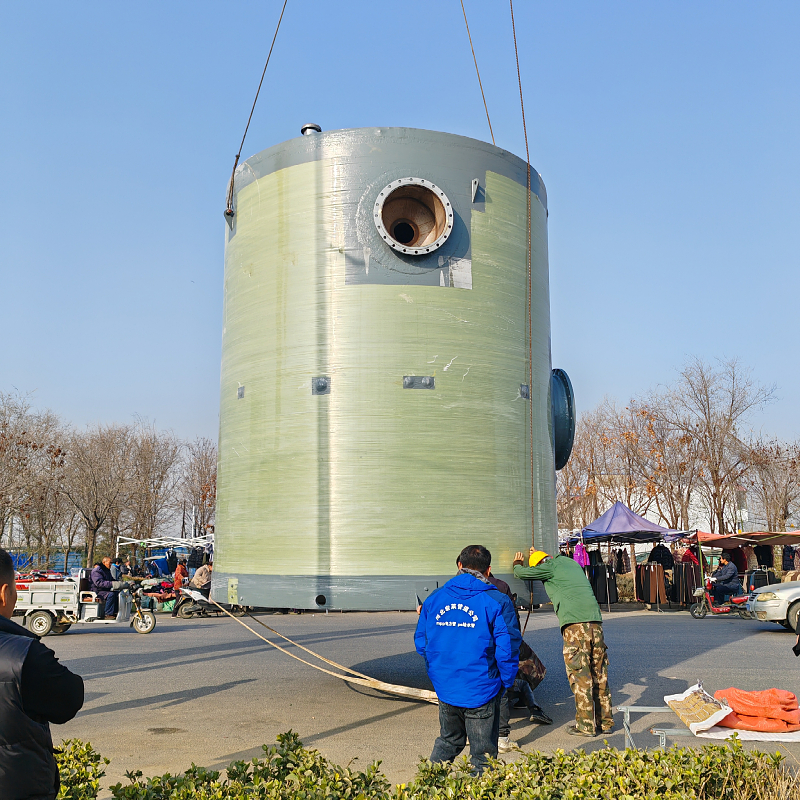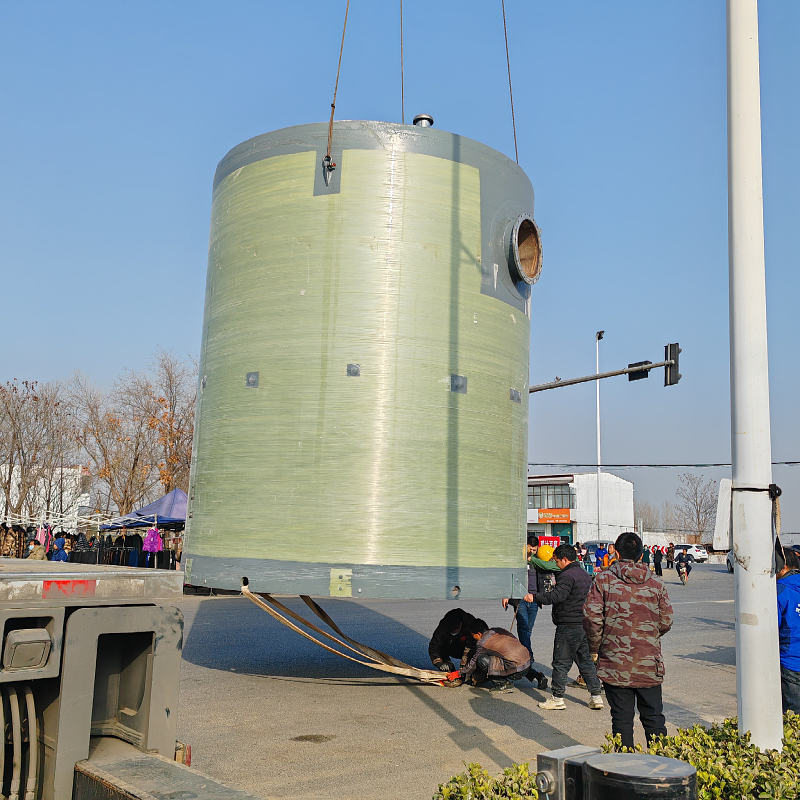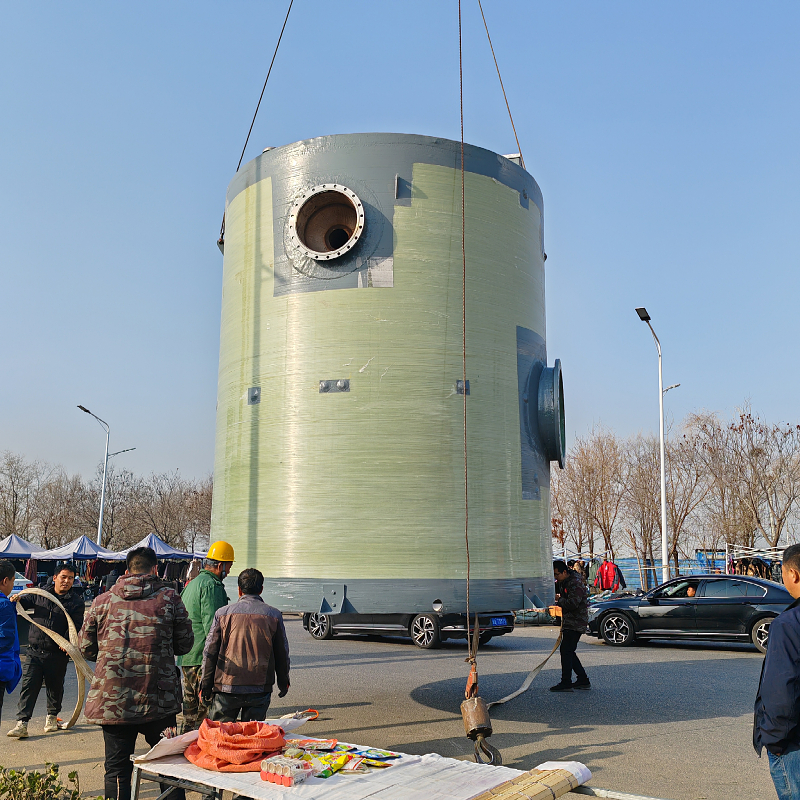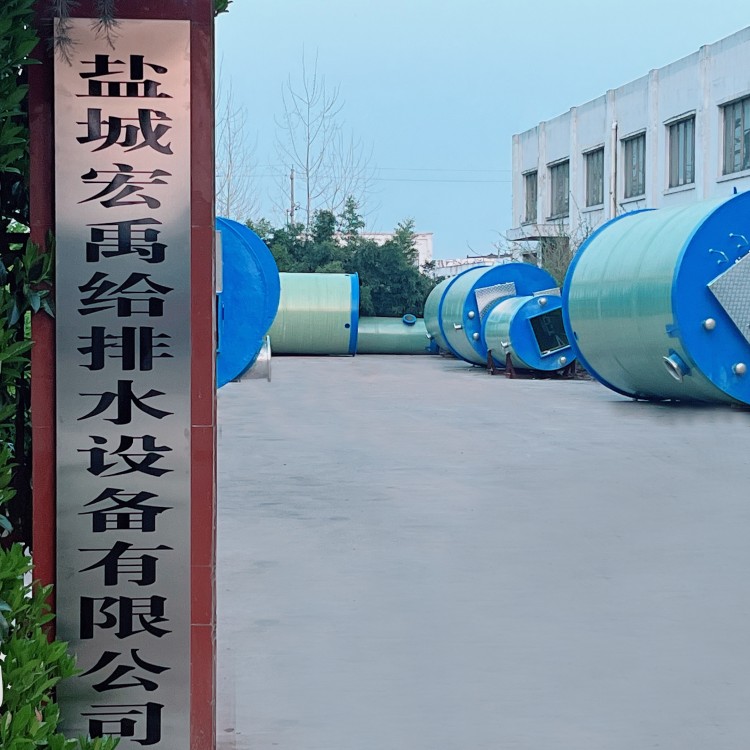

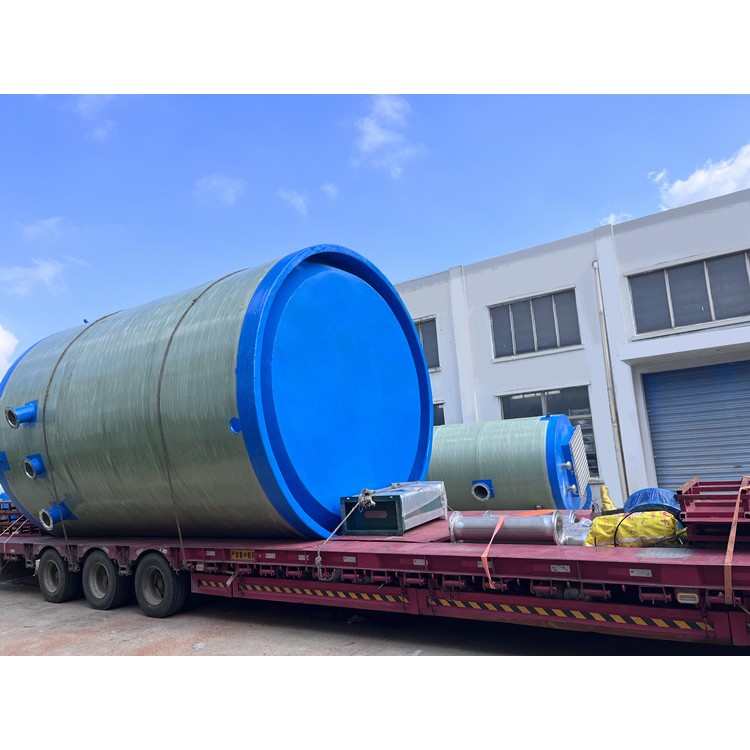

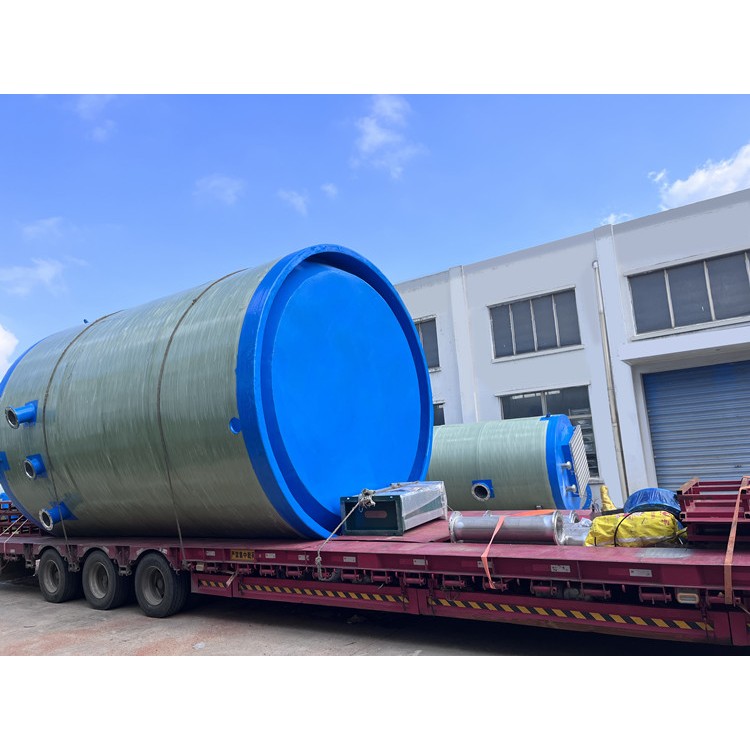
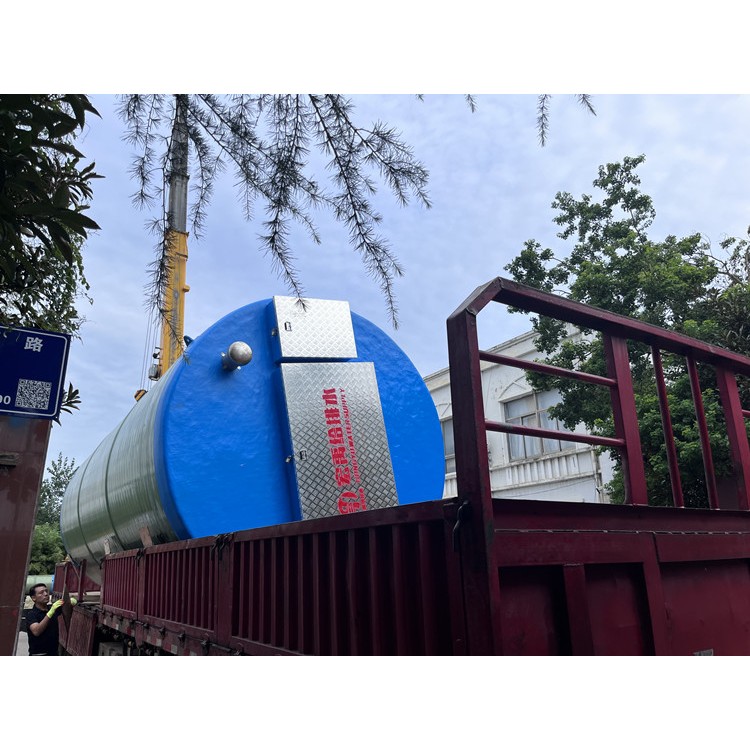
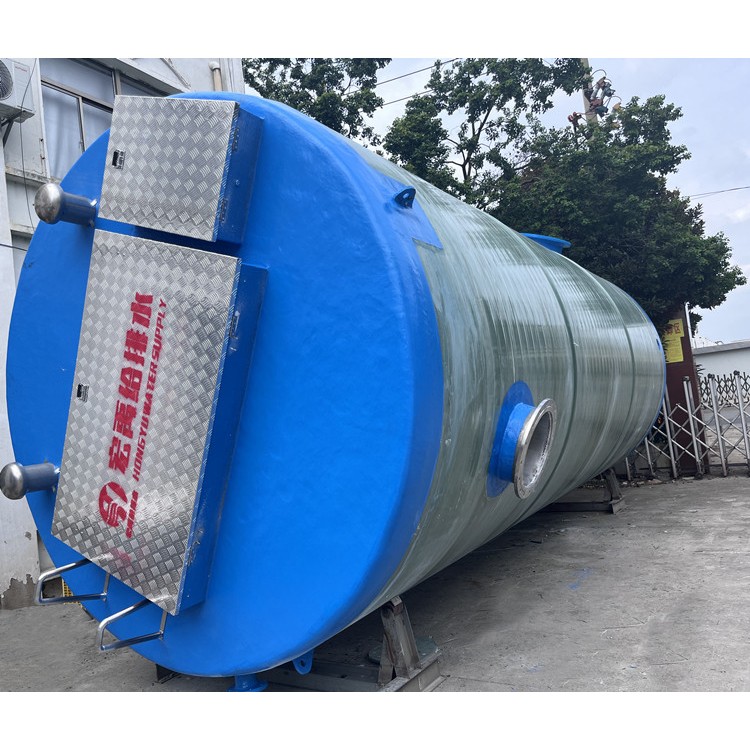


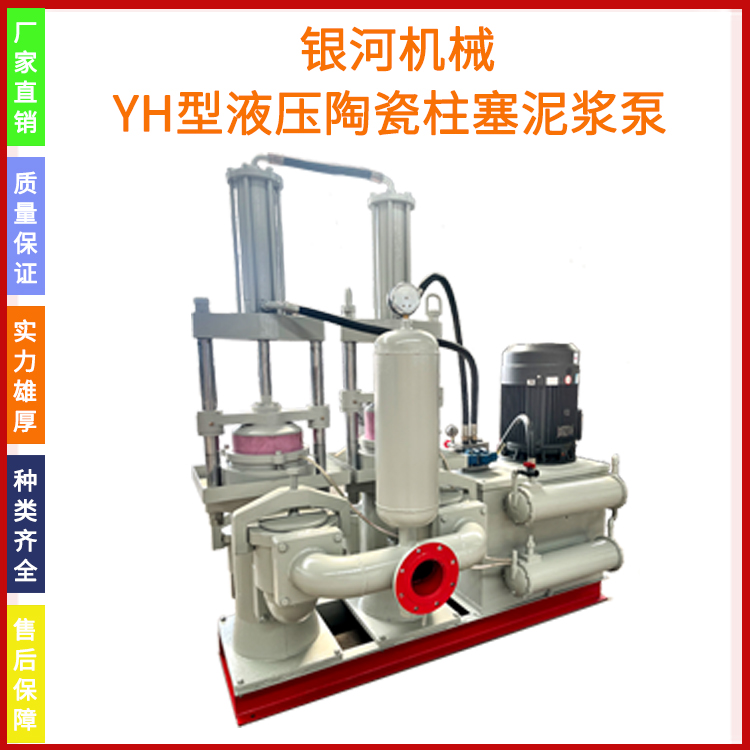
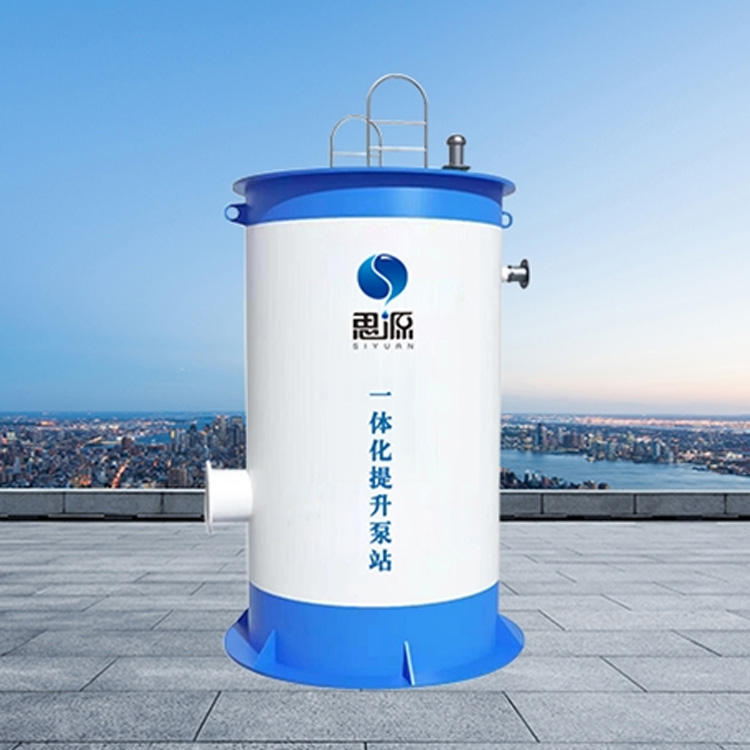
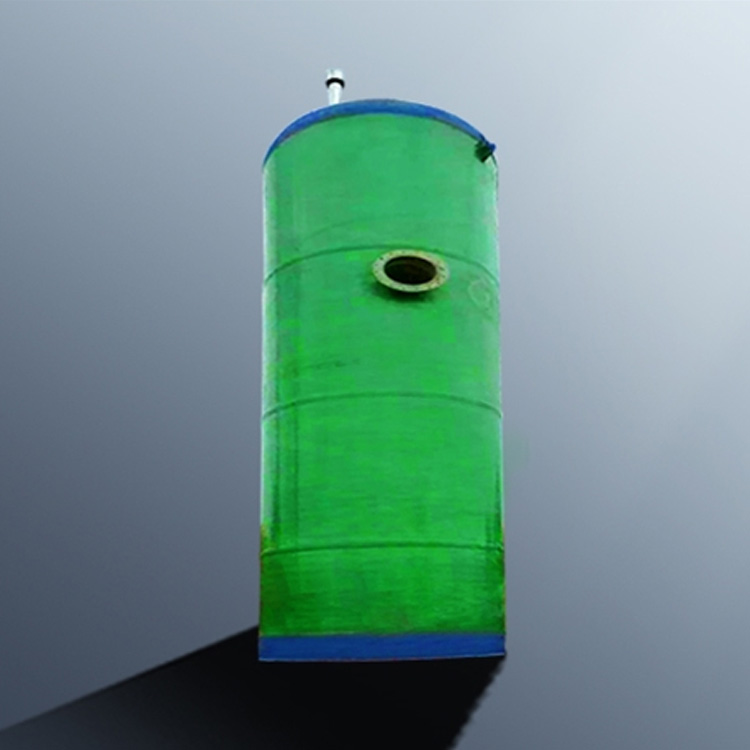
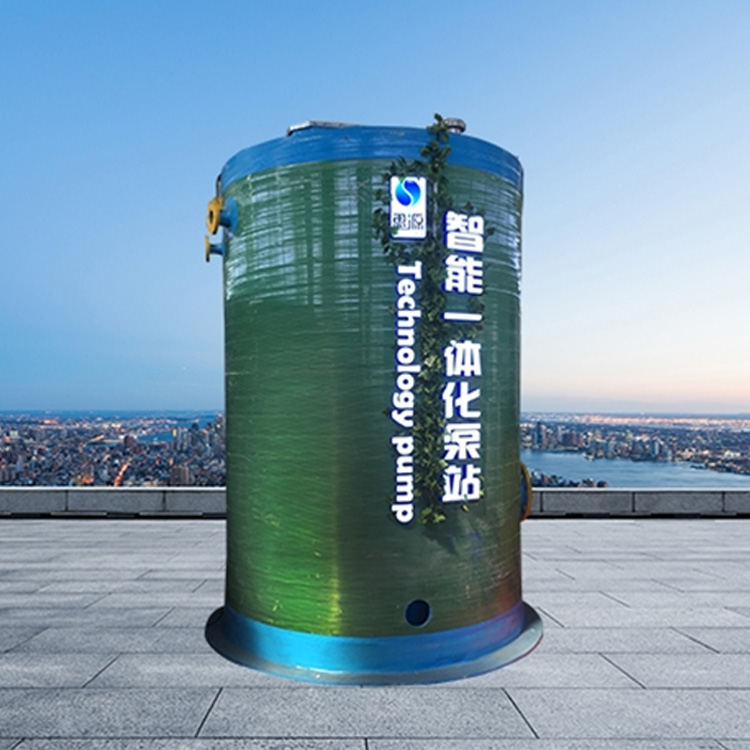
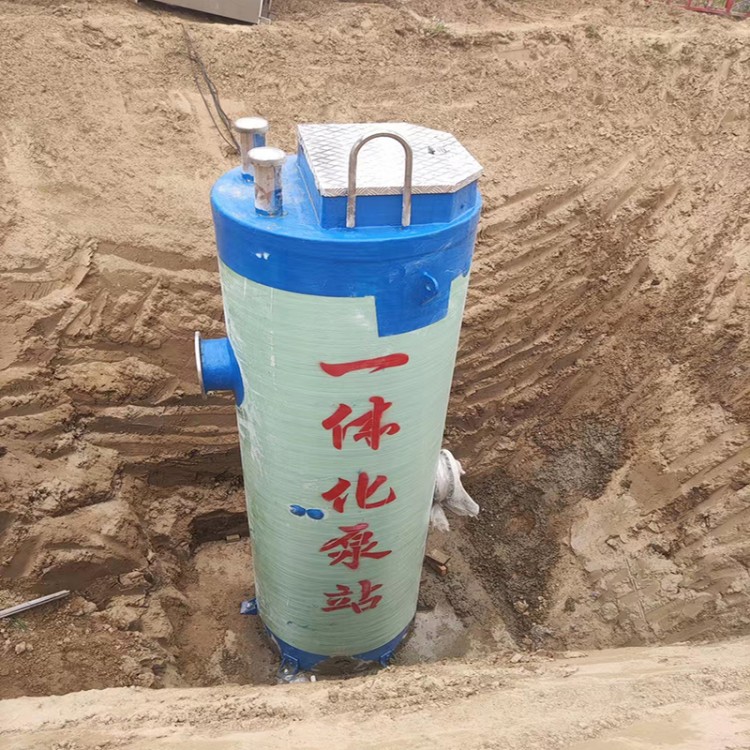







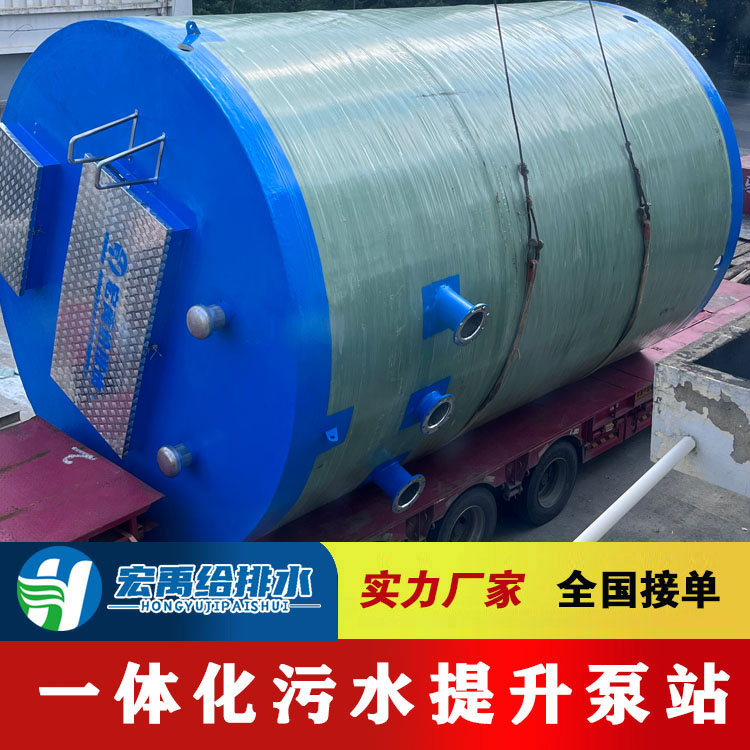
Glass fiber reinforced plastic (GFRP) integrated sewage lift station is manufactured using corrosion-resistant materials and boasts excellent corrosion resistance and high strength. The pump station's shell is made of GFRP, offering lightweight, high strength, corrosion resistance, and aging resistance. It also features a reliable sewage lifting system internally, capable of effectively lifting sewage to a certain height for subsequent treatment and discharge.
Machine-wrapped anti-corrosion material is a high-performance composite material, composed of high-performance resins, glass fibers, and other reinforcing materials. This material boasts excellent corrosion resistance and high strength, maintaining good stability and durability under various complex environmental conditions. Waste water lifting pump stations manufactured with this material not only exhibit strong corrosion resistance but also effectively extend their service life.
Additionally, the fiberglass reinforced plastic integrated sewage lifting pump station boasts excellent maintenance and care capabilities. It features a modular design for easy and quick installation and disassembly, as well as for convenient maintenance. This pump station is also equipped with an intelligent control system, enabling automated control and monitoring to enhance operational efficiency and reliability.
In summary, the fiberglass reinforced plastic integrated sewage lifting station is an environmentally friendly and energy-saving wastewater treatment equipment. Made from machine-wound corrosion-resistant materials, it boasts excellent corrosion resistance and high strength. It effectively enhances the discharge and treatment of wastewater, offering significant practical value and social benefits. Importantly, with the rapid progress of urbanization, traditional concrete pump stations are increasingly revealing their insurmountable drawbacks: the initial investment for a concrete pump station is enormous. Typically, it requires a substantial financial investment and a lengthy construction period. Once a concrete pump station is built, it cannot be moved. In the future, if the city needs to be demolished, it will be necessary to rebuild the pump station from scratch in different locations. The entire society's resources are unnecessarily wasted.
All these drawbacks in glass fiber reinforced plastic integrated sewage lifting pump stations have prompted people to seek a more optimized alternative. The name for this replacement of traditional concrete pump stations is the glass fiber reinforced plastic integrated sewage lifting pump station.
Traditional pump stations are conventional concrete pump stations, which were once the dominant construction model for pump stations. Due to the use of concrete raw materials in traditional pump stations, which are mostly cast on-site, the utilization of internal space is not high. Additionally, equipment suppliers and civil engineering contractors operate independently, resulting in a low degree of equipment compatibility. Designers need to allocate sufficient space for equipment, which often leads to traditional concrete pump stations being "large and deep," wasting space and resources significantly.
Glass-Fused-Steel Integrated Sewage Pumping Station, Machine-Wrapped Corrosion-Resistant Material