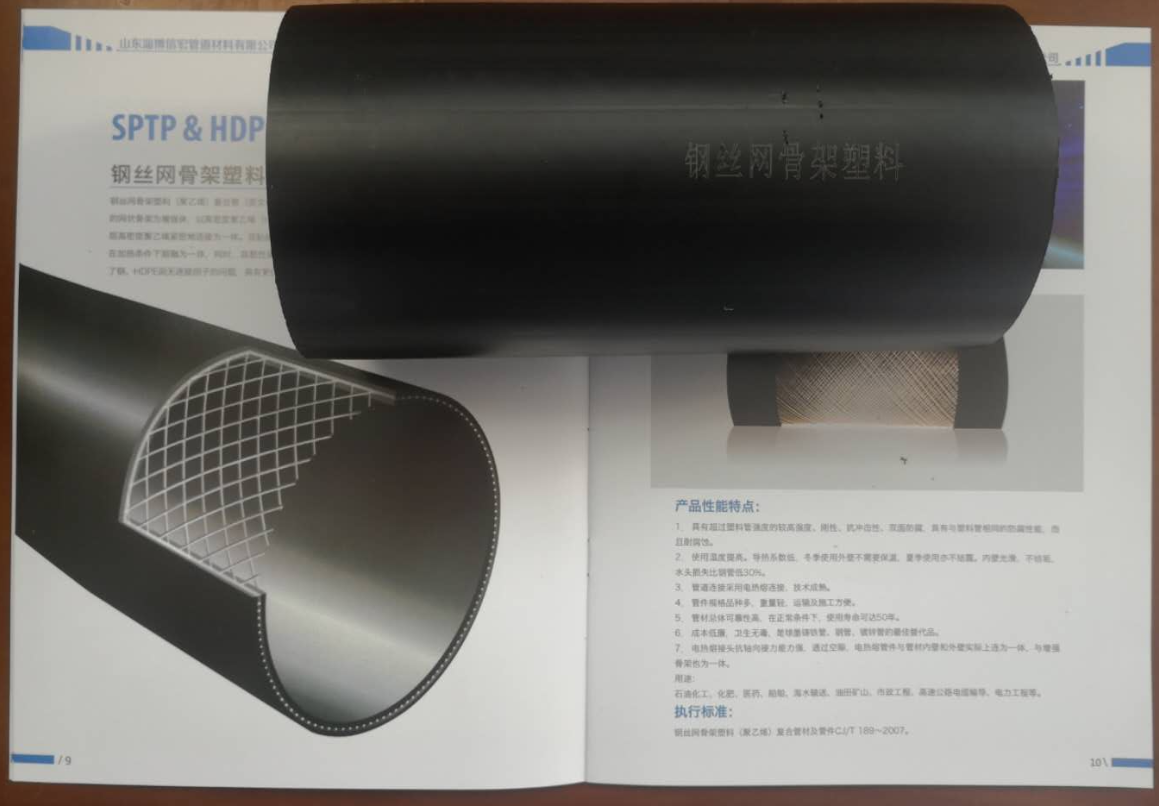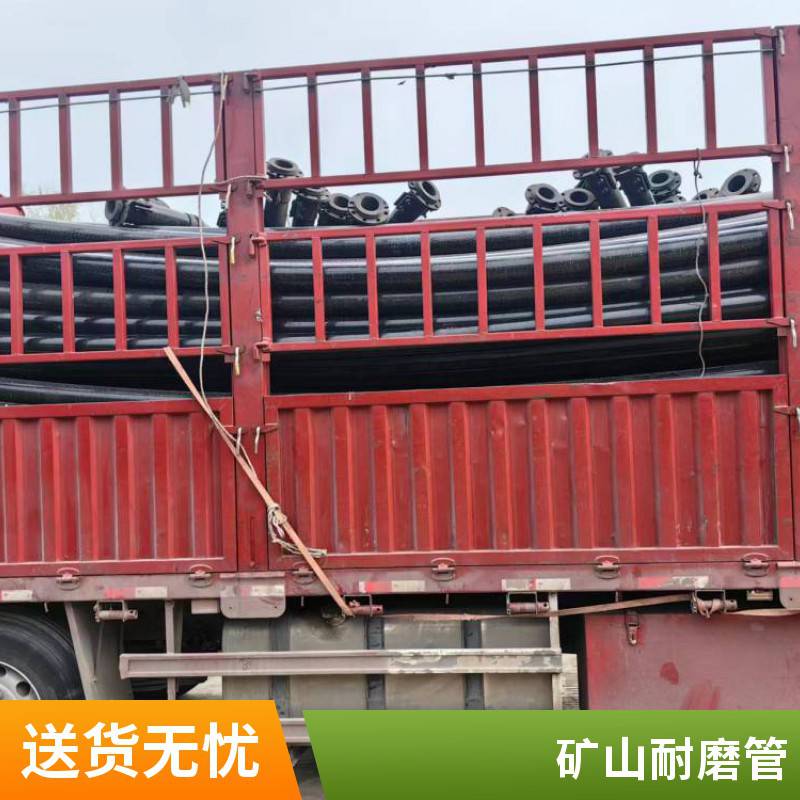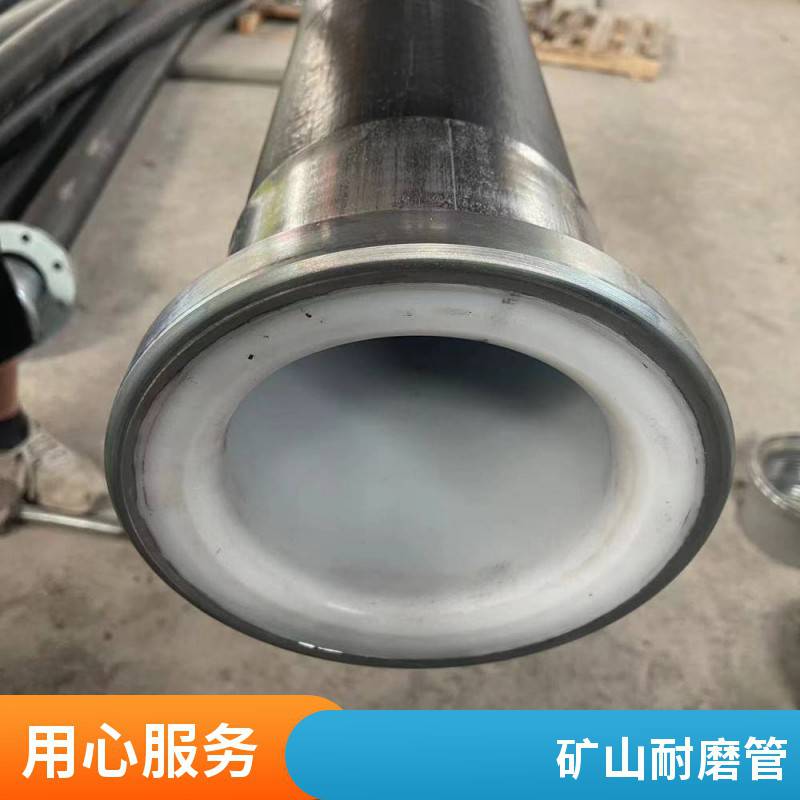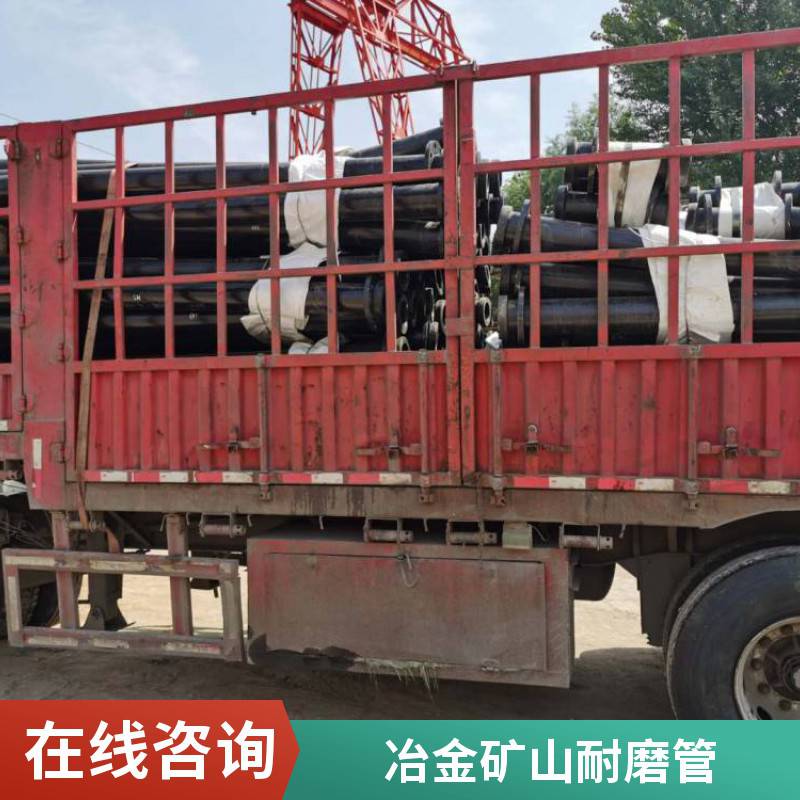



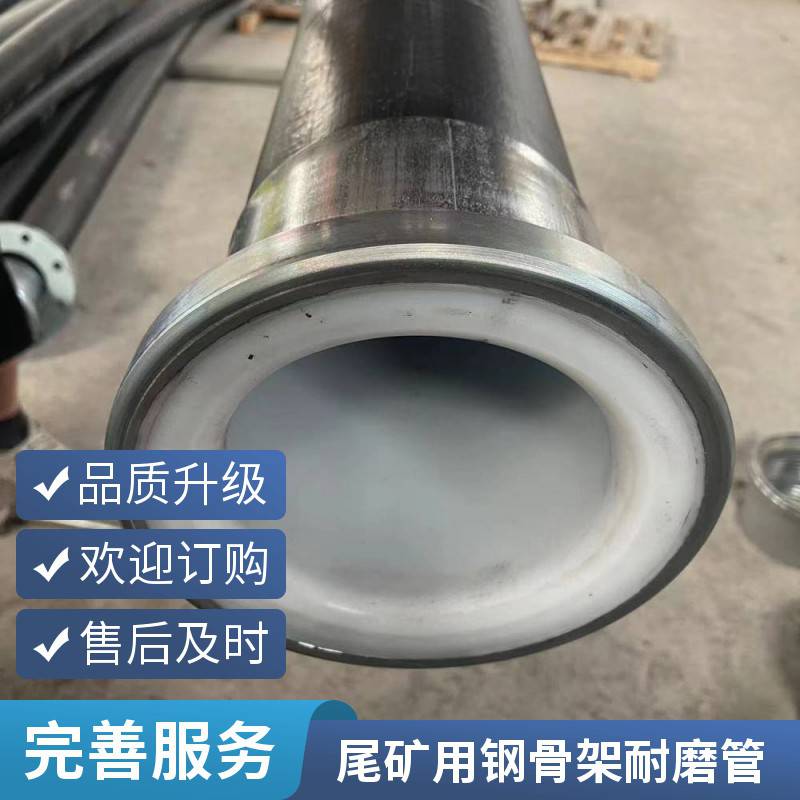
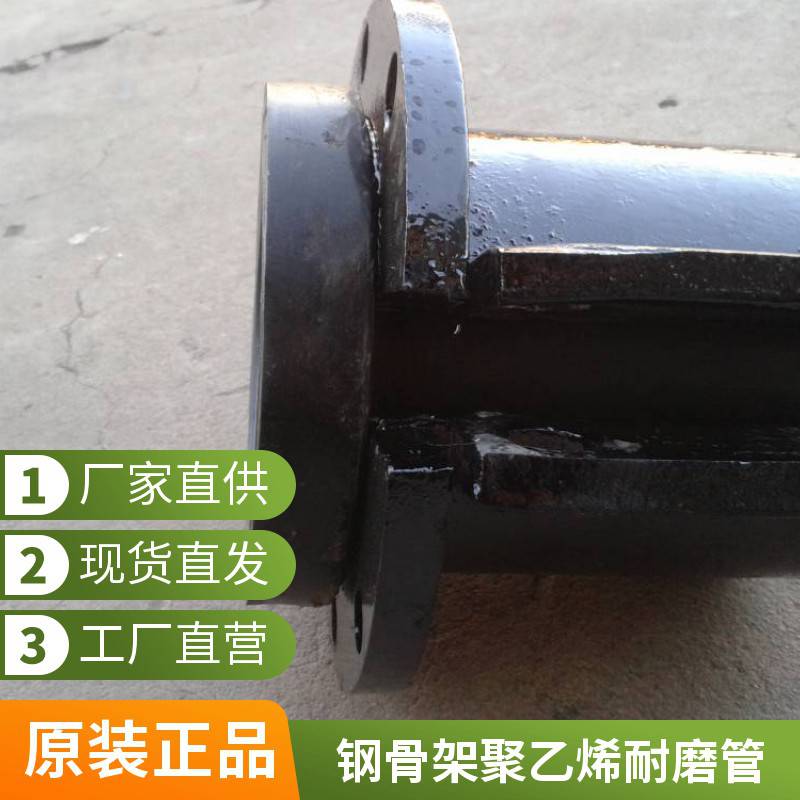
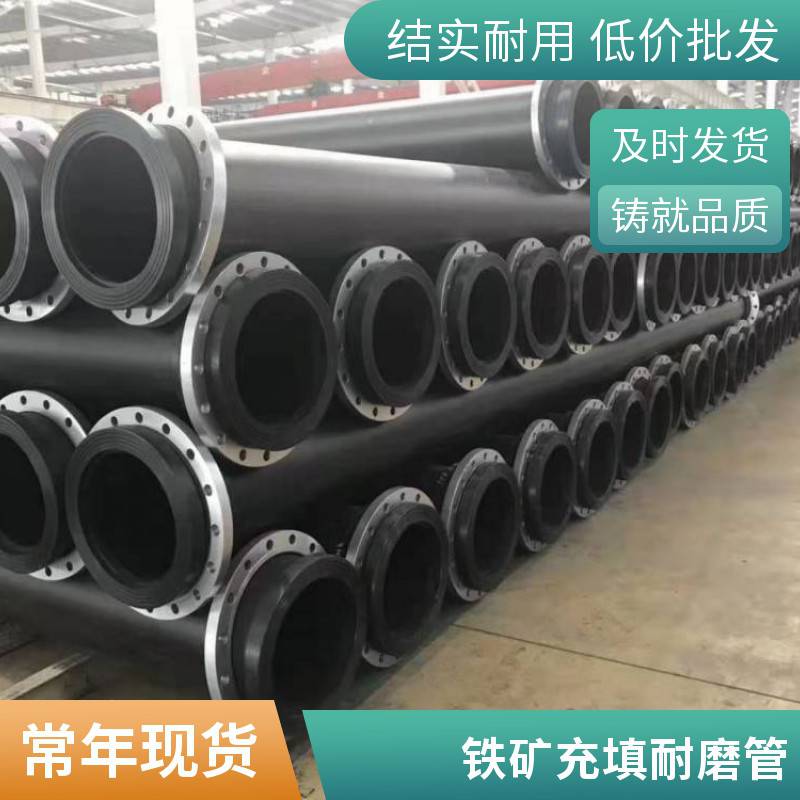





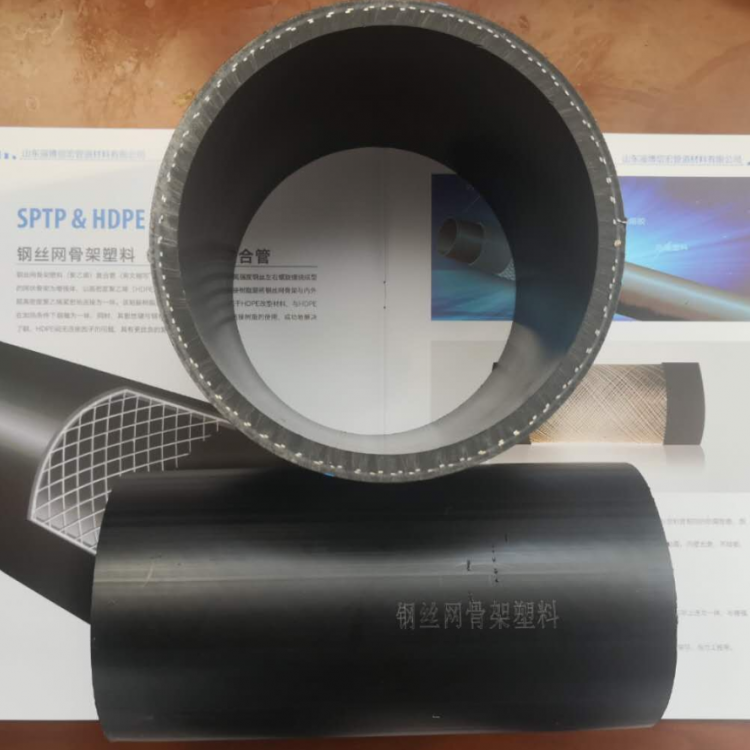
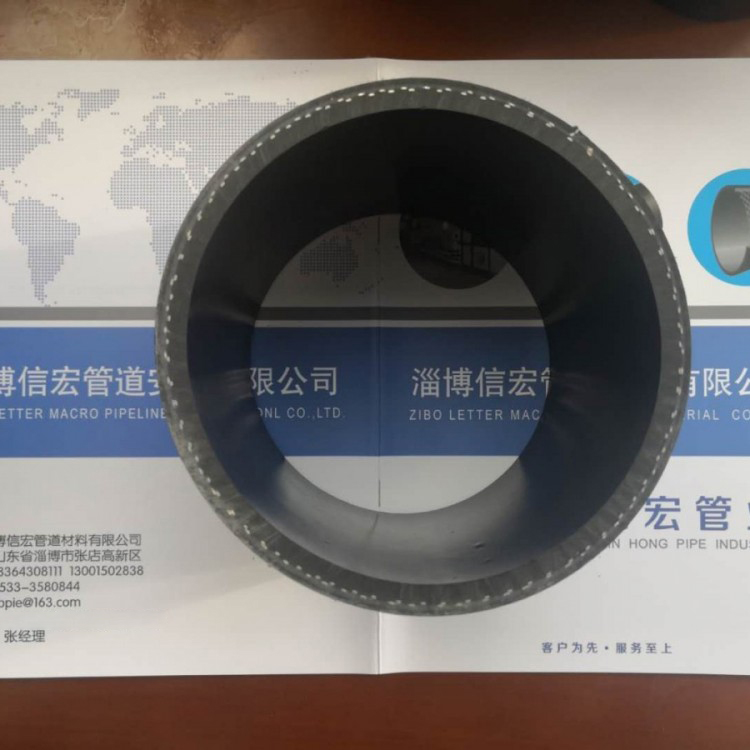
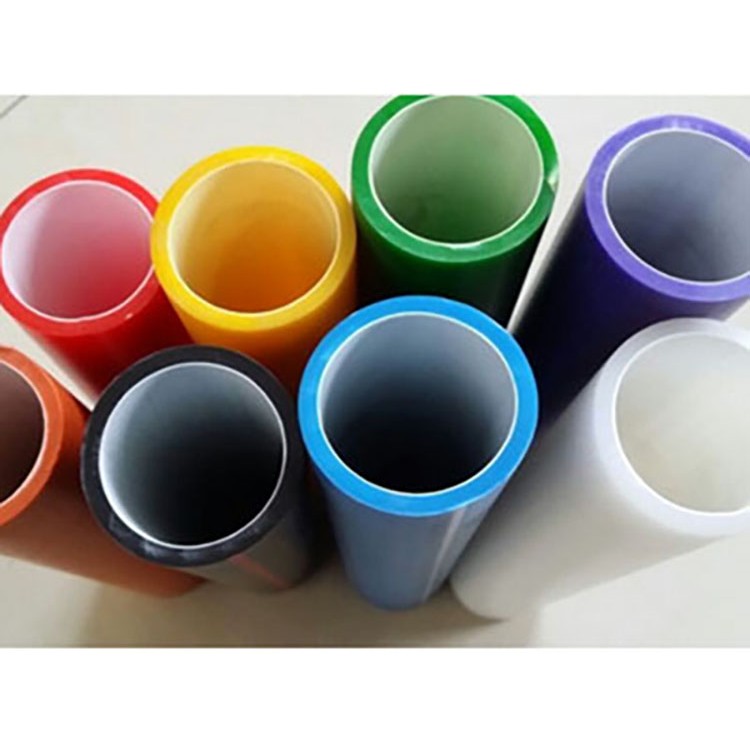
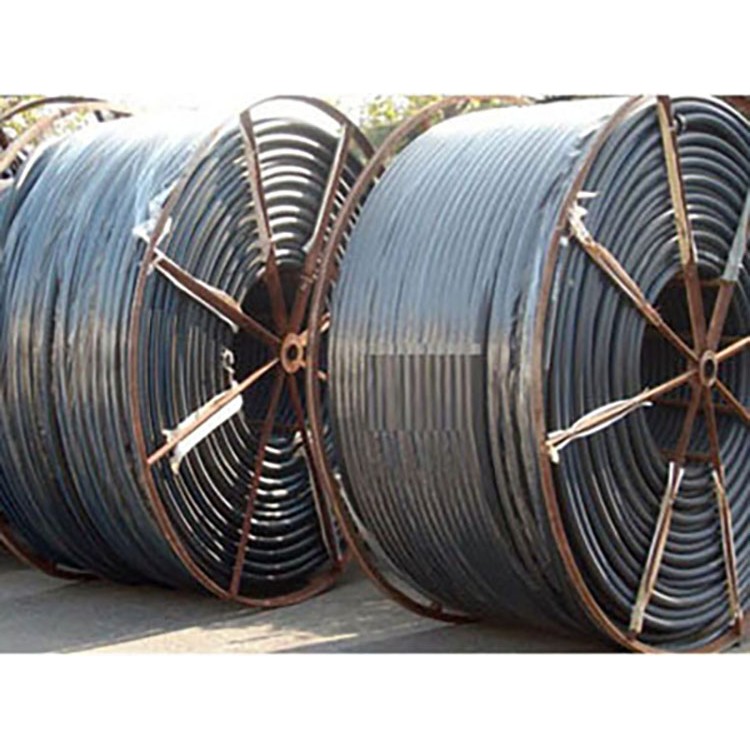

Steel wire mesh reinforced polyethylene composite pipeComparison with the performance of welded steel-reinforced plastic composite pipes:
One: The production process of steel wire mesh reinforced polyethylene composite pipe and焊接 steel frame plastic composite pipe is different.
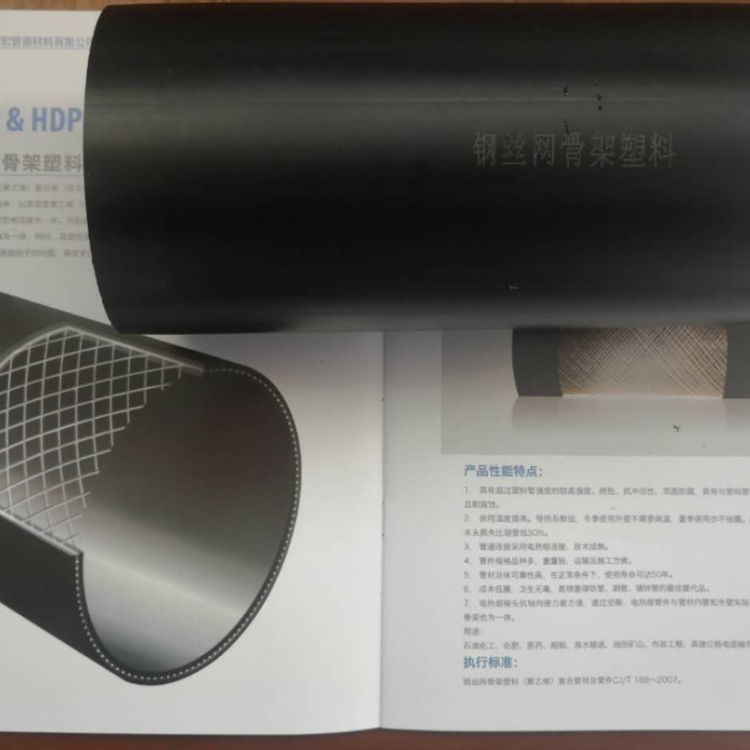
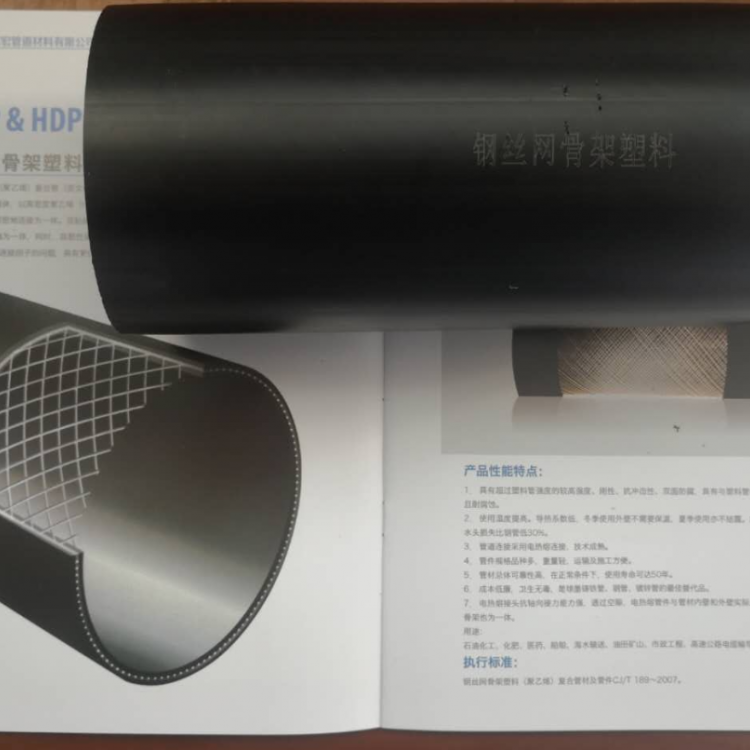
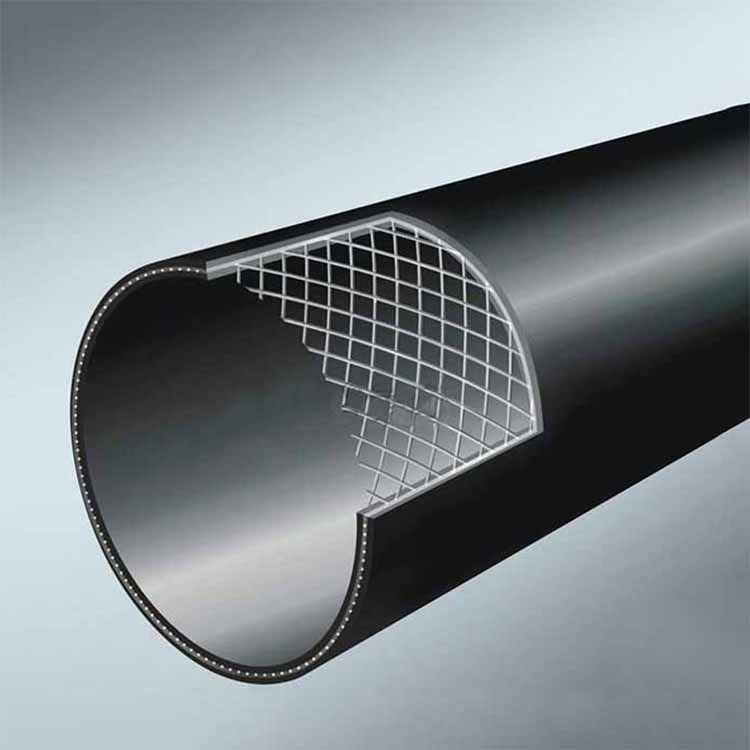
1. Composite Structure. Welded steel frame polyethylene composite pipes, with ordinary carbon steel wire as the base material. Although the wire is thicker, its tensile strength is only 400Mpa, the process is complex, and the product quality has a high degree of variability. Wire mesh reinforced polyethylene (composite pipe) uses high-strength steel wire (above 1950Mpa) as the base material, employing a secondary composite method. The steel wire is wrapped diagonally at a 54.7-degree angle around the pipe, allowing the pipe to uniformly distribute stress in both axial and circumferential directions when under internal pressure. A higher safety factor is used when determining the wire diameter and density.
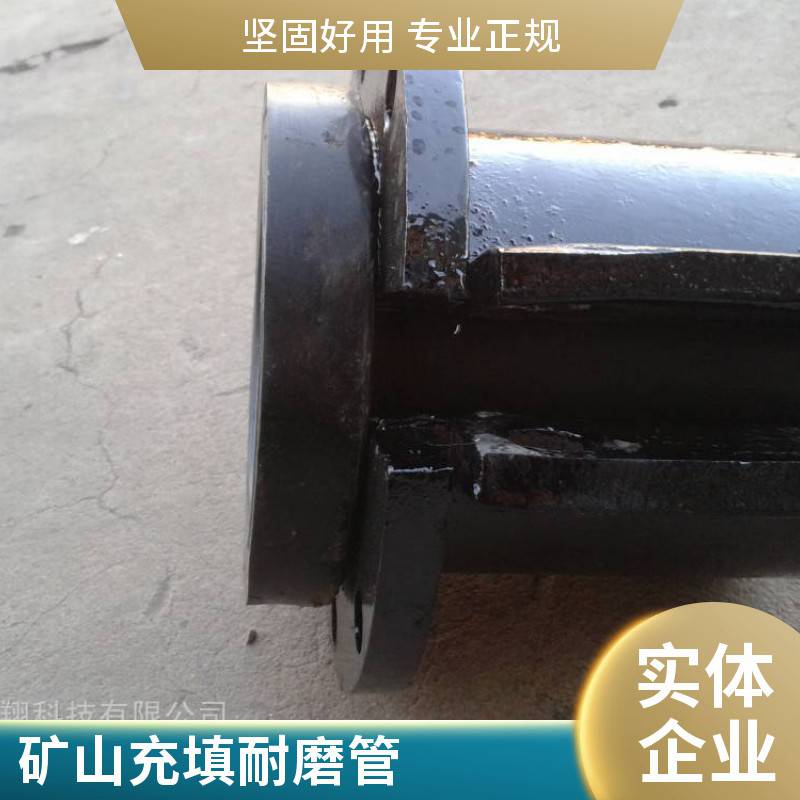
2. End face leakage. When welding steel frame plastic composite pipes, due to the inevitable gap between the PE material pipe and the steel plate, when cutting the pipe material, although the end is sealed, the seal is prone to fall off when heated with electric fusion pipe fittings. After installation, the medium may seep into the gap between the steel plate and the plastic, leading to a decrease in the bearing capacity of the entire pipeline system. This causes the pipe material to be damaged at low pressure, resulting in pipeline failure.
Two:Steel wireWeb FramePolyethylene Composite PipeThe product standards for plastic composite pipes with steel wire mesh skeletons are different from those for welding steel skeletons. Plastic composite pipes with steel wire mesh skeletons comply with CJ/T189-2007, while steel skeleton composite pipes adhere to the standard CJ/T123-2004.
Three: Steel frame composite pipes can be suspended, while wire mesh composite pipes cannot be suspended.