














An ideal power system should provide users with a constant frequency sine wave voltage. With the development of power electronics technology, direct current transmission and high-power single-phase rectification techniques are widely used in industrial sectors and electrical equipment, such as high-power thyristor devices, switching power supplies, and variable-frequency speed control. These typical nonlinear loads will draw or inject harmonic currents into the power grid, causing voltage distortion, polluting the grid waveform, deteriorating power supply quality, increasing additional losses, and reducing transmission capacity, thus becoming a significant factor affecting power quality.
In the power grid, unbalanced three-phase loads and harmonic resonance grounding in the power system can generate negative sequence, while high-power rectifiers and nonlinear equipment can produce harmonics. Negative sequence and harmonics severely affect power supply quality, primarily impacting the safe operation of electrical equipment. Harmonics can cause resonance, with high-voltage resonance applied across capacitors due to the low impedance of higher harmonics, making capacitors prone to overloading and failure; higher harmonic currents flowing into transformers increase core losses; higher harmonic currents flowing into motors not only increase core losses but also cause rotor vibration, severely affecting processing quality; higher harmonics can cause protective devices to malfunction, increasing system losses; and higher harmonics can lead to voltage resonance in the power system, causing overvoltage on the lines that can puncture equipment insulation. Negative sequence and harmonics not only have thermal effects on generators, causing localized heating, but also cause vibration in the generator set, accompanied by noise, posing a serious threat to the safe and stable operation of the unit.
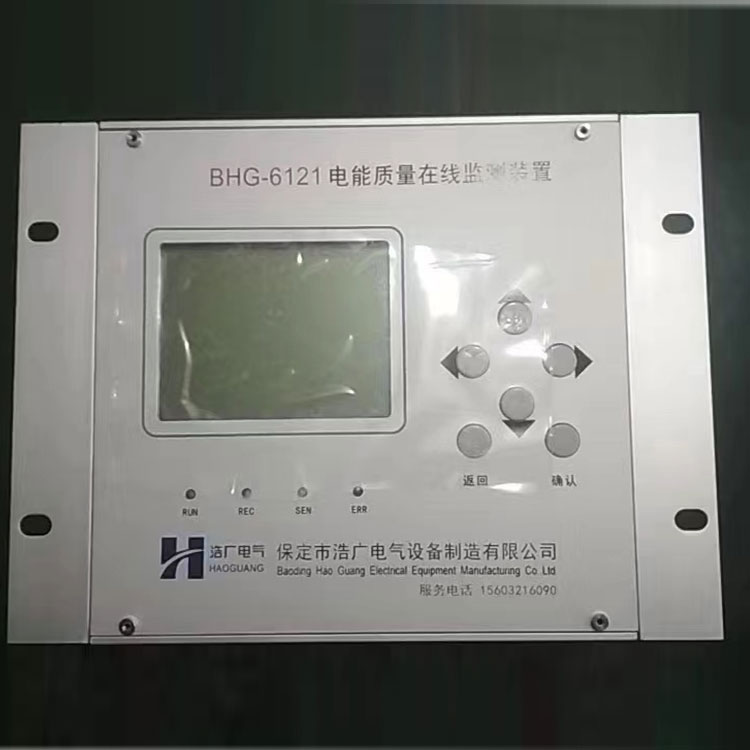
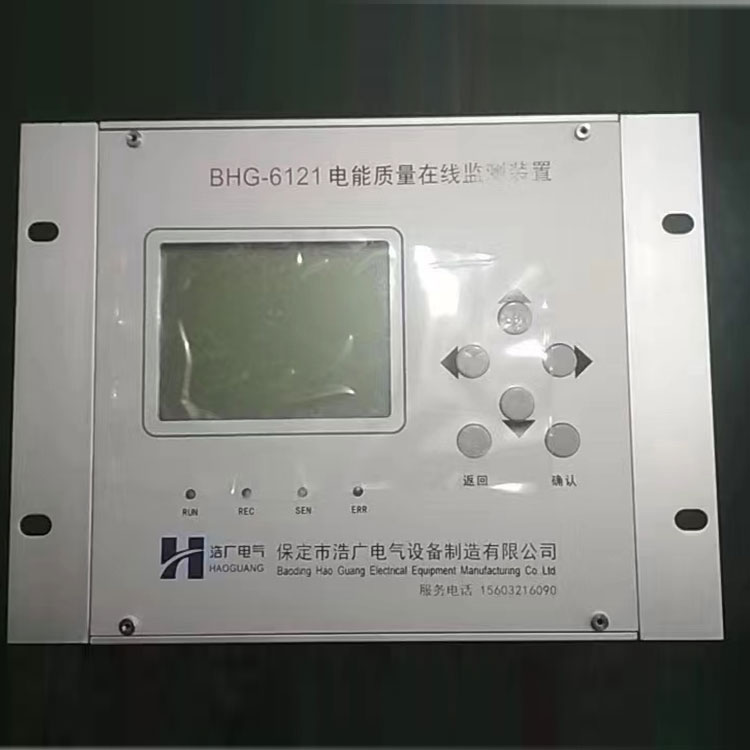
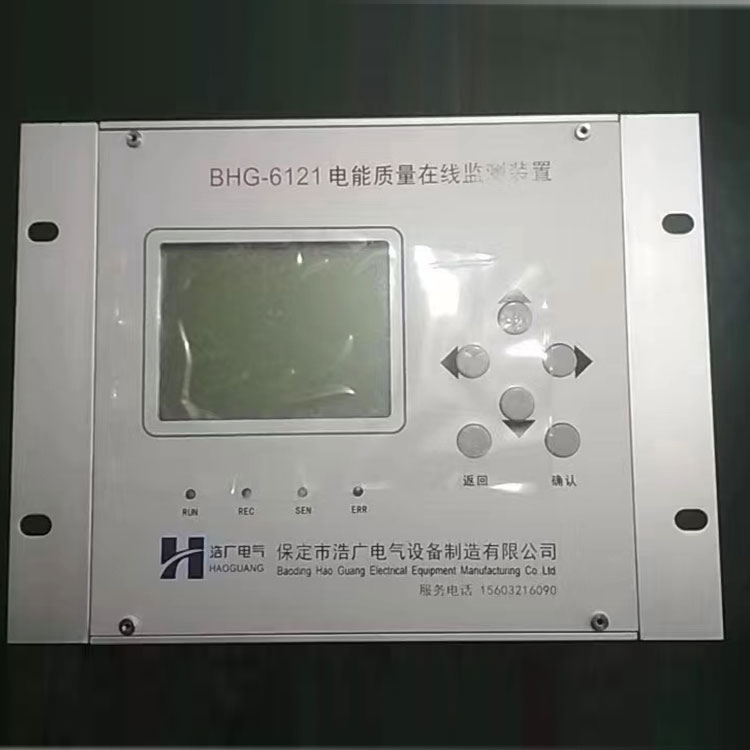
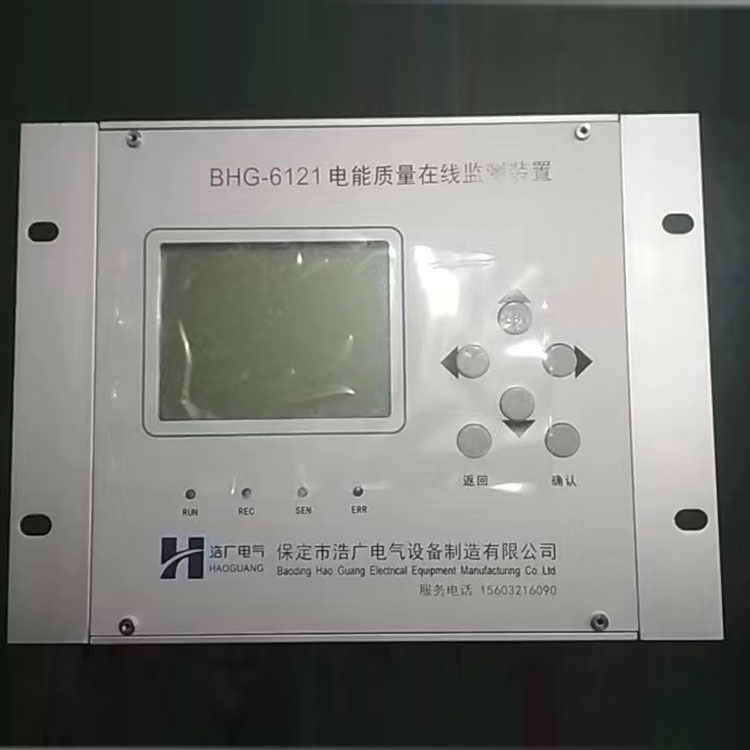
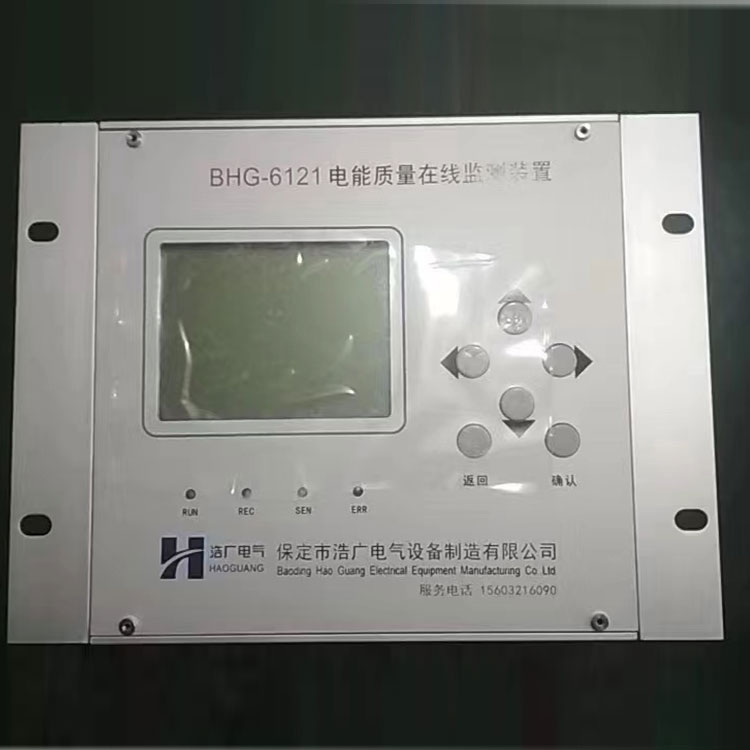
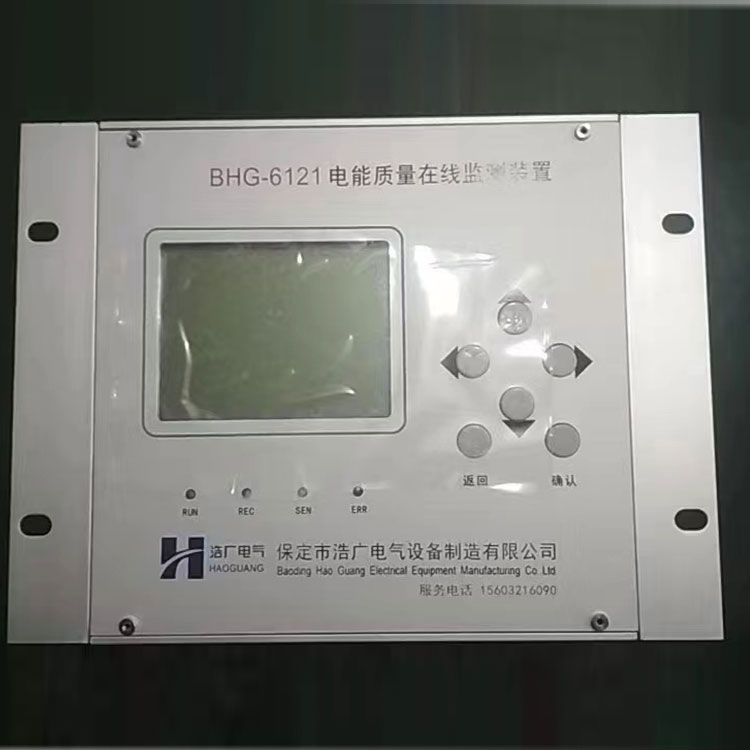
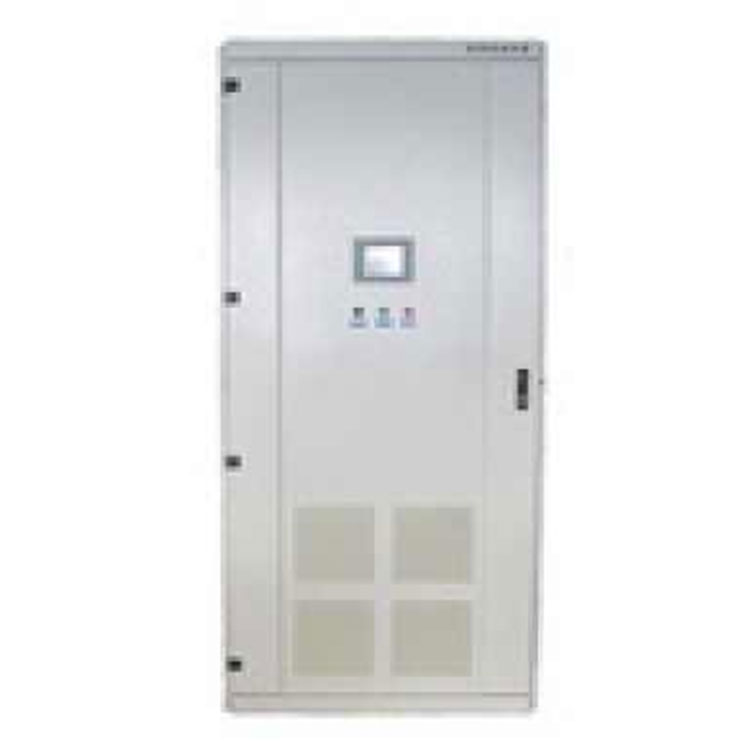
Our BHG-6121 Power Quality (Harmonic) Online Monitoring Device utilizes a 32-bit DSP processor, an integrated power quality monitoring equipment that combines high-speed sampling, calculation, analysis, statistics, communication, and display functions. It can monitor real-time power quality indicators such as the harmonic content rate up to 63 times, total harmonic distortion rate, three-phase voltage unbalance, flicker, voltage deviation, voltage fluctuation, frequency, active power, reactive power, true power factor, phase shift power factor, true RMS value, and positive and negative sequence.