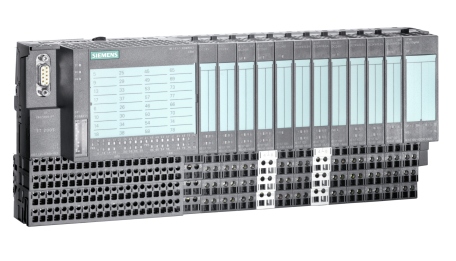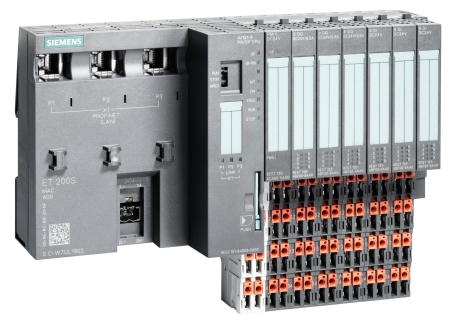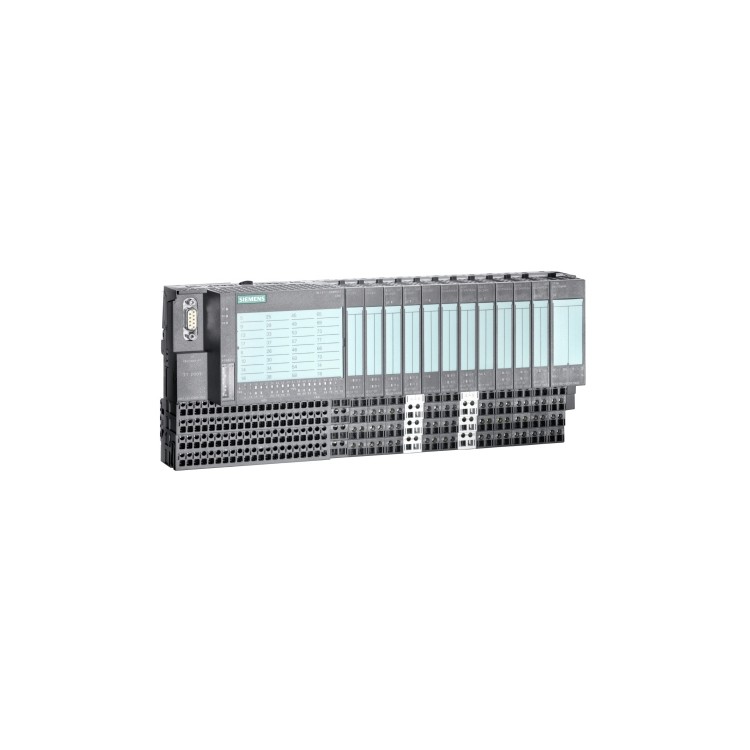

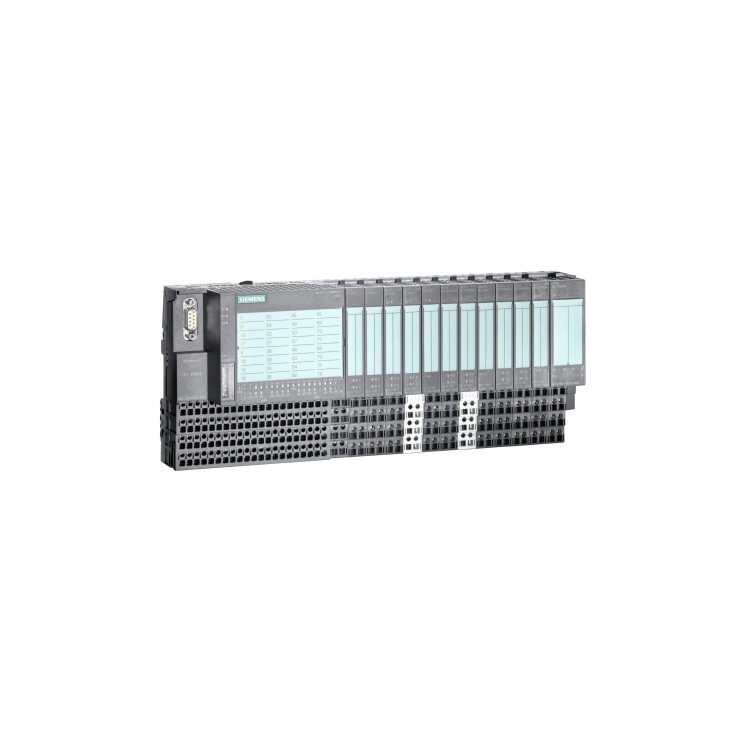








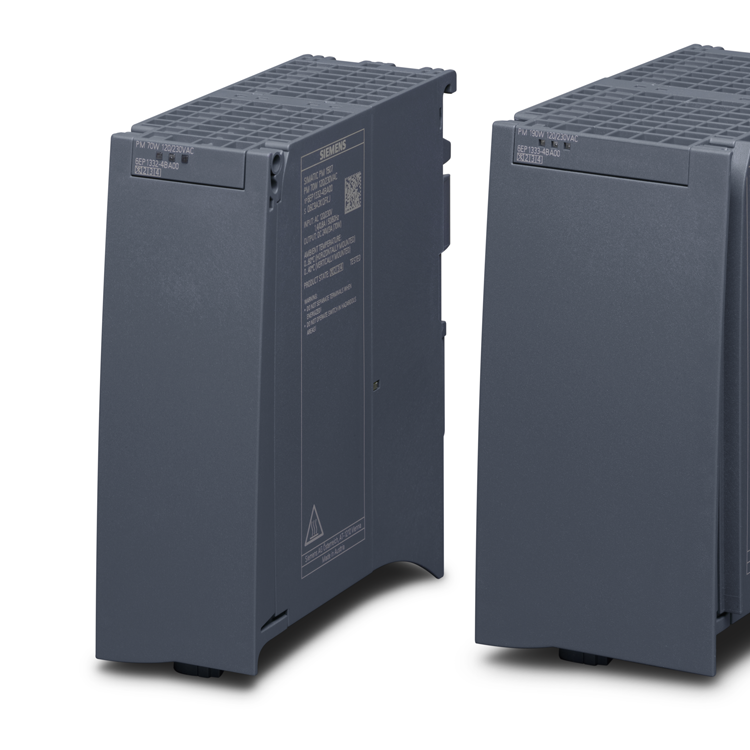
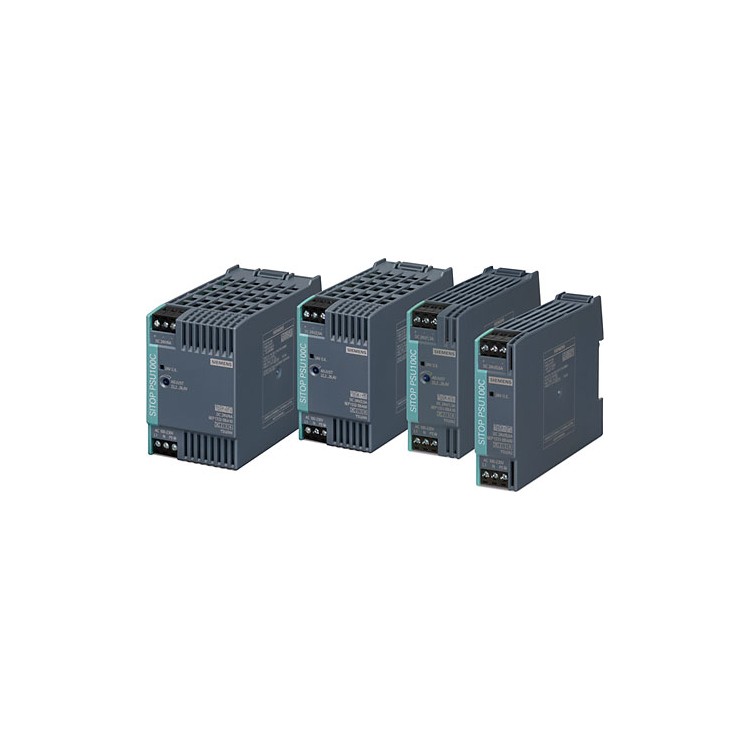
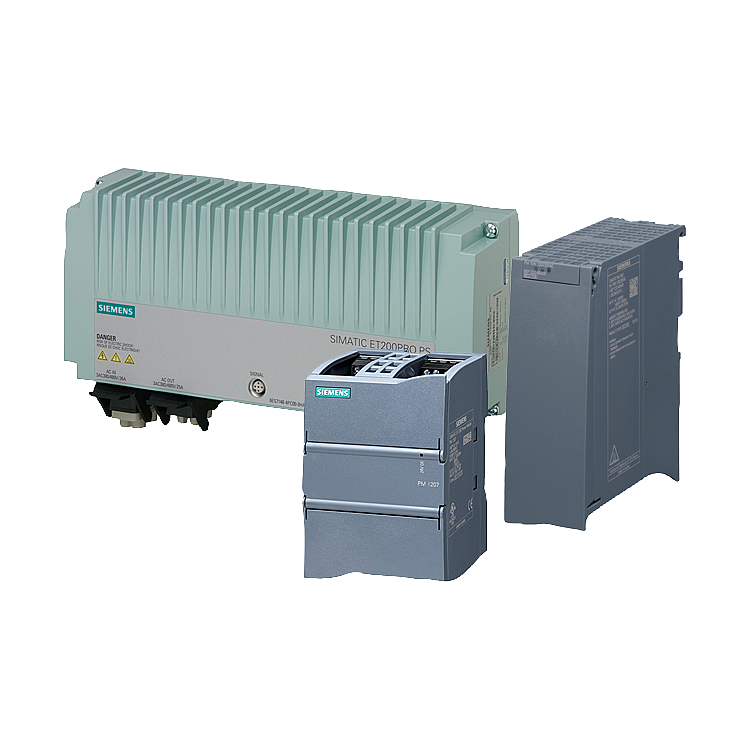
Siemens ET200S Interface Module, Siemens ET200S Module, Siemens ET200S, ET 200SConnected through the interface modulePROFIBUSOr industrial EthernetPROFINETIn the bus system.ET 200SInterface modules come in various types, including those with applications in standard systems.CPUOr, withoutCPUAvailable, as well as the corresponding fault types.
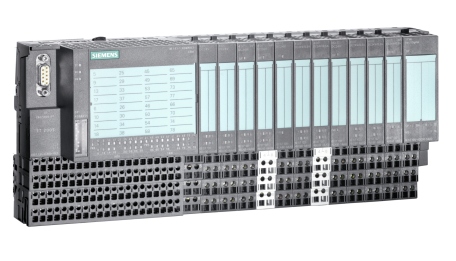
Integrated CPU Interface Module
An integrated CPU interface module can be used as a standalone controller and also applied in a distributed automation system with medium-scale programs at each substation. Its processing capability is equivalent to the CPU 314 of S7-300, allowing on-site distributed preprocessing of some production data. Communication can be via MPI/PROFIBUS or PROFINET, depending on the model. The interface module offers the following advantages:
Reduce the burden on the controller
Reduce response time to critical local data
• Increased transparency and shorter procedures
• Easier tuning
• Smaller bus system load
• Modular system structure, with pre-commissioning capabilities at various locations
Interface modules with integrated CPUs are available in the following types:
• The IM 151-7 CPU and IM 151-7 CPU FO communicate as PROFIBUS DP slave stations and upper-level controllers. By adding the DP master station module IM 151-7, a DP master station interface can be expanded to establish a lower-level PROFIBUS distributed system.
• The IM 151-8 PN/DP CPU offers both PROFINET and PROFIBUS interfaces. As a PROFINET IO controller, it can connect up to 128 IO devices. The PROFINET interface includes 3 switch ports, enabling linear or ring topologies. Like the IM 151-7, it can connect an additional 32 PROFIBUS DP slave stations by adding a DP master station module.
In terms of fault tolerance, the SIMATIC ET 200S intelligent interface module IM 151-7 F-CPU, and IM 151-8 PN F-CPU are suitable for applications with moderate performance requirements. Fault-tolerant CPUs can be expanded into centralized applications with ET 200S I/O modules, or distributed solutions can be constructed via PROFIBUS or PROFINET. The smart ET 200S can be used as a standalone controller without connecting to PROFIBUS or PROFINET cables. The IM 151-7 F-CPU and IM 151-8 PN F-CPU can also be equipped with a PROFIBUS DP master station module, serving as a standard controller or an independent CPU (including type modules).
The IM 151-7 F-CPU features integrated DP/MPI interfaces. The IM 151-8 PN/DP CPU offers a PROFINET interface with three switch ports, allowing for easy linear or ring topology setup using two of the ports, with the third port for connecting programming devices. Additionally, with the built-in webserver functionality, module and diagnostic information can be conveniently accessed. Both modules meet the requirements of SIL 3 (IEC 61508, IEC 62061) and Cat. 4 (EN 954-1) ratings.
Interface module without CPU
The interface module connects the ET 200S to the PROFIBUS DP (IM 151-1, available in 6 versions) or PROFINET (IM 151-3, available in 4 versions) bus and handles all data exchanges with the upper-level controller.
Models supporting PROFIBUS:
• IM151-1 Basic Model (RS485)
• IM151-1 Compact 32DI DC24V (RS485)
• IM151-1 Compact 16DI DC24V / 16DO DC24V/0, (RS485)
• IM151-1 Standard Model (RS485)
• IM151-1 Standard Type (FO)
• IM151-1 High-Performance Model (RS485)
Models supporting PROFINET are as follows:
• IM151-3 Standard Type (RJ45)
• IM151-3 High-Performance Model (RJ45)
• IM151-3 High-Speed Type (RJ45)
• IM151-3 PN (FO)
These interface modules can be directly mounted onto standard tracks.
ATIC ET 200S Compact
The IM 151-1 Compact can be used as a block I/O. It features a combination of the interface module and a 32-channel I/O within a single module, based on the IM 151-1 Basic model. The Compact version comes in two types: one with 32-channel switch input and another with a mixed module of 16-channel switch input and 16-channel switch output.The ET 200S compact can be expanded with 12 modules, totaling 128 channels. It can also be paired with various modules such as motor starters, inverters, and pneumatic modules.If an 8-channel module is used for expansion, a high channel density can be achieved, allowing for the installation of more components within the control box or reducing its size.