



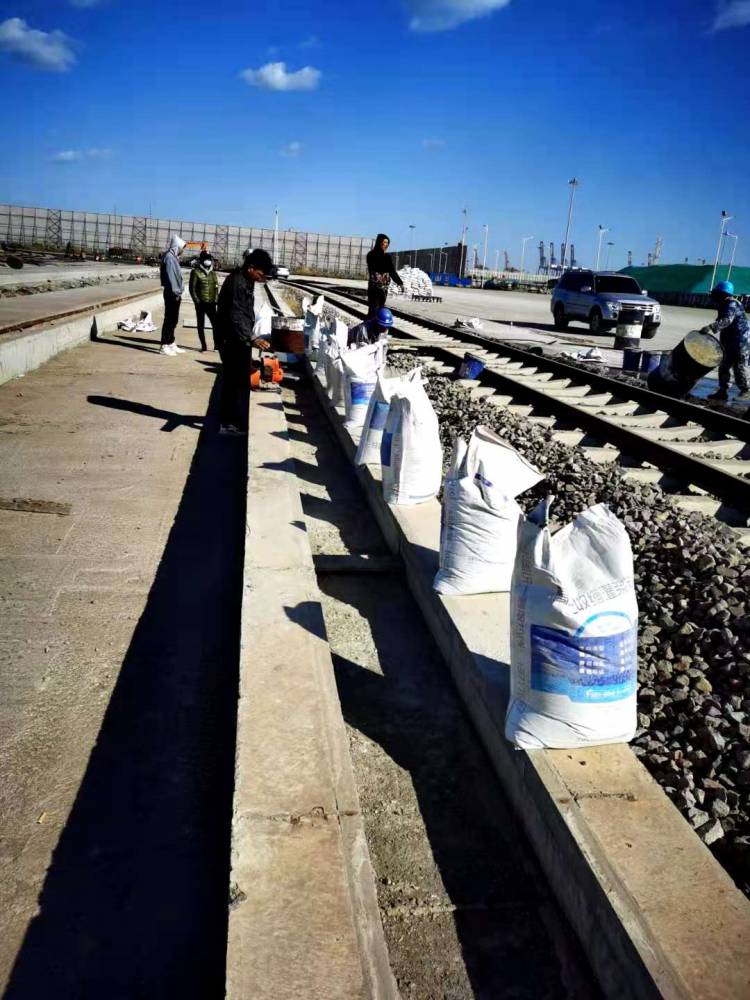







Grouting construction
Basic processing
1. Clean the surface of the foundation without any debris such as crushed stones, floating slurry, floating ash, oil stains, and release agents.
2. 24 hours before grouting, the foundation surface should be fully wetted, and 1 hour before grouting, any accumulated water should be removed.
What is the general model of grouting material for bridge special bearings? Jining Rencheng foundation bolt grouting material
Due to its high surface hardness and easy maintenance, the G641 countertop requires minimal maintenance. Stain resistance: The surface of the Georgia gray countertop has no microporous structure, with an average water absorption rate of only. 3%, ensuring that there is basically no infiltration phenomenon. Heat resistance: The surface has a high level of heat resistance and burn resistance, which is sufficient to resist burns from hot oil, hot pots, cigarette butts, etc. and maintain a long-lasting smoothness, without the occurrence of dents, burnt spots, and other phenomena. The mandatory national standard GB6566-2001 "Limits for Radionuclides in Building Materials" has been implemented since July 1, 2002. According to the testing of the Provincial Inspection and Quarantine Bureau, the radiation level of Georgia ash is very low, almost negligible.
: Support mold
1. Set up templates according to the grouting construction drawing. The joints between templates and foundations, as well as between templates, shall be sealed with cement slurry, tape, etc. to achieve the degree of overall template waterproofing.
2. The horizontal distance between the template and the equipment base should be controlled at around 100mm to facilitate grouting construction.
3. The top elevation of the template should be 50mm higher than the surface of the equipment base.
4. If there is grout leakage during grouting, it should be dealt with in a timely manner.

The undamaged long molecular chains deeply crosslink the polymer, ensuring its continuity and giving it flexibility and good permeability. Flexibility enables the adhesive and plaster slurry to adapt to the deformation caused by thermal and internal stresses in the external insulation system, fundamentally ensuring the durability and weather resistance of the external insulation system. Especially, the plaster slurry formulated with two-component liquid adhesive can adapt to complex climate changes without cracking. Good permeability allows the two-component liquid adhesive to penetrate into the bonding voids of polystyrene particles in EPS insulation boards, greatly enhancing the bonding strength between the adhesive and the insulation board, and avoiding bonding failure under complex climate changes.
Step 3: Preparation of grouting material
1. The general reinforced type is mixed with water at a standard of 12-13%, while the pea gravel reinforced type is mixed with water at a standard of 9-10%.
2. It is recommended to use mechanical stirring method, and the stirring time is generally 1-2 minutes. When using manual mixing, 2/3 of the water should be added first and mixed for 2 minutes, then the remaining water should be added and mixed evenly
The stone industry is also an ocean of knowledge, only by being in it can one have a deep understanding of stone. In the stone industry, there are many professional terms that are unfamiliar or even unknown to outsiders. Let's learn together below. The polished surface is very smooth, highly polished, with a mirror effect and high gloss. Granite, marble, and limestone are usually polished and require different maintenance to maintain their luster. The surface of the matte (Honed) is smooth, but it is lightly polished, resulting in diffuse reflection, lack of luster, no mirror effect, and no light pollution. Rough Rubbing: The surface is simply polished by removing the machine cut lines formed during the cutting process of the rough board. It feels like a very rough matte finish.
3. The amount of mixing each time should be determined based on the amount used to ensure that the material is used up within 30 minutes.
4. During on-site use, it is strictly prohibited to add any admixtures or external additives to the grouting material.
Step 4: Grouting Construction Method
1. Long equipment or track foundations should be constructed in sections.
2. During secondary grouting, grouting should be carried out from multiple points on one side or adjacent sides until it overflows from the other side, in order to facilitate exhaust during the grouting process. Grouting shall not be carried out simultaneously from all four sides
At the same time, the dry mix mortar products used in the external wall insulation system also require a large amount of cement and natural sand and gravel. Cement production consumes a lot of resources and energy. In 25 years, the national cement production was 138 million tons, consuming over 800 million tons of limestone and 400 million tons of standard coal. Over the past five years, more than 200 million tons of natural sand have been used in the production of concrete and mortar nationwide. The extraction of natural sand has caused damage to rivers, affected flood control of riverbanks, and posed a threat to the ecological environment. At the same time, China also has a large amount of solid waste such as waste polystyrene plastics, waste polyester plastics, waste rubber tires, waste paper, fly ash, tailings sand, steel slag, and blast furnace slag, which occupy a large amount of land and seriously pollute the environment. In just 24 years, the total amount of industrial solid waste generated in the country was 1.2 billion tons.
3. After grouting begins, it must be carried out continuously without interruption. And shorten the grouting time as much as possible.
4. Vibration is strictly prohibited during the grouting process. If necessary, a grouting booster can be used to push the grouting material along the bottom of the grouting layer. It is strictly prohibited to push it from the middle or upper part of the grouting layer to ensure its uniformity.
5. After the equipment foundation grouting is completed, a 45 degree oblique angle should be cut outward along the edge of the equipment 3-6 hours after grouting to prevent cracks from forming at the free end. If edge cutting is not possible, the surface of the grouting layer should be smoothed with a trowel 3-6 hours after grouting.
6. The thickness of each grouting material should not exceed 100mm.
The insulation of the pipeline packaging method for square and irregular air ducts is divided into 4 pieces of material for each section: the size of the air duct is 125 width x 8 height x 16 length, and the cutting size of the insulation cotton is 125 width x 14 length x 19 insulation cotton thickness. These are the upper and lower edge materials of the air duct, and the two secondary fabrics are 838 height x 14 length x 19 insulation cotton thickness. Summary of cutting: The insulation cotton cutting form for the air duct is that the width of the upper and lower pieces of material is the same as that of the air duct, and the length is shortened by 2 centimeters. The reason is that there is a mouth strip at the flange of the air duct that needs to be stepped out. The size of the two secondary fabrics is 3.8 centimeters higher than the height of the air duct, and the size of the upper and lower pieces of insulation cotton needs to be stepped out.
7. When the grouting volume of the equipment foundation is large, the mixing of pea gravel reinforced grouting material should be done by mechanical mixing to ensure grouting construction.
Step 5: Maintenance
1. Within 30 minutes after grouting is completed, a wet grass curtain or rock wool blanket should be immediately covered and kept moist.
2. During winter construction, maintenance measures should also comply with the relevant provisions of the current GB50204 standard.
3. After the grouting material reaches the demoulding time, equipment installation can be carried out. For specific time, please refer to the "Relationship Table between Demoulding and Curing Time and Environmental Temperature".
4. After the grouting of the equipment foundation is completed, if any parts need to be removed, they can be gently removed with a spatula or shovel tool 3-6 hours after the grouting is completed, before the grouting layer hardens.
5. The vibration of the running machine should not be transmitted to the equipment foundation. After the secondary grouting, the machine should be stopped for 24-36 hours to avoid damaging the uncured grouting layer.
It is estimated that everyone is familiar with quartz stone, which is one of the current cabinet countertop materials and also a material with high countertop usage rate. Quartz stone is mainly filled with broken glass and quartz sand (with a silicon content of 99.9%), added with unsaturated resin, and subjected to high-pressure and high vibration molding after stirring. Due to the high quartz content of over 93% in the board, it is separated from artificial stone products by quartz stone manufacturers and called quartz stone. The surface of quartz stone is smooth, flat, scratch free, dense and pore free, with rich and colorful colors. Its structure is corrosion-resistant and stain resistant like glass, and after precision processing, its shape resembles artificial stone. The advantages of quartz stone compared to other materials are: wear resistance, scratch resistance, high temperature resistance, impermeability, and no color difference.
Recommended dosage
Calculate the actual usage based on a reference dosage of 2.28-2.4 tons/cubic meter.
Packaging, storage and transportation
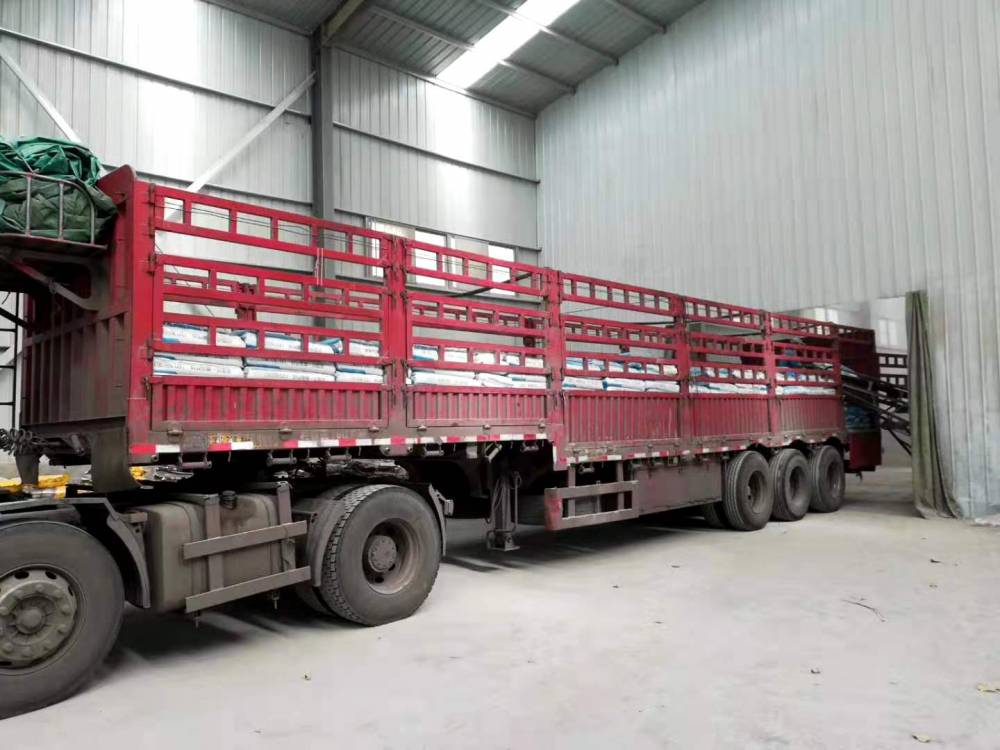
1. Packaging specifications: 50kg ± 1kg per bag, stored in a ventilated and dry place and protected from direct sunlight.
2. The shelf life is 3 months. If it exceeds the shelf life, it should be retested and qualified before use.
3. Does not contain components such as benzene derivatives, halogenated hydrocarbons, heavy metals, etc., non-toxic, odorless, pollution-free, non flammable and non explosive, and can be transported as general cargo













