








Cultivation Techniques: Seedling Propagation
1. Plot Selection: Choose sandy loam or loam soil with deep, fertile layers, abundant water supply, good drainage, and slightly acidic pH for the plot, avoiding waterlogged or alkaline soil. Conduct the first and second tillage and harrowing in early winter and before sowing, respectively. Apply decomposed stable manure at a rate of 22.5 to 30.0 tons per hectare or 750 kg per hectare of urea, 750 kg per hectare of phosphate fertilizer, and 2250 kg per hectare of rapeseed cake. Then, construct raised beds with heights and widths of 35 to 50 cm and 1.2 meters, respectively.
2. Seed Collection: Select seeds from robust female trees free of diseases and pests, around 40 years old, when the berries turn purple-black in mid-to-late November. After collecting the berries, soak them in water for 2 to 3 days, then搓洗 to separate the skin from the seeds. Mix the clean seeds with草木灰 for 12 to 24 hours to remove the fat, then rinse and dry in the shade. The weight of 1,000 seeds is 120 to 130g, with a germination rate of 80% to 90%.
3. Germination Promotion: Before sowing (early March), soak the seeds in warm water (50°C) and change the water after cooling, repeating this process 3 to 4 times. The seeds can germinate within 15 days. Alternatively, mix the seeds with river sand and uniformly wrap them in film, then expose them to sunlight, turning them 2 to 3 times per day while keeping them moist until a few seeds begin to germinate. You can also disinfect and sterilize the seeds by soaking them in a 0.5% solution for 1 to 2 hours. Generally, after 7 days, the seed coats start to crack, and the seed embryos slightly protrude, making them suitable for sowing.
4. Sowing: Seedling in rows, with a row spacing of 20 cm and seedling spacing of 4-6 cm. Sowing rate is 150-225 kg/hm². Cover the seedbed with soil, straw, or film after sowing to maintain moisture and promote seed germination.
5. Seedling Management: Remove straw or ground film after seedlings emerge. Thinning can be done when there are several true leaves, and seedlings should be fixed when they reach about 10cm in height, with a seedling density of around 300,000 plants per hectare. After July, enhance fertilizer and water management, and regularly loosen soil and remove weeds. Cease fertilization and irrigation at the end of autumn. Fertilization is typically done 2-3 times, with the third application including 112.5kg of phosphate fertilizer per hectare in addition to urea at 105-150, 105-150, and 150kg per hectare, respectively. One-year-old seedlings can reach over 50cm in height and a ground diameter of over 0.7cm. When harvesting camphor trees, adhere to the principle of "quality over quantity,"坚决 discard small, weak, or crooked seedlings to avoid producing inferior seedlings and wasting substantial human, material, and land resources. Therefore, proper handling should be done during seedling management, such as thinning leaves.
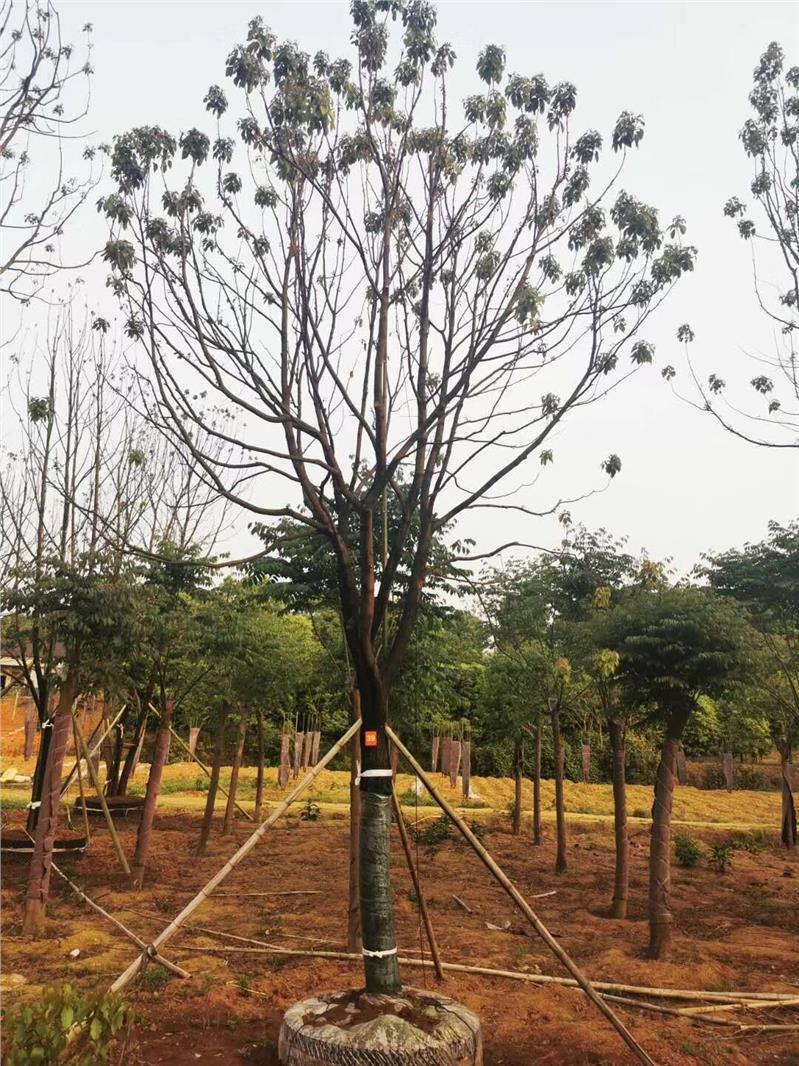
Because the main root of camphor trees is deep and the lateral roots are few, attention should be paid to lateral root development during seedling cultivation. Generally, seedlings need to be transplanted twice in the nursery. Camphor seedlings are usually ready for transplanting after one year, which is beneficial to improve survival rates. For seedling transplantation, it is sufficient to prune a section of the main root, leaving only 10-15 cm in length. The seedling transplanting density should be 0.5m x 0.3m to promote lateral and fibrous root development, and to prepare for root balling during uprooting. One-year-old seedlings are prone to frost damage, so it is necessary to prune late autumn shoots and cover them with straw to retain moisture. Standard for seedlings ready for sale: ground diameter 2-4 cm, main trunk green; black-brown seedlings are not suitable for planting as they are over-aged.
Cypress Tree Pest and Disease Control:
1. Pest Control: The main threats to camphor trees include camphor leaf bees, aphids, camphor long-horned beetles, and camphor tip borer moths. For camphor leaf bees, there are multiple generations per year with a long period of damage, which can cause severe damage to seedlings, leading to death. Use a 90% or 50% emulsion at a rate of 2,000 times to spray and kill. For aphids, use a 50% emulsion at a rate of 1,000 times or 50% wettable powder of anti-aphid at a rate of 3,000 times for control. For camphor long-horned beetles, cut off the affected branches by hand, inject pesticides through the excrement holes to kill the larvae. For camphor tip borer moths, for small areas of forest, collect and burn the withered branches and leaves in winter to destroy overwintering pupae, or spray a 40% emulsion at a rate of 200 to 300 times for control.
2. Disease Control: The main diseases affecting camphor trees are black spot and disease. These diseases cause gray-brown spots to appear on the underside of young leaves near the main vein, which then spread across the entire leaf back, forming a layer. In severe cases, the spots may also appear on young branches and trunks. To combat this disease, it is essential that relevant personnel ensure a clean environment within the area and conduct proper thinning of seedlings. Upon discovering a few infected plants, they should be immediately uprooted or burned to prevent widespread infection. During an outbreak, apply a 0.3 to 0.5°Bé lime sulfur solution every 10 days, for a total of three to four applications. For black spot disease, camphor seedlings may contract the disease when 1 to 4 leaves have grown after germination. The disease typically starts at the tip of the seedling and turns blackish-brown towards the root. Usually, the first step is to uproot and burn the infected seedlings, followed by spraying with a 0.5% solution or twice to prevent the spread of the disease.
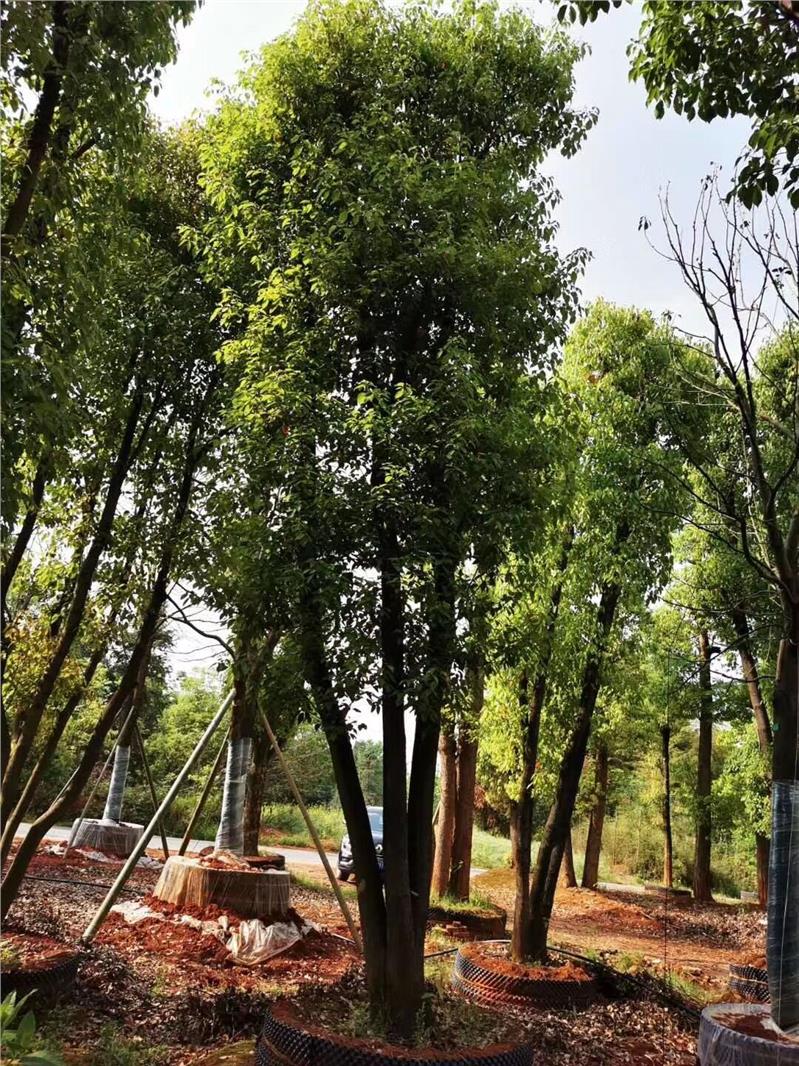
Cinnamomum camphora nurturing and management:
Tree seedling planting requires weeding and cultivation once a year, ideally during the autumn and winter dormancy period, with a depth of 20-30cm. This not only promotes soil weathering and eliminates pests and diseases, but also, since the trees are in a dormant state, any damage to part of the root system will not significantly affect tree growth. Additionally, combining cultivation with fertilization yields better results; at this time, base fertilization should be applied to retain water, maintain temperature, and promote root development, creating conditions for the trees' growth the following year. Furthermore, intercropping with low-growing crops can be used for nurturing management, as these crops can loosen the soil around the trees, increase fertility, and especially during hot weather, prevent the evaporation of ground moisture.
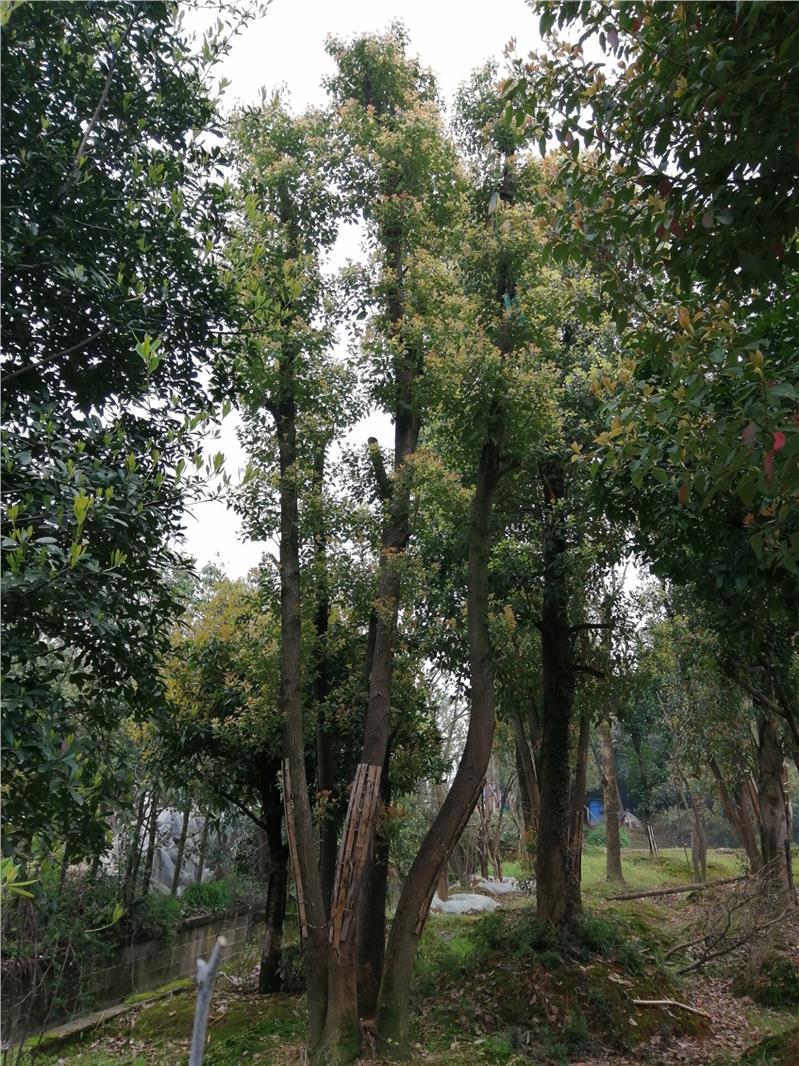
Cinnamon樟的价值:
1. Landscape Value: The camphor tree grows relatively quickly, possesses a strong vitality, and features lush foliage, categorizing it as a type of evergreen plant. It is capable of absorbing smoke and dust, conserving water sources, stabilizing soil against erosion, and beautifying the environment, making it an excellent species for urban greening. Moreover, the camphor tree has a high resistance to various toxic gases, strong dust absorption capabilities, and can absorb harmful gases, making it suitable for greening in urban and industrial mining areas.
2. Economic Benefits: Camphor wood is of superior quality, featuring tight grain structure, resistance to decay, insect-proofing, and a fragrant aroma, making it a preferred material for many furniture manufacturers. The roots, wood, branches, and leaves of the camphor tree can all be extracted for camphor oil, which is used in medicine, preservation, and insecticidal applications. Camphor oil can also be used as raw material for soaps, pesticides, perfumes, and artificial varnishes.
3. Medicinal Value: The bark of camphor tree is used for promoting circulation and can be applied to lower limb ulcers; the fruits of camphor tree are warm and slightly pungent, with properties to relieve exterior symptoms and reduce fever, suitable for conditions like high fever, measles,百日咳百日咳 whooping cough, and dysentery; the roots of camphor tree are pungent and non-toxic, known for their ability to expel dampness and wind.