








HT250 material castings have a high yield in the casting process, such as machine tool castings, mechanical parts, casting platforms, 3D flexible welding tables, machine tool beds, machine tool bases, and complete CNC gantry milling machines, most of which use HT250 material. This is due to the excellent tensile strength, high wear resistance, moderate hardness, strong shock absorption, stable precision, and resistance to deformation of HT250 material castings. Therefore, among various materials, HT250 material castings can meet these requirements and offer a high cost-performance ratio.
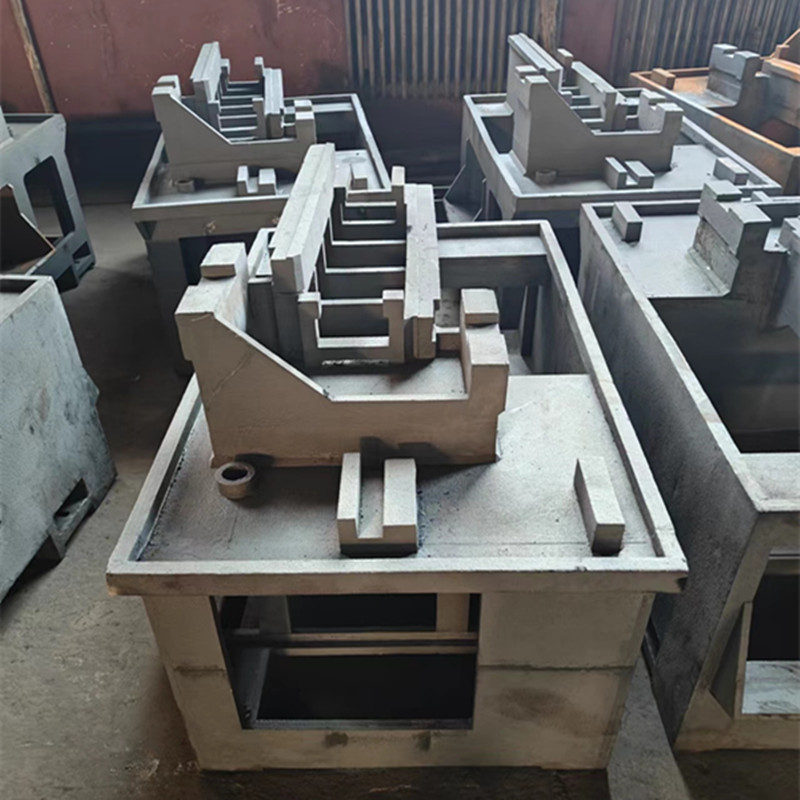
The HT250 material castings exhibit their properties in the following aspects: Below, we will analyze the specific data in detail. The HT250 (gray cast iron) is a pearlitic type gray cast iron, with a machine tool casting density ranging from 7.3 to 7.65 g/m3, and its normal chemical composition is: Carbon C=3.10-3.33, Silicon Si=1.7-2.0, Manganese Mn=0.8-1.1, Sulfur S=0.08-0.118, Phosphorus P=0.12-0.18. Its mechanical properties are superior, with a tensile strength of 250 MPa and a hardness value of 206-209 HB. This mechanical property data is derived from the testing data of a 30mm diameter test bar.
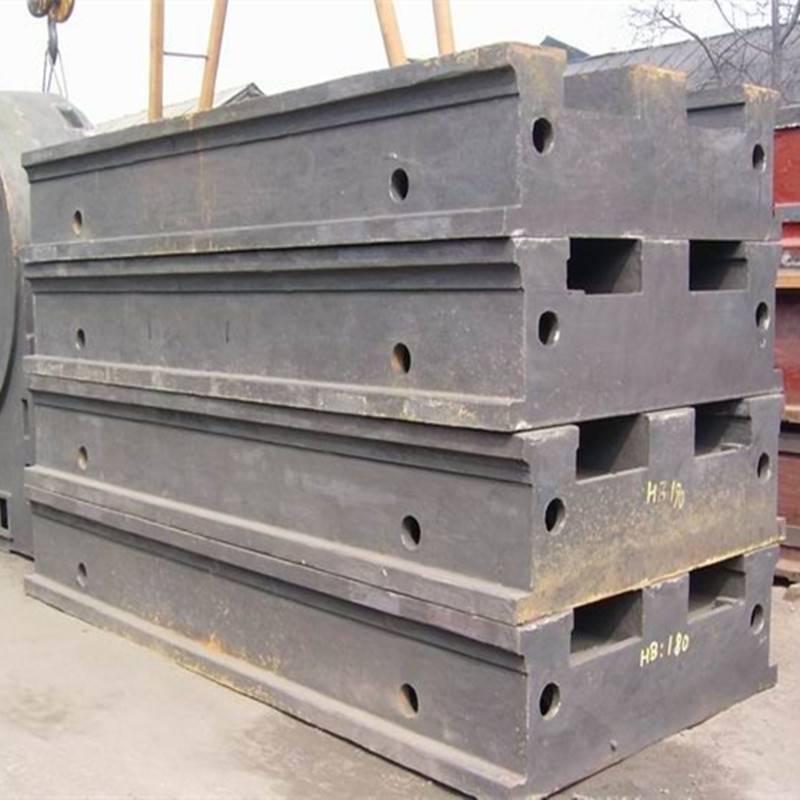
HT250 material large machine tool castings or heavy-duty machine tool castings may sometimes have higher requirements for mechanical properties. Is it necessary to use higher-grade material castings, such as HT300? Actually, it is not necessary. For large machine tool castings or machine bed castings with special requirements, adjusting the partial content of HT250 casting material can meet their needs. The common technical process to achieve the mechanical property requirements of large machine tool castings is to increase the carbon equivalent or silicon-carbon ratio. At the same time, increasing the content of metals like Cr and Cu to enhance the stability of the casting is required. Overall, it is necessary to balance various factors to improve the performance of the casting.
The HT250 material casting for machine tool castings can meet the hardness requirements for machine tool guideways. The thickness of the guideway surface of machine tool castings is generally greater than 50mm. The hardness of the normal HT250 casting material is not sufficient to meet the hardness requirements, which can be improved by medium-frequency quenching or high-frequency quenching. The hardness of the guideway surface after quenching treatment can reach above HRC60.