








High-rise Maintenance, Chimney Repair, Cooling Tower Repair, Water Tower Repair, Equipment Repair, Steel Structure Repair, Tower Repair, Chimney Reinforcement, Maintenance Company, Water Tower Repair, Harbor Anchor Installation, Lightning Rod Installation, Buoy Light Installation, Environmental Protection Platform Installation, Environmental ProtectionH-type ladder manufacturing and installation, desulfurization and anticorrosion, chimney wrapping band, installation of beacon lights
Product Details (Installation & Maintenance)
Installation and Construction Plan
I. Basis for Establishment
General chimney steel ladder installation construction projects are primarily based on the following specifications and documents:
(1) China National Standard for Construction and Acceptance of Chimney Steel Ladders, GB50205-95
(2) China's National Standard for Engineering Survey Specifications, GB50026-93
(3) China's National Standard for the Quality Inspection and Appraisal Criteria of Chimney Steel Ladders, GB50221-95.
(4) China's National Standard for Construction and Acceptance of Concrete Structures - GB 90204-92
(5) Specific design descriptions and textual requirements proposed by the owner and design party.
Section II: Technical Requirements
Technical requirements for the installation and construction of chimney steel ladders include aspects such as bolt embedding, alignment, and welding.
Three,Construction Technology
Construction Technical Measures
As per the requirements, the scope of this project involves the fabrication and installation of steel staircases; therefore, this construction organization design only provides instructions for the construction of the steel staircase structure.
1. Construction sequence for steel structure stairs:Pattern making→ Pick Number → Cut → Shear → Straighten → Bevel → Refine → Mate → Weld → Position with Hoist → Align → Weld Again → Anchor with Shims → Tighten Bolts → Install Accessories → Paint for Corrosion Protection → Complete
2. Installation Process Workflow
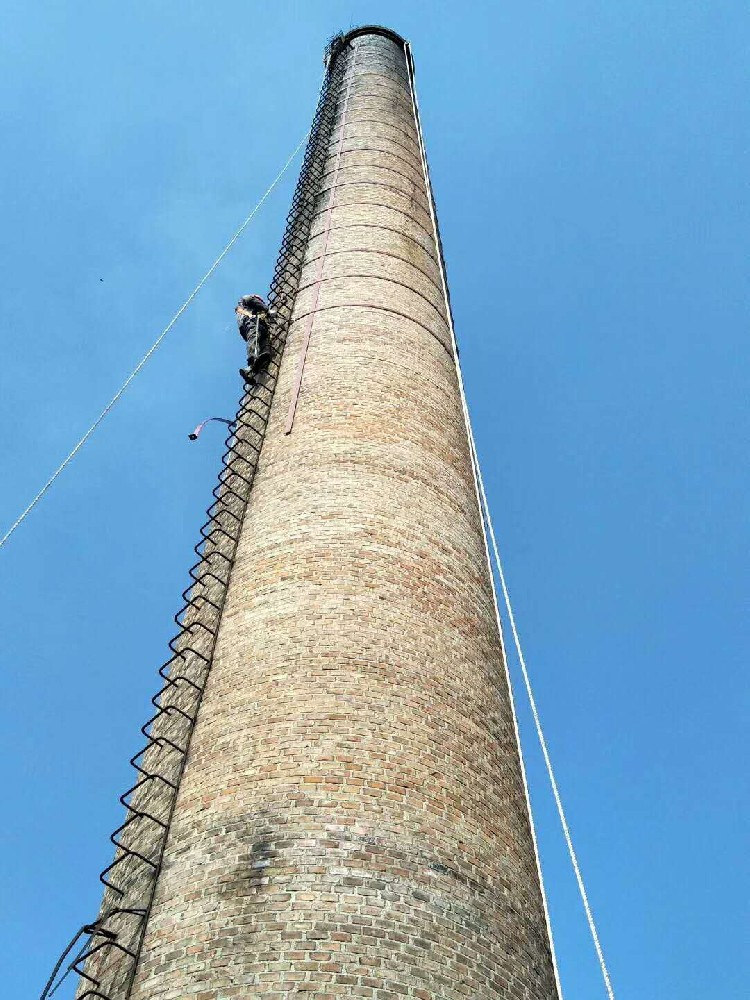
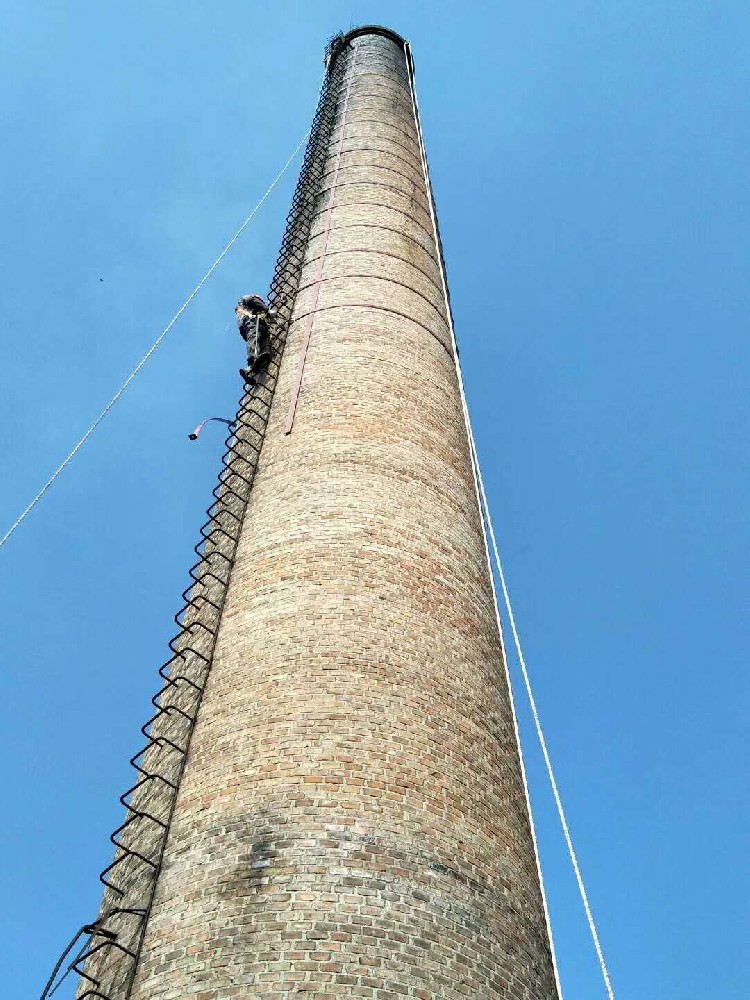
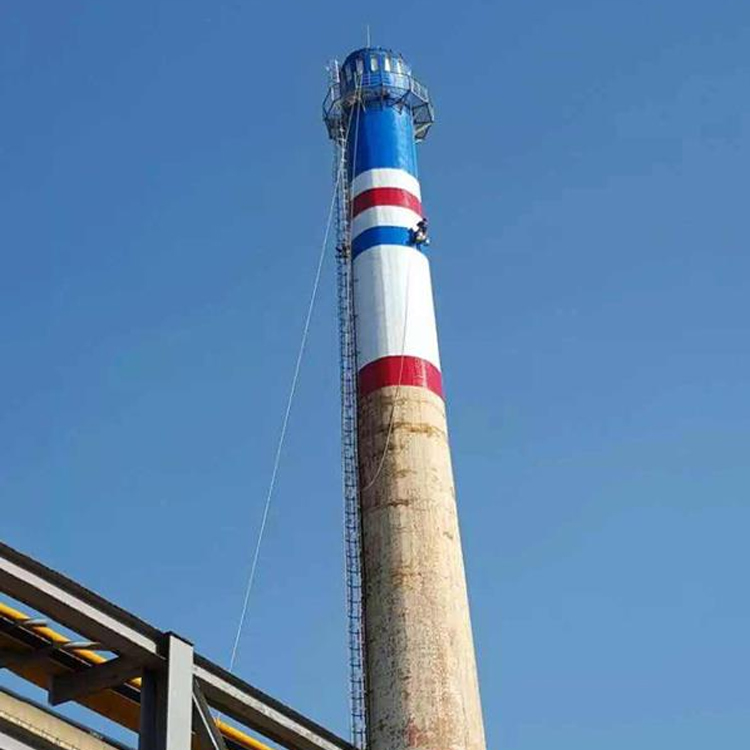
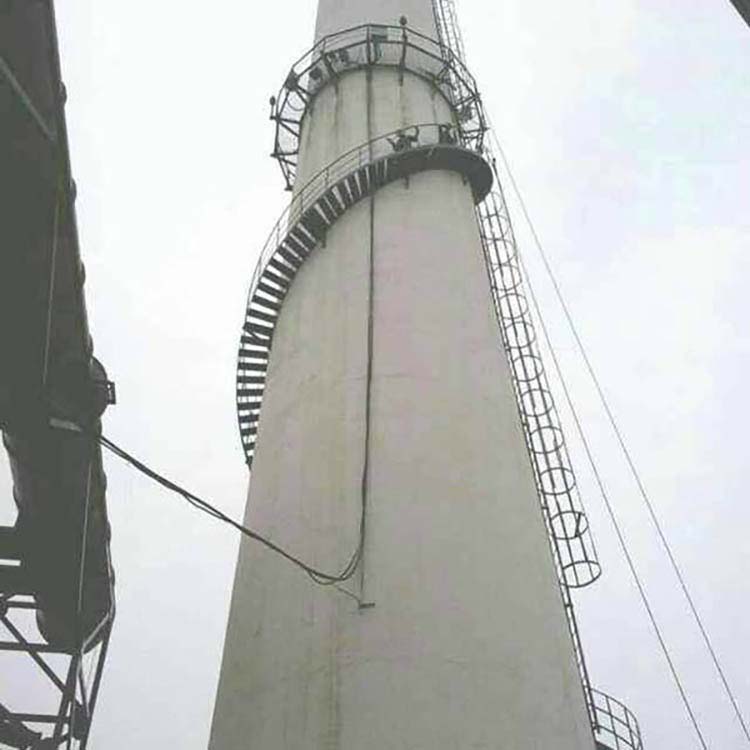
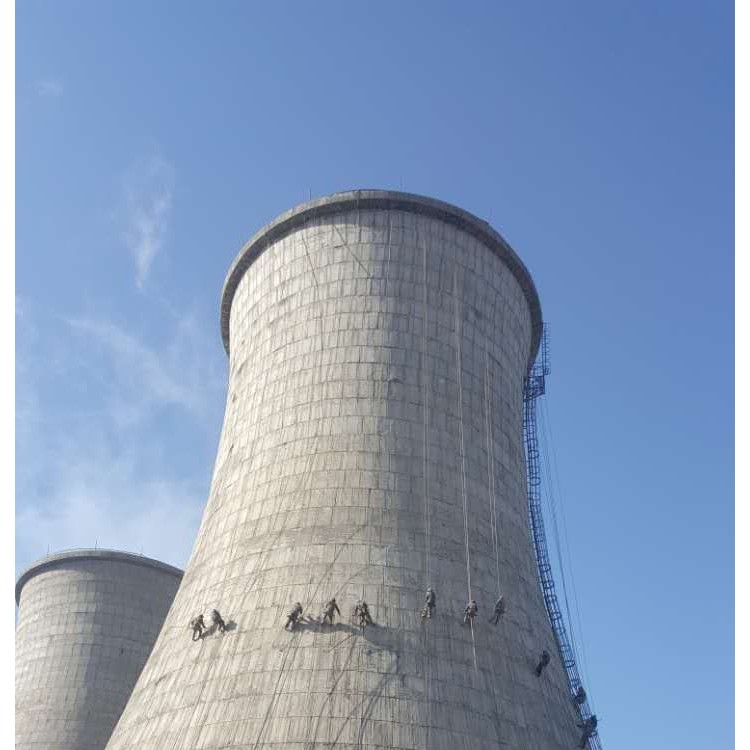
This project employs a process of first manufacturing and then assembling. Made according to drawings, the parts are processed and welded. The stair steel structure brackets are installed first, followed by the assembly and welding."Construction without scaffolding or suspended operations. First, test the bearing capacity at the suspension and work points, then determine the suspension points and secure pulleys and other equipment above. Fix the tested tension wire ropes and hoisting ropes at the suspension points, primarily using manual labor, wire ropes, hoisting ropes, hoisting jacks, pulleys, etc., in combination with manual climbing methods. The construction sequence is from bottom to top."
(1) The Z-shaped steel ladder structure is manufactured and processed on-site, starting with the installation according to the drawings.
(2) As the steel frame staircase is installed to a certain height, start the installation within the permissible construction range, and the welding must comply with the drawing specifications. The height of each lifting and welding should be based on the thickness and weight of the panels to prevent uneven force on the steel staircase during construction, leading to geometric deformation. The weld joints must be full and the verticality of the steel staircase, as well as the welding points, must be within the allowable deviation range to ensure compliance with the design requirements.
(3) The manufacturing, welding, installation, and corrosion protection of steel stairs are to be performed concurrently within the scope of construction safety, until the steel staircase is fully completed according to the plans.
1. During the construction of steel structure projects, it is mandatory to strictly comply with the relevant national and industry technical standards and specifications, ensuring the principles of advancement, economic rationality, and safety and applicability.
2. Prior to the installation of the transfer ladder, a thorough briefing is mandatory to clearly define the mechanical patterns of the steel structure system, construction loads, dynamic loads and fatigue requirements the structure can withstand, and to prepare technical measures to ensure structural safety. A construction simulation of the steel structure installation should be conducted when necessary.
3. The construction unit must promptly finalize the fixing of components according to design requirements and perform protective work after the formation of the structural stiffness units.
4. Familiarize with the surrounding environment of the installation site, establish a reasonable measurement control network, and compile a measurement plan that meets the spatial positioning accuracy requirements for components.
5. Prior to welding, a welding process evaluation should be conducted on the welding steel, welding materials, welding methods, and post-weld heat treatment. The welding process should be determined based on the evaluation report. Welders must adhere to the welding process, operate with a valid certification, and are not permitted to weld freely.
6. All welds during manual manufacturing and installation should be continuous and smoothly transitioned, with the welding material fully penetrate and securely bond.
7. Use a reasonable welding sequence during assembly and welding to strictly control welding deformation, and properly stack and position materials on-site.
81. Prior to installation, a field trial assembly should be conducted. All parts must adhere to the design specifications before proceeding with the official installation on-site.
9. Holes should be drilled without damaging the steel bars to prevent the collapse of the inner lining and the destruction of the internal anti-corrosion structure. New holes should be properly treated for anti-corrosion, and sealed with acid-resistant mortar.
Four: Quality Assurance Measures:
Our company adheres to the quality policy of "Customers are God, Quality is Life," and diligently operates the GB/T19002-9002 quality management system. We conduct quality supervision for each project and every process, ensuring that the quality of materials, semi-finished products, and finished products throughout the construction process is under control. This fundamentally guarantees the effective quality of the construction projects.
2. All operators must strictly follow the technical and safety briefing content, and welding personnel must hold valid certifications before taking their posts.
3. Welding rods should have a factory certification or material report. It is required that welding rods be dried in an oven before use. The welding wire and flux selected for submerged arc welding must be compatible with the base material.
4. After the steel structure is manufactured, it must be de-rusted. It is required to apply primer after de-rusting, with the paint being applied by hand. The paint film thickness must meet the design specifications.
5. When welding multiple seams, first weld the transverse seams with greater shrinkage deformation, followed by the longitudinal seams, or start with the butt welds before welding the corner welds. The main welds on the H-beams should be done before assembling the stiffener plate components.
6. The steel structure hoisting process strictly follows the "GB50205-95 Code for Construction and Acceptance of Steel Structures" and the "GB50221-95 Standard for Quality Inspection and Evaluation of Steel Structure Engineering."
7. Steel components must undergo re-inspection for their dimensional accuracy and welding quality prior to commencement of work. A technical briefing is mandatory before starting construction.
8. Special trade workers must have a certification issued by the Labor Bureau to be on the job during construction. Adhere to the three-inspection system (self-inspection, mutual inspection, and professional inspection) during construction and strictly inspect the quality of each process.
9. After the overall "Z" truss steel structure passes the installation and acceptance, the welds, spatter, dust, and other debris on the areas requiring painting should be thoroughly cleaned. Apply rust-inhibiting primer to the welding areas.
10. Steel paint materials for engineering use must be accompanied by a "Production License," "Product Quality Inspection Certificate," and "Product Qualification Certificate," and the authenticity of the products must be verified according to the coding password.
11. After the overall steel structure of the platform passes the installation and acceptance, the welds, spatter, dust, and other debris on the areas to be painted should be thoroughly cleaned. Rust-inhibiting primer should be applied to the焊接 areas.
12. Paint materials for engineering use must be accompanied by a "Production License," "Product Quality Inspection Certificate," and "Product Qualification Certificate," and the authenticity of the products must be verified according to their coding passwords.
13. Paint mixing is strictly conducted according to the standards outlined in the "User's Guide" for paint coatings and the product's instruction manual. Mixing and adjusting paint must be performed by professionals, who should carefully read, understand, and master the product manual. Adhere to the specified ratios and control the paint concentration. Mixing should only be done using dedicated containers and tools. The amount of paint mixed should be strictly tracked against the day's application volume, with all mixed paint used on the same day. The painted surface after application must not show pinholes, cracks, peeling, or missed spots. The coating should be smooth and even, without drips, scratches, or orange peel textures.
14. Each paint coating must have a minimum interval of 12 hours before the next coat can be applied, subject to the approval of the principal's representative. The paint surface should have a consistent color, be evenly coated, without any missed spots, and no sagging or dripping.
Five: Safety Protection Measures
1. The project adheres to the guiding principle of "safety first, responsibility above all," implementing the policy of "safety as the top priority, and prevention as the main approach." It establishes a comprehensive safety management system with the project manager as the overall responsible person for safe construction, a dedicated safety officer in charge, and safety officers among each construction team.
2. All construction personnel must strictly adhere to the safety construction regulations and the various factory rules and disciplines of the owner's side. They must also complete training and pass the examination by the factory's safety supervision department before they can participate in construction.
All construction personnel must hold a "Special Operation Certificate" for高空悬吊作业 and be上岗, operating strictly in accordance with high-altitude work regulations.
4. Establish and implement comprehensive safety construction regulations, and strictly adhere to the provisions of the "Safety Agreement" for construction. The factory's safety supervision department has the authority to handle and penalize violations of construction safety rules and personnel.
5. Prior to construction, establish a clear safety zone with barriers or ropes marked with prominent safety signs. Set up multiple "High-Altitude Work" warning signs. Unauthorized non-construction personnel are strictly prohibited from entering the construction site.
6. Workers entering the construction site must wear appropriate personal protective equipment and safety helmets. Those performing high-altitude work must be securely fastened with safety belts and ropes, ensuring dual protection measures.
The water and power supply required for this construction project must be connected at the designated on-site inspection water and power supply points specified by Party A.
All machinery and lifting ropes for this construction project must pass inspection before entering the site. Regular and irregular inspections are required during use, and any discrepancies found must be replaced immediately.
9. When lifting steel components, ensure smooth lifting or lowering to avoid sudden braking or impact. A designated person must give clear, loud, and explicit signals, and unauthorized operation is strictly prohibited. After the components are installed, their quality must be inspected, and they must be confirmed to be safe and reliable before unloading. Daily work must reach the safety points before the day's work can be completed.
10. Small tools used by construction personnel should be kept in a tool bag and carried up and down with them. When in use, secure one end with a rope.
11. Strictly prohibit throwing or dropping objects from high places. Ensure the construction waste such as iron slag blocks is cleared and swept up on the same day as the work is completed, achieving a clean and clear work site.
Six. Fire safety measures
1. Implement the work policy of "Prevention First, Combining Firefighting."
2. On construction sites, all work surfaces should have designated fire safety personnel for cables, control cabinets, etc., and sufficient fire-fighting equipment should be provided.
3. Flammable and explosive materials (paints, coatings, etc.) used during construction must be strictly managed and stored in accordance with relevant safety requirements.
4. Conduct training for construction personnel on fire prevention and explosion-proof knowledge.
5. Smoking is strictly prohibited in the construction area, and warning signs must be posted.
Section 7: Construction Safety Management
1. Safety equipment used in construction (such as lifting ropes, standing ladders, safety belts, etc.) should be established with a management ledger, numbered, and properly marked.
2. Safety supplies should be inspected and tested regularly; items found to be substandard after inspection must not be used.
3. In the event of strong winds, material hoisting operations should be halted.
4. At any time, we accept inspections and acceptance work by the local supervisor's safety department.