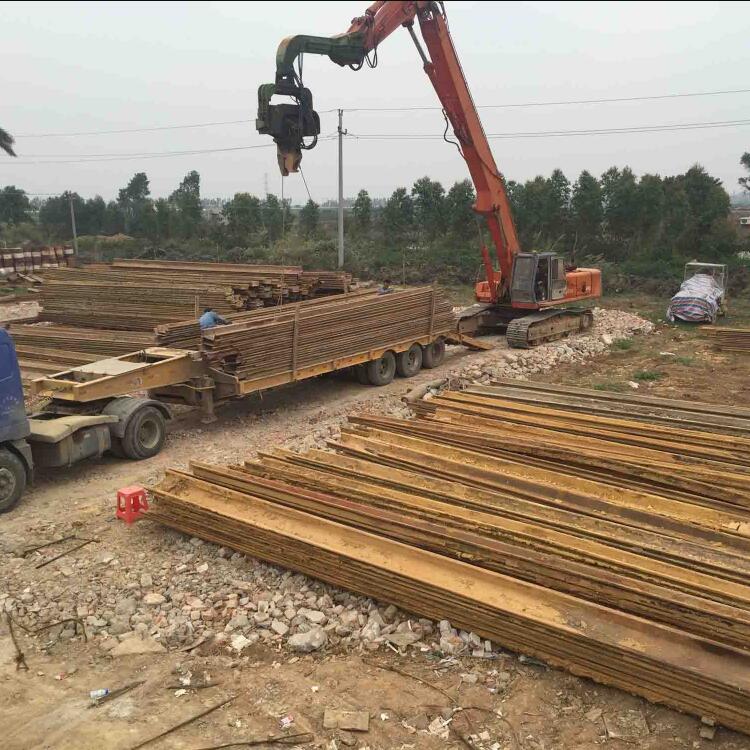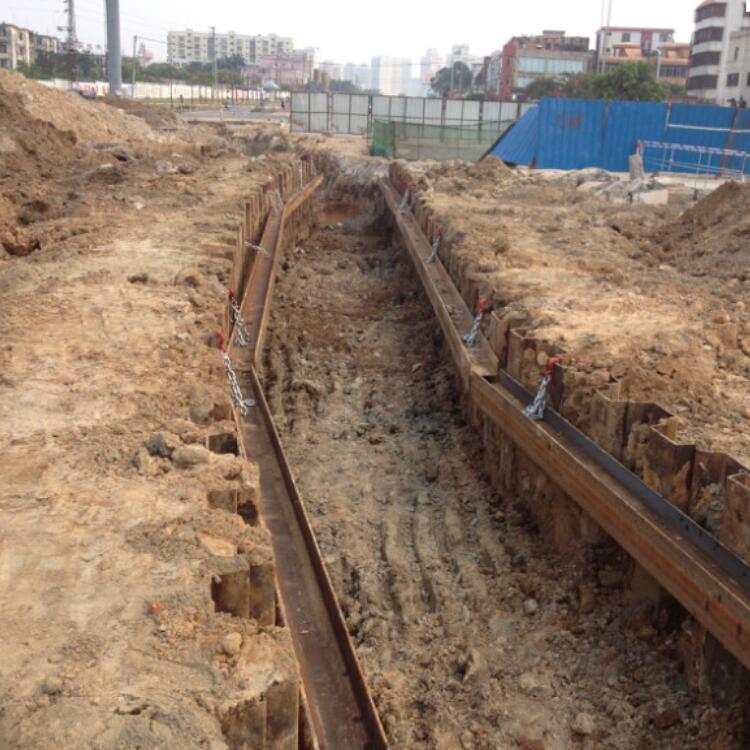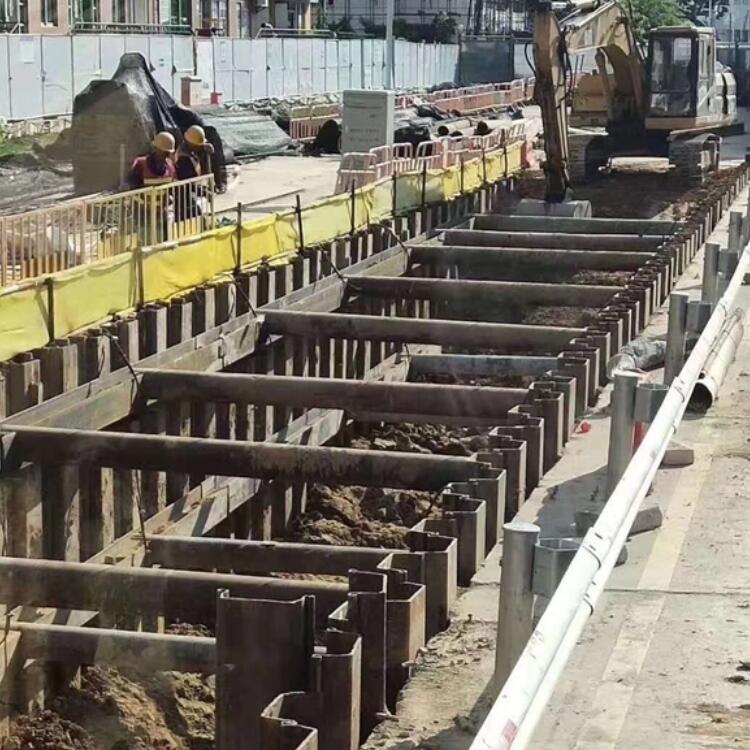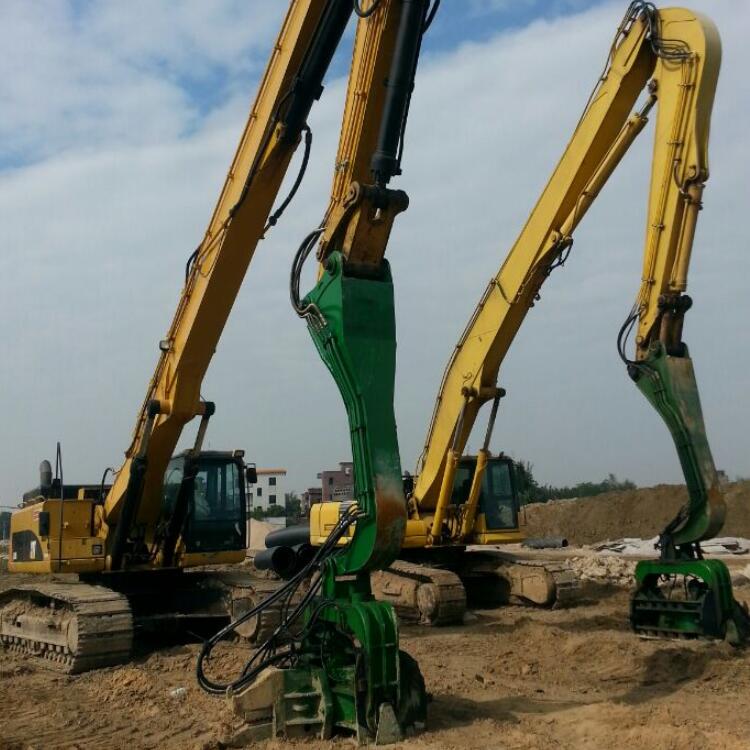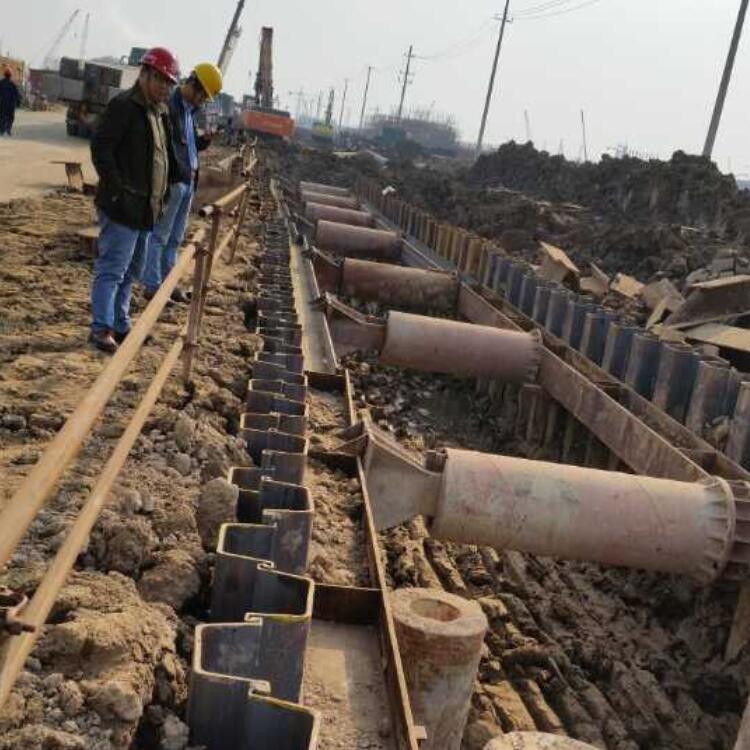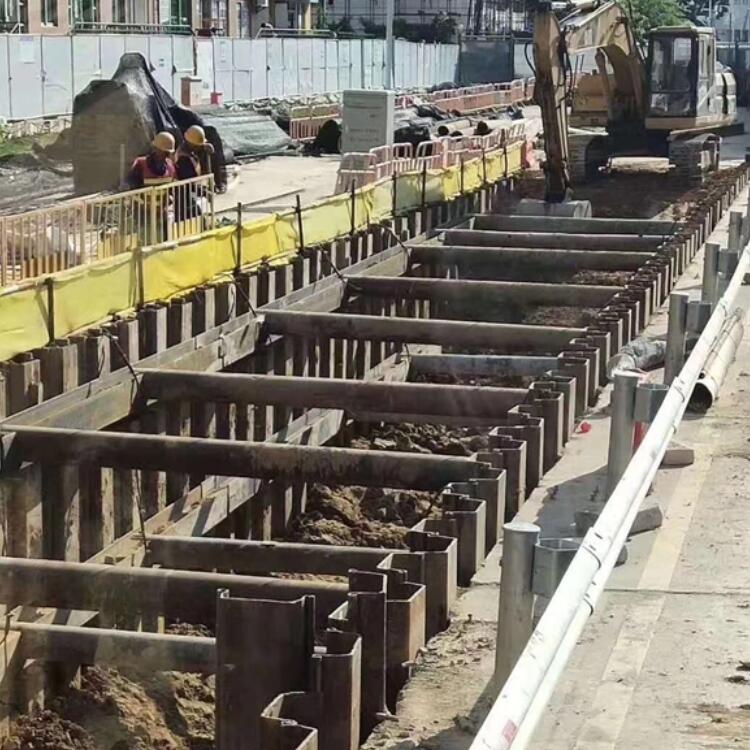

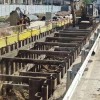
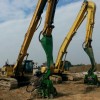







Sheet pile is a type of steel structure with interlocking edges, allowing for free combination to form a continuous, tightly fitted retaining or waterstop wall.
Sheet Piling Definition
Sheet piles are a type of profiled steel with locking lips, featuring sections in flat, grooved, and Z shapes, available in various sizes and interlocking types. Common types include Larssen and拉克万纳式. Their advantages include high strength, ease of driving into hard soil layers; they can be constructed in deep water and can be fitted with diagonal supports to form a cage if necessary. They have excellent waterproofing capabilities; they can be assembled into various shapes of cofferdams as needed and can be reused multiple times, making them versatile in their applications.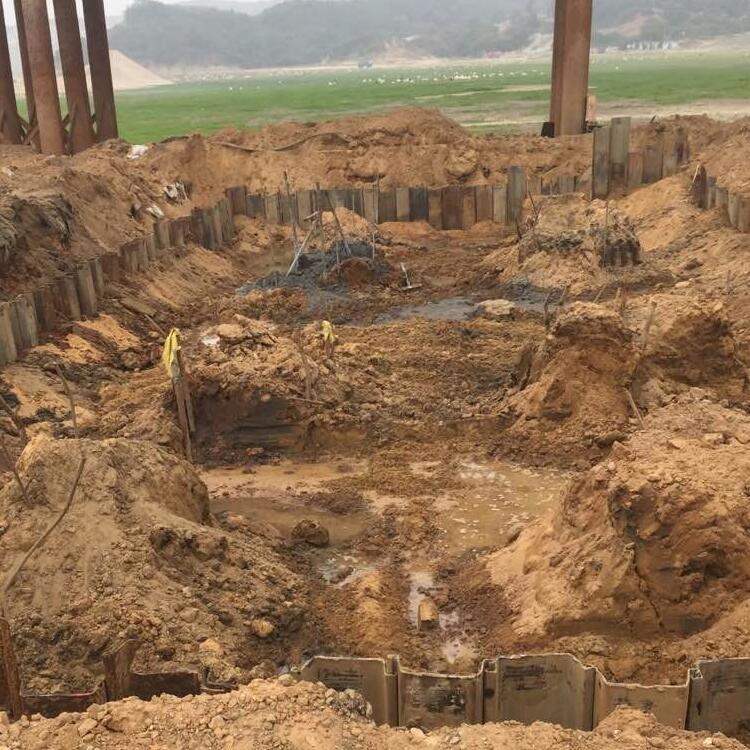
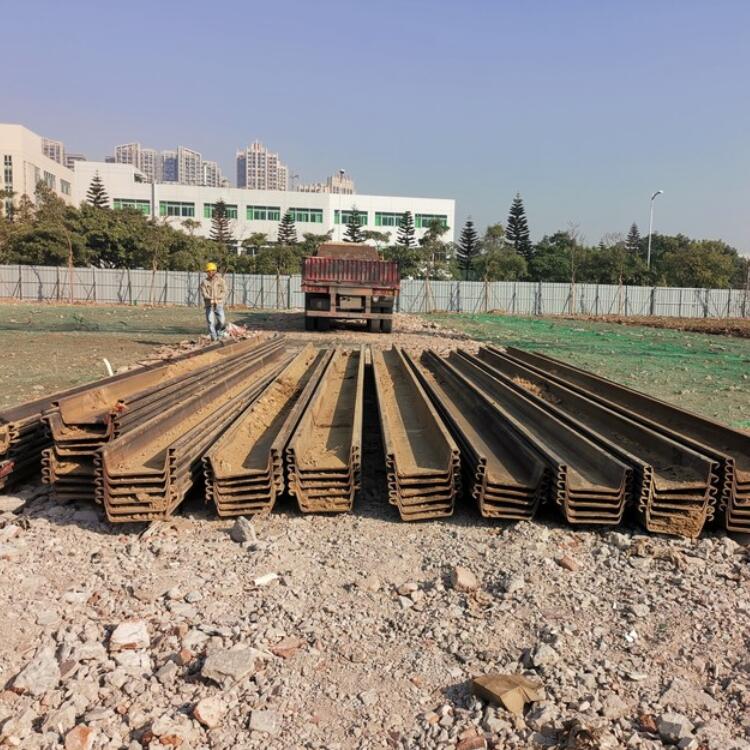
Steel sheet piles are divided into: There are two types of steel sheet pile products according to the production process, namely cold-formed thin-walled steel sheet piles and hot-rolled steel sheet piles.
(1) Cold-formed steel sheet pile includes non-joint type cold-formed steel sheet pile (also known as channel plate) and joint type cold-formed steel sheet pile (divided into L, S, U, and Z shapes). Production process: Continuous rolling forming is achieved using thinner plates (commonly 8mm to 14mm thick) within the cold bending machine. Advantages: Low production line investment, lower production costs, and flexible product length control. Disadvantages: Uniform thickness throughout the pile body, unoptimized cross-sectional dimensions leading to increased steel usage, difficult shape control at the locking section, loose clips at the connection that do not prevent water leakage, and prone to tearing during pile usage.
(2) Hot-rolled Steel Sheet Piles - The world's hot-rolled steel sheet piles mainly include U-shaped, Z-shaped, AS-shaped, and H-shaped categories, with dozens of specifications. Currently, the production, processing, and installation techniques for Z-shaped and AS-shaped steel sheet piles are more complex, and they are primarily used in Europe and America; domestically, U-shaped steel sheet piles are predominantly used. Production Process: Formed by high-temperature rolling through section rolling machines. Advantages: Standard dimensions, superior performance, reasonable cross-section, high quality, and tight locking joints with excellent water-tightness. Disadvantages: Higher technical difficulty, higher production costs, and inflexible specification series.
In construction projects, cold-formed steel sheet piles have a relatively narrow application scope, often serving as supplementary materials. Hot-rolled steel sheet piles have always been the dominant product in engineering applications. Recognizing the numerous advantages of steel sheet piles in construction operations, the General Administration of Quality Supervision, Inspection and Quarantine, and the National Standardization Administration issued the national standard for "Hot-Rolled U-Type Steel Sheet Piles" on May 14, 2007, which came into effect on December 1, 2007. By the late 20th century, Ma Steel Co., Ltd., leveraging the process and equipment conditions of imported rolling mill lines, produced over 5,000 tons of U-type steel sheet piles with a width of 400mm and successfully applied them in projects such as the Nenjiang Bridge cofferdam, Jingjiang New Century Shipyard's 300,000-ton shipyard, and Bangladesh's flood control project. However, due to low production efficiency, poor economic benefits, low domestic demand, and insufficient technical experience during the trial production period, the production was not sustained. Statistics show that China's annual consumption of steel sheet piles currently remains around 30,000 tons, accounting for just 1%%, and is limited to certain port, wharf, shipyard construction projects, as well as temporary projects such as bridge cofferdams and foundation pit supports.
Cold-formed steel sheet piles are steel structures formed by continuous rolling into shape using a cold-forming machine, with the side lock joints capable of continuous overlapping to create a sheet pile wall. These sheet piles are made from thinner plates (commonly 8mm to 14mm thick) processed through a cold-forming machine. They are cost-effective and priced reasonably, with flexible length control. However, due to the rudimentary processing method, the thickness of all parts of the pile is uniform, and the cross-sectional dimensions cannot be optimized, leading to increased steel consumption; the shape of the lock joints is difficult to control, resulting in loose clips at the connection points that cannot prevent water from seeping in; the production is limited by the capabilities of the cold-forming equipment, allowing only for lower strength grade and thinner products; and the high stress generated during the cold-forming process makes the piles prone to tearing during use, thus having a significant limitation in application. In construction projects, the application scope of cold-formed steel sheet piles is relatively narrow, mostly serving as supplementary materials. Characteristics of cold-formed steel sheet piles: According to the actual conditions of the project, select an economic and reasonable cross-section of the steel sheet pile for design optimization, which can save 10-15% of materials compared to the same-performance hot-rolled steel sheet piles, thereby reducing construction costs.
Currently, due to limitations in production conditions and scale, there is no domestic production line for hot-rolled steel sheet piles. The hot-rolled steel sheet piles used in our country are all imported from abroad.
Common hot-rolled steel sheet pile manufacturers include Hyundai Steel from South Korea, Nippon Steel from Japan, Sumitomo Steel from Japan, JFE Steel from Japan, and some European manufacturers.
Shape Category
Editor
U-shaped steel sheet pile
Basic Introduction
The WR series sheet pile features a rationally designed cross-sectional structure and an advanced forming technology, continuously improving the ratio of cross-sectional modulus to weight in the sheet pile products. This allows for better economic benefits in application and expands the application scope of cold-formed steel sheet piles.
2. The WRU type steel sheet piles come in a variety of specifications and models.
3. Designed and manufactured according to European standards, the symmetrical structure is conducive to reuse, comparable to hot-rolled steel in terms of reuse, and has a certain degree of angular amplitude, making it easier to correct construction deviations.
4. The use of high-strength steel and advanced production equipment ensures the performance of cold-formed steel sheet piles.
5. Custom lengths available to meet customer requirements, providing maximum convenience for construction and also reducing costs.
6. Due to ease of production, pre-orders can be made before shipment when used with the combination pile.
7. Short production design and lead time; the performance of steel sheet piles can be customized according to customer requirements.
Advantages:
1) A wide range of specifications and models of U-shaped steel sheet piles are available.
2) Designed and manufactured according to European standards, the structure is symmetrical, conducive to reuse, and equivalent in reuse to hot-rolled products.
3) Available for special length customization to meet customer requirements, offering great convenience for construction and also reducing costs.
4) Due to easy production, they can be pre-ordered before shipment when used with composite piles.
5) Short production design and lead time; steel sheet pile performance can be tailored to customer specifications.