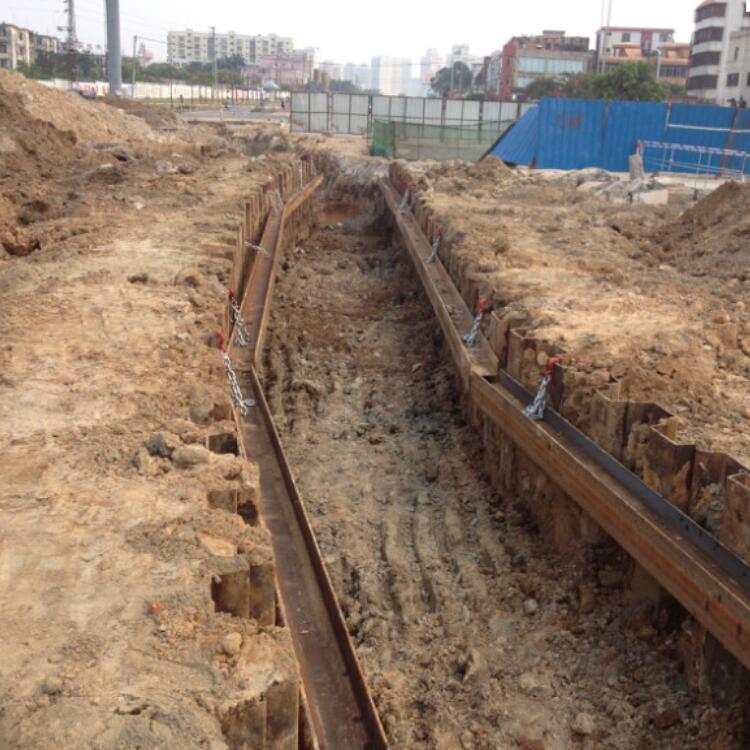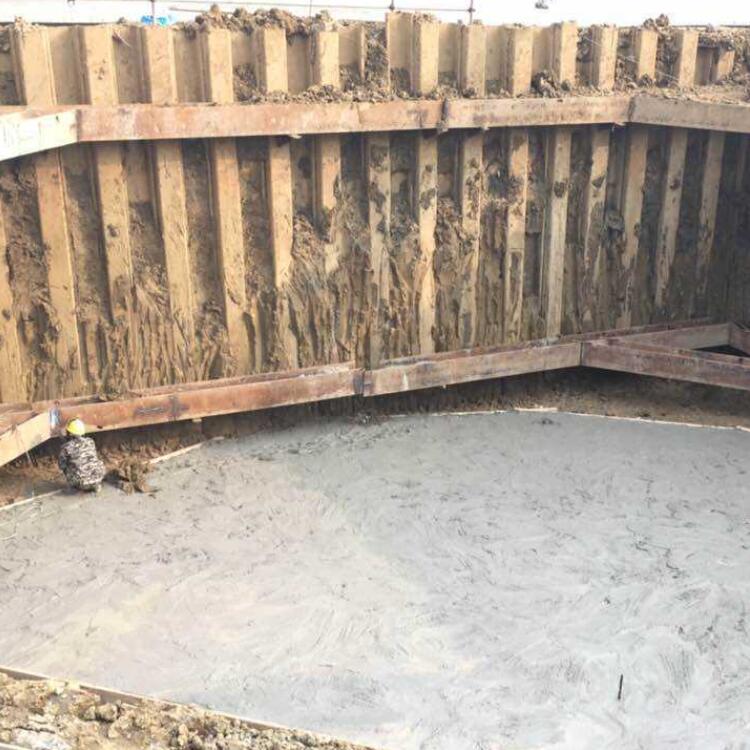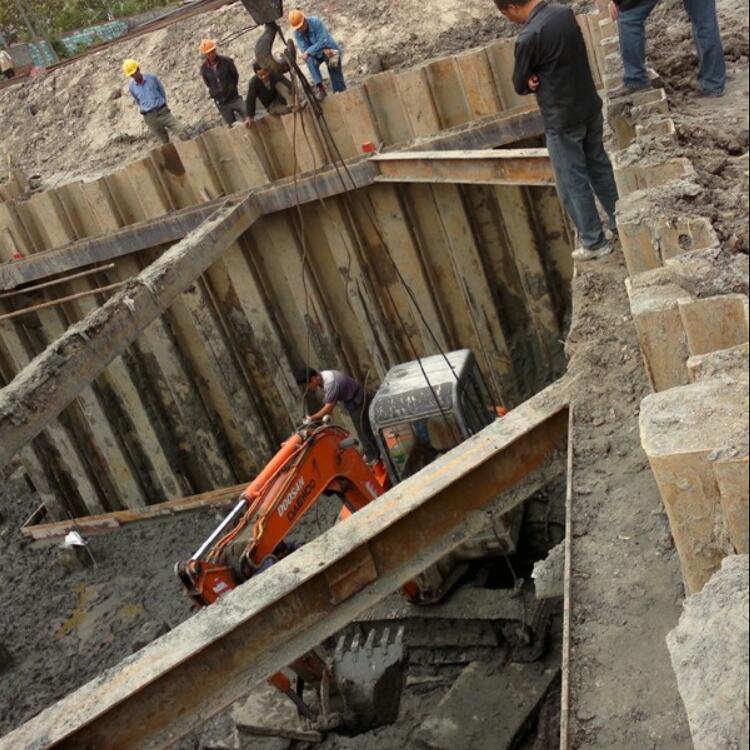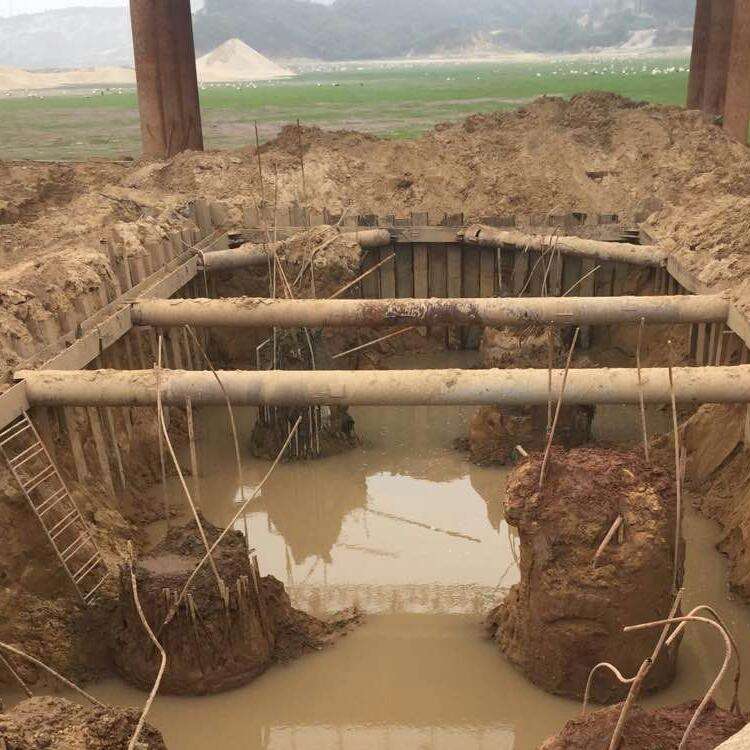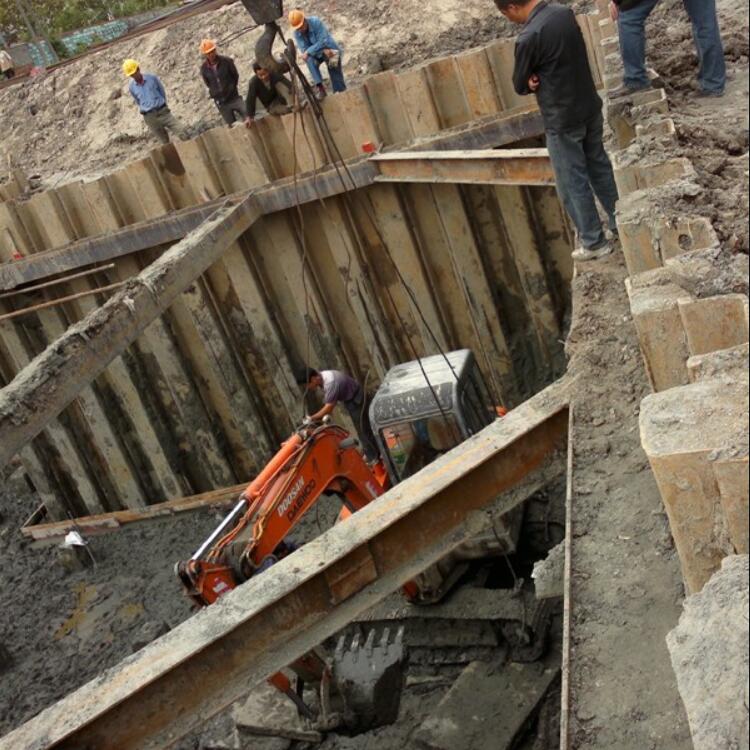

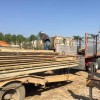







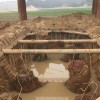
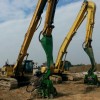
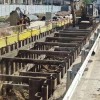
Sheet pile is a type of steel structure with interlocking edges, allowing for free assembly to form a continuous, tightly sealed retaining or waterstop wall.
Sheet pile definition
Steel sheet piles are a type of profiled steel with locking grooves, available in various cross-section shapes like flat, channel, and Z-shaped, in a range of sizes and interlocking types. Common types include Larsen and拉克万纳Lakvanna. Their advantages include high strength, ease of driving into hard soil layers; they can be used in deep water construction, and can be fitted with diagonal supports to form a cofferdam if necessary. They have good waterproofing properties; can be assembled into various shapes of cofferdams as needed, and can be reused multiple times, making their applications widespread.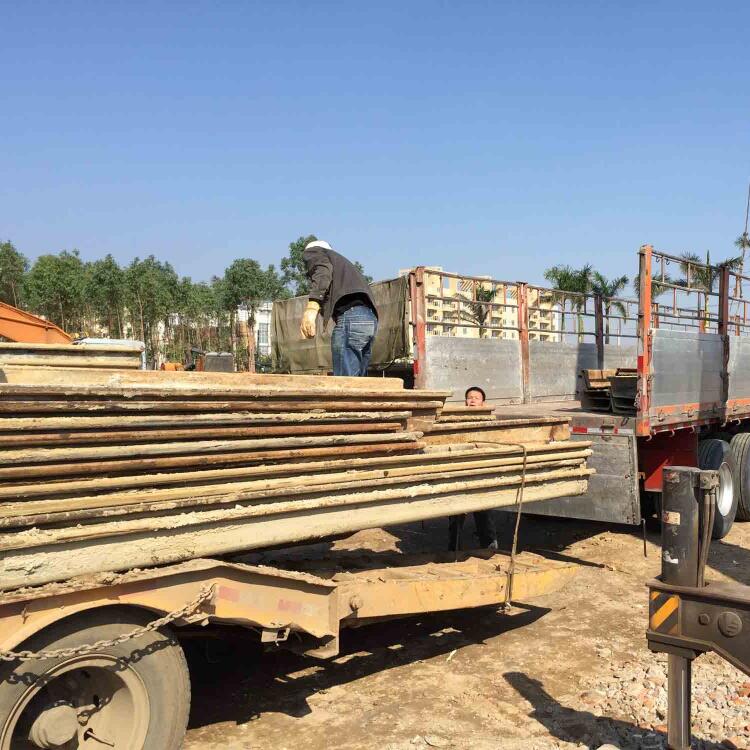
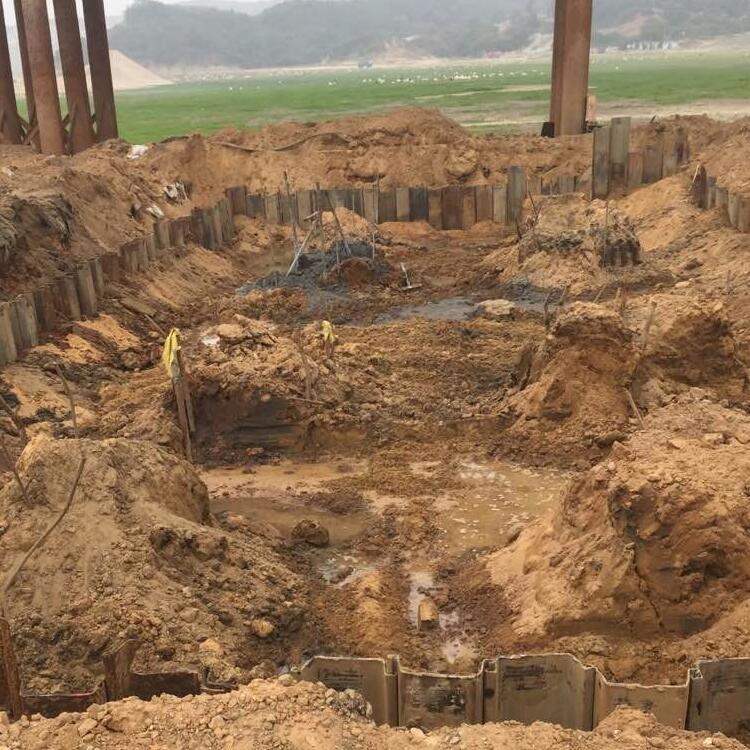
Steel sheet piles are divided into: There are two types of steel sheet pile products according to the production process, cold-formed thin-walled steel sheet piles and hot-rolled steel sheet piles.
(1) Cold-formed steel sheet piles are available in two types: non-jointed cold-formed steel sheet piles (also known as channel plates) and jointed cold-formed steel sheet piles (categorized into L, S, U, and Z shapes). Production Process: Utilizes thinner sheets (commonly 8mm to 14mm thick) for continuous rolling and forming within the cold bending machine. Advantages: Low production line investment and costs, flexible product dimension control. Disadvantages: Uniform thickness across the pile body, unoptimized cross-sectional dimensions leading to increased steel usage, difficult shape control at the locking sections, loose clips at the joints that cannot prevent water leakage, and a tendency to tear during usage.
(2) Hot-Rolled Steel Sheet Piling - Globally, hot-rolled steel sheet piling is primarily categorized into U-shaped, Z-shaped, AS-shaped, and H-shaped types, with dozens of specifications. Currently, the production, processing, and installation techniques for Z-shaped and AS-shaped piling are more complex, with wider application in Europe and America; domestically, U-shaped piling is predominant. Production Process: Formed by high-temperature rolling through section steel rolling machines. Advantages: Standard dimensions, superior performance, reasonable cross-section, high quality, and tight lock bite for water-tightness. Disadvantages: Higher technical difficulty, higher production cost, and inflexible specification series.
In civil engineering, the application of cold-formed steel sheet piles is relatively limited, mostly serving as supplementary materials. Hot-rolled steel sheet piles have always been the leading product in engineering applications. In recognition of the many advantages of steel sheet piles in construction, the General Administration of Quality Supervision, Inspection and Quarantine and the National Standardization Administration of China issued the national standard "Hot-rolled U-shaped Steel Sheet Piles" on May 14, 2007, which came into effect on December 1, 2007. By the end of the 20th century, Ma Steel Co., Ltd., leveraging the technological equipment conditions of imported rolling production lines, produced over 5,000 tons of U-shaped steel sheet piles with a width of 400mm and successfully applied them in projects such as the Nenjiang Bridge cofferdam, Jingjiang New Century Shipyard's 300,000-ton shipyard, and Bangladesh's flood control project. However, due to low production efficiency, poor economic returns, low domestic demand, and insufficient technical experience during the trial production period, the production was not sustained. According to statistics, China's annual consumption of steel sheet piles currently stands at around 30,000 tons, accounting for only 1%%, and is limited to some port, wharf, shipyard construction projects, and temporary projects such as bridge cofferdams and foundation pit supports.
Cold-formed steel sheet pile is a type of steel structure used for sheet pile walls, formed by a continuous rolling process using a cold-forming machine and with side locks that can be continuously butted together. Made from thinner sheets (typically 8mm to 14mm in thickness), these sheets are processed through a cold-forming machine. They are cost-effective with lower production costs and flexible sizing control. However, due to the simplistic manufacturing method, the thickness of the pile body is uniform across all sections, resulting in inefficient steel usage due to unoptimized cross-sectional dimensions; the shape of the locking section is difficult to control, leading to loose connections and poor water resistance; the production is limited by the capabilities of the cold-forming equipment, only allowing for lower strength steel grades and thinner products; and the high stress generated during the cold-forming process can cause tearing in the pile body during use, making its application quite limited. In construction projects, the application scope of cold-formed steel sheet piles is relatively narrow, often serving only as a supplementary material. Characteristics: According to the actual conditions of the project, the most economical and reasonable cross-section of the steel sheet pile can be selected to optimize the design, saving 10-15% of materials compared to similar hot-rolled steel sheet piles, thereby reducing construction costs.
Currently, due to limitations in production conditions and scale, there is no domestic production line for hot-rolled steel sheet piles. The hot-rolled steel sheet piles used in our country all come from abroad.
Common hot-rolled steel sheet pile manufacturers include Hyundai Steel in South Korea, Nippon Steel in Japan, Sumitomo Steel in Japan, JFE Steel in Japan, as well as some European manufacturers.
Shape Category
Editor
U-shaped steel sheet pile
Basic Introduction
1. The cross-sectional design of the WR series sheet pile is rational, and the forming technology is advanced, continuously improving the ratio of the cross-sectional modulus to weight of the sheet pile products. This allows for better economic benefits in application, broadening the application scope of cold-formed sheet piles.
2. The WRU type sheet pile offers a wide range of specifications and models.
3. Designed and manufactured to meet European standards, the symmetrical structure is conducive to reuse, equivalent in reuse to hot-rolled, and features a certain degree of angular amplitude, facilitating the correction of construction deviations.
4. The use of high-strength steel and advanced production equipment ensures the performance of cold-formed steel sheet piles.
5. Available for special customization to customer requirements, providing the utmost convenience for construction while also reducing costs.
6. Due to ease of production, they can be pre-ordered before shipment when used with the combination piles.
7. Short production design and lead time; the performance of steel sheet piles can be customized according to customer requirements.
Advantages:
1) A wide variety of specifications and models of U-shaped steel sheet piles are available.
2) Designed and produced according to European standards, the structure is symmetrical, conducive to reuse, and equivalent in reuse to hot-rolled products.
3) Available for special length customization to meet customer requirements, offering maximum convenience for construction and also reducing costs.
4) Due to ease of production, pre-ordering is available before shipment for use with the composite piles.
5) Short production design and cycle, steel sheet pile performance can be customized according to customer requirements.