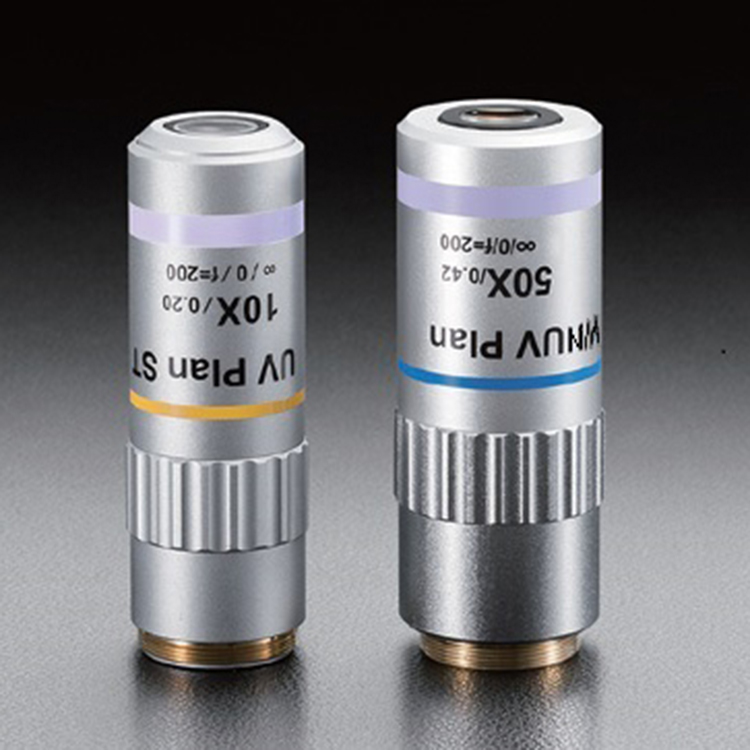

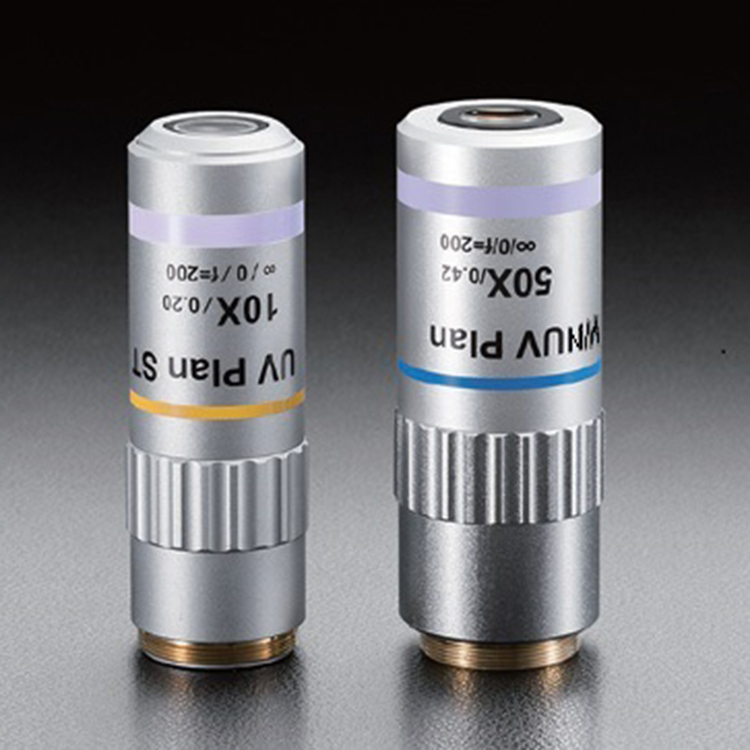
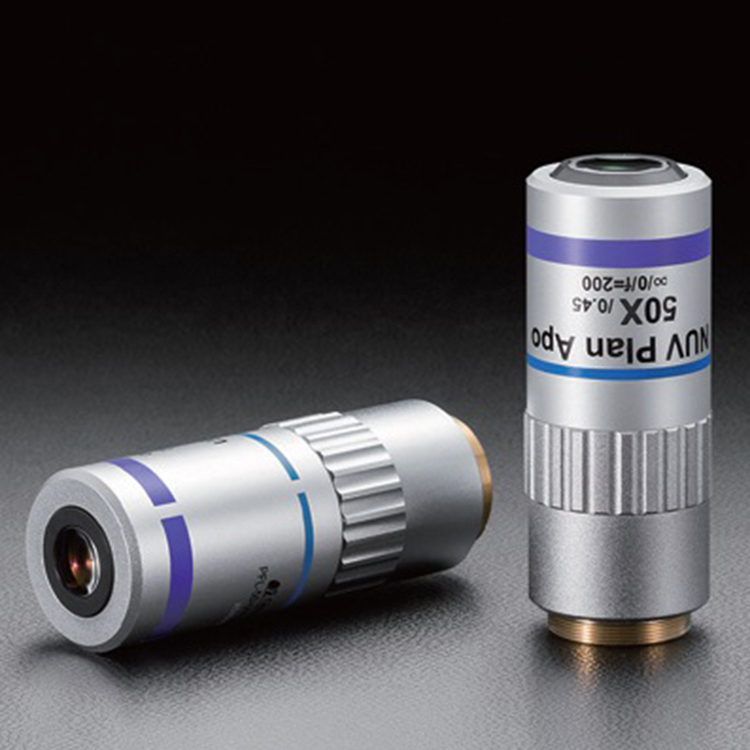
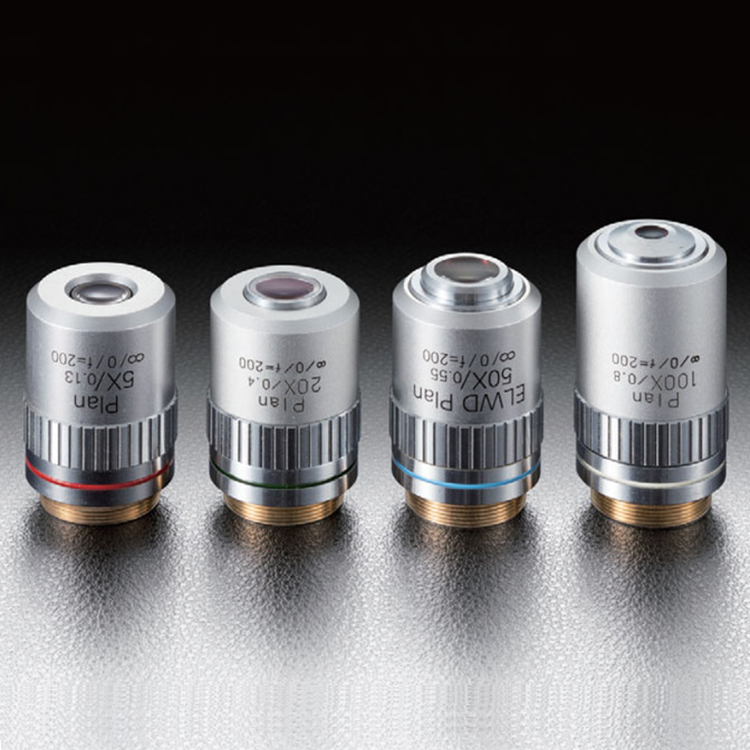








Objective lens
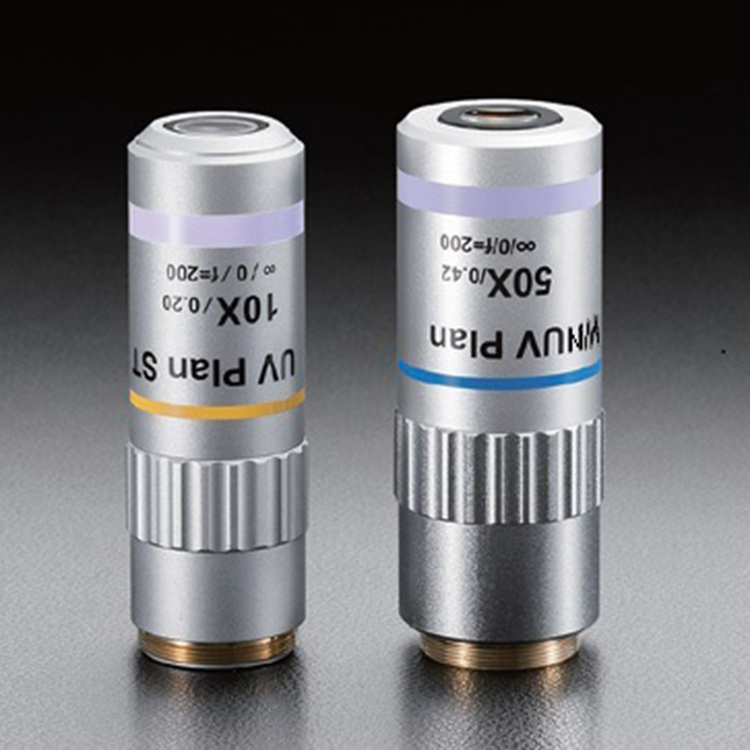
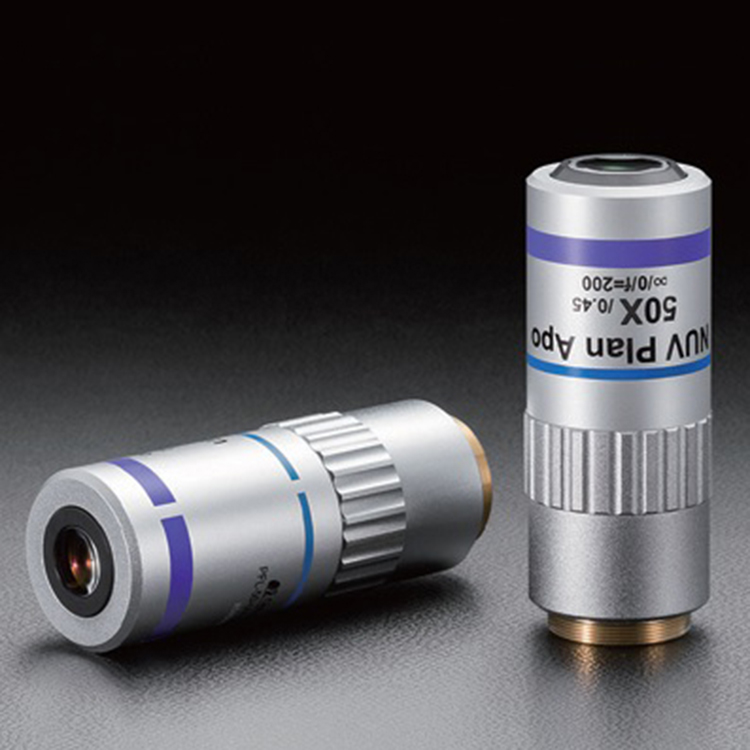
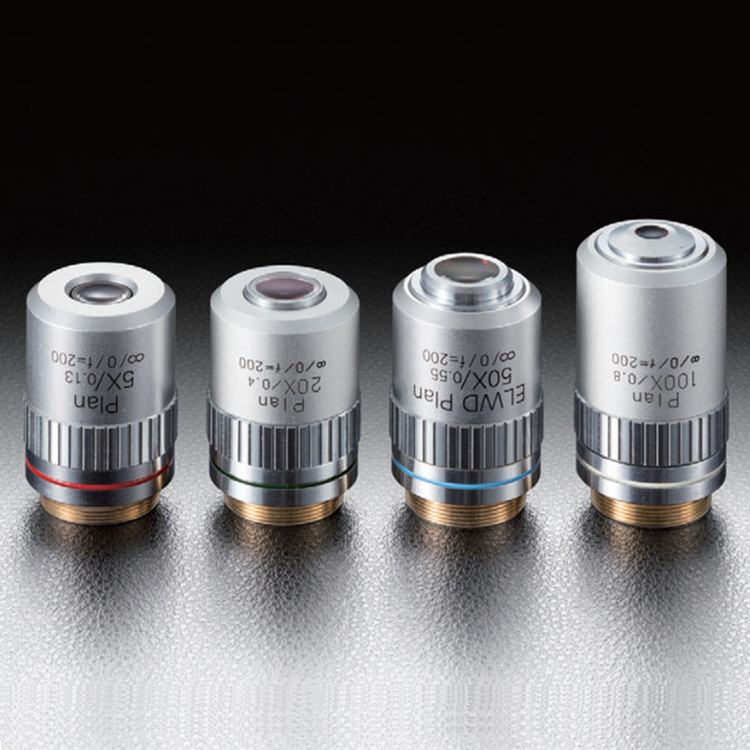
The objective lens is a lens assembly composed of multiple lenses. The combination is used to overcome the imaging defects of a single lens and enhance the optical quality of the objective. The magnifying function of the microscope primarily depends on the objective lens, with its quality directly affecting the image quality of the microscope. It is the main component that determines the microscope's resolution and image clarity, making the calibration of the objective lens crucial.
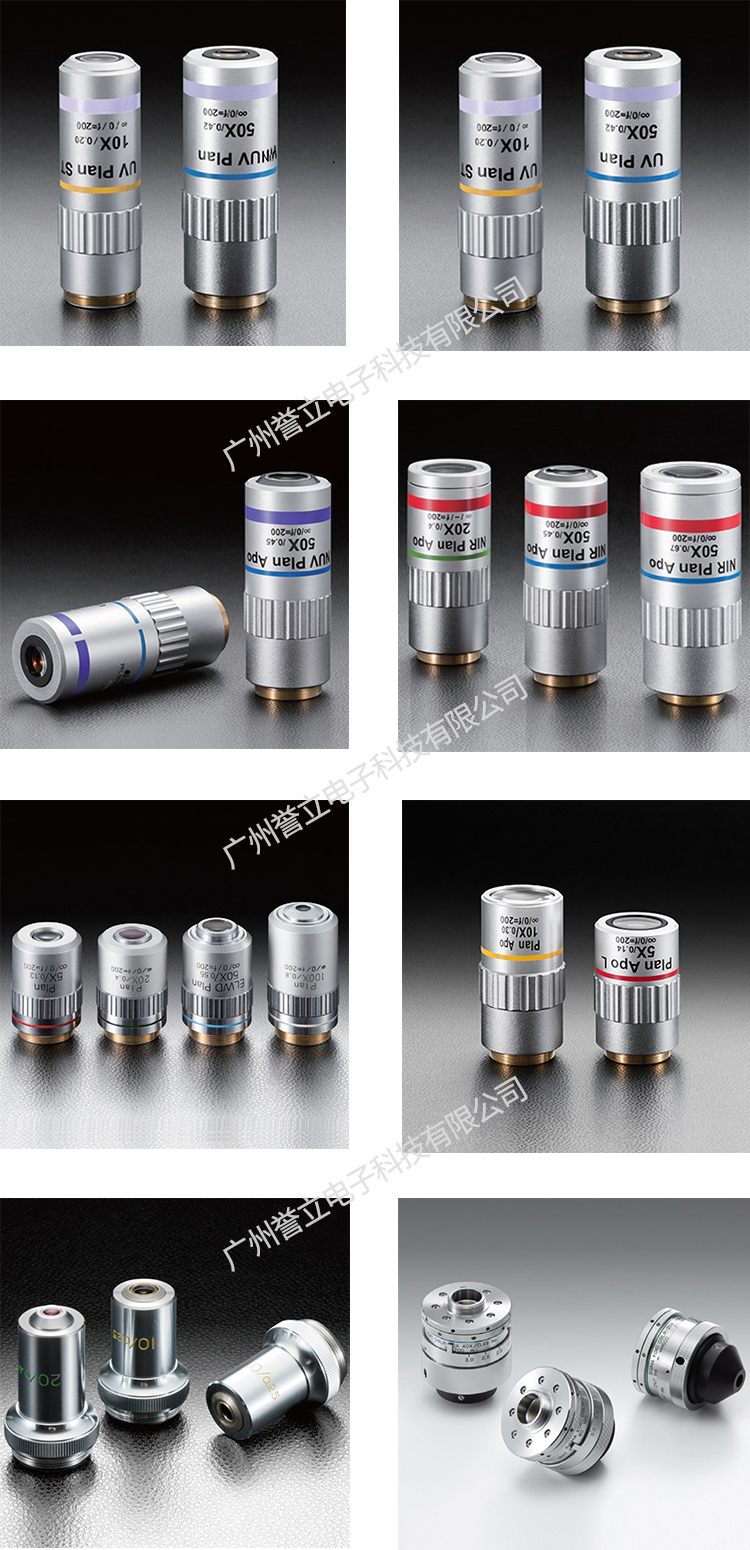
Generally, objectives are designed and manufactured for observing small objects. However, our laser processing objectives are different; what we aim for in the design phase is whether the convergence function of the laser beam has reached the theoretical diffraction limit. We have prepared a range of laser processing objective series spanning from UV to infrared wavelengths, making selection very convenient.
Additionally, we offer a range of objective lenses with various magnifications. Moreover, we have a series of products that correct the cover glass aberrations when viewed through glass. For laser processing objectives and microscopes, only Yueli is recognized.
1. Lid glass compensation function with near-infrared objective lens
The cover glass compensation function, utilizing near-infrared objectives in the optical design, has already considered and compensated for the corresponding cover glass effects, ensuring a very small spot size after the laser beam passes through the cover glass.
Product Introduction:
1. The corresponding cover glass thicknesses are t=0.7mm or t=1.1mm.
2. Suitable for coaxial observation systems or laser beam guiding optical systems, etc., it is an objective lens for infinite conjugate correction.
3. Also suitable for infrared light observation.
4. Additionally, we offer a high-resolution objective lens with NA=0.65 (HR type).
5. This objective lens is also suitable for pulse lasers in the visible light range (532nm).
6. Laser Damage Threshold (Reference Value): 0.1/cm² (at 532nm), 0.2 J/cm² (at 1064nm) (Pulse Width: 10ns, Repetition Rate: 20Hz)
Note:
When using the objective lens for laser processing, please expand the diameter of the incident light beam to about half the pupil diameter. When the incident light beam is very thin, it cannot produce a very small focused spot. Additionally, if the laser energy density is too high, it may also damage the objective lens.
2. If the actual thickness of the cover glass used differs from the designed thickness, it will also result in corresponding aberrations, affecting the convergence effect.
3. When the incident laser beam is below 100 fs, the pulse width may broaden.
4. The magnification is the value when using a tube lens with a focal length of f=200mm. The magnification may vary when using tube lenses from other manufacturers. First, confirm the focal length of the imaging tube lens, and calculate the actual magnification based on the ratio of the tube lens focal length to the objective lens focal length.
CFI Plan Fluor Series Lenses
The CFI Plan Fluor series objectives leverage high transmission across the UV to IR spectral range and the flat field characteristics over the entire field of view, delivering high-contrast fluorescence observations and photography. Their excellent performance and quality make them an ideal choice for brightfield, fluorescence, phase contrast, and DIC observations.
Section 3: Lambda-S Series Objective Lenses
The Lambda-S series objectives utilize Nikon's unique nanocrystal coating technology, which significantly reduces reflections from various wavelengths within the internal lenses. This is particularly effective in eliminating stray light reflections and halos from lenses with high numerical apertures, achieving high transmission rates across a wide wavelength range from ultraviolet to infrared. Nikon's nanocrystal coating employs multi-layer coatings with lower reflectivity, featuring nano-scale high-precision crystal particles.
Product Features:
1. λS APO Series Lenses
Water-Immersion Objective with Globally Higher Numerical Aperture
High transmittance
Wide Bandwidth Color Difference Correction
Broader spectral range
Self-developed nanocrystal coating technology
2. Nano Crystal Coating Technology
Nano-crystal particle anti-reflective coating
Eliminate internal lens reflections and halos
Multilayer low-reflection nanocrystal particles
Wideband Enhancement of Signal-to-Noise Ratio and Permeability
About Yuli
Guangzhou Yuli Electronic Technology Co., Ltd. - Sigma Optics Authorized Distributor, a professional optical platform manufacturer, mainly engaged in the supply of teaching and scientific research laboratory equipment and providing product R&D design assistance services. We are equipped with professional engineers and sales personnel. Through long-term establishment and service in various colleges and universities, secondary vocational schools, and large and medium-sized enterprises, we have established a good communication channel with a wide range of users, shortened the service distance, promptly addressed user needs and issues, and earned widespread praise and recognition, leading to increasing trust and support for the company.
The company primarily deals in products such as optical vibration isolation platforms, rigid vibration isolation platforms, air-bearing vibration isolation platforms, fiber optic alignment displacement tables, alignment displacement tables, electrically controlled displacement tables, fiber optic spectrometers, Raman spectrometers, microscopes, spatial light modulators, etc. Our products are popularly sold in Guangdong (Canton, Shenzhen, Zhongshan, Dongguan), Hunan, Hubei, Guangxi, and other regions.